Professionalism

We’re all tightly packed together here on the internet.  Social media is a fuzzy category and now includes such platforms as LinkedIn, which I think of mainly as a place to hang your shingle while looking for a job.  I chose, many years ago, to make myself available online.  This sometimes leads to a strange familiarity.  It isn’t unusual for me to have an author hopeful to contact me through my personal email or through LinkedIn, especially, to try to push their project.  (Such people have not read this blog deeply.)  One thing acquisitions editors crave most highly is professionalism.  Being accosted on LinkedIn, or in your personal email, is not the way to win an editor’s favor.  Some of us have lives outside of work.  Some of us write books of our own and don’t blast them out to all of our contacts on LinkedIn.  Professionalism.

It’s tough, I know.  You want to promote your book.  (I certainly do.)  It seems strange to say that blogging is old-fashioned, but it is.  (Things change so fast around here.)  But you could start a blog.  Or better yet, a podcast.  Or a YouTube channel.  You can blast all you want through X, Bluesky, Facebook, Tumblr, or Instagram.  I admit to being old fashioned, but LinkedIn is for professional networking, not doing quotidian business.  It may surprise some denizens of this web world that some publishers don’t permit official business through social media.  Email (I know, the dark ages!) is still the medium preferred.  Work email, not personal accounts.  Some authors (believe it or not) still try to snail mail things in.  Publishing is odd in that many people, and I count my younger self among them, suppose you can just do it without learning how it works.  Most editors, I suspect, would be glad to say a word or two about professionalism.

Photo by Ben Rosett on Unsplash

Professionalism is what makes a commute to the office on a crowded NYC subway train possible.  We all know what’s permissible in this crowded situation.  We know to wait until someone checks in at work before asking them about a project we have in mind.  (If you’re friends with an editor that’s different, but you need to get to know us first.)  When I started this blog I was “making a living” as an adjunct professor.  I was hanging out my shingle.  I also started a LinkedIn account.  Then I started writing nonfiction books again.  Since those days I’ve been trying to figure out the best way to promote them.  Professionally done, if at all possible.


Covid Books

There’s a fairly new phenomenon called “Covid books.”  No, I don’t mean books about Covid-19, but books affected by the virus.  (Not infected.)  Let me explain.  Many publishers, unaware of the menace, continued scheduling books through what became the pandemic.  You see, books take a long time to put together, and, interestingly, much of the work can be done remotely.  That meant that even as we locked down, books still published.  But in 2020, few people were interested in books on other subjects.  Children’s books and others intended for young readers did really well.  Online ordering made this possible.  Fiction for adults didn’t fare too badly.  What suffered was nonfiction on topics unrelated to the pandemic.  This is so much so that publishers designate as “covid books” those that underperformed and appeared in the early twenty-twenties.

To put a more personal spin on it, I published a covid book.  Nightmares with the Bible came out late in 2020.  Granted, the topic didn’t appeal to everyone, and the price was about $100 when people were wondering if their jobs would be there after this was all over.  (Is it over yet?  I still wear a mask in crowded places.)  The reason that I consider it a covid book is that although it has received more reviews than any of my other books, it has sold the worst of them all.  Less than its dollar amount.  The publisher, which was bought by another publisher, has no inclination to do it in paperback, so it will remain an obscure curiosity.  Interestingly, I found a Pinterest page that was a listing of unusual book titles and mine was there.  But it was a Covid book.

In the wider world, even in 2025 publishers discuss Covid books.  A promising author whose book appeared in the height of the pandemic may have sold down at my levels.  What with the gutting of government programs and agencies since January, it’s difficult to tell if we’ll ever get a pronouncement that the pandemic has ended.  Where two or three are gathered, I’ll be wearing a mask.  And I’ll likely be thinking of books of that lost generation.  Information that will never be processed.  Book publishing survived, despite being a nonessential business.  People still buy and read books.  Some day some bibliophile might write a book for other readers about the year that robbed us of interesting but ultimately irrelevant books.  There’ll be too many to list, of course.  But we have been given a lesson.  Let’s hope we continue to do our homework.


Word Words

So, in the old days, when books were paper, printers would rough out the typesetting on trays called galleys.  Prints from these plates would be sent out for review.  Naturally enough, they were called galley proofs, or simply “galleys.”  After those came back from an author marked up, corrections and further refinements, like footnotes, were incorporated.  Then page proofs, or second proofs, were produced and sent again.  The process took quite a bit of time and, as I’ve now been through six sets of proofs for my own books, I can attest it takes time on both ends.  Electronic submissions have made all of this easier.  You don’t have to physically typeset, much of the time, unless you merit offset printing—books in quantity.  You can often find uncorrected proofs in used bookstores, and sometimes indie bookstores will give them away.  That’s all fine and good.  The problem comes in with nomenclature.

These days proofs are sometimes still called “galleys” although they’re seldom made anymore.  If someone asks about galleys, it is quite possible they’re asking about page proofs.  It is fairly common in academic publishing for an author to see only one set of proofs—technically second proofs, but since no galleys were set, they could be called that.  Or just proofs.  Now, I have to remind myself of how this works, periodically.  It was much clearer when the old way was in force.  There were a couple reasons for doing galleys—one is that they were, comparatively, inexpensive to correct.  Another is that authors could catch mistakes before the very expensive correction at the second proof stage.  Even now, when I receive proofs I’m told that only corrections of errors should be made, not anything that will effect the flow, throwing off pagination.  This is especially important for books with an index, but it can also present problems for the table of contents.

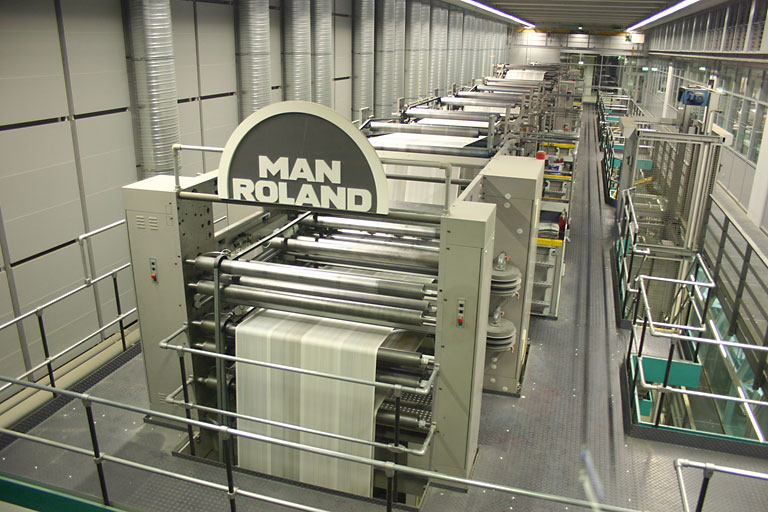
Offset printing. Image credit: Sven Teschke, under GNU Free Documentation License, via Wikimedia Commons

The ToC, or table of contents, also leads to another bit of publisher lingo.  When something is outstanding and expected before long, many editors abbreviate it “TK” or “to come.”  Why?  “TC” is sometimes used to mean “ToC” or table of contents.  There are hundreds of thousands of words in the English language, yet we keep on bumping up against ambiguities, using our favorites over and again.  That’s a funny thing since publishers are purveyors of words.  None of my books have printed in the quantity that requires galleys.  In fact, academic books, despite costing a Franklin, are often pulped because they’re more expensive to warehouse than they are to sell.  This is always a hard lesson for an academic to learn.  The sense behind it is TK.


Double-Dipping

Double-dipping takes many forms.  The kind I’m talking about is trying to get more than your fair share by either taking twice, or by fooling others into buying the same thing two times.  I’ve fallen victim myself.  Some publishers will sell a hardcover book and then release the paperback with a different title a couple years later.  If you’re a fan of the subject, you’ll buy the same book twice because they won’t easily tell you that it is the same one.  On paper the strategy is to get libraries to buy the hardcover (which costs more) instead of waiting for the paperback.  Why change the title if not to fool someone?  Maybe I’m just embarrassed by the vegan egg on my own face because I realize that I’ve bought the same book more than once.  Maybe more than once.  With a limited budget, I don’t appreciate being deceived.

The egg is even older and more obvious when I realize that those of us of a certain age can’t keep our memories as sharp as they used to be.  I read a lot.  I try to get through 60 or 70 books a year.  Have done for over a decade now.  If a book doesn’t create a strong impact, it may go into that category of enjoyable but not really memorable.  So when I recently learned that a publisher had double-dipped with a book I’d bought and read—twice—I felt violated and embarrassed.  Even more troubling was the fact that I wrote blog posts about each of the books (about three years apart) without recognizing I’d already read it.  To be fair, buried on the copyright page (who reads that?) the paperback confessed that it was the same as the differently titled hardcover.  Of course, I’d already bought the book, read it, and blogged about it (twice) before someone pointed out to me that it was the same book.  Gotcha!

I hold myself to high ethical standards.  I hope that I’m an honest person; I tell the truth whenever possible.  I’d certainly not try to sell someone two of the same thing without telling them that they weren’t buying something new, but simply giving more money for something they already had.  Even Amazon says, “Purchased on,” and gives you the date if you call up a book you’ve already bought.  Publishers, I know, have a difficult time.  Publishing is a “low margin” business, which means that you have to sell lots in order to stay solvent, and each sale brings in only a small profit.  Temptation to double-dip must be very strong.  Still, I feel a bit silly to have fallen for it, even when it’s what I do for a living.


Being Perceived

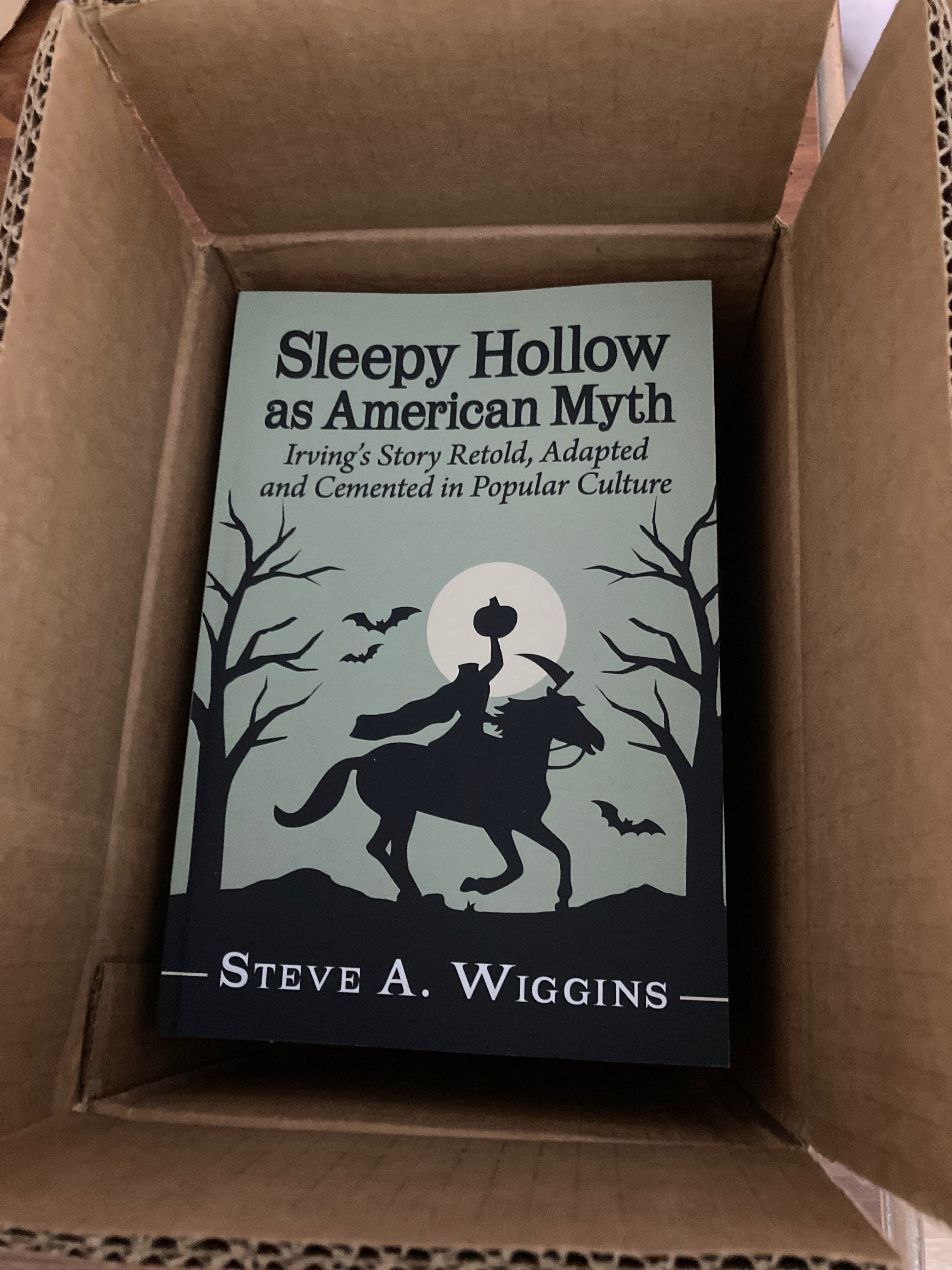
The philosopher George Berkeley argued that to be is to be perceived.  This perspective goes by the name of immaterialism and I have to admit to being sometimes seduced by it.  The real question comes down to who counts as a perceiver.  In any case, as a book author there’s always a worry that the book sent to the publisher isn’t real until it appears in print.  I’m Berkeleyian enough to think that ebooks aren’t really perceived, and so I mean in print.  Until I see a copy of the book, I don’t really believe it exists.  This entire week I’ve been waiting.  Sleepy Hollow as American Myth was released on either Monday or Wednesday, depending on who you believe about such things, and my author copies have been on their way.  At last, the book exists!

In the publishing industry there are those who consider a book like a box of puzzle pieces.  They often refer to books as “content,” or “product.”  Something that can be divided up and sold piecemeal in electronic form.  A chapter at a time.  Never mind what the author was trying to do when s/he wrote the book.  Such people, it seems to me, should be forced to spend several years working on an integrated project only to see the producer of said product take it apart and sell insubstantial pieces of the whole.  It feels like being eviscerated.  Books are objects and those who love them form cultures.  I know there are people who read ebooks, and I don’t judge them for it—readers are readers and we need more of them!  But for me, book culture involves, well, books.

One of the greatest thrills a writer can know is opening that first box of their author copies of a book.  Many academic publishers are cutting down the numbers, to save money, of course.  McFarland, I’m happy to report, still provides ten, which used to be standard.  So before I start doling them out, I have, for the moment, ten copies of my sixth book.  I have only one copy of the second edition of A Reassessment of Asherah and two copies of Nightmares with the Bible.  They’re both too expensive for me to buy more.  (Income from writing books may bring images of Stephen King or J. K. Rowling to mind, but they’re household names because their situation is so exceptional.)  Right now, however, I’m bathing in the glow of knowing, at least at the moment, my latest book is being perceived.


Short Story

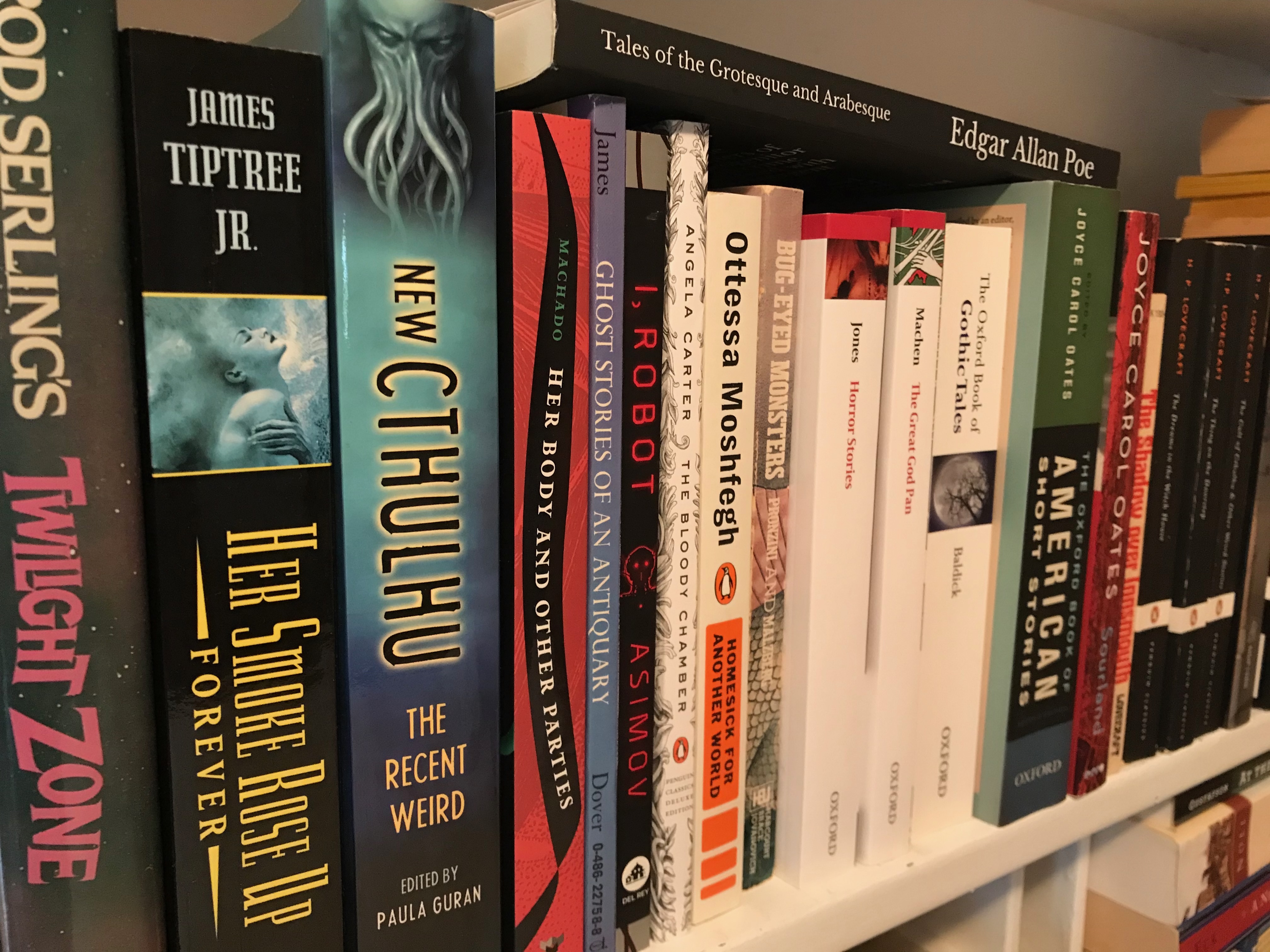
I often reflect on how little I know.  No matter how much I read there is more to be read.  Works worthy of time but sacrificed to circumstance.  I was recently reading a short story by Poe that I’d never read before.  As others have noted, Poe was a prolific author of a great deal of forms—poems, a novel, letters, a scientific treatise, literary criticism, and, of course, his stories.  I came to know his stories through cheap collections available in my small town, mostly not along the lines of those Poe himself selected.  Indeed, editions of his own chosen works, such as Tales of the Grotesque and Arabesque, before the advent of internet-based publishing, were difficult to come by.  Original editions cost many thousands of dollars.  Poe isn’t alone in this category—short stories are an unusual genre.

I know from personal experience that finding a publisher for a collection of such stories is nearly as difficult as finding a publisher for poetry.  Publishers are looking for money, of course, and like Poe, all writers produce stories that interest some but not others.  The novel is safer, and even today’s amazing writers have to find success as novelists before publishers will offer volumes of their short stories.  Tis a pity, really.  I have many volumes of short stories on my shelves, including some of Poe’s, but for some reason publishers tend to cram such volumes so full that they become unwieldy.  Intimidating almost.  It leads to that feeling of existential dread that I felt approaching War and Peace—would I indeed survive to finish it?  (I did, but that is such a Poe-like question I had to employ it.)

The short story is an important literary form that is singularly difficult to publish.  I have managed to find homes for about thirty such pieces, but many more have failed to move even just  the internet critics.  Those that have been published have brought no income at all.  In Poe’s day, an author attempting to make a living could not afford to give away their life’s blood.  Indeed, Poe’s older contemporary Washington Irving struggled with pirated copies of his works being sold overseas (he spent a great deal of time in Europe).  Like Poe, Irving excelled in the short story, or sketch.  We’re often at the mercy of editors who select the stories for us, making them available.  I suspect there’s much that we miss by not stepping outside their personal tastes regarding what to include.  Or, just as importantly, exclude.  Some day, perhaps, I will have read all of Poe’s short stories.  Until then, I’ll find them when necessary.


Is That Cookie Free?

I offer free editorial advice here, from time to time.  Not many academics, I expect, pay any notice—what have they to learn from a mere editor?  Still, it’s a public service, so here goes.  It really pays to do your research.  I don’t mean about the topic of your book, but research into what publishing is and how it works.  Some authors, for example, think that if they pay an Open Access fee their book will get bells and whistles that other mere monographs won’t.  They underestimate how much it costs to print a book, especially when they’ve already undercut their own sales by making it available for free online.  There some basic business sense lacking here.  There’s a free cookie but then there’s also giving away the whole box.  Who’s going to buy what’s free?  (There are good reasons for Open Access publishing, but wishing for special favors isn’t one of them.)

I make no claims to be some kind of publishing guru.  I tend to think of myself as a guy who got lost along the way, career-wise.  But I’ve learned that I wish I’d known more about publishing when I was teaching.  I see the same rookie mistakes over and over and over again, made even by senior scholars sometimes.  I remember, however, when I was teaching.  It never even occurred to me to find out anything about publishing.  In the academic’s eyes, publishers are there to serve up what researchers discover.  To a point that’s true, but publishers vary quite widely in their tolerance for the purely academic exercise.  You see, you actually have to sell books to stay in business, and if your research to too obscure, well, I guess you could try to find some Open Access funding.

One of the things that amazes me about the biz is just how many academics assume that editors are menial workers in the larger enterprise of getting their important ideas in print.  My time in publishing has been an education in itself.  I may not have time to keep up with Ancient West Asian studies anymore (the draw is still there, but it’s a terribly expensive habit).  Horror’s a bit easier to handle since you really have only about two centuries to cover, rather than four millennia.  But I can’t help but muse on what a missed opportunity presents itself when a free cookie is passed up.  It’s far easier to stay wrapped in that academic shell than it is to try to break out and discover what is freely offered.  Strange how the world works sometimes. Have a cookie…


Running on Irony

I recently remarked that my life runs on irony.  I was thinking back to when I was trying to get out of Gorgias Press (long story) and I was interviewed by Irving Louis Horowitz, founder of Transaction Press.  He listened to my account of myself and said, “What you need is a leg up.”  He didn’t offer me that leg up, but I always remembered his kindness in giving me a shot at a non-existent position.  As it turned out, I was hired a couple years later by Routledge.  Routledge is owned by Taylor & Francis, an Informa company.  Publishers grow in two main ways: by the volume of books that sell well, and by acquiring other companies.  While at Routledge we were encouraged to talk to those higher on the ladder about prospects for acquisition.  I made a small case to one executive about acquiring Transaction and was summarily dismissed.

Then I was actually dismissed.  For reasons never explained, I was handed a pink slip the day after returning from a business trip to Arizona.  So life goes.  I found another job, more stable, in the academic publishing world.  One day I was recollecting my conversation with Irving Horowitz.  I’d contacted Transaction out of the blue because it was based in Piscataway, New Jersey.  Gorgias Press was also located in Piscataway, and I’d moved my family to nearby Somerville so that the commute would be only fifteen to twenty minutes.  (I was so naive about commutes at the time.)  Besides, that semester I’d been assigned to teach on the Livingston Campus of Rutgers University as an adjunct, and Transaction operated out of a building either on or adjacent to Livingston.  It all seemed right.  Except it never happened.

After Routledge let me ago, I again contacted Transaction.  I knew that Horowitz had passed away but his widow sent me a packet of information that I never opened because a job offer had been made by my current employer by the time I received it.  After some time I’d heard that Transaction had been acquired.  The irony was that the publisher is now considered defunct because of the acquisition.  In my reverie, I decided to look up by whom.  Of course, Taylor & Francis had bought Transaction and rolled it into Routledge.  I am absolutely convinced my sophomore suggestion had nothing to do with this this.  Someone else, probably higher up, had noticed a smaller press ready for assimilation.  I’m pretty sure that I didn’t keep the somewhat hefty envelope I’d received from Transaction when I was again in need of a job.  If I had, and if it had contained an offer, I would’ve found myself again working for the company that had let me go.  My life runs on irony indeed. 


Finding Books

This is a public service announcement to those who try to find books that aren’t issued by one of the big publishers.  I’m not shy about saying that my books all fall into that category.  One of the things I’ve noticed is that books feed out to different internet venues at an odd rate, before they’re published.  Some publishers use what they call New Book Announcements (NBAs) to get the metadata out to wholesalers, distributors, and other vendors.  Sometimes a book comes to public light in strange ways.  I’ve had my eye on a book that a friend pointed out.  I don’t know how they heard about it, but I went searching for it and found it on Barnes & Noble’s website, but not Amazon.  Well, that’s not quite true.  It is on Amazon, but not in North America.  Amazon China and Amazon Singapore have it, but you can’t find it here.  Yet.

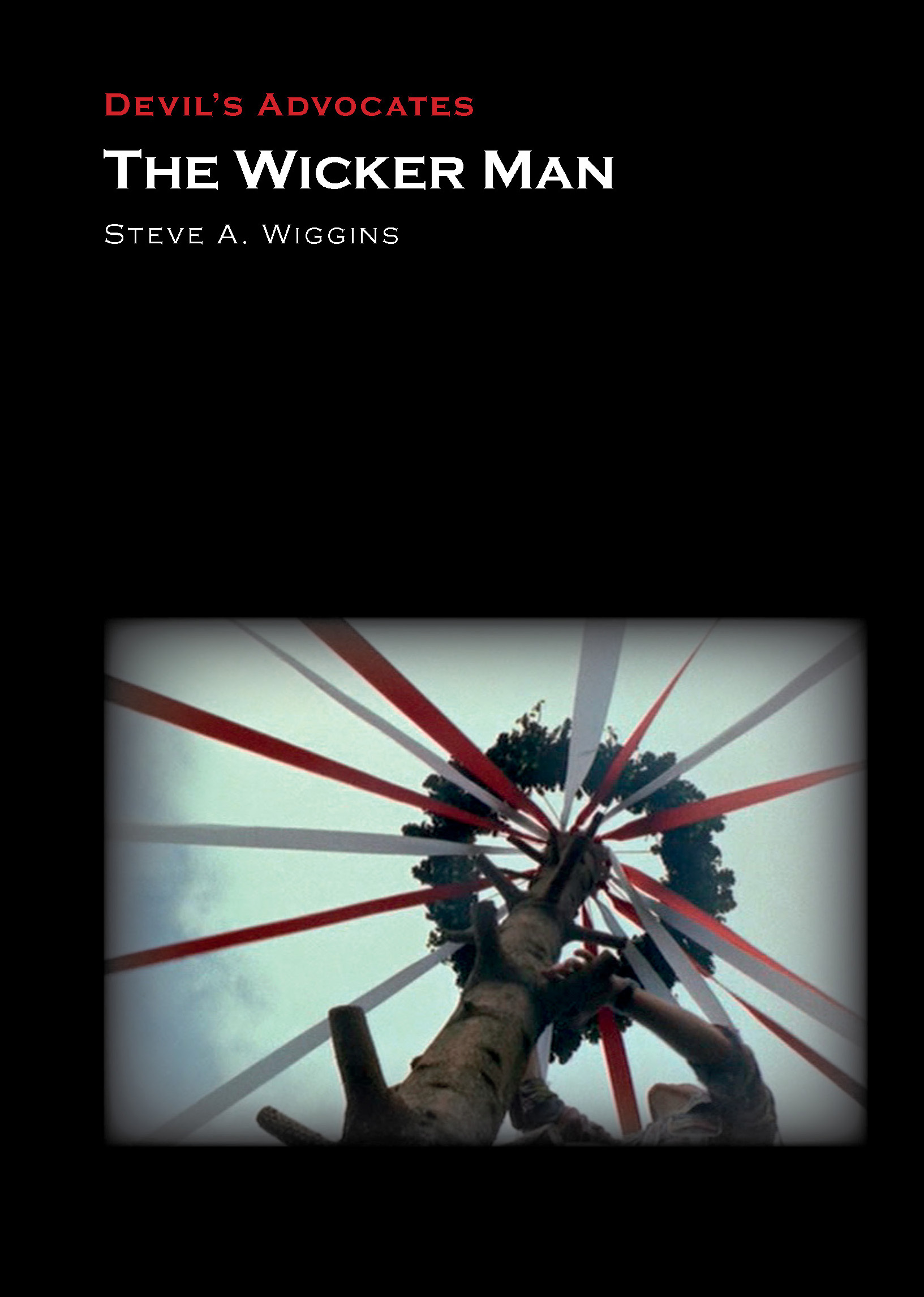
I noticed a similar thing with The Wicker Man.  An anxious author, I kept searching for it online when I didn’t hear from the publisher.  It was first announced at German booksellers.  Eventually it got around to English-speaking sites, and eventually (it took a few months after publication), it became available in “all channels.”  Although, several websites still only list the hardback which retails for more than a dollar a page.  Now that’s inflation!  Even $40 for such a short paperback is a lot, but that’s why I’m looking for anything but an academic publisher for the next book.  But there’s a larger issue here.

Like old Joe, I sometimes can’t remember things.  I have an elaborate and Byzantine set of reminders that fit my neurological profile (mostly).  For books I want to remember to look up after they’re published (I can’t generally afford to buy them right away, so this takes advanced planning), I have an online list.  That online list is associated with a bookseller and I can’t easily add to my list until the book appears on said seller’s site.  I suppose I could write it down in my zibaldone, but will I recall that I wrote it there?  (Those little notebooks get filled up pretty quickly.)  It would just be easier if information on the internet could feed out instantaneously.  If, say, Amazon Singapore could let Amazon USA know that a book that is publishing in the United States can be listed—well, wouldn’t that make sense?  Systems are complicated.  So complex, in fact, that architects must be hired to keep them in order.  Or maybe books could be announced when they’re actually available? What? Lose the buzz?  In the meantime I’ll put a bookmark in this page and hope that I remember to look it up when the time comes.


Playing Authors

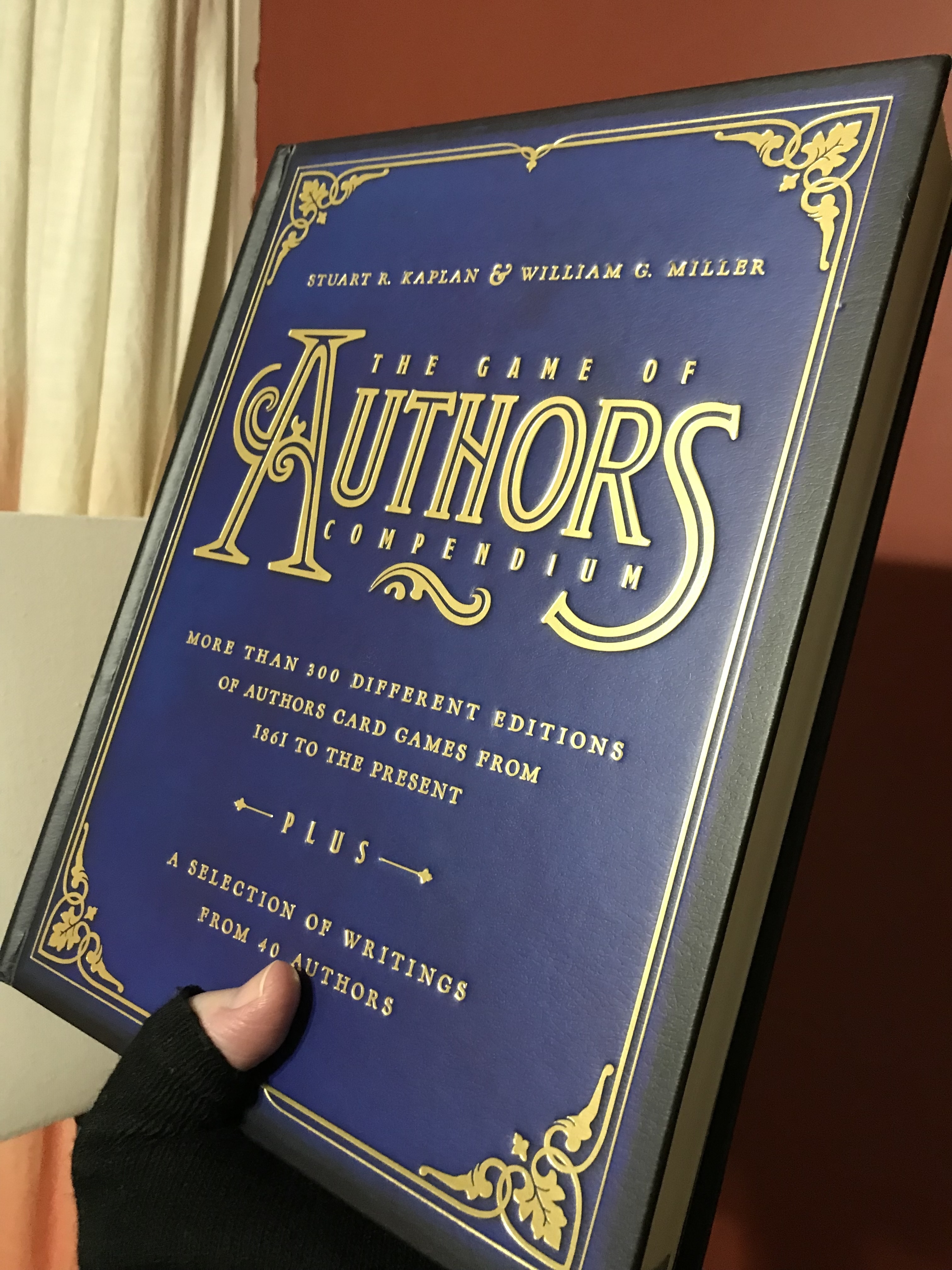
My family looked at me funnily, but not for the first time.  With a holiday gift card I’d ordered a book on the card game Authors that I’d blogged about recently.  You see, there’s not a ton of information on it on the web, and it was a formative influence in my life and I wanted to know more.  I suppose it’s typical for someone raised as a fundamentalist not to immediately think of evolution, but Authors has evolved over the years.  And quite a lot.  For one thing, you can’t copyright an idea and other game-producing companies made their own versions of the original game.  And what I’d assumed had been the original (since it was the one I had as a child) was only one of many versions.  The book even documents the Bible Authors game I’d mentioned.  My real interests included that age-old question—did it ever include Edgar Allan Poe?

Today is Poe’s birthday.  It’s fair to say that he’s one of the most recognizable authors in the world now.  He also had a tough time being accepted.  This book, which I haven’t read through—it’s more of a reference book, in any case—points out that Poe was indeed included in more than one edition of the game.  He isn’t one of the strongly recurring authors (which include several of whom I’d never heard).  This is the fate of writers.  Reading about Dickens lately, I came to realize that even after several best-selling novels (at numbers that would make any modern publisher gloat), he was effectively living off debt until well into his forties.  And he died at 58.  He was famous, but until his final years not what you could consider wealthy.  

Another realization dawned.  Writing for a wider readership means getting away from academic publishers.  I had an agent interested in my current book project for a couple of months before he decided it wasn’t for him.  I’ve also come to see that several authors I respect, and whose books are priced below $20, have published with presses that aren’t part of the Big Five.  And they earn some profit from their efforts (unlike academic publishing).  In other words, becoming an author of either fiction or non, often involves book sense that I’ve been slow to gain.  At the Easton Book Festival a few years back I met several local writers who were putting additions onto their houses with the royalties they earned.  I’d published three books at that point and was turning my pockets inside out hoping for forgotten spare change.  Authors is a game.  Those who are included are those who figured out how it’s played.


No Agency

I’ve worked in publishing since 2006.  That seems like a goodly time, but the industry is a complex one.  I started trying to publish again around 2010—losing my job at Nashotah House sent me into a tailspin in that regard, although I wrote a novel or two in the meantime.  My first post-dissertation book was published in 2014.  I soon learned that academic publishers each have their strengths and weaknesses.  Most have trouble with marketing—people just don’t know about your books.  (And can’t afford them if they do.)  If the publisher won’t advertise, well, the voice of one ex-academic isn’t very loud.  So I wrote on.  My sixth book has existed in draft form for a few months now.  I know that to get a publisher who knows how to market you often need an agent.  I also know that as an unknown writer it’s difficult to get an agent’s attention.  I finally found one, however.

Agents change books.  Mine asked me to rewrite yet again.  All of my books have been rewritten multiple times, so this was par for the course.  I had to leave out a lot of the stuff I liked.  Then the agent changed his mind.  Hey, I get it.  Agents live off the advances their authors get so if they don’t see enough zeroes they shy away.  That’s just how it works.  I’ve found what looks like a good publisher (not an academic press) but I couldn’t simply go back to the version I really liked—I’d made improvements for the agent—so I had to blend the two versions together.  The problem is, that’s difficult to do on a computer.  I know from working in publishing that side-by-side comparative screens in word processing programs are difficult to find.  Of course, if you just print both versions out all you need is a table and a red pen.

I wasn’t born into the computer era.  Flipping between two screens doesn’t come easily but printing out two three-hundred-page manuscripts is time and resource consuming.  So I’m flipping screens.  I hope to finish this book soon because the next one is already brewing and I really can’t wait to start getting the ideas out.  And I even have a publisher in mind—one that doesn’t require an agent.  I don’t think agents really get me.  Or maybe I’m just not a “commercial” enough thinker.  There are plenty of presses out there, however, and if you do your research you can find a home for this project that’s taken years of your life.  It’s just difficult to do the screen flipping.  But then, I’ve only been doing this for about a decade.  I’ll get the hang of it soon.


Support Roles

It seems to me that many people who strive for a particular life—say writer, actor, rock star—and don’t break through often end up in supporting roles.  I’ve looked for agents for three of my books (unsuccessfully, of course) and have noticed that many agents list themselves as authors as well.  I’ve not heard of any of their books, but then again, there are thousands of new books (likely closer to two million) published each year.  Nobody can keep up.  Since I can’t break through, I work as an editor.  A support role.  Many colleagues who haven’t made it to tenured professorships settle for the better paying but less rewarding job of being administrators.  Artists become gallery owners, guitar players sound engineers, actors coaches.  You get the picture.  We can’t all succeed at what we set out to do.

There is, however, always hope.  For the past several months I have begun each day seeking out quotes about hope.  Those who struggle, sometimes against great odds, must never give up.  I continue to write books even if they don’t sell or even get published.  Some of the writers I admire most never achieved fame until after they died.  The drive to do something noteworthy with life is strong, even if we don’t know what that is yet.  When we give up hope we become mere drones.  Automatons doing our pre-programmed work.  That is, we identify with our support roles and that becomes our life.

Photo by Faris Mohammed on Unsplash

I read about movies quite a lot.  There are many people involved, often in roles that most of us simply don’t comprehend.  Some of the more versatile people in the industry shift from role to role—director, writer, technician, producer, actor.  Those who break through are the few upon whom society smiles.  I recall learning about the Communist ideal of assigning people roles based on their early aptitudes.  I have no way of knowing if this really happened, but the idea is both scary and promising.  Scary because some of us are late bloomers.  Promising because some of us showed early talents that have been undervalued in our careers.  I don’t give up hope.  Daily, even on vacation, I awake early to work on what I hope to accomplish.  I may never break through—finding success as a writer is elusive, especially if you didn’t major in a subject others expect will lead to a writing career.  A support role gets you close enough, perhaps, to see how it’s done.  And to hope.


Whither Wicker?

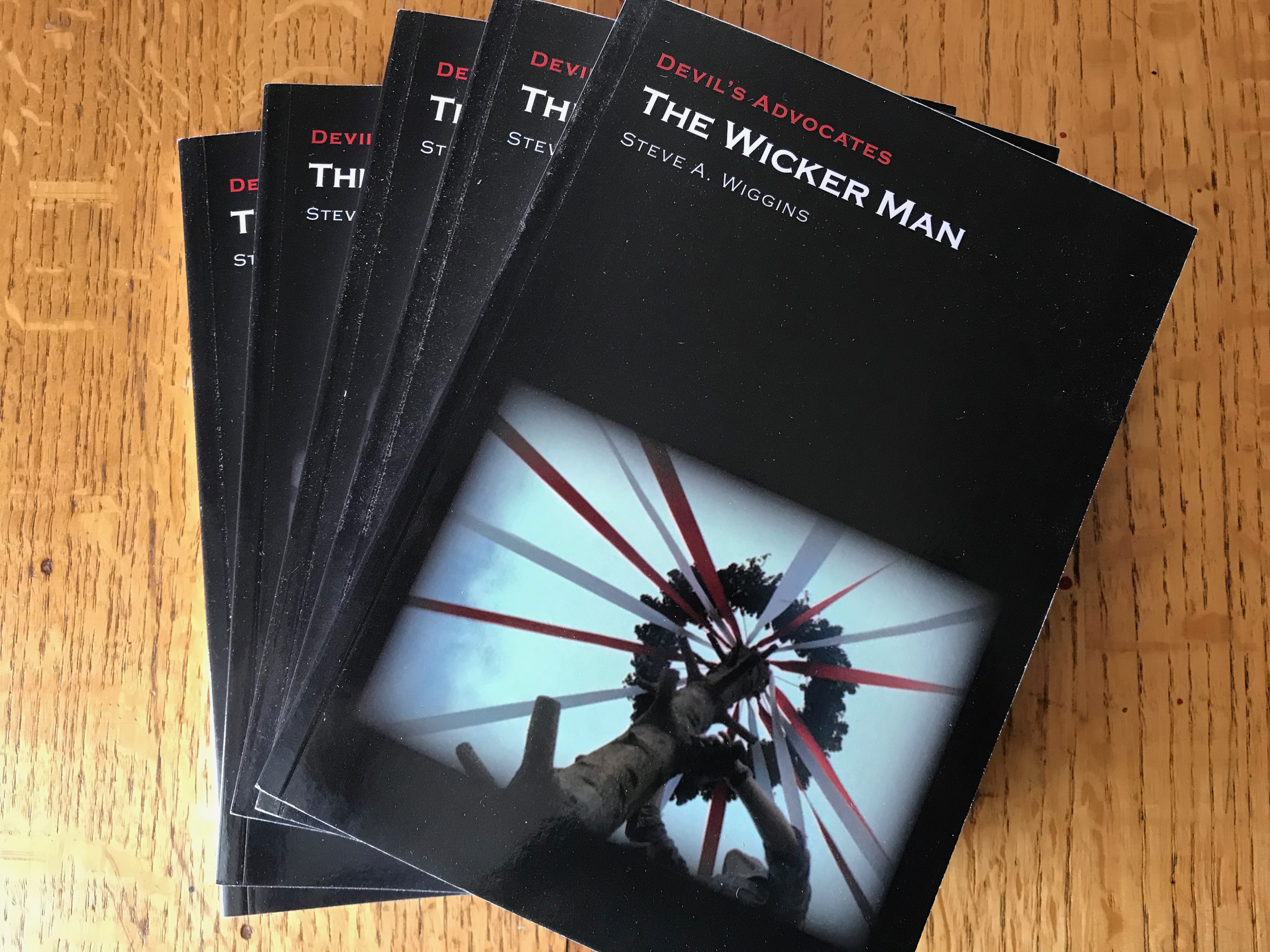
The process of producing a book is a lengthy one.  Even as an author you’re not really ever quite sure when it’s out in the world.  My author copies of The Wicker Man have arrived.  The release date is set for August and the publication date is September 1.  Still, it’s out there somewhere in the world at the moment.  The release date of the book is generally the date that stock arrives in the warehouse.  The book is technically available on the release date, but the publication date isn’t until two-to-four weeks later.  The publication date is when a book is fully stocked at the warehouse and is available in all channels (Barnes and Noble, Amazon, Bookshop, and your independent local bookstore).  Chances are you won’t find this book, being a university press book, in your local, but it can be ordered now.  Even in July.

This is a short book, so I don’t want to write too much about the contents here—then you might have no reason to buy a copy!  In brief, though, I can say that it explores The Wicker Man through the lens of holiday horror.  Not a lot has been published on the sub-genre of holiday horror.  In general publishers tend to be reluctant about holiday books—the perception is that they sell only seasonally (if my buying patterns are taken into account, that’s clearly not true).  Movies, however, can be watched at any time.  The Wicker Man is about May Day but it was filmed largely in November and was released in the UK in December of 1973 (fifty years ago), and in the United States in August of 1974.  People see it when it’s offered.  (Of course, video releases have changed all that.)

The movie has grown in stature over the years.  It appears in many pop culture references and even those who aren’t fans of horror have often heard of it.  There’s been quite a bit of buzz about John Walsh’s book on the movie, to be released in October.  (Of course, it is distributed by Penguin Random House.  I’m learning about the importance of distribution the more I delve into the publishing realm.)  My book has a more modest release and a slightly smaller sticker price (unless you go for the hardcover, then I’m right up there with university press prices).  I thought readers might like to know it now exists.  This writer, in any case, is glad to hold a copy and see the fruits of a few years’ labor, whenever it might come.


Ultimate Collectables

“Collectible ebook” is a phrase you never hear.  That’s because such a thing doesn’t exist.  Even though I work in the publishing industry, I’m not really a fan of ebooks.  I don’t write my books anticipating pointing to some screen and crowing, “I wrote that!”  No, books exist as entities and there’s a kind of contempt associated with making them disposable by creating them out of ephemera.  I’m not wealthy enough to be a serious book collector, but when I buy used books I notice the rare category of “collectible” with some envy.  This is a book that has been treasured.  You see, I know that when I die I’ll leave little behind apart from my books.  If they were ebooks they’d be worthless.  You can’t sell them or trade them in.  Or even put them into a little free library.

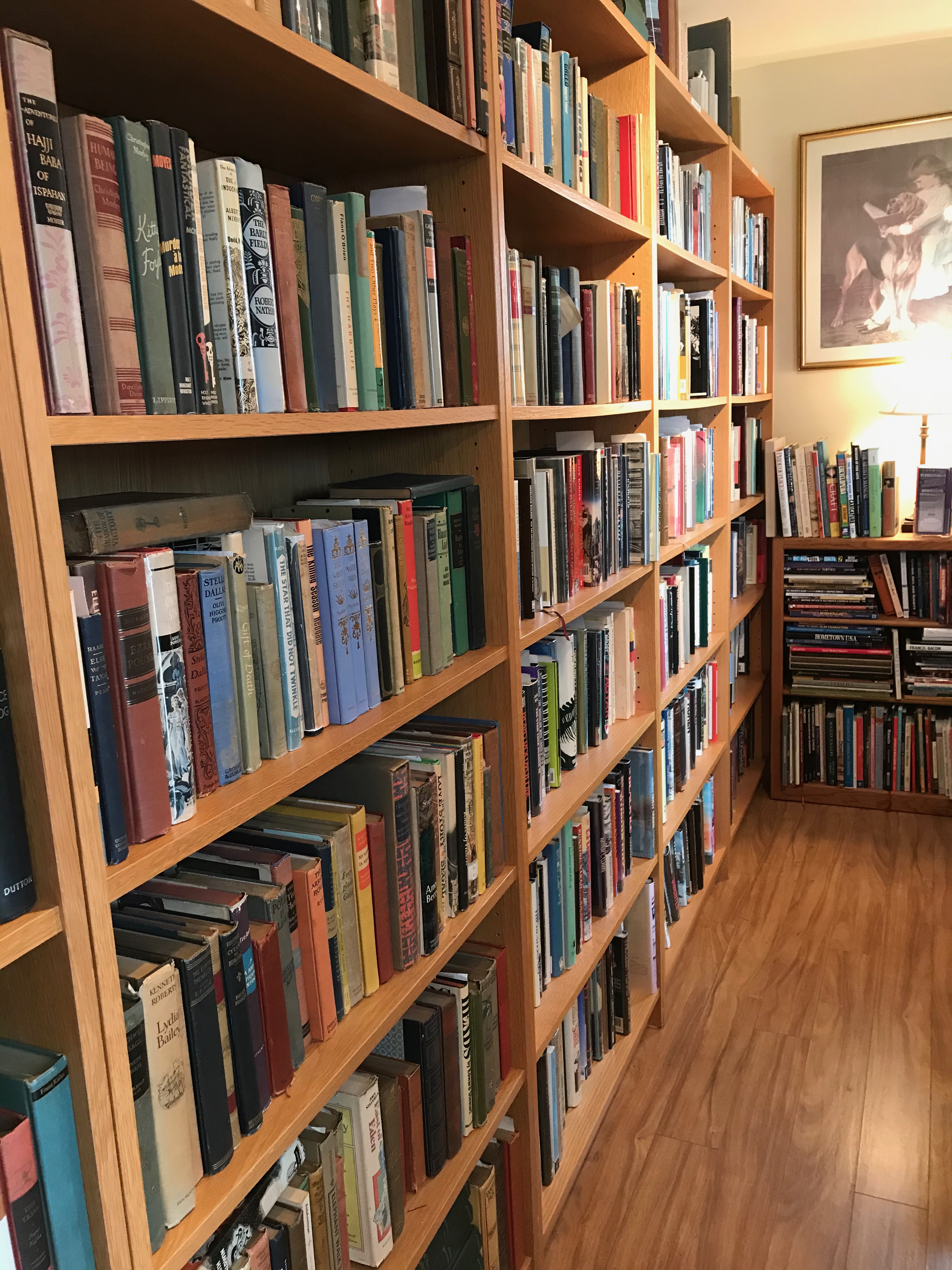
Sometimes buying electrons seems to be more convenient than the alternative.  For example, we’ve pretty much run out of space for DVDs and Amazon seems unlikely to fold soon (like UltraViolet did), so subscribing to a streaming for a movie seems safe enough.  Yes, you can resell DVDs, but often for a pittance and you gain by opening more space.  The space books take up demonstrates their importance.  We bought our house with an eye toward book space, and even though we don’t have many books that would be considered “collectible,” we do have many that are interesting.  Unusual.  They have been conversation-starters when we’ve had the curious over.  (I always look at other people’s books when invited to someone’s place, if they’re publicly displayed.  It’s how people get to know each other.  I’ve never looked at anyone’s ebooks.)

Books are a cultural object.  The big tech companies have been trying to drive traffic to ebooks for years.  The pandemic gave them a leg up, but book sales—print book sales—also increased.  You can watch only so much Netflix, I guess.  I have yet to find a study that shows something read on a screen stays longer, or receives deeper engagement than something in print does.  To be sure, electronic reading has its place, but its place isn’t to replace actual books.  I guess I’m suspicious of the electronic revolution.  It feels fragile and tenuous to me.  If the power goes out we’re left without our gadgets and their contents.  You can still light a candle, however, and read an actual book.  And if bought and treated wisely, you may even find something collectable on your hands.


Lost at Sea

Where do books come from?  It still comes as a surprise to many authors, but books tend to be shipped by, well, ship.  When publishers use overseas facilities, it’s far too expensive to send books across the ocean by air.  I had many people express disbelief when I explained their books were delayed by the Suez Canal blockage, but if most of the world’s international goods are sent by ship (and they are) what might seem like a quirky news story has very real ramifications worldwide.  I was reminded of this by a recent NPR story of two new cookbooks having been lost at sea.  The ship from Taiwan, bound for New York, ran afoul of a storm in the Azores, resulting in the loss of 60 shipping containers—including those holding the newly printed books.  There is a worldwide shortage of shipping containers (seriously) and one of the problems is they keep falling off ships.

Photo by Elias E on Unsplash

If you haven’t googled “cargo ships” and looked at the image options, do.  You’ll see astonishingly large ships with what look to be entire cities worth of cargo containers stacked on the deck.  Many of these containers are lost at sea.  Current estimates are that about 1,000 containers fall off of ships per year.  Although the authors of these particular cookbooks took a lighthearted approach to the news, the book that really brought this home to me was Moby-Duck, which I blogged about some years back (you can read it here).  That book was about trying to follow the plastic “rubber duckies” that fell off a ship back in 1992.  This isn’t, in other words, a new problem.

Videos posted of these massive ships being tossed about and losing cargo are impressive in their own right—they make the ocean seem omnipotent.  But the fact is, we’ve littered it pretty badly.  Books, in their defense, will decompose naturally.  We live in a society defined by consumerism.  We see things and we want them.  In order to make them inexpensive, American companies buy the items from overseas where labor costs are much cheaper (and where many nations have socialized medicine, I might add, making employees cheaper to pay).  As ships grow larger we might expect these kinds of accidents to increase.  The older I get, the more I pay attention to economics.  The dismal science does hold a macabre fascination, especially when entire printings of a new book end up at the bottom of the ocean.  Authors, if they’re curious, ought to consider where books come from.