No Agency

I’ve worked in publishing since 2006.  That seems like a goodly time, but the industry is a complex one.  I started trying to publish again around 2010—losing my job at Nashotah House sent me into a tailspin in that regard, although I wrote a novel or two in the meantime.  My first post-dissertation book was published in 2014.  I soon learned that academic publishers each have their strengths and weaknesses.  Most have trouble with marketing—people just don’t know about your books.  (And can’t afford them if they do.)  If the publisher won’t advertise, well, the voice of one ex-academic isn’t very loud.  So I wrote on.  My sixth book has existed in draft form for a few months now.  I know that to get a publisher who knows how to market you often need an agent.  I also know that as an unknown writer it’s difficult to get an agent’s attention.  I finally found one, however.

Agents change books.  Mine asked me to rewrite yet again.  All of my books have been rewritten multiple times, so this was par for the course.  I had to leave out a lot of the stuff I liked.  Then the agent changed his mind.  Hey, I get it.  Agents live off the advances their authors get so if they don’t see enough zeroes they shy away.  That’s just how it works.  I’ve found what looks like a good publisher (not an academic press) but I couldn’t simply go back to the version I really liked—I’d made improvements for the agent—so I had to blend the two versions together.  The problem is, that’s difficult to do on a computer.  I know from working in publishing that side-by-side comparative screens in word processing programs are difficult to find.  Of course, if you just print both versions out all you need is a table and a red pen.

I wasn’t born into the computer era.  Flipping between two screens doesn’t come easily but printing out two three-hundred-page manuscripts is time and resource consuming.  So I’m flipping screens.  I hope to finish this book soon because the next one is already brewing and I really can’t wait to start getting the ideas out.  And I even have a publisher in mind—one that doesn’t require an agent.  I don’t think agents really get me.  Or maybe I’m just not a “commercial” enough thinker.  There are plenty of presses out there, however, and if you do your research you can find a home for this project that’s taken years of your life.  It’s just difficult to do the screen flipping.  But then, I’ve only been doing this for about a decade.  I’ll get the hang of it soon.


Modern Work

The entertainment industry has proven itself, time and again, resistant to recessions.  It says something about our lives that we need that outlet no matter what.  The New York Times has been looking at the writers’ and actors’ strike in Hollywood as a piece of what they are calling the “fractured work” puzzle.  Noting how inequality inevitably increases in a capitalistic system, they put the screenwriters into a situation with which I am unfortunately familiar—that of the adjunct professor.  Adjunct professors now make up some three-quarters of the teaching force in higher education.  In case you haven’t had the misfortune yourself, an adjunct gets paid by the course (not very well, by the way) and has no benefits—medical or, often, retirement (some state schools are required to offer the latter, but you’ll never be able to retire on the pittance you receive).  The idea is that work is being broken into smaller chunks so that entrepreneurs can pay less for work done.

Everyone knows such a system isn’t sustainable.  It will crash.  Unless it’s reformed.  Some people have asked me about becoming a copyeditor for a job.  The thing about copyediting is that it’s freelance work.  Publishers generally don’t hire copyeditors full-time.  You can make a living at it, but it’s self-employment.  You need to set aside the money for retirement and health insurance.  As well as taxes.  And you have to work long hours to make it pay off.  I tried it for a year, but I’m a slow reader.  It was clear that I didn’t have the right literary stuff to make such a living, so I had to move into acquisitions instead.  If you know me personally you may find that ironic.

Those of us who’ve always sought a spiritual existence, however defined, often don’t fit into a capitalistic system.  Especially if you question doctrine.  That’s why I became an academic—or at least tried to.  It’s one of the few places where people with my skill set can thrive.  Work often defines who we are.  Usually one of the first questions to arise when you meet someone is “what do you do?”  Specialists often suggest dissociating our selves from our jobs—I suspect that’s more necessary in positions in which a person is unwillingly being taken over by a position that’s not fulfilling on some level.  Wouldn’t it be better, since we’ve opted for fractured work, if we made it something you could do for a career?  The New York Times suggests specializing, but be careful, dear reader, in what you decide to specialize.  The “market” may well dry up on you and striking may not even be an option.


Whither Wicker?

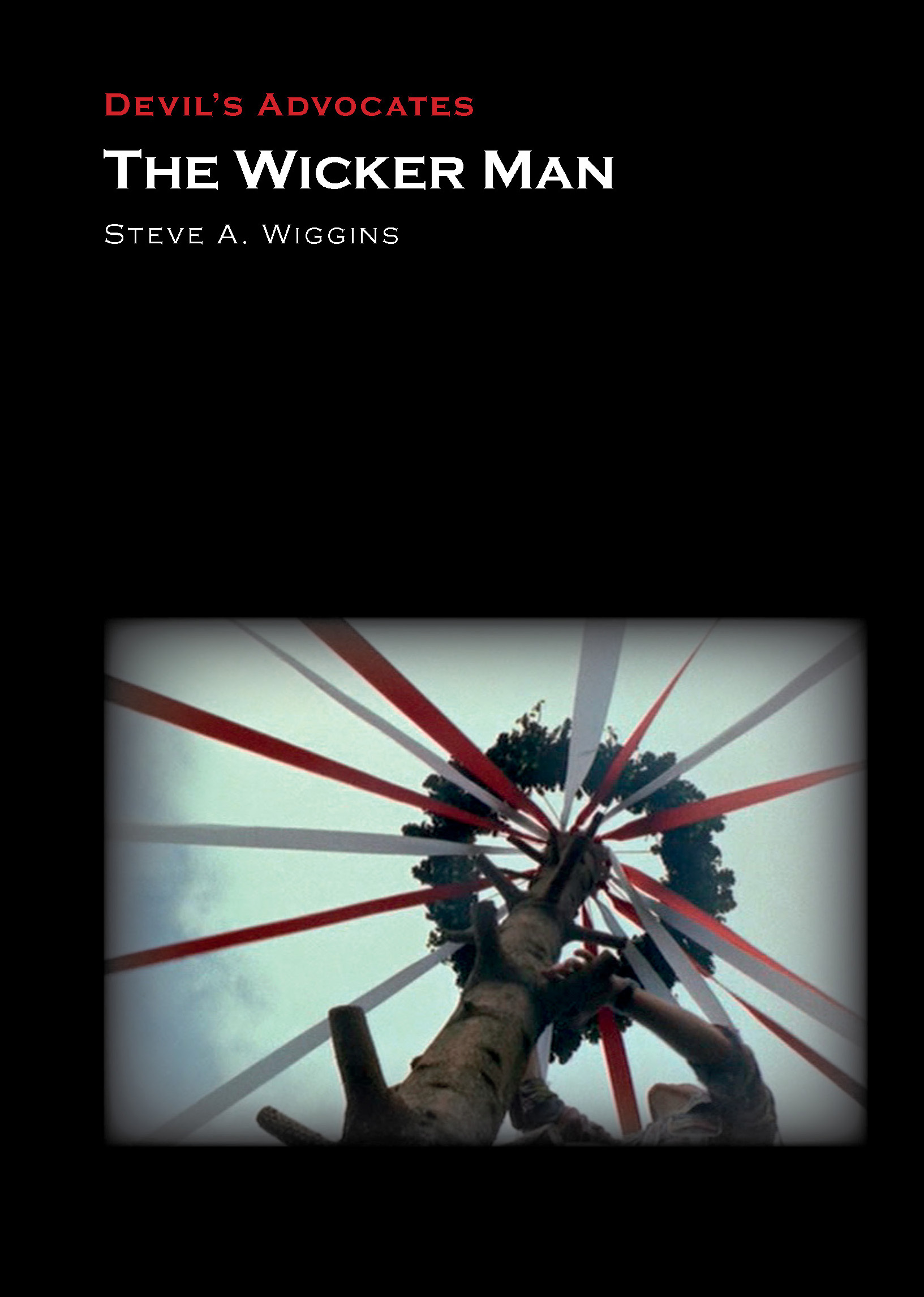
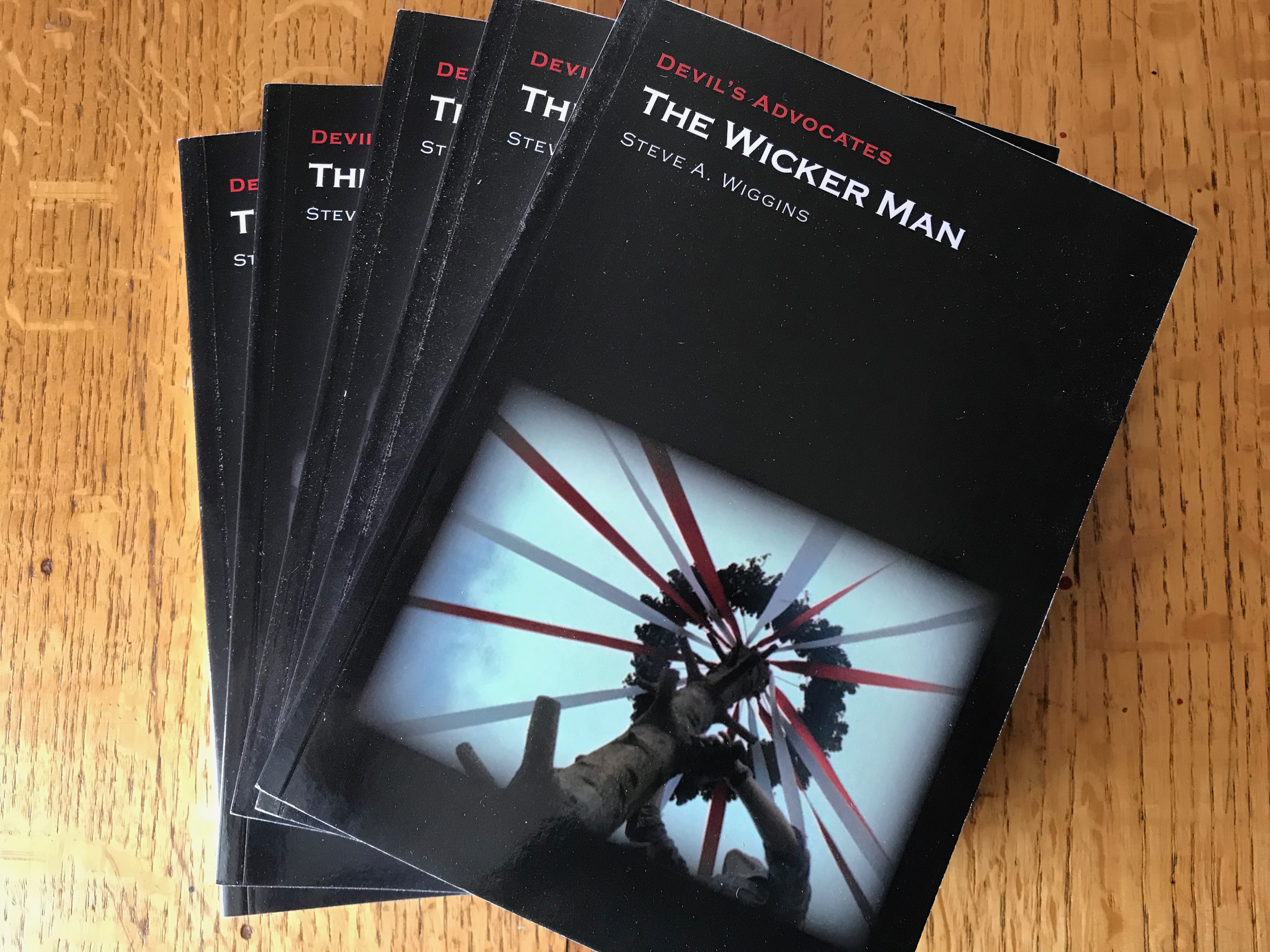
The process of producing a book is a lengthy one.  Even as an author you’re not really ever quite sure when it’s out in the world.  My author copies of The Wicker Man have arrived.  The release date is set for August and the publication date is September 1.  Still, it’s out there somewhere in the world at the moment.  The release date of the book is generally the date that stock arrives in the warehouse.  The book is technically available on the release date, but the publication date isn’t until two-to-four weeks later.  The publication date is when a book is fully stocked at the warehouse and is available in all channels (Barnes and Noble, Amazon, Bookshop, and your independent local bookstore).  Chances are you won’t find this book, being a university press book, in your local, but it can be ordered now.  Even in July.

This is a short book, so I don’t want to write too much about the contents here—then you might have no reason to buy a copy!  In brief, though, I can say that it explores The Wicker Man through the lens of holiday horror.  Not a lot has been published on the sub-genre of holiday horror.  In general publishers tend to be reluctant about holiday books—the perception is that they sell only seasonally (if my buying patterns are taken into account, that’s clearly not true).  Movies, however, can be watched at any time.  The Wicker Man is about May Day but it was filmed largely in November and was released in the UK in December of 1973 (fifty years ago), and in the United States in August of 1974.  People see it when it’s offered.  (Of course, video releases have changed all that.)

The movie has grown in stature over the years.  It appears in many pop culture references and even those who aren’t fans of horror have often heard of it.  There’s been quite a bit of buzz about John Walsh’s book on the movie, to be released in October.  (Of course, it is distributed by Penguin Random House.  I’m learning about the importance of distribution the more I delve into the publishing realm.)  My book has a more modest release and a slightly smaller sticker price (unless you go for the hardcover, then I’m right up there with university press prices).  I thought readers might like to know it now exists.  This writer, in any case, is glad to hold a copy and see the fruits of a few years’ labor, whenever it might come.


Shepherding Books

One of the truths of publishing books—unless you make it to one of the big five, and even then it can’t hurt—is that you have to promote your own books.  Almost no publisher can afford to get word out that you’ve published your incredibly interesting tome with them.  So when I received an invitation from Shepherd to put together a list with one of my books on their site, naturally I said yes.  The way it works is your book page features a category of books, anchored by your own, and followed by five recommendations.  The idea is that people attracted to your subject will find this list and your book and, perhaps, just perhaps, buy a copy.  Since Nightmares with the Bible still hasn’t come out in paperback, I started my list with Holy Horror.  You can check it out here.

Authors often have no sense of scale.  Thousands of new books (perhaps up to two million) are published each year.  Think about that for a second.  Even the big five publishers can’t promote every single book, not at that rate.  There is a real satisfaction in having written and published a book, and many authors take that as a kind of entitlement.  “I’ve done my work, now somebody else should do the advertising.”  That may be fine if you have tenure somewhere and your prestige is assured.  If you’re a mere mortal like the rest of us, however, that means using social media.  Make a webpage.  Start a blog.  Get a Twitter and Facebook account.  The fact is, unless you do these things people won’t be able to find you.  They don’t spend their weekends at the local library browsing the shelves for new books.

Photo by Tanner Yould on Unsplash

Shepherd is a free service to authors.  I know many people who write (most of whom don’t read this blog) but if you know of anyone who does, point them to Shepherd.  The homepage has a convenient “Contact Us” link at the bottom.  Some websites will promote your work for a fee.  For me, I’m still waiting for royalties to come anything near what I have to spend to write my books—so far it’s been a money-losing venture.  I’m optimistic, however, that some day my books will be published in the affordable range—not just the big five do this, but most publishers have to be persuaded, through social media presence, that you can help find readers.  Shepherd is a good place to start.


Wicker Proofing

I’m currently reading the first proofs of The Wicker Man (due out in August).  While necessary, proofreading is a pain (and I work in publishing!).  You have to put everything else aside and concentrate on what you’ve already written, and if you’re like me, moved on from, to get your earlier work out.  I’m extremely time conscious.  I have many things that I would like to accomplish in the time I have left.  Right now one of my priorities is book six.  It’s already written, but I’m revising it for the umpteenth time.  Then the proofs come.  This is one of the issues a graphomaniac faces.  It’s part of trying to make a life from words.  And it distorts time.  I submitted my Wicker manuscript back in December.  Since then my mind has largely been elsewhere.

Proofreading—or is it proof reading?  I’m not a proofreader—isn’t the same as it used to be.  These days you proofread a PDF and use the markup tools for changes.  I had developed a kind of nostalgia for the old-fashioned proof markings.  Now you highlight the offending text and add a note to explain what you would like changed.  This makes me worry about time too, since I’m probably among the last generation who will even known what proof markings are, apart from historians of publishing (and yes, there are historians of publishing).  I am fortunate in having had a good copyeditor for The Wicker Man.  S/he didn’t change much but pointed out where my wording was ambiguous.  Those of you who’ve read me for a while know that some of that ambiguity is intentional, no?

A quick turnaround time on proofs is necessary.  Of course, mine would arrive on a Wednesday.  That very same day I was asked to be a reader-responder to a journal article, also with a brief turnaround time.  I wanted to say “No,” but as an editor I know how difficult it is to find reviewers.  Anyone who publishes should consider it a moral obligation to review when asked.  Just like jury duty.  Thursday and Friday mornings were spent reviewing the article (which I hope will be published, whoever wrote it).  All of this was done without picking up a pen (as much as I wanted to) or leaving my laptop.  As much as I enjoy those proof markings, nobody has the time for them anymore.  Even now I’m playing hooky from proofreading to write this blog post.  I’d better get back before someone notices that I’m gone.


Take the Tour

If you read my blog posts on Facebook, Twitter, or Goodreads (Hi, y’all!), you may not be aware of my actual website.  Now I have no kind of fame, no matter how modest, but the website does contain more than my blog posts.  I’ve been working on it lately to try to update the place a little.  There are separate pages for all my books, for example.  And links to the various interviews I’ve had, as well as links to my YouTube videos (thank you to my original 14 followers!).  If you know me personally you know that I’m not the self-promoting type.  I have a monster-sized inferiority complex (so it’s good that I don’t run for political office), and I’m a champion introvert.  I spend a lot of time by myself.  So why do I do all this web-based stuff?

Good question.  You see, I work in publishing and one of the things I hear constantly is marketing and publicity folks talking about an author’s platform (or lack thereof).  Believe it or not, my humble efforts here outstrip many authors—I do have a website and I tweet and book-face, no matter how infrequently.  In other words I do this to write. Call it being a modern writer.  The days are long gone when you wrote a manuscript and mailed it in and let the publisher do their thing.  To be a writer is to have to promote yourself, no matter how inferior or introverted you may feel or be.  If you’re a regular reader you know I miss the old way of doing things.

Photo by Rodion Kutsaiev on Unsplash

We learn lessons when we’re young.  Those lessons are difficult to unlearn.  I didn’t really know what it meant to be a writer—I grew up among laborers in a blue collar family—but I knew whatever my job might be it would involve writing.  As it turns out I’ve had more success (such as it is) in getting published as a nonfiction writer.  A great deal of that is due to learning how the system works—being in publishing helps—and figuring out how to place a book.  I wasn’t an English or even publishing major.  It didn’t seem to be rocket science back then, but it has become a more technological industry today.  Of course, time for doing this extra stuff is limited.  Indeed, if you work 925 you know that time to do anything outside of work is already rare enough.  If all of this looks like an amateur built it, it’s because that’s true.  The urge to write is, however, elemental.  Some of us are willing to work for words.


Life Writing

It’s sometimes thought that a writer’s life is easy.  What’s so difficult about scribbling things that people will pay for?  I’m absolutely certain that, like most systems, this one may be gamed.  Amazon has made it quite easy to slap together words and covers and sell them alongside literary giants.  Only time will tell those that endure.  Most writers, apart from those who achieve early success (capitalism loves nothing so much as a repeat source of money), hold down other jobs.  Many of those jobs don’t involve writing, so those with literary ambitions must carve out time from their busy lives to write.  Not only that, but to write well you have to spend a lot of time reading.  Think about your daily life—how often do you have time to curl up with a good book?  Sure, you can read on the internet, but that’s not the same thing.

I love reading about writers.  Often they had struggles to overcome and many remained obscure as writers until after they’d died.  (At least that takes some of the pressure off.)  Someone saw there was money to be made in what they left behind.  Knowing quite a few writers, I suspect most of them really wouldn’t mind that.  Recognition during your lifetime must be nice, but writers tend to have a longer view.  That’s why things are written down, and, against hope, published.  Literary ambition can be a mean dog indeed.  Especially when the lawn requires mowing again and those invasive trees need constant trimming and gee, why didn’t we buy that house with no yard?  Many writers had even greater struggles to overcome.

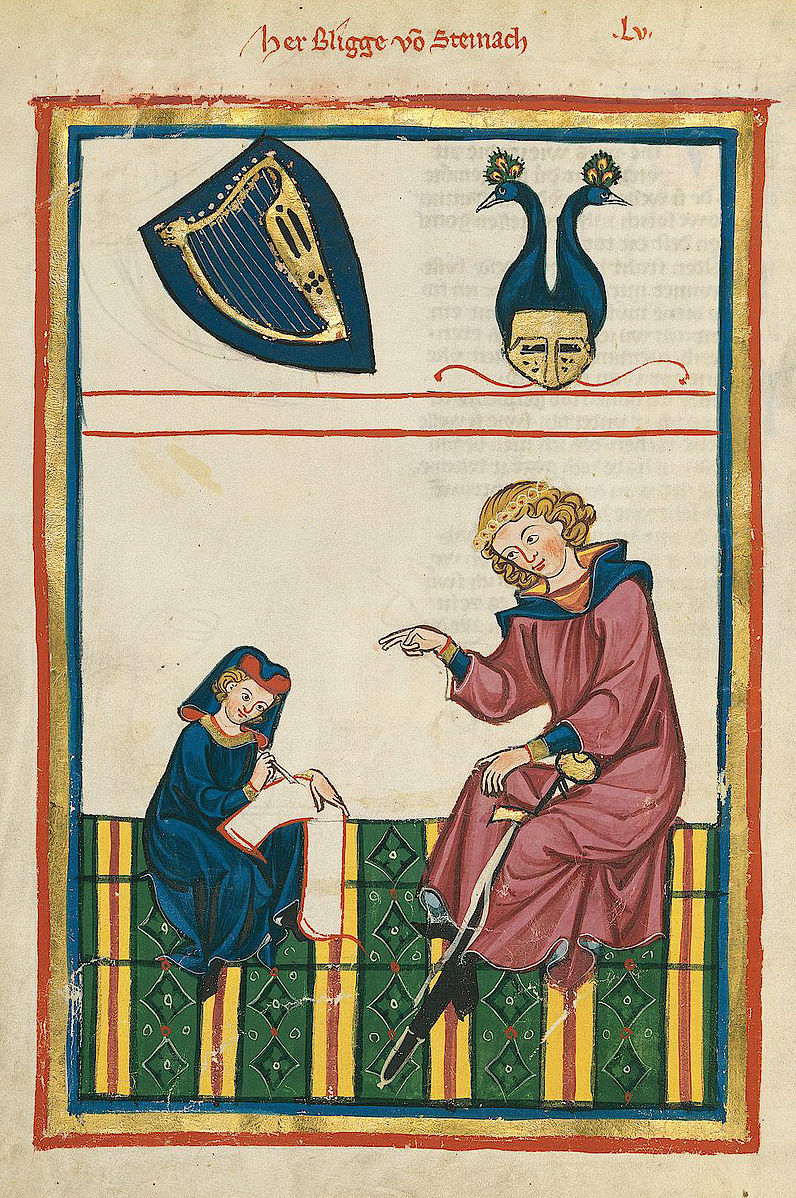
Image credit: George G. Rockwood, via Wikimedia Commons

When reading, I’m constantly discovering new old writers that I missed.  I didn’t grow up in a literary family.  I find them by reading other writers and, perhaps more importantly, reading about other writers.  Who influenced whom.  Many remained obscure.  Although it’s only an estimate, 2.2 million new titles are published each year.  Readers are, and always have been, a minority.  Most people don’t read for pleasure.  That makes sense, given that we haven’t evolved for that.  Survival involves working for sustenance and mowing the lawn or shoveling the walk when you’re done with work.  A clueless professional once asked me “Why don’t you hire a service?”  With what?  My royalties?  Sacrifice is an inherent part of writing.  Whether it’s the neighbors thinking you’re a trashy yard-keeper, or you boss wanting you to spend more hours on the clock, or cheating sleep night after night, a writer’s life isn’t for the fainthearted.  That’s why they inspire me.


Short-Changed

Time often feels short.  When we back it up against the pencil marks on the doorpost we find it seems to shrink with its own passing.  It is nevertheless relentless.  This shows especially with daily tasks, such as the posts on this blog, which leave enormous piles of writing behind.  I used to print every entry I wrote but I had to stop because there were too many.  There are now well over 4,500 of them and yet time keeps going and each day demands its sacrifice.  It’s that way with other daily tasks too.  It’s staggering, for example, to think of just how much food you eat in a lifetime.  It makes sense of why we struggle against that middle-age bulge.  Little bits add up.  I suspect that’s why the news can feel overwhelming at times.  It just keeps piling on.

If I’d chosen to study journalism—I really didn’t know what it was, despite being co-editor of my high school newspaper—I might’ve reached the point of being paid for my writing by now.  Even with my published fiction stories (and two of my nonfiction books) no money has ever changed hands.  I know from editorial board meetings that journalists expect pay for what many of us give away for free.  Writing is funny that way.  The best way to improve is to practice, and so I spend time each day writing blog posts, as well as content for books and articles and fiction stories.  As I said, there’s quite a pile.

Time is relentless.  It’s also in short supply.  The marking of each passing day with writing is a reminder of just how quickly the sand slips through the glass.  Other tasks go neglected for writers, which is, I expect, why we appreciate being paid for our work.  But just imagine if we were paid for reading.  What if every book read brought in say, in today’s economy, $1,000.  Would we be a more literate society then, valuing the work of writing?  For nonfiction editorial boards note the difference between professors, who are paid to do other things (and paid pretty well, considering), and journalists who live by the pen.  I have another job, helping other writers get published.  I suppose that means I have less time to do my own writing.  Time and writing are engaged in a complex dance which, when viewed from a distance, may look beautiful.  And when the dance is done you’ll find another piece of paper to add to the pile, regardless of whether it has monetary value or not.


Slow Running

It’s extremely slow.  In fact, you might think nothing is happening at all.  I mean the book publishing process, of course.  It takes a long time to read 60,000+ words.  Even longer if you’ve had a few poor nights of sleep.  And many people have to read it before it gets anywhere near a printing press.  Everything about writing a book takes time.  While everything in the outside world happens at an unbelievable pace—last year at this time there was no war in Ukraine, for example—the slow process of organizing thoughts, putting them into words, sending them to a publisher who has many, many other proposals and manuscripts to consider, getting it rejected once or twice, finally finding a publisher, making the requested changes, getting it copyedited and typeset, getting the files sent to one of the few domestic printers left (who have tremendous backlogs), then to the bindery, and finally shipped out to the warehouse—it takes years.

Centuries of work

Current events publishers can rush things through and it often shows.  Meanwhile the authors of all other books learn to wait.  And wait.  Often the payoff isn’t great.  (I’ve received no royalties at all for Nightmares with the Bible.)  So why do we do it?  Those of us compelled to write have many motivations, I suppose.   One is to expand human knowledge.  We’ve discovered something and we want to share it.  We want to inform and entertain.  Those of us who write fiction also hope that our ideas may speak to others.  Having the fiction piece accepted is a validation of our outlook and experience.  Those who do so well may be inflicted on future literature classes.  I still remember The Loneliness of the Long-Distance Runner by Alan Sillitoe.  We had to read it in twelfth-grade English.

None of my friends liked it.  It was a collection of short stories by Sillitoe, titled after the one story that is still his only real claim to fame apart from his novel Saturday Night and Sunday Morning.  The tale of an English boy’s alienation didn’t speak to the rural western Pennsylvanians of the late seventies.  One of my classmates disliked it so much that he drove his pencil through the runner’s image on the front cover in a kind of uncouth performance art.  Now as I experience trying to get short stories published (with a little success here and there, but no royalties), I can feel for Sillitoe.  Still, “The Loneliness of the Long-Distance Runner” was made into a movie and has quite a few cultural references pointing its way.  Long-distance running, like publishing, is sometimes a slow process.  And at times you decide not to finish the race.  Or at least realize this race may last for years.


Free Research

I’ve lost track of how many times it’s happened, but it has been relatively few.  Someone I don’t know will approach me and ask me to post about something on my blog.  Sometimes they’ll even send me a book to highlight.  Perhaps not the most effective way to build a library, I’ll admit.  And some of the books haven’t been great.  I admire them nonetheless.  It takes great effort to write a book.  And not a small amount of faith, too.  Many books—perhaps most—never get published.  A great many are self-published.  (Those who work in publishing can be a stuck-up lot sometimes.)  Even those professionally published can use a push from time to time.  On this blog I’ve actively resisted the urge to make it about one thing.  Why?  Is life just one thing?

In a recent conversation I laid out for someone new what had been my research agenda as a young professor.  It had a direction still reflected in some of the categories you’ll find on the right column of this blog.  After writing on Asherah, I was going to give similar treatment to the other ancient goddesses attested at Ugarit.  This was perhaps ambitious for an academic waif at Nashotah House, but it was well underway.  My book on Shapshu was making good progress when the market (that dragon to every St. George) led friends to suggest turning biblical, which led to Weathering the Psalms.  A new research agenda—explore the weather terminology (the meteorotheology) of other biblical books—arose.  There were storms, after all, becalmed over lakes.  Horror entered in the jobless period and beyond.

And social justice.  I’m not a thrice-failed minister for nothing!  In fact, a recent freebie was a book on social justice.  I have a colleague as interested in monsters as me.  This particular scholar had decided to focus on the cause of the poor.  Even economists are starting to say the unequal distribution of wealth is hurting us.  While the rich fly to space on personally owned rockets, the rest of us have trouble filling up at the service station, even if we have jobs.  So it is that this blog is eclectic.  A friend told me early on that it would be more popular if I just stuck to one topic.  That’s probably true, but my mind can’t settle down like that.  And when people send me things to talk about, I’m happy to do so, if it fits somewhere in my mind.


Underestimated

Under-printing, ironically, can create great demand.  Books are generally under-printed because publishers don’t see much of a market for them.  Back before the days of inexpensive print-on-demand (POD, in the lingo) books may not have even existed as electronic files.  Often a publisher won’t print a book unless it anticipates that it can make back its costs.  If they think it won’t sell that well, they’ll print just enough.  And they might even melt down the typeset plates to reuse them for other books.  I’m not sure if that happened in the case of a book I’ve been looking to consult, but something has made this under-printed book extremely rare.  It’s not on Internet Archive.  WorldCat shows it in only two libraries world-wide, the nearest one over 3,000 miles away.  Its price used (and there seems to be only one copy) is $46,000. I can’t tell you what it is because you might buy it before I can.

For the purposes of my research, this is actually the only book on this particular topic.  (The subject isn’t even that obscure.)  The book is cited everywhere this topic is mentioned, and at least one person on Goodreads has actually seen a copy of it.  I have to conclude that all those who cite it must live within driving distance of one of two libraries worldwide.  For the rest of us the book is simply inaccessible.  As an author this is one of the worst fates imaginable.  Even if some price-gouger is selling a copy for $46,000 the author gains nothing from it.  Royalties are null and void for used book sales.  The only profiteer is the person who happens to have found a rare book (from the 1990s!) and is determined to ensure only the most wealthy will be able to purchase it.

I’ve known people who sell used books online.  Those who want to move books try to undersell the unfortunate under-printed title by pricing a bit lower than the competition.  There is no regulation, however.  You can charge whatever you like.  The funny thing is, if someone eventually forks over $46,000 for this book, and then has it appraised (it is a paperback from the 1990s), its actual worth is probably at most in the hundreds of dollars.  Back when we watched the Antiques Roadshow we always knew that the poor person who brought in a book would be disappointed in the appraisal.  Last time I was in Oxford I saw rare books from the 1400s for sale for far, far less than $46,000.  I only hope that my books, as obscure as they are, are never deemed that expensive.  And I would encourage publishers to print a bit more generously, for the sake of knowledge.


Living Right

Horace Liveright had an outsized influence for his somewhat foreshortened years.  Initially a bond trader, he eventually moved into publishing where he founded the Modern Library as well as Boni and Liveright.  The Modern Library still exists, now as an imprint of Random House.  Liveright ceased publishing operations eventually, but the name was revived as an imprint of W. W. Norton.  There have been many publishing Wunderkindern, including Richard L. Simon, co-founder of Simon and Schuster (and father of Carly Simon), and the Scot William Collins whose name still appears in HarperCollins.  While reading about Liveright recently I learned that he also was responsible, in an unexpected way, for the development of the horror film.

Liveright never worked in the film industry.  He did, however, work as a stage producer in New York in the 1920s.  Among his most successful works was a play titled Dracula.  It starred Bela Lugosi and Edward Van Sloan as Dracula and Abraham Van Helsing, respectively.  The success of the Broadway show caught the attention of Hollywood and Lugosi and Van Sloan were cast in the same roles in Tod Browning’s Dracula, widely considered to be the first horror film, released in 1931.  Van Sloan went on to appear in Frankenstein as well, and Lugosi reprised his Dracula character as well as several other monsters.  It’s possible, perhaps likely, that horror would’ve begun with some other entry into the genre, but as history stands Dracula, based on Liveright’s stage production, started the whole thing.

Unless we work in it, we tend not to think about publishing too much.  We don’t pay attention to the publisher of the book we’re reading, and who lingers over the copyright page?  Giving a thought to these details, however, often adds new stories to the ones between the covers.  A fellow editor is fond of saying that books are as much about the author’s story as they are about the story the author’s telling.  The press, for example, often focuses on the former.  Who is it that wrote this book and why?  The question may be extended further—what publisher took it on and how did they even get into the business of deciding what people will read?  The internet has democratized that quite a bit, of course, and some authors can become their own authorities by knowing how to handle it.  So I’m taking one such opportunity to highlight the work of a sometimes forgotten pioneer who nevertheless began a publishing venture from which we’ve all most likely read.  And he also helped created the horror movie.


Literary Thoughts

A book is a physical object.  It is printed on paper and has a cover.  It has a publisher who undertakes to have it printed and bound (and with any luck, marketed and publicized).  This, I would contend, it what most authors have in mind when they sit down to write a book.  It isn’t just “content,” of which you can find far too much on the internet.  It is an object of pride that you can slot onto your shelf with a great sense of personal achievement.  It has taken a lot of work, and headaches, to get to this point.  Several months or even years of your life.  An idea that can’t be addressed in a couple dozen pages.  A book is born!

Publishers are more and more pushing the ebook, however.  The ebook is not a book in the same sense as a printed object is.  In some sense it may be more durable.  It’s certainly easier to get quickly.  But how do you get excited over writing an ebook?  Whenever I’m writing a book, there’s clearly an object in mind, not a cloud of electrons.  Ebooks have their place, but as people start talking about a post-literate future I start seeing visions of my own tombstone.  It gives me a strange kind of comfort to know that all of my books so far reside in the Library of Congress.  Some university libraries even buy copies.  Would a carpenter take pride in an electronic table she built?  Can you set your book on it?  If you don’t carve your “Kilroy was here” in stone, how will you ever prove it?

As handy as ebooks are, nothing matches the sensation of walking into a room full of books.  The sense of rapture is palpable.  Such rooms are monuments to our culture.  A screen with metaphorical tons of content may be a tribute to technology, but is any of it real without ink connecting with paper?  There’s nothing wrong with “content;” I produce some every day.  The thought process is different from book writing, however; just like the process of writing poetry differs yet again.  The publisher always looks at the bottom line.  (And I don’t mean the last line of a poem.)  And to keep “books” profitable the conversion to “content” seems attractive.  It breaks down, however, if writers no longer think in terms of books.  The book has a storied history and a long future, if we keep in mind that it’s something far more refined than mere content.


Moral Compass

Where have all the morals gone?  Well, not exactly song-worthy, but it is a question I think about a lot.  You see, I work in publishing.  Publishing, above all, is a business.  People make their livelihood at it, and so they have to find a market that pays.  Money and morals don’t mix well.  A recent New York Times story pointed out that the political polarization that’s tearing America apart is reflected in bestsellers.  Political nonfiction bestsellers have topped the charts since Trump was unfortunately elected.  Books both pro and con have flooded the market.  What’s this got to do with morals?  Well, I believe publishing should be in the business of educating.  If you’re going to publish nonfiction, it should be material that doesn’t cause more problems than it helps solve.

When I look at a book, after checking the title and author, I next look at the publisher.  Some publishers are conservative, and that’s fine.  That’s what they do.  Most, however, consist of highly educated professionals who realize the severe, and continuing damage that Trump caused.  These publishers, however, will produce pro-Trump books if the numbers look good.  There’s gold in them thar hills!  I often have these scruples working for an academic press.  Some ideas are clearly distorted.  I’m no elitist—I’m still pretty much working-class all the way down to the bones—but education reveals when something very bad (fascism) is happening.  Others see it too.  Still, the temptation of all those dollars… it’s a real pressure, almost like being at the bottom of the ocean.  There’s money pressing on us and we want it.

The gray lady story bothered me.  Instead of publishers looking out their windows and seeing the political grand canyon of this nation, they see profits.  This is business, after all.  Just business.  Is there any such thing?  Morality informs the way you live, the choices you make.  Do I promote education, reflection, and sound reasoning or do I promote a very real 2024 threat of a man who leads by refusing to lead?  After elected Trump immediately began campaigning for his next term, loving the rallies, the cheers, the adulation.  Who doesn’t want to be worshiped?  But is that what we want to see three Novembers from now?  I remember the shock the morning after election day 2016 in New York City.  I see the damage four years of environmental degradation caused just when the effects of global warming were becoming obvious.  I see women demeaned.  I see voting rights quashed.  And now I look at the bestseller list and wonder where the morals have gone.


To Write in Black and White

It can be seen as a black and white issue: either you’ve written a book or you haven’t.  Many people do write books.  Many more want to.  In a survey I saw sometime in the past few months—I can’t recall exactly where—a survey indicated a high percentage of Americans wanted to write a book.  What exactly does that mean?  There are many different kinds of books and several motivations for writing them.  And, depending, your work may or may not be taken seriously, even if you publish.  As someone who’s published four nonfiction books, all of them obscure, I often think about this.  Working in publishing I have some privileged access to the ins and outs of how this works, but that doesn’t necessarily help in writing success.  So what are the motivations?  Is there any way to tell the difference?

Obviously, I can’t speak for others’ motivations but I can see the results.  Most of the writers with whom I work are academic writers.  Their books are generally written for fellow academics and they’re the result of years of research in specialized libraries often off-limits to non-academics.  Those are pretty easy to tell at a glance.  Another class of nonfiction writer is the journalist.  It’s assumed by the industry that someone who majored in journalism is a talented writer.  If, after reporting on a topic for a few years, a journalist wants to write a book based on experience, that frequently gets a publisher’s interest.  The results may not be academically reliable.  I recall that as a grad student it was assumed there were even certain established publishers not to trust—mainly those that weren’t university presses, but not exclusively.

The self-published book has a more difficult trajectory to trace.  Some authors, no matter how good or insightful, just can’t get a standard publisher’s attention.  Others are convinced of their own wisdom and now have an easy route to become a published author.  Yet others realize some money can be made from writing (although making a living at it is very hard work).  I’ve been reading a book by a journalist that has lots of factual errors in it.  I try not to judge, but I do wonder when I know it’s shelved as nonfiction.  Now, these aren’t the kinds of errors that will cost a life if dosed incorrectly or will set off a war between dominant personalities that are heads of state.  I also know that most books do contain inadvertent errors—books are written by humans and we don’t have all the answers yet.  Still, I think of the readers and how we define nonfiction.  What counts as a book anyway?  Things are seldom black or white.

Writing my first book