Quarter Day

Some years it sneaks up on you.  The solstice, that is.  The weather remains an area of fascination for me, and not one of infrequent complaint.  The late spring (pretty much all of May and June up until Juneteenth) around here has been rainy and chilly.  Oh, we’ve had hot days sprinkled in, but even this week I had to wear a thermal shirt and fingerless gloves in the morning since there was no sun and the furnace has been off since last month.  The last couple of days, starting, ironically, at Valley Forge, have been getting hot.  And today begins astronomical summer.  I write about the seasons quite a lot.  Having been born and raised in a rainy, temperate zone climate, I grew up accustomed to four distinct seasons.  And we’re now at the longest day of the year.
The quarter days always make me reflective.  Culturally, there’s no real celebration associated with solstices or equinoxes.  The winter solstice falls relatively near Christmas and other winter holidays.  The spring equinox is close to Easter.  The start of summer, which should be ebulliently hopeful with its abundant sunshine, tends to get overlooked.  Some like to say summer is when life is easy.  It does mean mowing the lawn quite a bit.  The grass loves all the rain we’ve had this year.  Waypoints, however, are important.  We divide the year so we might anticipate.  Our agricultural roots focus on planting and harvest.  Even our hunter-gatherer forebears had to follow the food that changed location depending on the prevailing weather.  The seasons are deep within us.

The summer solstice always makes me think of Ari Aster’s Midsommar.  The underlying fear of too much light.  Even here there is a profound message for those able to excavate it.  If things are going well we tend to sabotage them.  Still, I prefer to think of this as a season of hope.  Summer illuminates.  I write this noting the sun’s chasing of twilight outside my window, even before five a.m.  There are still some clouds in the sky because old patterns are difficult to break.  But it is a season of light.  The next quarter day, when we start to realize that the darkness will be increasing until the sister solstice comes to our rescue in winter, is likewise passed over in silence.  By then many will be ready for a respite from the heat that comes with too much light.  Others of us will be thinking of cycles and how they are full of hope and anticipation.


All Things Being

“Equal” and “night,” in their Latin forms, give us the word “equinox.”  Today we enter the darker half of the year.  Interestingly, of the so-called “quarter days”—the equinoxes and solstices—this is the only one for which we have no ancient indications of celebration.  Like a birthday that goes by unnoticed, this feels odd.  Why, among the set of only four days—longest, shortest, and two equal—did this one fail to be noticed?  Well, perhaps noticed, but not celebrated?  The failure of ancient records may be one explanation, and perhaps other, near dates of note subsumed it.  In Judaism, for instance, Rosh Hashanah and Yom Kippur come around this time.  The ancient Celts celebrated August 1 and November 1, or thereabouts.  September is a particularly busy time.

Harvesting, in many places, gets its real start in September.  In more modern times, school starts up again.  Work schedules once more take priority and those “relaxed” summer hours are a thing of the past.  It’s easy to overlook this seemingly insignificant day.  It is important nonetheless.  For those of us who watch horror, it’s now more easily explained—it’s darker and that brings on one of the most primal of fears.  Halloween is coming, and if you haven’t prepared already, discounted pricing on picked-over merchandise will begin in coming days.  More and more houses will prepare for the haunted season.  Around here leaves are just beginning to change, but in more northern latitudes they’re well on their way already.  Pumpkins are already on hand at grocery stores and farm stands.  The days of summer sweet corn are over.

Not all holidays receive equal attention, of course.  Less romantically inclined adults simply work through Valentines Day.  And who even notices May Day anymore?  If you don’t spend money on holidays they don’t seem to count.  Who goes out and buys things for the forgotten autumnal equinox?  Nevertheless, many people say that fall is their favorite time of year.  It has a trickster element to it.  You awake and have to throw on some extra layers, but by mid-afternoon short sleeves may be sufficient.  Hurricanes may come ashore.  Some days will feel like winter, and others summer.  Transitions are like that.  The autumnal equinox signals the inevitability of winter but also the yearning and melancholy of the shortening days when color springs to light once again.  Forgotten or not, today is the harbinger of things to come.


Just the Beginning

It occurs to me that my post on Sunday may have been a touch cryptic.  (I can be naughty at times.)  Horror Homeroom was good enough to publish a piece I’d written about the movie Midsommar, a film that got its hooks into me earlier this year.  Here’s the link in case you’d like to read it (it’s free): http://www.horrorhomeroom.com/midsommar-and-cross-quarter-day-horror/.  It’s not an article using the Bible and horror as in yesterday’s post, but rather it is an exploration of the broader relationship between horror and religion.  The origin of religion has long been a fascination, and the more I look into the connection with what makes us afraid, the more I find in common.  But why midsummer when summer’s only just beginning?

Ancient peoples in temperate zones, according to the records they left behind, carefully observed the change of seasons.  Without a tilted, spinning globe as a model the science of the time (which was likely their religion) suggested that the heavenly bodies were migratory.  If you use raw observation that’s what seems to be the case.  Now that I sit in the same office every day with a south and a west window, it becomes very clear how the sun shifts over the course of the year.  In the winter it seems to be on a journey far to the south.  Religions of such science would want to know, of course, when it would start coming back.  The years were divided into segments—we still recognize four of them in our seasons although, in truth, they are merely gradual changes that take place in the weather as the earth’s tilt moves our hemisphere toward or away from the sun.

Midsummer was a northern European festival to celebrate the longest day.  Whether this is the start of summer or the middle of summer is merely a matter of interpretation.  The film Midsommar plays on the disorienting long span of daylight in northern Sweden.  Without the dark to guide us, sleep and the regular rhythms of daily life can become difficult.  When the people believe the old religion, well, let your imagination run wild.  Horror films often lurk in these transitional times of the year.  We tend to associate them with Halloween, but there’s enough to be afraid of right now.  Not all horror has religious components, of course.  Nevertheless it has been there from the beginning, from when van Helsing pulled out a crucifix to frighten off Dracula.  And it continues, in perhaps more sophisticated ways, even in the broad daylight.


August Ancestry

Lugh

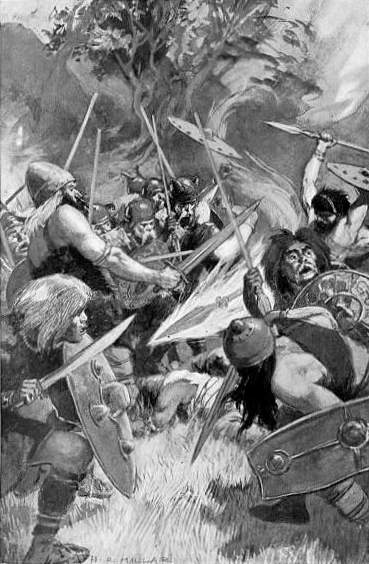
Now that August is in full swing, it is appropriate to think of Lugh. It would have been more appropriate, I suppose, to have considered him on Lughnasadh (August 1) but I’m afraid I missed the deadline. August is the only month with no officially recognized holidays, either lighthearted or serious, in the United States. Back in Celtic Britain the first of August was one of the quarter days, or days when the rent was due and religious festivals were celebrated. When Scotland was Christianized, Lughnasadh was kept under the name Lammas-mass, a festival of the first harvest of the year. The Christian correlation became the deliverance of Peter from prison or Saint Peter in Chains.

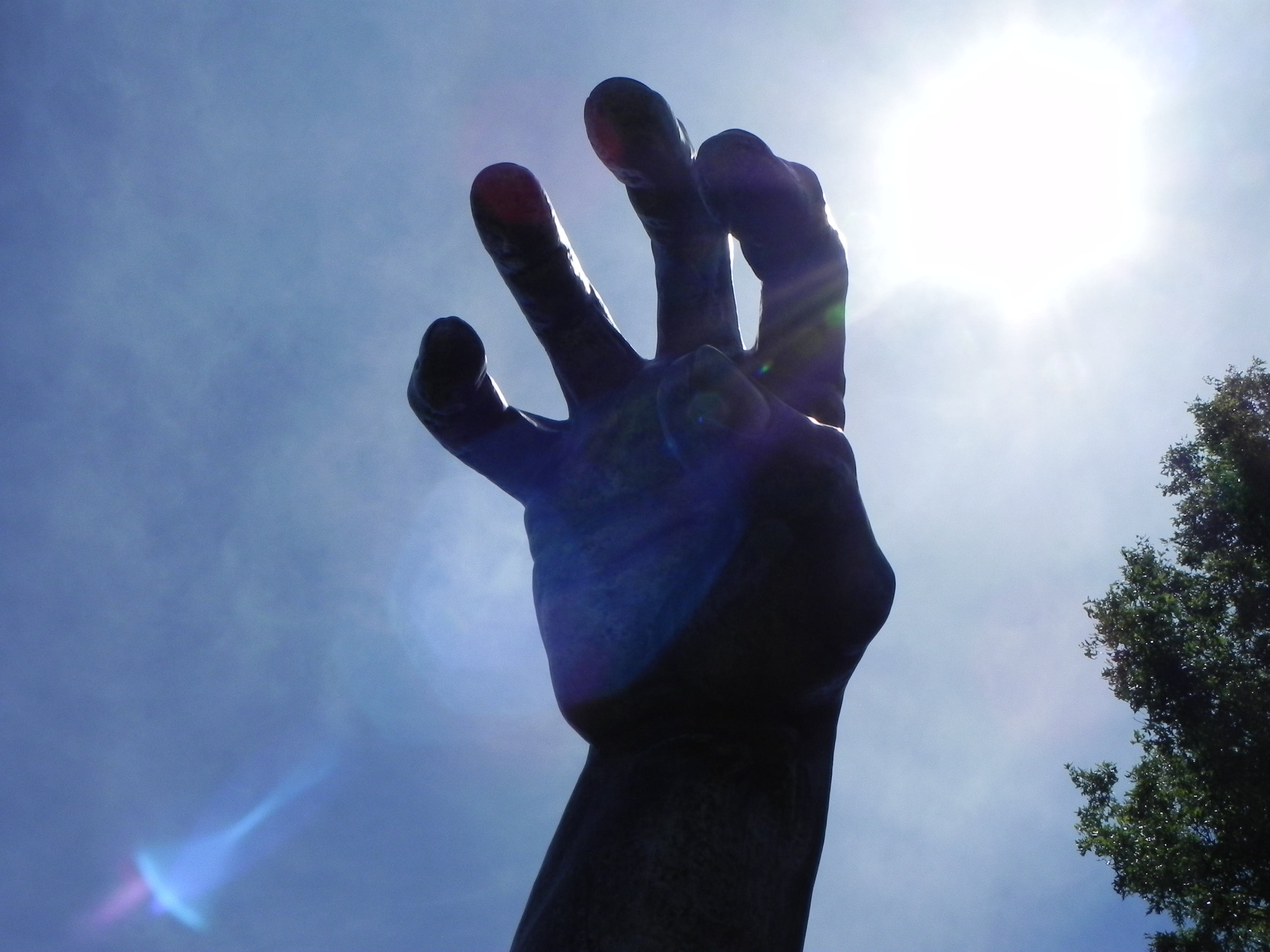
Lugh was, without doubt, one of the most important gods of the Celts. It has been suggested that the Celts understood their gods not to be transcendent beings of a different order than humans, but rather as their own ancestors. They apparently believed that gods came from great humans. Lugh is a warrior god, and occasionally god of the sun. His favored epithet is “long arm” or “long hand,” indicating his felicity with spears and swords. So widely was he known that many important cities were named after him, including Lyon in France, Vienna (known by one of his epithets), and perhaps even London itself. When Romans conquered the Celtic lands, the festival in August was that of the Caesar from whom the month takes its name, Augustus. Apart from the minor Christian festival of Peter in Chains, the month of August was simply forgotten as the seat of holy days.

The origins of gods differ in diverse cultures. The assumption of most people today seems to be that gods exist as an ontological reality and we reverence them because of their factual existence. The Celts, on the other hand, grew their own gods in the tradition that a noble human was worthy of veneration and full of undying power. Lugh may have been one such person. If he was, he has been lost in the heavy haze of hoary antiquity. He comes to us today in August, but more often in March. The word leprechaun is an Anglicized version of the Irish phrase “Lugh the cobbler” (one of his many associations). As such he is remembered every time we pour ourselves a bowl of Lucky Charms.

Part Lugh, part Potter