
The funny thing about authority is that when it counts those who have it are often afraid to use it. So yesterday the “mother church” (if that honorific still applies) of the Church of England voted not to allow women bishops. According to Reuters, the voting breaks down into three parties: the bishops, the clergy and the laity. The bishops and clergy both approved the motion while the laity fell short of approval by only four votes. My regular readers will know that I normally shy away from coarse language, but I wonder, along with the Joker, “what happened, did your balls drop off?” In a church built around hierarchy, where there is tremendous authority—according to official teaching, the very power to let one in or keep one out of Heaven itself—vested in the clergy, can they not say, “this is the right thing to do” and just do it? In a Protestant milieu where Methodists, Presbyterians and Lutherans have all overcome centuries of chauvinistic stain, why does the Church of England not do what the collected bishops and clergy have decreed correct? Are the laity now running the show?
I have had a long history with the Church of England. As laity I know that when the clergy want to throw their considerable weight around they are not afraid to do so. My entire career was thrown into turmoil because just such tonnage was shifted. And I had met the Archbishop of Canterbury (before he ascended to the throne) as he received an honorary degree from Nashotah House. When a layman could still shake his holy hand. It is time for the church to drop its magical infatuation with testicles and get on with the business of making the world a better place. Otherwise Heaven may include too many football games and deer hunts to really make all of us comfortable. The gender divide should be dropped and the church should be getting on to matters that really could use some compassion, both human and divine.
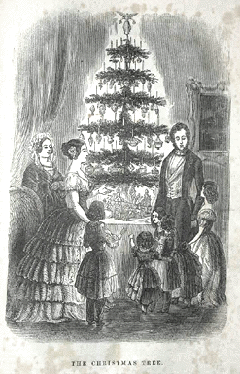
It seems that the staid laity of the C of E didn’t follow the fortunes of the radical right very closely in the recent elections this side of the big water. The day of exclusivism is over. It should have been long ago. Many have been the times when I was informed that doctrine is not a matter of democracy. Perhaps in an issue so basic, so fundamental as the equality of humankind, this should be one of those instances. The titular head of the Church of England is a woman. Has been for decades. Before Elizabeth the Second, for six decades of the nineteenth century Queen Victoria held that role. I think I speak for the majority of sensible laity when I say, in the spirit of the departed monarch, “We are not amused.”
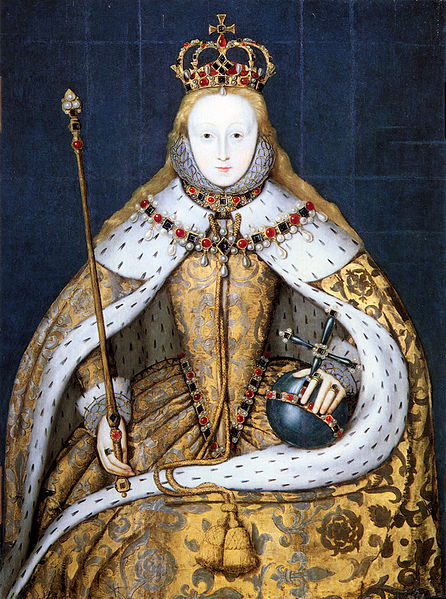
She’s got the whole world in her hand.
 Steve A. Wiggins