
The mass market paperback. This may very well be one of the best symbols of my younger years. One of the largest distributors of mass market paperbacks (Readerlink) has announced that it will no longer distribute them. It seems that the writing, instead of in readers’ hands, is on the wall. Mass market paperbacks are the least expensive formats of books to buy. Publishers have increasingly been tending to push trade size (about 6-by-9 inches)—they can charge more for them. They don’t fit easily in your pocket, however, and well, they cost more. Often, as someone who reads in public, I find myself wishing more literary fiction was still produced in mass market form. Only the best selling authors ever make it down to that size. I miss being able to stick a book in my pocket.
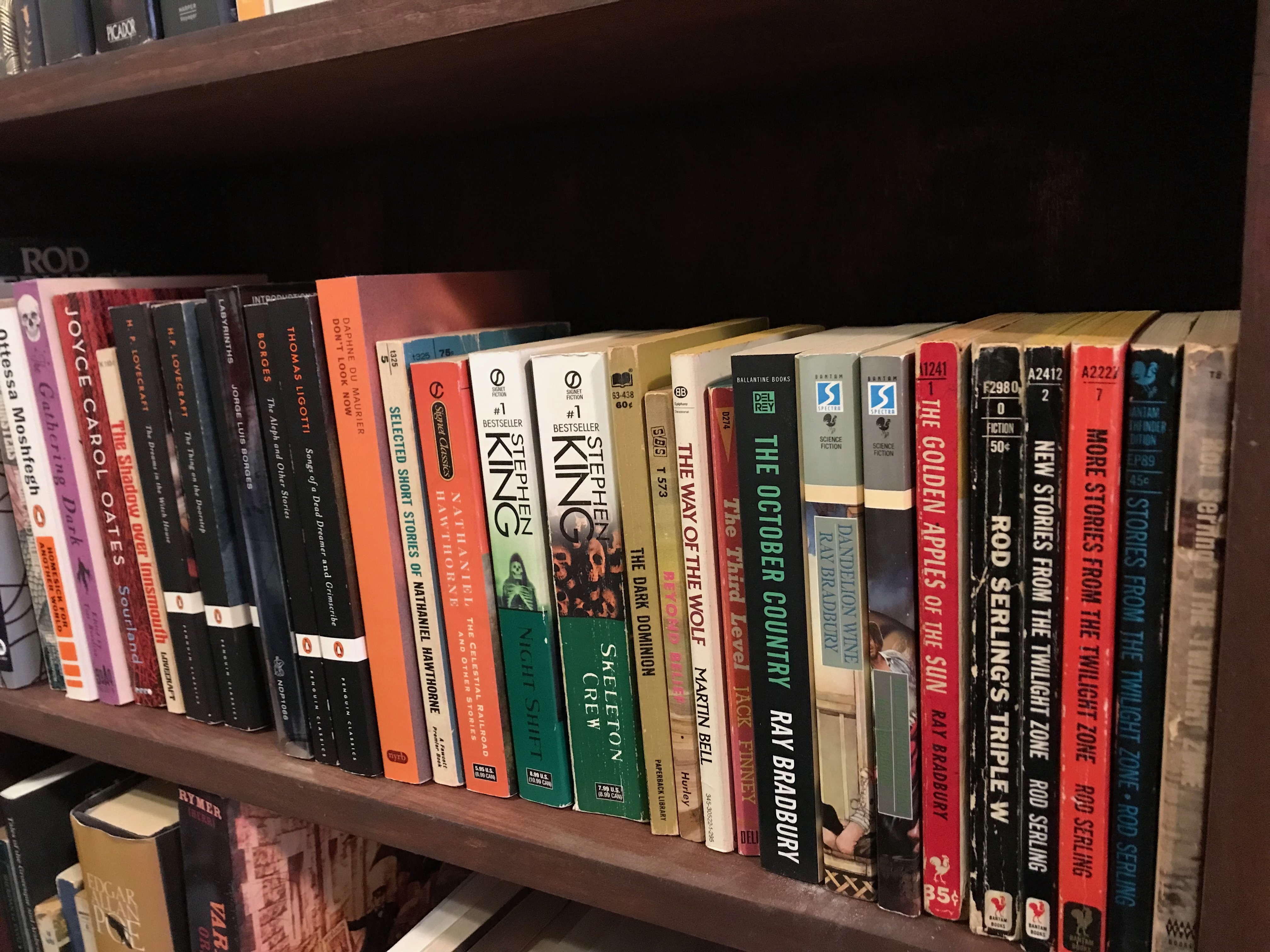
The mass market paperback’s story began with railroad books, once innovated by my erstwhile employer, Routledge. The form we recognize today only really took off in 1935. When I was growing up, I considered all other formats somehow too big. My book collection and reading habits began with mass market size. When we moved to our house a few years back, I repurposed an old dresser as a bookshelf. The top drawer slots were just tall enough for mass market books. I discovered that I really didn’t have enough of them to fill that shelf. Books have grown bigger. Now, working in publishing I realize profit margins are thin in this industry. Many publishers need the big sellers to help make up for disappointing sales of other titles. (You have to have thick skin to be an author, I know from experience.) They need to stay solvent.
But still, this feels like the end of an era. Books in this format have been around really only less than a century. Literacy—reading for pleasure—among the masses hasn’t been around much longer. Books were expensive and were afforded by the elite, then cheaper forms and formats became available. The electronic revolution has made much of life more convenient but some of us miss the challenge of having to fold a road map and never really knowing, for sure, where we are. We’re also the ones who likely have a book in the car. On the occasions when I don’t, I often regret it. And one of the ways to encourage people to take books with them is to make them of a size that would sell thousands. So many, in fact, that they would be given the title “mass market.”
 Steve A. Wiggins