Cloistered

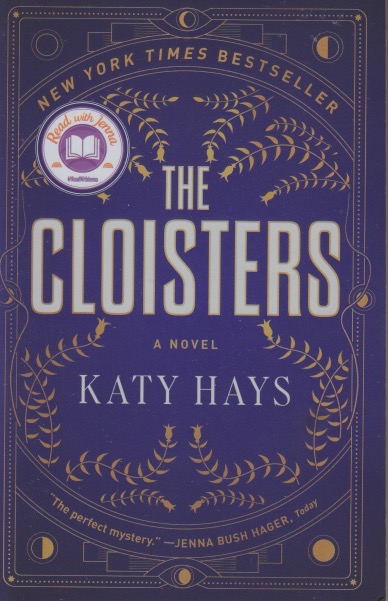
Free will.  I’ll go on the record as a proponent.  Any kind of determinism gives me the willies.  At times, however, it does feel as if we’re merely pawns.  Katy Hays deals with the concept of fate, and the occult world of tarot, in The Cloisters.  The writing is quite compelling and the story moves along at a good pace.  It follows Ann, a graduate from eastern Washington who wants to get away from the town where her father was killed.  She accepts the offer of a summer program at the Met in New York City, but because of a mix-up ends up at the Cloisters instead.  I’ve never actually been to the Cloisters, but this novel makes me want to go.  At this museum of Medieval and Renaissance art, Ann works with Rachel, another assistant, Leo, a gardener, and the curator, Patrick.

Rachel has been at the Cloisters for some time and Patrick, her boss, has become enamored of tarot decks and their history.  He’s been seeking perhaps the oldest complete deck known and has come to believe that perhaps the cards do have the ability to tell the future.  Ann befriends Rachel.  The two begin to make discoveries, particularly Ann, but Rachel, who is independently wealthy, manipulates her, taking advantage of the fact that Ann never wants to return home.  Then Patrick is poisoned.  I won’t reveal whodunnit here, but the last half of the book has several twists that make you reassess whatever conclusions you may have drawn.  It’s a fascinating story, well told.

This novel is another example of dark academia.  Much of it takes place in the library of the Cloisters and Patrick holds a Ph.D. while Rachel is a graduate student.  Ann is about to enter a doctoral program.  All of them have some fairly dark secrets in their lives.  And all of them are driven.  The story has elements of social commentary as well, particularly concerning how life in New York City will drive people to extremes when the competition makes this necessary to survive.  Although three of the four commit crimes, they are all likable people.  Three of them are academics as well.  All four are quite intelligent.  I was drawn into this tale from the start and even as the darkness was revealed couldn’t bring myself to dislike any of the characters.  Some novels have antiheroes that you just can’t feel for.  The Cloisters moves in the other direction, and it does make you wonder just how much choice you actually have and how much is left to fate.


Deep Backlist

It’s kind of a personal archaeology.  Exploring the terrain of one’s own mind, that is.  Back in January, I mentioned my “deep backlist,” which is actually my “to read” list stored on an online book vendor site.  When it comes time to buy (or provide a gift request for) a new book, this list is my first stop.  I started the list in 2010.  Since I’m cautious about book buying (believe it or not), there are many items on that list that never got purchased.  And if I go back far enough, I have to confess to myself, there are books I really don’t want to read anymore.  At least not at this time.  That list, however, is a snapshot of my interests at the time an item was entered.  I don’t delete things from it unless I actually get them.  Life has taught me that when interests fade it’s usually not permanent.

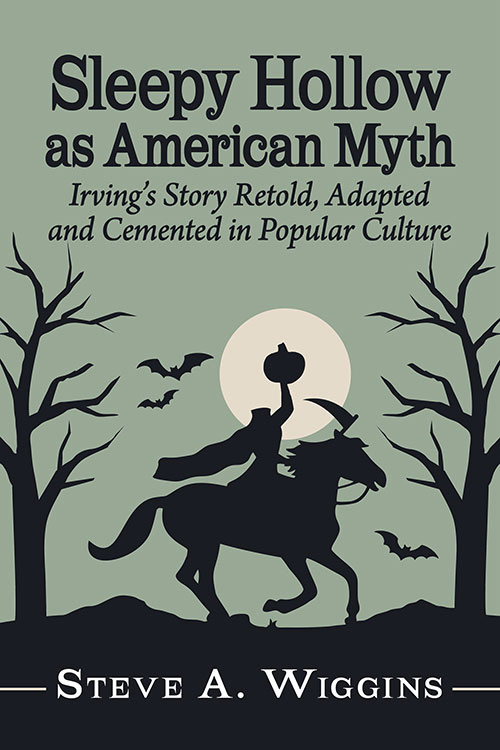
Sometimes I think I should be more intentional about my reading.  When I was writing Sleepy Hollow as American Myth, I was adding lots of books related to the subject.  Many of them came off the list as I purchased and read them, but not all.  Although I’m currently involved in my next writing project or two, I don’t remove the remaining Sleepy Hollow-inspired books because I may well, depending on length of life, come back to them.  The same is true of all my books from Holy Horror on.  Depending on where I am on that list, I can tell what book I was working on, and not a few that never got finished.  An accountant once told me that if you are writing books to earn money (as paltry as those earnings may be), the books you buy may be tax write-offs as business expenses.  Such is the mind of capitalism.

My wishlist is a personal archaeology of some poignancy.  It took me many years after being shunted out of academia (no matter how dark) before I found employment stable enough to allow for me to start writing books again.  Weathering the Psalms was started around 1997 or 1998.  It was published in 2014.  Even after that it took a couple years to realize that I could write Holy Horror.  And there are other books that, if I’m honest with myself, I know I won’t have time to write or finish.  I find scrolling through my “deep backlist” an inspiring but melancholy exercise.  We all have layers, and strangely enough, even the books that we wanted to read, or just remember, can speak volumes about who we are.


Bibliographer for Hire

Why is bibliographer not a job?  Why can’t a person make a living categorizing knowledge?  I ask this because I see YouTube videos of people saying your job should be what you enjoy doing.  What if you enjoy creating bibliographies?  You see, my research methods are a bit unconventional.  They kind of have to be since I have no institutional support for my writing, and yet I want it to be intelligent and informed.  That means I have to locate my own sources and inevitably, when I’m compiling a bibliography, I’m happy.  Even if it means ferreting out obscure sources and trying to learn where something was originally published, I’m still at the top of my game.  (Yes, this is one of those things that the longer you’ve been doing it, the better you get at it.  These days it means learning to engage the internet for research.  Since it’s more of a money-making venture geared towards entertainment, that can be tricky.)

I remember those days of typing out bibliographies by typewriter, smearing White-Out all over, or trying to use that ribbon stuff that was supposed to be able to type over mistakes.  My friends and fellow students hated bibliographies.  Secretly, and perhaps perversely, I was enjoying myself.  You see, a bibliography is gathered knowledge.  When I finish reading a nonfiction book, particularly one where I want to do further reading myself, I go through the bibliography.  I want to know the origins of ideas.  There’s an irony here since my last few books have featured quite a few of my own ideas supported by what I’d read.  And I know that unless I provide a precise footnote, anyone who might read my work might wonder “how I know” what I’m writing.  It’s increasingly becoming one of those “pay attention to your elders” sort of thing, I guess.

But the bibliographies I could compile!  The really tricky part when writing The Wicker Man was the word limit.  I know authors who struggle bringing the bibliography down to required length, and I feel for them.  I really do.  You see, a bibliography is a record of what it took to get me to write this book.  These are the things I was reading, pondering.  Or found along the way.  There’s an art to a bibliography as well.  Some topics seem to attract authors with last names beginning with a certain letter, for instance.  Or others seem to have a dearth of another letter.  I may be the only person who finds such things fascinating, but can’t that be a paying job?  It is most interesting work, and categorizing knowledge is a full-time job.  If only it was a paying one.


Book Stages

Books appear in stages.  All publishers are different.  These platitudes encapsulate my experience in finding a venue for my ideas.  Sleepy Hollow as American Myth has just appeared in McFarland’s spring and summer catalogue.  I haven’t seen the proofs yet, but I suspect I will before too long now.  What’s with the spring and summer catalogue?  Well, believe it or not, books are seasonal.  Publishers go by seasons.  For many academic publishers there are two seasons: Spring/Summer and Fall/Winter.  The timing of certain books may fall in a specific place within those seasons but many academic books are aimed at classroom adoptions so early spring and early autumn are the most popular times.  It’s no coincidence that academic conferences also cluster around the semester system, the big ones being either autumn or spring.  Academics have a migratory instinct.

Personally, I’m hoping Sleepy Hollow will be out in late summer.  I don’t have any control over that, but it’s about then that normal people’s thoughts start turning toward falling leaves, long nights, and monsters.  Every year there’s a day in August when I step outside and literally smell autumn in the air.  As a kid seasons seemed like something as rigid as a biblical law: spring was March through May, summer June through August, and so forth.  The older I get, the more I realize how negotiable seasons are.  The Celts celebrated the start of spring in February.  Yes, there are lots of cold days yet to come, but the early signs of spring have begun.  For early risers, we finally start to observe earlier sunrises.  (These technically start around January 10, but they’re slow getting out of bed.)

You might think the ideal season for a book on spooky stuff, like Sleepy Hollow, would be timed for release in the fall/winter cycle.  Not necessarily.  Both Holy Horror and Nightmares with the Bible hit the market after Halloween.  Normal people’s thoughts had shifted to Thanksgiving.  I’m pleased that Sleepy Hollow will be released a bit earlier.  Summer is ideal for Halloween-themed books.  And yes, I devote a chapter to Halloween and the Headless Horseman.  They are closely related.  So I was glad to receive McFarland’s spring/summer catalogue and find my book on page two.  I don’t have a publication date yet, but I’m looking forward to being part of the discussion about one of my favorite ghost stories of all time.  Speaking of which, it’s almost time to begin gathering firewood for next winter, or at least it will be in summer.  And it’s not that far away.


Worse Seed

Not too long ago I watched The Bad Seed.  In the 1950s it probably wasn’t considered horror, but it is quite a scary movie.  I’d classify it as horror—not all fifties horror was guys in rubbery suits.  When reading about the movie afterwards, I learned the novel had a darker ending (the movie was pretty dark as it was).  So I decided to read the book by William March.  The movie’s fairly faithful, up to the ending.  As usual, the novel adds more detail and reveals some things rather differently.  For example, Christine Penmark, the mother of Rhoda, can’t ask her father if she’s adopted.  She “learns” this through inference.  Indeed, the book leaves you wondering if she’s actually mentally unstable.  The proof that she’s the daughter of a serial killer is strong but not definitive.  And her father is already dead when the story opens.

The school outing, where Rhoda claims her second victim, is where the movie opens.  Rhoda is expelled from the school because the women who run it can’t abide Rhoda’s dishonesty.  The character of Leroy is very well portrayed in the movie, but he too seems to have some kind of mental illness.  Monica Breedlove is accurately presented as a busybody, but she too spends a lot of time analyzing people, including herself.  Rhoda is, of course, a literal sociopath.  It’s fair to say the novel is an extended exploration of mental illness of various sorts.  I remember from growing up in the sixties that many conditions that are now regularly diagnosed simply weren’t recognized.  Kids were blamed for bad behaviors that were, in all likelihood, caused by being somewhere on the spectrum.

Much water has passed under the bridge since the fifties.  This book was a bestseller then, but I only learned about it last year.  Indeed, it’s been adapted to film three times and was a Broadway play before all that.  There was a sequel released a couple years back.  Rhoda Penmark is herself a trope of the narcissist who lacks empathy.  Hmm, where else do we see that?  It’s still analyzed as primarily a “nature verses nurture” novel, but I suspect there’s something more going on.  We’ve moved beyond Freud and this novel probes what goes on in the minds of those who spend too much time alone, as well as who happen to be the mothers of pathological child murderers.  And the ending is different, but the movie’s is equally as bleak.  The Bad Seed a good book for this particular January.


Steering

I’ve always been self-critical.  Often when someone points out something I’ve done wrong I’ve already figured out that I’ve made the mistake and the reminder is painful.  I can’t help but think that my childhood made me this way.  In any case, since I haven’t ever found much success is writing, I figure I must need help with it.  Recently I’ve read books on various aspects of writing by Stephen King and H. P. Lovecraft (published posthumously).  I’ve read quite a few more over the years.  I recently saw Steering the Craft: A 21st-Century Guide to Sailing the Sea of Story by Ursula K. Le Guin.  I confess that I haven’t read a ton of Le Guin’s fiction, but she is treated with a great deal of reverence in literary circles that I figured a bit of advice from a master couldn’t hurt.  Besides, it isn’t a long book.

Books about writing aren’t volumes that you fly through, though.  Steering the Craft has ten relatively short chapters and ten writing exercises, some in multiple parts.  As I read through I stopped and did each of the exercises.  I really didn’t want to cheat myself of the experience of learning from a departed sage.  The experience was refreshing.  As will surprise none of my regular readers, I’m in the midst of another writing project.  The thing about steering is that you’re constantly doing it.  And if the captain is someone who’s been through these waters, it’s best to listen.  At the same time—and Le Guin was very aware of this—hard and fast rules tend to be neither.  What spells success for one author becomes abject failure for another.  Some of us write because we must, whether anybody reads us or not.

But the exercises.  Exercise is good for your health.  Even writers with native talent need to stay in shape.  I’ve been doing creative writing, in one form or another, constantly, since at least the Nixon Administration.  Publication began in the academic realm when I was working on my doctorate.  I had my first fiction piece published in 2009.  Keen eyed readers will notice that is the same year I began this blog.  I’d been pretty much booted from academia by then, but I’d been writing in the meantime.  Essays, novels, short stories.  Then I tried a nonfiction book or two.  There is a great gulf between writing and publication.  An ocean, in fact.  And if you hope to cross an ocean, it is always helpful to learn how to steer.  I’m still trying to learn why my boat seems to be leaking, though.


Measuring Books

You know how some email servers stock your inbox with ads?  I almost never pay attention to them.  Then one for Books by the Foot showed up.  I had to click.  The basic idea is simple enough: you want to look smart so you fill your shelves with books by a company that sells them by the linear foot.  You can get color coordination, rainbows, old books, you name it.  Now this isn’t a free ad.  In fact, this is a rather sad state of affairs.  I’m sure their antique books have been vetted for any real treasures, but the fact that people want to buy books just for display evokes, well, melancholy.  I’m pleased that books retain their cachet as symbols of pride, but these are not books for reading.  I’m left with mixed feelings.  The website states that they have over 5 million books on hand.

At least they’re not selling ebooks.  I love books.  They are a wonderful symbol and I suspect they are among the most noble things that humans achieve.  I grew enamored of books as I entered my tweens.  I was terribly shy by that point.  We had moved to a new, and rough small town where I really didn’t know anybody.  Life, which hadn’t been exactly a picnic to that point, seemed to be getting scarier.  So I read.  And I never really stopped.  Ironically, during my professorial days I had less time to read entire books.  Those who’ve dabbled in higher education know that at even the hint of organizational skill you get bumped into administration, whether you want to or not.  And administration is busy work.  Yes, even professors have it too.  In any case, when I got bumped back down to being a mere adjunct, I started reading a lot again.

One time one of my bosses asked me how many books I had.  This was early in the pandemic when we were seeing inside each other’s houses for the first time, via Zoom.  My office is one of my main book repositories.  (Along with the attic and the living room.)  I answered truthfully that I’ve never counted.  I started using Goodreads in 2013 to keep track of the books I read.  In those early days I didn’t put everything in there (who hasn’t read a book they’re embarrassed to admit to once in a while?), but when I started the reading challenges in 2016 I did.  Mine has been a life defined by books.  Starting with the Good Book, and including many quite the opposite, I have earned books by the foot.  But I’m not selling.  Symbols have value beyond cash, at least in my mind.


Motorcycle Trip

Among my introductory lectures to students was one that covered genre.  I recall saying something along the lines of “when you read something your expectations of genre influence how you understand it.”  Strangely, my own writing sometimes defies easy categorization, but I find it disorienting to read something without an idea of whether it’s fact or fiction or whatever.  I suspect I’m not alone in this.  When my wife suggested we read Robert M. Pirsig’s Zen and the Art of Motorcycle Maintenance together, I wanted to know what it was we’d begun reading.  The BISAC code (the category on the back cover of a book) simply said “Philosophy.”  I took almost enough philosophy in college to minor in it, so I had a general idea of what philosophy might look like.  Then I remembered reading Nietzsche’s Thus Spake Zarathustra and found myself back at the question of genre again.  Was this philosophy, autobiography, or a novel?  All of the above?

Now, I’ve known about this book from college days on.  It was in the college bookstore and I’m pretty sure it was assigned in some classes (not the ones I took).  What threw me was the autobiographical part.  Was this fiction?  The philosophy parts were pretty stout stuff.  And was Phaedrus real or imaginary?  Of course, you start getting some inklings that Phaedrus and the narrator are the same.  And that the latter isn’t a particularly good father.  The edition we read came with a helpful introduction that suggested that Phaedrus was the one with a correct outlook all along.  And an afterword that told how Chris died during a mugging when he was only 22.  There was pathos all over this tale.  Even when we finished I wasn’t quite sure what we read.  It’s sometimes classified as an autobiographical novel or philosophical fiction.

Rejected over 120 times, the book became a national bestseller when one editor took a chance on it.  (That is how publishing works.)  Perhaps the most poignant part of the book is the author.  What’s more, Pirsig wrote the book by getting up and writing at the same time slot that I use, so he could work a regular day after.  And he had been in a psychiatric hospital and had received electroshock therapy for schizophrenia.  Clearly a lot was happening behind the scenes for this most unusual tome.  Among the academic publishing crowd it’s common to hear that Stephen Hawking’s A Brief History of Time was a book that many bought and never read.  I did find that one a bit rough going too, but I do wonder how many engage with the philosophy in Zen and the Art of Motorcycle Maintenance.  There’s heady stuff here to ponder.  And I’m glad for that one editor who thought differently from all his colleagues.


Perhaps More?

Publishers use the term “deep backlist” to refer to titles that they published long ago.  That’s always the phrase that comes to mind when I browse my “to read” list.  That list was started, in its current online repository, a decade-and-a-half ago.  When I delve into the “deep backlist” of items I placed on the list years ago I sometimes can’t remember where I learned about them.  Such was the case with N. T. Morris’ debut novel, Elmwood.  Someone recommended it years ago and I finally came into possession of it.  A moody tale about a town haunted by a cult, it is a nice effort as a self-published horror novel.  If you read a lot of fiction you start to notice some of the signs with self-published work (and there are many good reasons to go that route).  Morris offers a well-designed and aesthetically pleasing book.  The story does end with some loose threads, however.  There may be spoilers below.

Aidan Crain finds the victim of what appears to be a serial killer.  His difficulty coping with it leads his wife Laura to suggest that they get away from it all in the little town of Elmwood.  They rent out a house she found online, but it turns out to be haunted.  The people of Elmwood aren’t terribly friendly to strangers, but since the goal is to get away from city life, the young couple doesn’t much mind.  Except the ghosts in the house are accompanied by a dark presence in the woods that keeps calling to Aidan.  One of the tricky bits for me was determining what were dream scenes and how they related to waking scenes.  This is often part of speculative fiction, but a solid editor would lead you in the right direction in such situations.

The story tries to fit a lot in, leading me to think—rather uncharacteristically—that it needs to be longer.  The house was owned by a serial killer who’s part of the cult that killed the victim Aidan found many miles away.  The cult has been culling both locals and visitors for years and the police department appears to be complicit.  As do some local business owners.  The darkness in the woods, which is defined more or less as evil itself, seems to control the cult and it wants Aidan to join.  Some of the loose threads at the end suggest that Morris’ next novel will be a sequel to this one.  I can’t recall how I learned about Elmwood, but I’m glad to have finally read it.  It’s a good shot at becoming a horror writer from my personal deep backlist.


2024 in Books

I’m trying to figure it out.  My annual last post is my book reflection for the fading year.  I keep track of my books on Goodreads, and I always join their reading challenge to keep myself honest.  What I can’t figure out is why I fell below 70 books this year.  (The official total is only 61.)  I set my goal below that, of course, because I’m no fan of setting targets impossibly high.  The only thing I can figure is that some of this year’s books took longer than usual to get through.  Maybe on average they were longer than my typical fare.  In any case, my favorites among the fiction I’ve read are these:

For standard horror I especially liked Thomas Tryon’s The Other, and Ivar Leon Menger’s What Mother Won’t Tell Me.  Interestingly, neither was speculative.  I do seem to have slipped in that category a bit.  Gothically speaking, Thierry Jonquet’s Mygale, Rebecca James’ The Woman in the Mirror, Alix E. Harrow’s The Once and Future Witches, and Erin Morgenstern’s The Night Circus were all memorable.  I started reading Dark Academia somewhat intentionally this year and I would argue that Sarah Moss’ The Ghost Wall fits since the professor’s up to no good in the woods.  Piranesi by Susanna Clarke also fits for a similar reason, only not in the woods.  I enjoyed both.  For literary fiction, edging back into horror, A Children’s Bible by Lydia Millet was very good.

My reading tends toward nonfiction (occupational hazard) and here there are categories also.  In the general category, Andrew Laties’ Son of Rebel Bookseller stayed with me.  Don Foster’s Author Unknown was enjoyable and eye-opening.  I also really enjoyed Mark Thomas McGee’s Fast and Furious.  For books on horror I read Stephen King’s Danse Macabre and his On Writing.  (I also read one of his novels.)  Both of these were quite good, I thought.  I also learned a lot from Olga Gershenson’s New Israeli Horror.

I see that I also read quite a lot of unusual nonfiction.  Most of it I quite enjoyed.  The most conventional of them was David Robson’s The Expectation Effect.  I’m fascinated by the power of the human mind, so Mitch Horowitz’s Uncertain Places and D. W. Pasulka’s Encounters gave me considerable pause early in the year.  Carlos Eire’s They Flew, a weighty tome, was well worth the time it took.  Among the reflective/spiritual nonfiction my favorite was Katherine May’s Wintering.

I very much enjoy my end of year reflection over the books I’ve read.  I don’t plan my reading for the year in any systematic way.  I will say that I received quite a few titles over the holidays that I’m looking forward to posting on these this coming year.  And I suspect a few new titles will appear along the way as well. I do hope to get past 61, in any case.  Read through 2025!


Echoes

Among the first books I read that might be considered Dark Academia was P. D. James’ Death in Holy Orders.  That was so long ago that I don’t remember when, although the inscription tells me it was purchased in 2002.  There’s no mystery as to why.  There was buzz at Nashotah House when the novel came out.  It was about a murder at a conservative Anglican seminary with few students.  It seemed very much like Nashotah House to some there, so I read it.  Now, I’m not a fan of murder-mysteries.  I’ve read nothing else P. D. James wrote.  I had no idea who Adam Dalgliesh was.  The book was a New York Times bestseller.  Reviews were mixed, and among fans of Dark Academia it is scarcely noticed.  Still, Dark Academia is still in its toddlerhood.  Its boundaries aren’t clear and it overlaps with other genres, as most modern genres do.  There may be spoilers below.

In a very complex plot (mystery writers like to show off in that way) a rich seminarian at St. Anselm’s, dies by suicide that was strange but not really suspicious.  His wealthy stepfather receives an anonymous letter suggesting foul play and super-sleuth Adam Dalgliesh of Scotland Yard is brought in. After the suicide, an old housekeeper dies of an apparent heart attack.  But then an Archdeacon is murdered in the chapel (here was the frisson at Nashotah House).  Since there were visitors on the isolated campus at the time, and the Archdeacon was not liked by most people there, it becomes a whodunit with conflicting motives, one of which is to see the seminary closed.  It owns artifacts worth millions, and, it seems, someone stands to inherit.  Dalgliesh and his team pick through all the clues and, of course, figure out the guilty party.

Even at the end the motivation seems odd.  There is a kind of Dead Poets Society letter of confession about preserving the arts.  The murderer is a professor of Greek.  These elements definitely cast the book into the realm of Dark Academia.  Still, it’s primarily a detective novel, and I suspect that’s why many fans of Dark Academia haven’t yet come upon it.  I do recall, upon first reading it, that it felt real enough.  I was living in a setting not unlike that of the novel and small seminaries do have big secrets.  This time through I was less impressed.  Super-sleuths are just too smart, which means their writers have to be exceptionally clever.  The setting suggests something wrong in the educational world, however, and that is true enough.


Learning to Write

If you’re not famous as a writer, nobody asks you for advice on improving their game.  Part of that is simply having a writer’s outlook.  We all have our own ideas about how it’s done.  I admire the work of Stephen King.  He’s a gifted storyteller and his books often deal with the kinds of things I think about.  I had his book On Writing on my reading list for years.  What finally got me to read it was finding it in a local independent bookstore and wanting to support said venue.  I found it both helpful and a little scary to read.  This is part memoir and part instruction manual by someone who isn’t full of ego, despite his success.  Egoism isn’t uncommon among writers, but King realizes that many people have talent, but not all know how to bring it to any kind of success, no matter how modest.

I really enjoyed reading the memoir parts.  Indeed, I wish I could’ve read them when I was, say, in college.  My own trajectory as a writer might’ve turned out differently.  His instructive sections are also helpful, but the part about finding an agent is hopelessly out of date.  The internet has made doing so both easier and more difficult.  Too many people now flood agents’ offices with pitches that you practically need an agent to get you an agent.  I know this from experience.  Nevertheless, King’s advice generally feels quite solid.  And it’s encouraging to hear of the commonalities we share in our upbringing.  Writers often begin in less-than-ideal situations.  If we can struggle out of them, some can find success in writing while others manage to do it on the side (this isn’t my day job).  But write we do.

As with most of King’s books that I’ve read, this one went fairly quickly.  Not every book that I read makes me feel eager for reading time, but King always does.  In part, at least with On Writing, it’s because I can’t help but wonder if I’m doing this right.  During the course of reading his book, two more rejection letters came for my fiction projects.  Any writer knows that you have to deal with lots and lots of these.  King started earlier, but, like me, he kept his rejection slips.  Eventually I ditched mine because they’re too discouraging.  And I still submit to what has become, since this book was written, a very, very crowded fiction market place.  Still, this is an encouraging book, offering advice from someone who knows what he’s doing.  It’s a shame I waited so long to read it.


Another Level

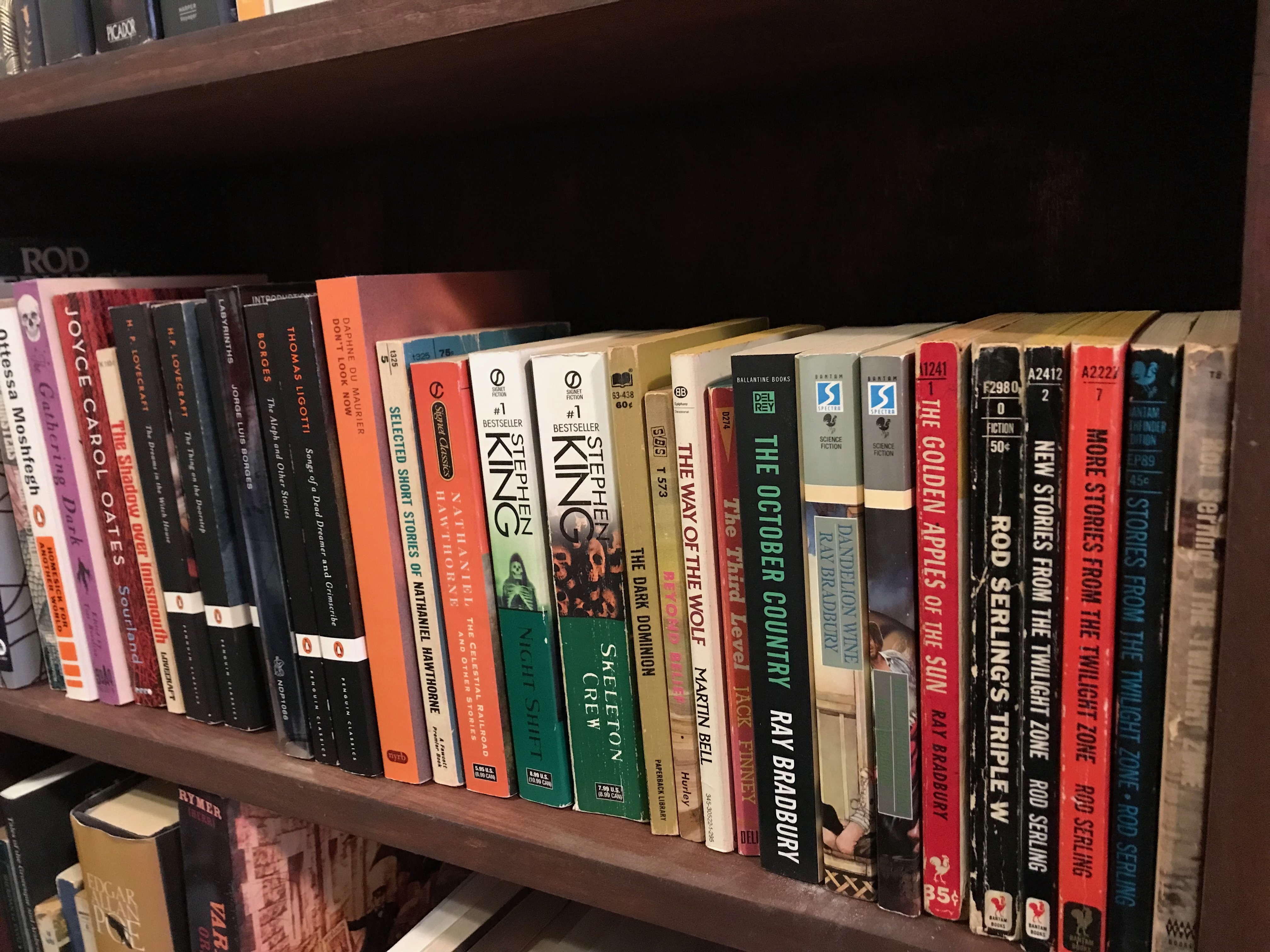
Jack Finney is probably best remembered as the person who came up with the idea for The Invasion of the Body Snatchers.  His book, The Body Snatchers, was the inspiration behind the two movies based on it, as well as various knockoffs.  The Third Level is a collection of short stories he wrote.  I’ve been trying to introduce more short stories into my literary diet, and this one was recommended by Stephen King in Danse Macabre.  Specifically, he mentioned it as being more like what The Twilight Zone should’ve been than much of what Rod Serling wrote.  Now, I’m an unapologetic Rod Serling fan.  This is based on memories from childhood when I watched the show and, let’s be honest here, wished he could be my father.  I already had a taste for the unusual and sometimes macabre, and so I was curious what King thought might do Serling better.

The Third Level was labeled as science fiction, but sci-fi and horror share more than a boundary or two and at least four of the stories have nothing sciency about them.  As a collection it’s good in the same sense as a mature reading of Ray Bradbury is good.  I would’ve liked this—probably loved it—as a kid.  I was reading, however, for The Twilight Zone.  There are some good twist endings here, but not all the stories have them.  A couple of them are pretty straightforward whimsical romances.  Many of them feel very much like they were written in the forties and fifties.  A couple of the stories, late in the collection, I really liked.  They were a bit more Zonish than some of the others.

One of the problems in writing a brief post on a collection—and no collection is uniformly great—is that it’s difficult to give a sense of the whole.  So instead I’ll just focus for a minute on the last story, “Contents of the Dead Man’s Pockets.”  This one shows the power of Finney’s descriptive writing and it caused physical reactions I seldom get when reading.  It involves a man climbing out on an eleventh-story ledge to reclaim an important bit of paper that blew out the window.  More than once I almost had to put the book down.  Fear of falling is deeply embedded in the human psyche and Finney is able to probe it for more pages than I was comfortable reading.  Well done, sir.  Overall, the collection is good to have read.  It won’t change my mind about the Zone, however.  It reached me a little too late to do that.


Gray Matter

It seems to me that I was living in Boston the last time I read Oscar Wilde’s The Picture of Dorian Gray.  That was long enough ago to have forgotten almost everything except the central premise that everyone knows.  Recently, I had been reading some analysts who consider it a kind of horror story.  Wilde was a great and notable wit, not typically cited as a horror writer.  More recently I’d seen the novel classified as dark academia.  Since there are no students, and there’s no school in the novel, that genre seems forced.  In any case, it is a classic and I was curious about what I had forgotten.  The dialogue regarding morals stands out rather boldly, with traditional Christian values being the gold standard.  In his own life Wilde was known to flaunt these things, but in his story they stand mostly unchallenged.

At the same time, it is a book about seeking redemption.  Toward the end, Dorian regrets the lifetime of evil he’s led.  He wants to turn over a new leaf.  Corrupted from an early age by Lord Henry Wotton, he learned to live a cynical and self-centered life.  He shut out the feelings and needs of others for his own pursuit of pleasure.  As an old man still appearing young, he comes to have his regrets.  Although Wilde didn’t really live long enough to reach this stage in his own, he seems to have understood psychology well enough.  He even tried to have a half-year Catholic retreat.  Length of life often trails regrets in its train.  Of course, for Gray it is too little, too late.  He has made his mark on the world, but it hasn’t been for good.  His final act is a stab at redemption, but the novel gives no hint whether he achieved it or not.

Whether intentional or no, the novel considers the fact that we all wear masks.  And we do so for much of the time.  And there is a bit of horror involved in discovering that we aren’t who we pretend to be.  The real Dorian Gray was locked away in an attic room while his life of dissipation  led to the ruin of many.  The witty dialogue maybe makes this a comedy horror.  At times it seems to get in the way of the mood of the story, but it never stopped the novel from making a similar impression to the nearly contemporary Dr Jekyll and Mr Hyde.  Late Victorians knew something that we, as a society, seem to have forgotten.  The attics of some prominent individuals surely have portraits that belie their appearance on the ubiquitous screen.


Nightly Entertainment

A list of most gothic recent books, I believe it was, that suggested The Night Circus by Erin Morgenstern.  It’s a big book—over 500 pages—so I decided I’d wait until autumn to get underway.  It ended up taking most of September and half of October to finish it.  Since I prefer to start fresh, I had no idea what it was about.  A night circus, of course, as the title indicates.  It is set in the late Victorian period, although I’m not sure all the turns of phrase in the book were current at that time.  There may be a few spoilers in the description, should you want to go out and read this yourself first.  I mention that because something that only becomes clear near the end is a pretty good starting place for giving an idea of what the story’s about.

A very old man (who doesn’t look or act old) is a very accomplished magician (not the stage variety).  One of his students becomes very proficient and the two begin a rivalry that involves each setting a protege against that of the other.  It is a contest, we eventually learn, to the death.  The younger magician selects a daughter he didn’t even know he had, while the original teacher selects a young man without prospects.  The battleground on which these two duel is the eponymous night circus.  Each tries to outdo the other in creativity and wonder.  The circus is open only at night (hence the name) and is fueled by actual magic.  A cast of characters gets introduced, and they’re very well drawn.  In my experience of reading the book, they drew me back in because you pretty much liked most of them and with magic involved, well, you never know.

The novel was gothic in the Victorian setting and in the sense that there is an ancient contest underway here that interrupts into the then present.  There aren’t spooky castles, however, or really even damsels in distress.  The women characters are all strong and resilient.  The writing is lively and the resolution is satisfying.  The real draw for this book is the writing and the complex story that doesn’t overwhelm or leave you feeling too lost.  It’s a magical realism with boundaries and offers a good message that magic is all around, if we only open our eyes to it.  It’s a good book to get lost in for a few weeks.  I appreciated the fact that the villains weren’t the focus and the violence was mostly implied.  It kept me turning pages, gothic or not.