Do I Know You?

How do you know someone without ever seeing them?  How do you know they are who they say they are?  I’ve been spending a lot of time on the phone, much of it trying to establish my identity with people who don’t know me.  This has happened so much that I’m beginning to wonder how many of the people I’m talking to are who they say they are.  I never was a very good dater.  Going out, you’re constantly assessing how much to reveal and how much to conceal.  And your date is doing the same.  We can never fully know another person.  I tend to be quite honest and most of the coeds in college said I was too intense.  I suppose that it’s a good thing my wife and I had only one date in our three-year relationship before deciding to get married.

Electronic life makes it very difficult to know other people for sure.  I don’t really trust the guardrails that have been put up.  Sometimes the entire web-world feels false.  But can we ever go back to the time before?  Printing out manuscripts and sending them by mail to a publisher, waiting weeks to hear that it was even received?  Planning trips with a map and dead reckoning?  Looking telephone numbers up in an unwieldy, cheaply printed book?  You could assess who it is you were talking to, not always accurately, of course, but if you saw the same person again you might well recognize them.  Anthropologists and sociologists tell us the ideal human community has about 150 members.  The problem is, when such communities come into contact with other communities, war is a likely outcome.  So we have to learn to trust those we can’t see.  That we’ll never see.  That will only be voices on a phone or words in an email or text.
I occasionally get people emailing me about my academic work.  Sometimes these turn out to be someone who’s hacked someone else’s account.  I wonder why they could possibly have any interest in emailing an obscure ex-academic unfluencer like me.  What’s their endgame?  Who are they?  There’s something to be said for the in-person gathering where you see the same faces week after week.  You get to know a bit about a person and what their motivations might be.  Ours is an uncertain cyber-world.  I have come to know genuine friends this way.  But I’ve also “met” plenty of people who’re not who they claim to be.  Knowing who they really are is merely a dream.

The Talk

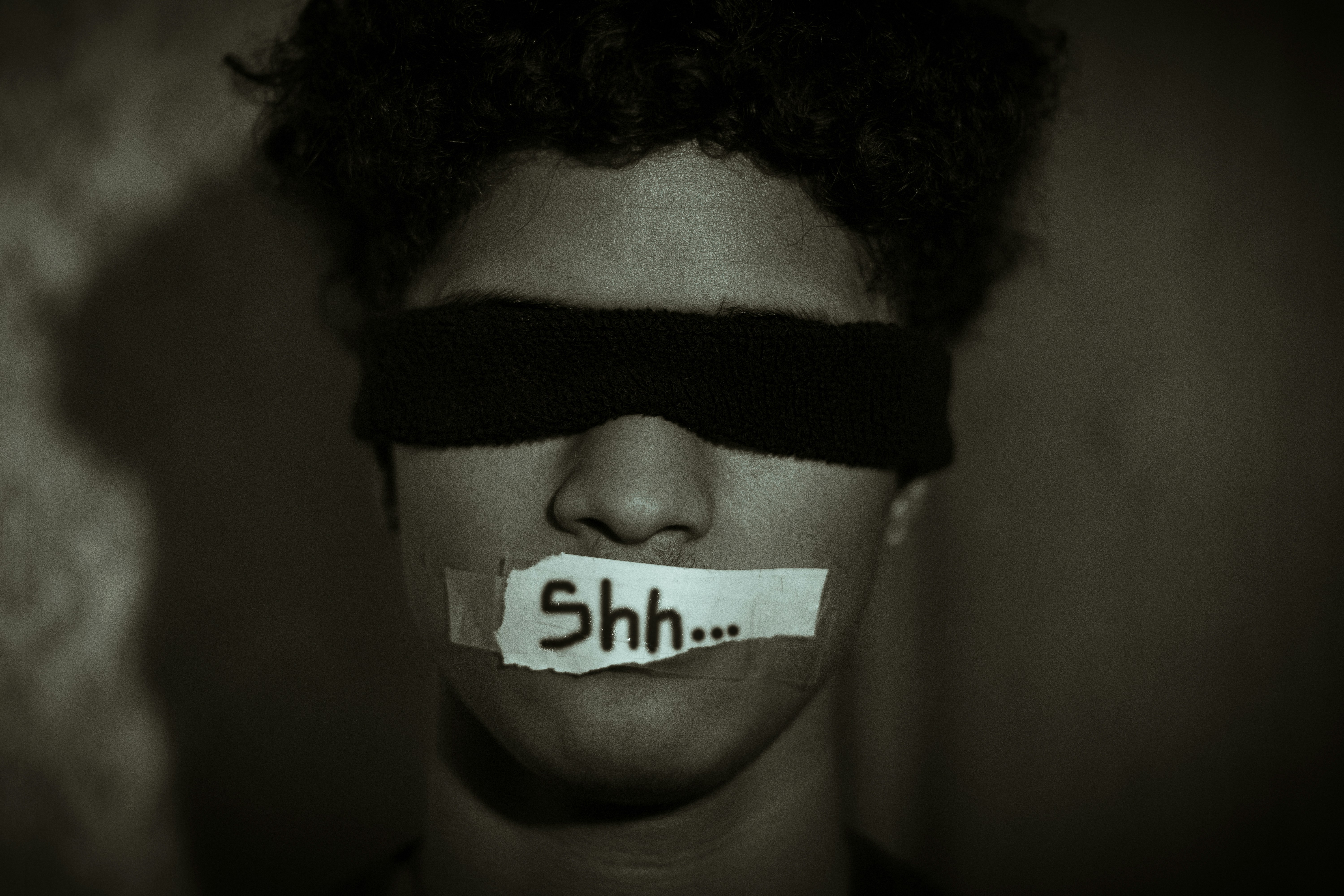
Sex.  It’s the great forbidden topic.  This extends to the truly staggering number of words that have been coopted, either as slang or circumlocutions, to discuss anything related to sex.  The other day I wanted to use the phrase, “finger in the dike.”  I was thinking of that illustration of a little Dutch boy preventing a flood from some of my childhood reading, but I quickly realized that it could be construed as insensitive.  When I was a child I wasn’t like other kids.  Some referred to my interests as “queer,” although I am not a homosexual and am not afraid to admit that I have many friends who are.  That word, though, can’t be used without being thought to refer to sex.  While this is true of many words that were once slurs, such as “gay” and the whole arsenal of derogatory words associated with denigrating our sisters and brothers, other—more neutral—words also fall into this category.

The sheer number of words we use to refer to our genital organs would stun alien (off-world) linguists, perhaps confirming, in their own minds, the advantages of telepathy.  Who isn’t slightly embarrassed when someone introduces himself as “Dick”?  I remember a good friend, who happened to be a bishop (now, sadly, departed), who introduced himself to me as “Dick.”  (I was a seminary professor at the time.)  I had trouble calling him that, although we met on many informal occasions and he even wrote me letters of reference.  Sometimes I ponder how sex has become the most talked about stigma there is.  I’ve been on a private campaign against stigmas lately.  I know this is a fight I cannot win, but still, isn’t it worth talking about?

Probably the most frequently used adjective, among many subcultures, is the f-bomb.  No matter how many times we hear it used (and books have been written on it), it always manages to shock.  Even the word itself has spun a whole effing set of circumlocutions to refer to the word itself.  This is truly a remarkable state of affairs.  I’ve studied linguistics enough to know that some topics are like this, but I’m hard pressed to think of any others that reach the level of sex.  Many are the times when I want to use a phrase I was taught as a kid that I now have to resist.  I had a colleague once respond with open-mouthed shock as I used a word in public that remains perfectly innocent (which is how I was using it) but which could be construed the wrong way. Such is our world.  Ironically, you can see sex in the media quite easily.  Movies, television, the internet.  Just don’t talk about it.

Photo by Gama. Films on Unsplash

Infinity

It occurred to me the other day that I will never read all the books on my list.  Only in my fifties, it’s not as if I’m knocking at death’s door, but who hasn’t been aware that that gentle rapping might come at any time?  Macabre?  Maybe.  Realistic?  Definitely.  Perhaps I’m a little old to be thinking about prioritizing, but it’s pretty clear that between work, writing, and the requirements of daily life (taking the car to the shop, scheduling a dentist appointment, trying to find time for a haircut, lawn care), that something’s got to give.  Work’s the non-negotiable since without it avoiding starvation (or perhaps getting medical coverage) becomes a full-time job.  Best to leave that sleeping dog slumber.  Then come the other three Rs: relationships, reading, and writing.  After that the time left to divide is pretty petty indeed.

My reading list grows almost daily.  Reading is a form of relationship.  I’ve recklessly written to writers after finishing their books, convinced that they’d written it to me.  I’ve also read material that, when done, makes me regret the time spent.  Still, I don’t, I can’t give up.  Writing is a form of giving back.  The other day an editor who’d accepted one of my fictional stories wrote that she couldn’t stop reading it.  It doesn’t matter that the magazine doesn’t pay—I’ve received back already what I’d planned for all along.  A kind of relationship with a reader.  If WordPress is to be believed, there are some followers on this blog.  Most think I write too much, and some, perhaps, too little.  Writing, however, like reading, is the formation of relationships.

Like relationships, reading takes time.  I carve out a spot for it daily but that doesn’t really make a dent in the growing reading list.  I can’t claim that it’s because I’m no longer a professor.  Except during the summer I read more now than I did when I was teaching (the professor’s life isn’t what most people think).  It is, I believe, that there are so many interesting ideas out there that one person simply doesn’t have time to think them all.  Reading and writing are a form of very slow conversation.  Of course, with technology the rest of life is speeding up.  Things seem now to happen instantly.  The world of books is slower, and the pace is far more sane.  I may never get through my list of books to read, but at least I have good conversation with those I don’t know, and that’s what really matters.