Pagan Fear

We still fear pagans.  Religion and horror are often tied up together, but when it comes to monsters we trust Catholics and fear pagans.  Of course, when Startefacts recommended The Ritual it was in the context of five pagan horror movies you should see.  I’d seen three of the others, so The Ritual seemed the next logical step.  Four friends are hiking through Sweden to honor the wishes of a fifth friend killed during a robbery.  When one of the them injures his knee, they decide to take a shortcut through the forest where a combination of the Blair Witch Project and Midsommar and Antlers takes place.  After finding a freshly gutted elk in a tree, they take shelter in an abandoned cabin surrounded by runic signs on the trees.  Soon they’re being hunted by a huge creature they can’t see clearly.
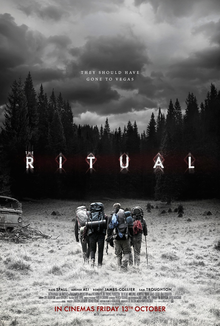
The final two are captured by a pagan group that worships one of the Jötnar—the monster that’s been hunting them.  The final boy escapes by getting out of the forest, where the Jötunn can’t go.  The choice of a Germanic monster is a bit different, and the creature design is fascinating.  Jötnar apparently straddle the line between gods and monsters, being a kind of frost giant.  The pagan group sees it as a deity that keeps them safe in return for sacrifices.  Given the number of bodies in the trees, other hikers had decided the shortcut was worth taking in the past.  But still, the pagans are cast as the bad guys.  This is in spite of the fact that the friend whose death started the whole thing was killed in England.

The religious convictions of the English robbers aren’t made clear, but they were raised in a Christian context and are every bit as brutal as the pagans.  In fact, the pagans, although they sacrifice strangers, do try to talk kindly to them (at least if they have the mark of the Jötunn on them).  Not just the pagans are savages.  At least they have a moral reason for what they’re doing, in their own minds.  The criminals are in it only for themselves.  We still fear those of other religions, although they’ve come to their beliefs in a way similar to how we’ve come to ours.  Whether born into it or converted, believers generally come to their conclusions honestly.  In the world of the film, this Jötunn is real.  And, until the end, it protects those who worship it.  So yes, this is a pagan horror film, but it makes the viewer wonder whence the horror really comes.

Meeting Places

It’s one of those quirky British television plays that’s its own movie.  It was part of the Play for Today series.  I turned to Penda’s Fen after receiving some very distressing news, as a means of self-healing.  (I may seem distracted for some time, please forgive me.)  Sometimes considered folk horror, it really isn’t a horror film although it may be treated as one.  The dialogue is heavily religious, involving a lot of theological discussion of Manichaeism, the “heretical” belief in the struggle between the powers of light and powers of darkness.  It plays out through the maturing of Stephen Franklin, son of the local vicar who is, unbeknownst to himself, adopted.  He also discovers his homosexuality as he begins to rebel against the strictures of his private school education.  Underlying all this is the fact that he lives in Pinvin, in reality Penda’s Fen.

The story deals with the past interrupting into the present as Penda’s pagan kingdom never really fell.   A local writer claims that there is an entire escape city beneath the British landscape to which those deemed “important” to the government are to be evacuated in case of emergency.  In reality, the kingdom beneath, and overlapping, Pinvin is that of Penda.  Penda was an actual Anglo-Saxon king and here he encourages Stephen to know himself—one of the mottos of the school.  That knowing involves coming to question the conservative, Christian belief system he has wholeheartedly embraced.  His adoptive father, the vicar, has broader beliefs, including the reality of other gods.  Stephen discovers this and learns of his adoption, making for some heartfelt religious dialogue.

My reason for watching, apart from the much-needed therapy, was that it had been recommended as a piece of religion and horror.  There are some horror moments, but generally it’s difficult to say whether they’re hallucinations of Stephen or they’re really happening.  One is presented outside his viewing, which suggests that they are meant to be real.  One involves a demon, but not the scary kind of The Exorcist, which had been released just a few months ahead of Penda’s Fen.  In all, it’s a thoughtful movie, the kind you might expect when based on a play.  Given the themes, I’m not sure it was the best therapy, but it did engage the religion and media dialogue.  I hope to come back to it some day under better circumstances.  The dialogue is worth engaging with more depth than I’ve been able to muster here right now and there’s much I still don’t understand.


A Tumble

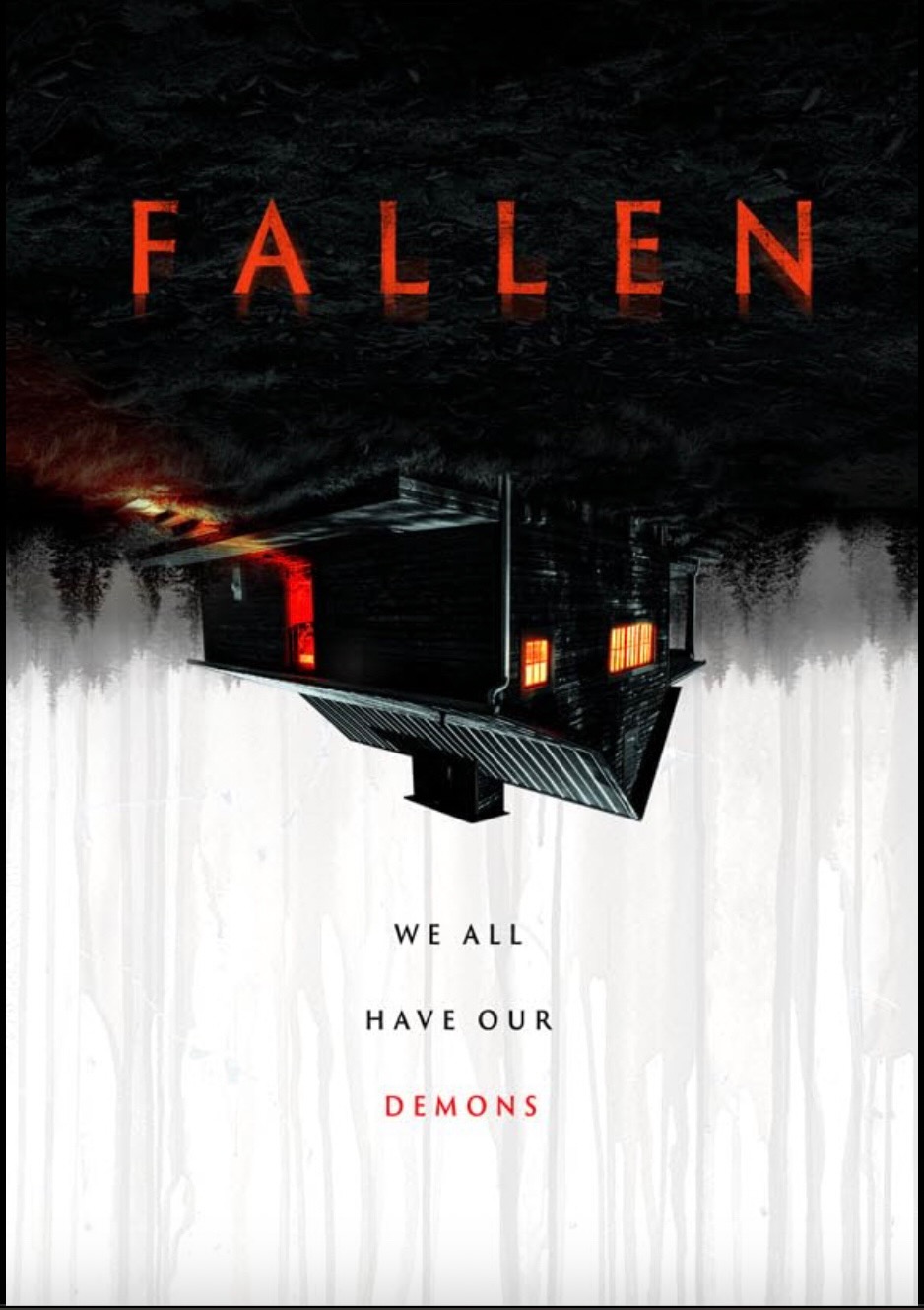
So beautifully shot, Fallen is a movie worth watching despite its disjointed plot.  Worth watching for horror fans, that is.  Apart from the night scenes, this is art house cinematography, and that may be because it’s an independent movie.  What’s it about?  That’s difficult to say, definitively.  The night scenes are so dark that you can’t tell what’s happening and the plot seems to have been intentionally obscure.  (That’s hard to substantiate because the 2022 film hasn’t generated too much discussion.)  This may have been another case of mistaken identity, like The Entity, because my notes only had the title down.  There are at least three movies with this title.  I’m learning my lesson to jot down the year when I add a movie to my “to see” list.  In any case, here goes…

A young priest (?) is warned by an older priest that it is time to take up violence because the darkness has started.  The younger priest is called “Father Abraham,” but he wears a tie in church services, and a small pectoral cross, making identification of the denomination difficult.  Since this is religion-based horror you’d think that that much, at least, ought to have been sorted out.  The heavily accented dialogue is often delivered so low that it’s difficult to follow.  In any case, this minister, after fighting “darkness” for many years, is in an isolated farmhouse with his disabled daughter.  He hunts and traps for their needs and a local boy delivers groceries, and is secretly in love with the daughter.  The minister, who seems to be presented as a tortured soul, isn’t really likable.  At night the house is attacked by physical demons.  There will be spoilers in the next paragraph.

It’s finally revealed that Fr. Fallen (apparently that’s his surname) had killed his wife for being a witch.  His daughter is also a witch, out for revenge for her mother’s death.  She summoned the demons and eventually kills her father and leaves the farm.  Religious imagery is everywhere in this film and begs for interpretation.  The lack of coherence, however, makes that very problematic.  The disabled daughter is the only survivor at the farmhouse, and is healed at the end.  By the demons?  Or because she’s a witch?  The influence of M. Night Shyamalan is evident, but his clean plotting is absent.  Online discussion is minimal, but there could be something of substance here.  If only it were better put together.  If only it were more discussed.


World’s End?

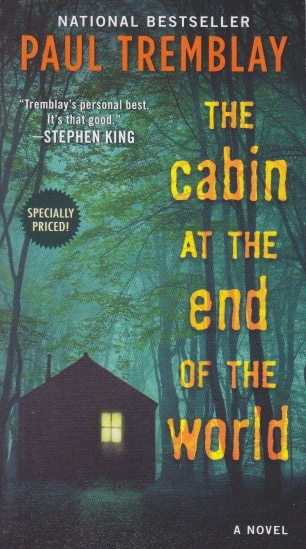
I’ve been writing on religion and horror for quite a few years now.  Sometimes you come across a horror movie, or novel, which addresses this directly.  Paul Tremblay’s The Cabin at the End of the World is one such novel.  A friend strongly recommended this, and indeed, the first half went impossibly fast.  This despite my dislike of home invasion stories.  It nevertheless kept me on the edge of my seat.  I should probably say there will be spoilers here (there will), in case you haven’t read this but intend to.  I’ll hold off on them until the next paragraph, though, so if you’re a faster reader than I am a writer you won’t accidentally run upon them.  So, a family consisting of two fathers and an adopted daughter find the cabin, where they’re vacationing, invaded by four people who believe the world is going to end.  Spoilers follow!

The world is going to end unless the family agree to sacrifice one of themselves to stop the apocalypse.  The strangers are armed while the vacationers are not.  And, as usually happens when those with weapons confront the innocent, the armed prevail.  But.  But the family refuses to sacrifice anyone.  Then the brainwashed four do something unexpected—they kill one of their own.  They continue to do this, attempting to convince the men that if the invaders all die, and neither of the men is sacrificed, the world will end.  Quite a bit of the novel then becomes a theological discussion regarding what kind of god would make such a demand.  Of course, if you read Genesis you’ll already know the answer, right Isaac?

Tremblay knows not to tip his authorial hand as to what’s really happening.  As the cabin becomes a mess of blood and gore, the television seems to be showing predicted apocalyptic events.  The invaders can’t reveal their source of secret knowledge because they receive visions telling them what to do.  The whole thing raises that most troubling of questions: who is really in charge?  Is there a bloodthirsty deity who requires a willing death or are the invaders simply good at acting out their paranoia and interpreting events to meet their expectations?  So it is that Cabin becomes a disturbing story—nearly a theodicy—asking age-old questions of what happens when religious belief conflicts with rational materialism.  There are enough hints of supernatural happenings to make the reader wonder.  And when it ends it affirms something many of us are exploring these days—religion and horror have much in common but neither is clearly understood.


Cat Nipped

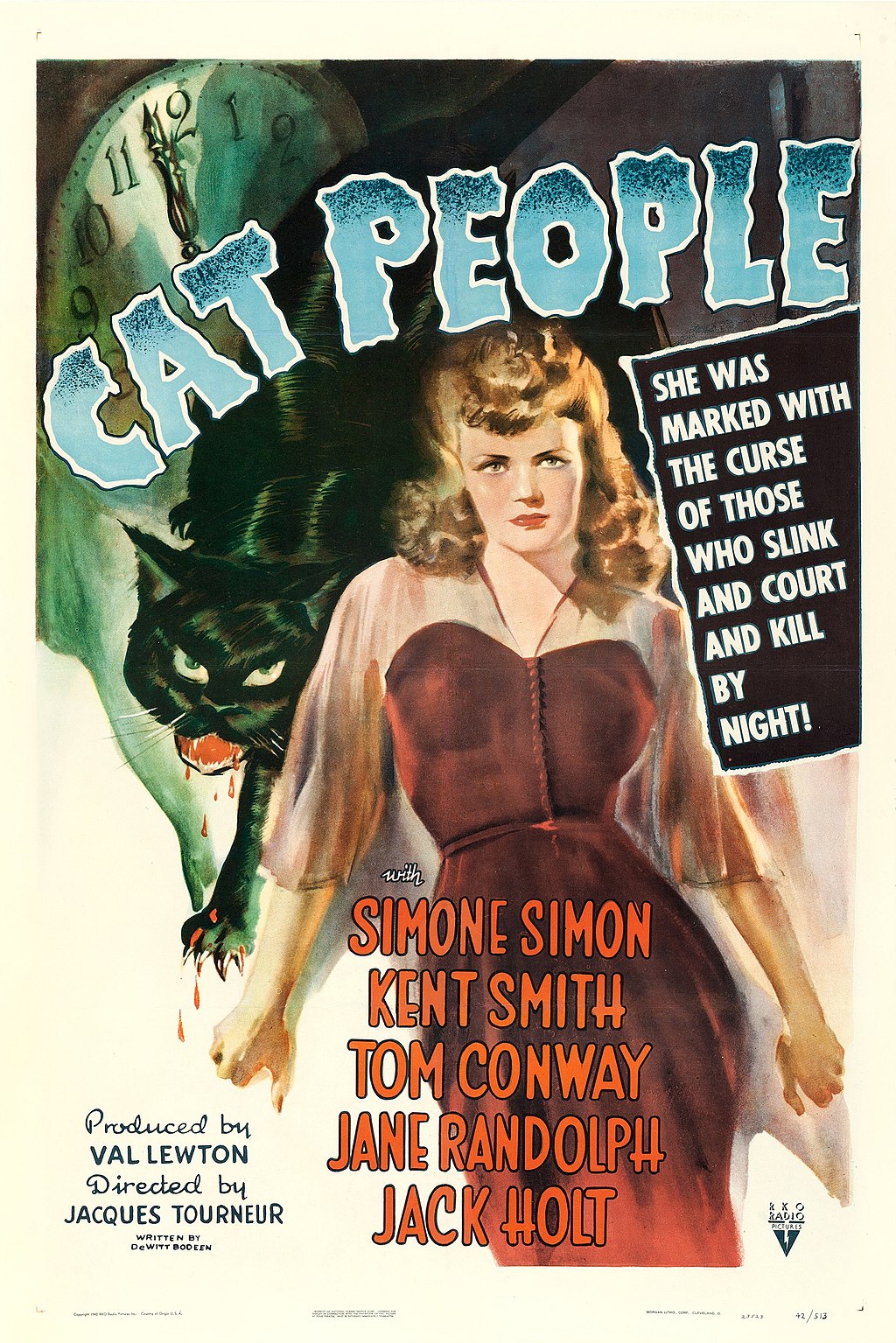
Holy Horror began with movies from 1960 on.  You see, I had watched the 1982 remake of Cat People without ever watching the original from 1942.  The remake has Paul Gallier, the brother of Irena, as a religious leader.  He doesn’t cite the Bible, so the movie fell outside the limits I set for that particular book.  I recently watched the 40-year older original version and was surprised to find not only the religion intact, but also the Bible as part of the story.  Both versions integrate religion and horror and some of the scenes are very close between the two.  The original centers around Irena Dubrovna, a Serbian immigrant.  In addition to originating the The Lewton Bus technique, the film also introduced a religious origin for the horror.  When Irena meets Oliver Reed, she explains to him that in Serbia, in her home village, some witches were driven out into the woods of the surrounding mountains by the Christians.  There they formulated a curse leading to becoming cat people when aroused.

Irena, fearing sexual arousal, spends time apart from Oliver after they marry, mainly watching the black leopard at the zoo.  One of the custodians warns her it’s an evil animal, a monster as described in the book of Revelation, which he quotes.  Of course, this leopard is an ordinary big cat, and the woman to whom he quotes Scripture is a cat woman.  Irena knows inside that she’s one of the cat people, but nobody will believe her.  The film also makes use of a quote from John Donne regarding sin.  Indeed, the film makes it clear, even after Irena dies, that she had never lied.  While she’s stalking Oliver and Alice in their office one night, Oliver pulls down a T-square, the shadow of which forms a cross on the wall, and he abjures her, in the name of God, to leave them alone.  Religion, the clash of religions, makes the monster.

Cat People, despite having had a mixed reception, was an influential movie.  Like much of early horror, it’s tame by today’s standards.  And yet it’s aged well.  I didn’t expect to be drawn in as much as I ended up being.  After all, I’d seen the remake first.  America at the time had a fear of the Balkan region, where mysterious eastern Europeans still had tales of vampires, werewolves, and cat people.  Of course, the last of these was invented for the film.  The director, writer, and producer wanted to create an intelligent horror film, which they did.  Moody, atmospheric, and based on religious tension, it is worthy of a Holy Horror sequel.


More Water Monsters

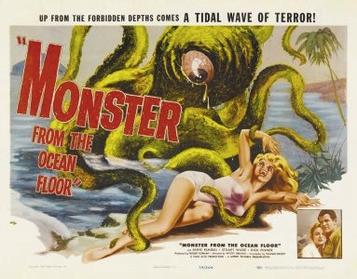
Monster from the Ocean Floor, one gets the sense, wouldn’t have merited a Wikipedia article were it not for the fact that it was the first film Roger Corman produced.  Despite its B-movie quality, there’s quite a lot to like about it.  First of all it has a strong female lead.  Julie Blair is the only gringo in Mexico to believe the locals that there’s a monster just off shore.  Steve Dunning, the scientist, is an avowed skeptic.  The plot is cheesy—the monster is an overgrown amoeba irradiated by the Bikini Island underwater nuclear tests, and it’s killed by getting a submarine in the eye—but there are some very effective cinematographic moments.  When the young boy talking to Julie in the opening turns to stare at the ocean where his father disappeared, the framing and emotion are perfect.

The theme music for the approach of the shark, and then the amoeba, anticipate Jaws by a couple of decades, and I have to wonder if John Williams hadn’t watched Monster from the Ocean Floor.  (I’m sure even cultured people watch the occasional B-movie.)  There’s also an unexpected religion angle.  A series of episodes in the film have a couple of locals trying to kill Julie as a sacrifice to the monster.  Despite the holes in the plot, it’s remarkable that in 1954 there could be dialogue suggesting that the Christian God (“the other god” according to a local woman) isn’t the God that Quetzalcoatl is.  All the same, the sacrifice is based on the folklore that the sacrifice of the “fairest” (Julie is, naturally, blonde) will appease the monster.  Maybe not the most solid theological basis, but still, not bad for a bad movie.

I’ve recently published a piece on Horror Homeroom about women and water monsters.  Having a strong woman in a 1954 film is especially remarkable.  Julie, despite the skepticism of the scientists, takes the initiative to dive right down and see the monster for herself.  It’s only when she comes up with physical proof that the men consider that she may be right (and in danger).  Of course, the men do have to rescue her—you can’t have it all.  Yes, it’s a cheaply made movie with a paper-thin plot but it was beginning to show that a woman could take the reins and with good motives (if nobody else will do something about the monster, she will).  Although she’s the love object of the movie, she’s so much more.  And a submarine in the eye—that’s gotta smart.


Wrong Entity

In one of those weird synchronicities the universe likes to play, the very next day after I watched The Entity (2015) and wrote a blog post on it, this happened.  In yesterday’s post I noted that I couldn’t remember where I’d read about the movie, or who had recommended it to me.  I couldn’t even be sure which The Entity it was, since I didn’t write down the movie’s date.  The next morning I had the privilege of watching Claire Donner, of the Miskatonic Institute, talking about The Entity and it immediately came to mind that it was she who’d suggested I might like it (or might not).  Also, that I got the wrong one.  I haven’t had the opportunity to watch the one actually recommended yet, but it brings back to mind just how the Miskatonic Institute contributes to understanding horror.

The Institute has asked me to present a course this coming October and I will be posting more on that closer to the time.  It got me to thinking about a couple of things.  One is that I missed some major horror films growing up.  When I “got religion” in high school (I always had it, of course, and saw no problem with enjoying monsters too) I began to steer away from horror.  In college I had a dating occasion or two to watch horror, but it really only started again in earnest after being booted out of academia.  I was interviewed in seminary by a sociology grad student interested in why people watch horror, but my watching was (and still is) circumscribed by lack of cash flow.  The Entity made quite a splash in the early eighties, but it took someone in the 2020s telling me about it before I realized I probably should watch it.

The other thing Donner’s talk brought to mind is how religion and horror relate.  Such films are scary because of an existential threat—THE existential threat.  There’s nothing more powerful than God, but in such movies God can do nothing.  I haven’t seen the movie yet, but I suspect that’s true.  It’s certainly true of The Exorcist, with which it’s sometimes compared.  God doesn’t deliver Regan McNeil, no, Fr. Karras does.  And only by sacrificing himself to do so.  The existential threat has to involve a universe entirely out of kilter.  What is a God that’s powerless (it’s implied) to drive out evil?  The exorcism in The Exorcist doesn’t work, does it?  Yet there’s some benevolent force in the universe that gives us synchronicities and, it seems, is looking out for goodness in an often cruel world.


Spiritual Alterations

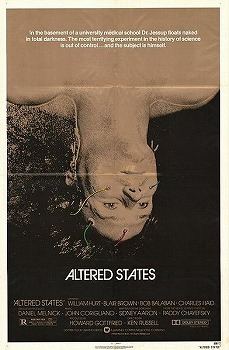
I’d been meaning to watch Altered States for quite a few years.  I suspect the reason (it’s been long enough that I can’t recall for sure) is that I knew it had a story line tied in with religion.  The tale follows Edward Jessup, a psychopathologist, who is attempting to understand schizophrenia.  He’s particularly taken by the religious nature of some schizophrenic delusions, and he uses sensory deprivation on himself to trigger something similar.  A trip among tribal Mexicans leads him to a psychoactive substance that he decides to combine with sensory deprivation to enhance the effects.  Along the way he explains to his girlfriend, and eventual wife, that his father was religious but died a horrible death.  He therefore became irreligious but his altered states of consciousness are often full of images from Revelation.

While the Bible theme eventually gives way to biological regression to pre-Homo sapiens, one of Jessup’s experiences has him coming to his dying father again and dropping a Bible on him which turns into the veil of St. Veronica on his face, which he then rips off and throws, flaming, to the floor.  Another instance of the Bible in horror, the film also uses crucifixes and hellish images to demonstrate the religious nature of these alternative states.  Jessup’s goal is to regress to the original thought, to encounter, as he puts it “God.”  This desire, combined with the potent Mexican drug, transforms him physically, and, in the end, emotionally.  Instead of being dissociated from his wife (whom he is planning to divorce), he realizes that love is the only thing that can save him from the terror of his experiences.

This is some profound stuff.  Paced like a movie from 1980, it has a quality not unlike 2001: A Space Odyssey.  The message seems to be sound—the need for encountering the “divine” ends up convincing Jessup (that may autocorrect keeps changing to “Jesus”) that love is really what it’s all about.  The transformation scenes, while not shown in the detail of An American Werewolf in London, are nevertheless convincing enough.  It’s a rare movie that treats religion respectfully.  Here Ivy-League scientists are motivated to understand it.  In real life, alternative states of consciousness are quite real, if poorly understood.  They’ve been part of religious practice from the beginning and are a far cry from sitting in the pew and singing anodyne hymns week after week.  The more movies I see, the more it seems that a sequel to Holy Horror will be necessary some day.  


Lilith Be Gone?

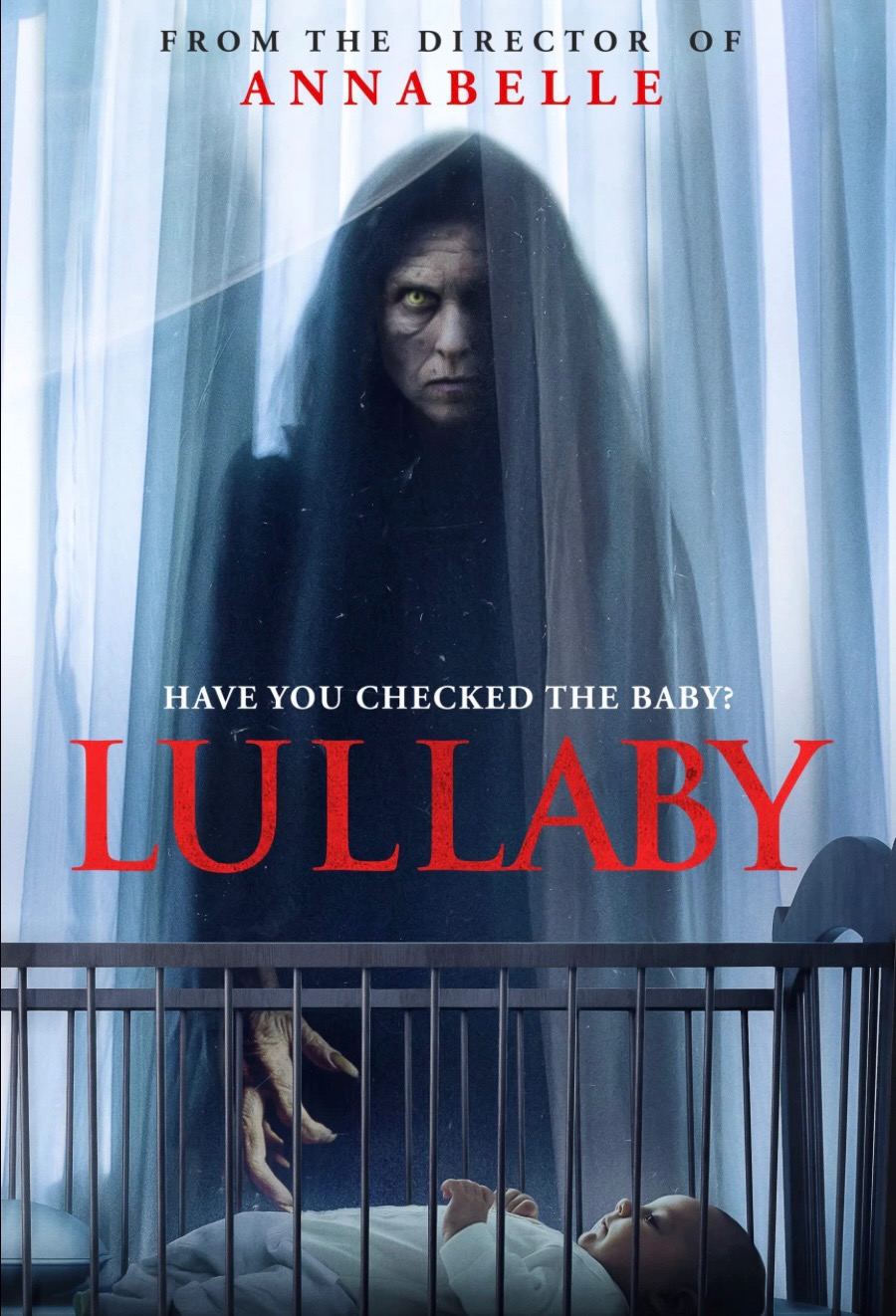
One of those questions it isn’t politic to ask is “Are you Jewish?”  I get asked that once in a while but mainly by Jews.  I’m not Jewish but some people tell me I look like I am.  In any case, as a Bible editor at an academic press, the question of someone’s ethnic affiliation sometimes comes up.  The dilemma is that we can’t ask that.  And it is very difficult to know the answer if someone doesn’t tell you.  The reason that this is on my mind is that I recently watched John R. Leonetti’s horror film Lullaby.  The film was one of at least two that came out with that title in 2022.  And since it deals with Jewish themes, that question naturally comes to mind: is the director, or are the writers, Jewish?  I suspect, from the way all of this plays out that the answer is “No.” Or, if they are, they didn’t do their homework.

Lullaby is a Lilith story.  A young couple—she’s Jewish, he’s a convert for her—have a newborn.  The woman’s sister has sent to them, among other things, a book in Hebrew that contains a Lilith-summoning lullaby.  Lilith shows up and steals the baby but a tattooed rabbi gives the husband some Jewish rituals to combat Lilith.  Apart from the spurious etymology of “lullaby” as “Lilith be gone,” this rabbi doesn’t seem convincing.  His Hebrew handwriting looks as if he might be a first-year student.  And keeping a menorah lit all night is supposed to keep a demon at bay?  Not only that, his assistant can be bribed to regain the cursed book.  All of this begins to look like a gentile trying to direct a horror film in a religion he doesn’t understand.

Religion and horror go naturally together.  I’ve written several posts about Jewish horror that really works.  In those instances, it’s clear that the writers and directors understand what Judaism is.  The solution here is that the convert husband must “really believe” in order to conquer Lilith.  The rabbi tells him to have faith.  The thing is, Judaism isn’t a religion based on having faith—Christianity is.  And taking that aspect of Christianity and using it to try to make other religions faith-based is one of the most common mistakes of those who don’t study religions professionally.  Horror works well with religion when those doing it actually understand the religion they’re trying to portray.  When they don’t, it can end up looking like appropriation of the worst kind.  I watched the movie because it was about Lilith.  What I found was a basic misunderstanding of how religions work.


Curses

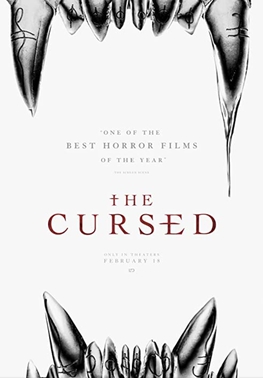
Once again I’m reminded that Holy Horror was never intended to be comprehensive.  I recently watched The Cursed (the 2021 one, directed by Sean Ellis).  This appeared after Holy Horror was published, but it’s a good example of religion (and the Bible) and horror.  It’s artfully done but rather gruesome and difficult to watch.  I suspect such aspects as gruesomeness are why many people dislike horror.  That certainly isn’t my favorite part either.  I watch for the story.  The lesson learned.  The moral delivered.  And also to get a sense of what’s going on in the wider culture.  People tell disturbing stories for a reason.  And quite a lot can be learned from them.  The Cursed has a complex story that was, I suspect, influenced by the historical incident of the Gilles Garnier killings in early modern France.

Set in France, this movie focuses on disputed land and the inappropriately extreme measures wealthy landowners will take to keep it.  A group of Romani (“gypsies”) have laid claim to some aristocratic lands.  Seamus Laurent, a local baron, decides (with the advice of the clergy) to kill them off.  Foreseeing this, one of the women had a set of silver teeth made and put a curse on them.  After she’s killed, the teeth are found by the children of the town and the teeth make monsters.  There’s some confused imagery here, but the story-line is clear.  The monster is revenge for the cruel treatment of and land theft from the Romani.  They may be dead, but betrayal leads to revenge.

That’s where the Bible comes in.  Apart from the locals fleeing to the church for safety, it turns out that the silver was from the thirty pieces given to Judas to betray Jesus.  One of the murder victims had a page torn from the Bible with Ezekiel 22.22 highlighted.  Unlike Pulp Fiction, this quote from Ezekiel isn’t made up and the “prophecy” is taken to refer to the beast conjured by the injustice done to the rightful owners of the land.  This film is subdued, moody, and gothic.  The story is sincere and well told.  It leaves enough gaps for discussion.  It also shows, once again, how religion and horror benefit from each other’s presence.  Stealing land is a biblical crime.  Although the church doesn’t ultimately protect, the absent God in this movie is on the side of those oppressed and tortured by the wealthy.  Maybe it’s time for a sequel.


Creepy

There’s some symbolism here that I haven’t had time to sort out.  (Some of us need time to just sit and think—time that work won’t allow.)  I’d been wanting to watch Jeepers Creepers for quite some time but streaming services said it was unavailable.  I suspect that was because a sequel has been running in theaters and those who own the rights want to capitalize on it.  So it goes.  When it finally did show up on Freevee, so you have to subject yourself to commercials, I had to see it.  Now I need some time to think.  In case you’re even slower than me, the film involves a couple siblings driving home for spring break when they encounter a monster/demon, Creeper.

Creeper smells peoples’ fear and consumes parts of those who have something it needs to regenerate itself.  The brother and sister encounter Creeper on one of those long stretches of road without civilization that you find in parts of America (in this case, the unspecified south).  I won’t spoil the ending, but for my money (or actually, Freevee patience), the first half is pretty scary.  The whole is not bad either.  So what do I need to think about?  Well, Creeper stores its victims’ corpses in a church basement.  The church is abandoned, but still.  This overlap between religion and horror is an aspect that has fascinated me time and again.  Shouldn’t a church be a safe place?  (For many of us, that’s a myth long debunked.)  Is it because it’s abandoned that a demonic monster has moved in?  Or does religious symbolism not bother it?  Or perhaps attract it?

Not only that, but the movie also has a prophet.  While she’s not called that, this local woman has dreams of things involving Creeper that haven’t happened yet.  Like Cassandra, however, everyone ignores her.  It seems that Jeepers Creepers experienced a budget cut during production that led to a rewritten, and cheaper, ending.  While I won’t spoil it, I will say that it is a bit of a letdown from how the film started.  A lot is left unexplained, but the story is pretty good and the acting, at least by the siblings, and the always entertaining Eileen Brennan, was impressive.  They have a way of conveying fear that’s believable and contagious.  The religion theme, however, appears to have been dropped once the church burns down.  It may be that it was somehow revisited in the ending that money forced to change.  Regardless, it is worth watching, and, if you have the time, pondering.


Expiration Date

One of the perils of trying to understand others—something that is vitally necessary for a humane and civil world—is facing difficult truths.  Sometimes horror makes you do that.  I’ve recently been trying to watch horror directed by women, as this gives another perspective on what’s scary.  Directed by Mimi Cave and written by Lauryn Kahn, Fresh is very disturbing.  Noa is a young professional who’s not having much luck dating.  He best friend Mollie, who is African American, is the voice of reason in the film.  Noa finds internet dating services inadequate, matching her up with losers, but then she meets a handsome, funny guy in the grocery store.  She agrees to a date and they hit it off.  So far, so good.  Then he takes her to his place and abducts her.  He explains that he’s a supplier of human meat for an ultra-wealthy circle and she is to be consumed.

I won’t say much more about the plot since you may want to disturb yourself some day, but I will say that the movie reinforces something I get from reading Carmen Maria Machado:  women have to deal with men’s assumptions about their bodies.  Even the institution of marriage is all about ownership; men don’t want to pay (the key word) for supporting someone else’s child.  The nuclear family is intended to keep that at a minimum.  Just a glimpse at social standards reveals that men are held less accountable for cheating than women are, largely because there’s never a question of who someone’s mother is.  Noa’s captor is charming and nice.  He’s also a (as later revealed) Satanic psychopath.  He’s also also married, with children.

The film is disturbing on so many levels as it reflects on how a man feels he has the right, literally, to take women’s bodies.  Habeas corpus indeed.  It feels like being invited to dinner at Hannibal Lector’s house.  The religion element—for there often is one—is only revealed in two short glimpses.  One is the plate of one of the cannibals which has a Satanic symbol printed on it, and the other is a mid-credit shot of the butcher’s customers where the Satanic symbol reappears.  This theme isn’t really explored in the movie, but it is equated with “the one percent of the one percent.”  The clients are those who can afford anything and who crave the one thing they can’t have.  This is a movie to keep you up at night but it’s also one with a very strong social commentary.  That commentary is as disturbing as the entire premise of the film.


More Scary Stories

There might be a disconnect.  As a child the stories I had read to me were either Bible stories (Archway Books) or wholesome Easy Readers.  I think that was pretty typical in the sixties.  We didn’t have a lot of money but an abundance of respect for the Bible, so the former by far predominated in my literary experience.  As any kid will do, I thought this was normal.  There was a stir in the kids’ world two decades later, in the eighties, when Alvin Schwartz began compiling scary folklore and retelling it for children.  His Scary Stories to Tell in the Dark series has been challenged or banned from the start.  Most parents don’t want to admit that their kids like scary tales.  We didn’t direct our daughter’s reading much when she was old enough to pick Scholastic Books, and one time she wanted Scary Stories.

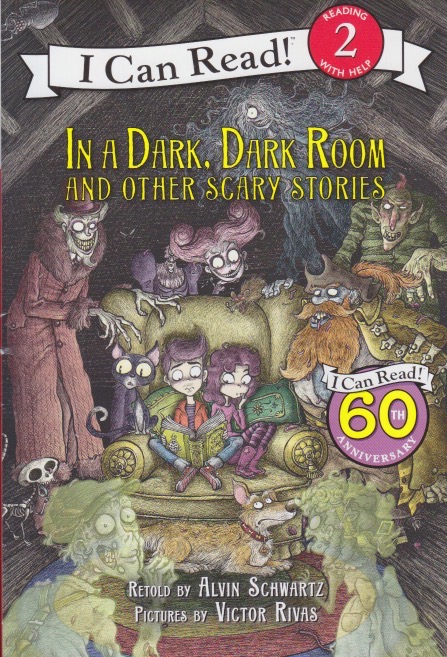
We were a bit shocked, not by that, but when a relative got us started on Roald Dahl.  His somewhat macabre children’s books were fine.  One of them, however—and I can’t recall the title—it’s packed away in the attic—was stories for older kids and it was so gruesome that I had difficulty making it through.  Not for me, but thinking about it from the perspective of a young child.  I recently had cause to read In a Dark, Dark Room and Other Scary Stories, again by Schwartz.  The copy I read wasn’t an original edition, but had illustrations, in color, by Victor Rivas.  I tried to think how scary such tales must be for kids who don’t know them already.  These illustrations were humorous, which helps, and tended toward Victorian or Edwardian style. Encountering such ideas for the first time, however, could leave an impression.

We tend to find olden times scarier than our own, it seems.  Partially this is correct, I suppose.  Science has helped us delay the inevitable by ameliorating many things that were formerly deadly.  At the same time it has helped those interested in such things to develop even deadlier weapons.  Mass shootings have become more common, to be mingled with the quotidian horrors of daily life.  Ghost stories hardly seem to be the most scary thing anymore.  I don’t know the answer to when kids are psychologically ready for scary things.  I still recall our neighbor—she was a few years older than we were—telling my brothers and me scary “true” stories that happened in the woods just across the street.  Those were in the “innocent” days before printed ghost stories for kids, but they gave me nightmares even so.  It was, however, the machinations of “Bible believers” that led me back to horror as an adult.  It’s kind of a disconnect.


Pumpkin Season

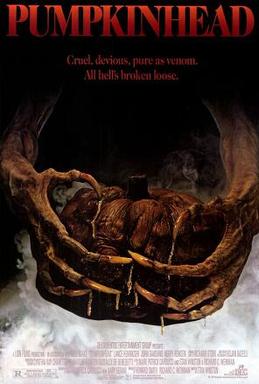
A creature feature with a moral.  Not a bad way to think through ethical dilemmas.  You see, we don’t have a lot of extra money lying around, so when I need a pick-me-up I try to find something free to watch.  Well, free because I subscripted to Amazon Prime years and years ago for the free shipping and now it involves “free to me” streaming on select titles.  Often I learn about movies from browsing and that’s how I came across Pumpkinhead.  I’ve learned my lesson about just clicking through without checking it out ahead of time.  It turns out the Pumpkinhead, apart from having major studio backing, was pretty favorably reviewed back in 1989.  My wife and I were in Edinburgh at the time, newly wed and trying to concentrate on doctorates.  I hadn’t been bumped back into horror yet.

In any case, what is this moral?  What is this movie?  Set in the unnamed rural south, the movie involves the accidental death of a good, honest man’s son.  Some city slickers, hot rodding on dirt bikes, accidentally run the boy down.  This good man visits the local witch, against the advice of the locals, and she raises a demon for him—the eponymous Pumpkinhead—to get revenge on the meddling kids.  The moral comes in where the witch warns him that such revenge comes at a terrible price, and it does.  The man and the avenging demon begin to merge and his desire for revenge leads to his own demise.

Religion plays a role in this film as well.  One of the locals, wanting to help the final girl and her boyfriend—the only ones left alive out of the six city folk—takes them to a ruined church, figuring that a demon won’t enter hallowed ground.  He’s not exactly right about that, but an extended shot of the religious imagery makes you think about the nature of revenge and what it means in a Christian context.  Besides being the first film role for Mayim Bialik (only 13 at the time), it also spun off two sequels.  Being a good student at the time, I was completely unaware of all of this.  I learned about the film while trying to stay awake one winter afternoon and trying not to spend any money to do so.  Not a great movie, it nevertheless does feature repentance and it explores the consequences of being driven by a desire to get back at others.  And the monster isn’t bad either.


Urban Tiger

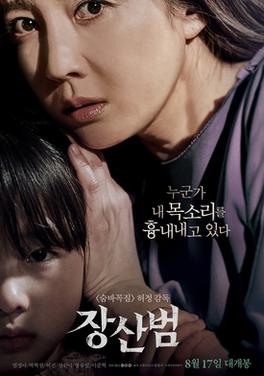
Many things are universal.  Ghosts, for example.  What ghosts do and how they behave, however, can be culturally specific.  The Jangsan Tiger is sort of a ghost and sort of a creature, and it has a religious backstory.  Of course, I’m referring to the Korean horror film, The Mimic.  I found it while looking for Mimic on Amazon Prime, but that definite article made this one free and it had received pretty good ratings.  Released by the careless trespass of a murderer, the Jangsan Tiger stalks a family that really just needs a break.  The parents, Hee-yeon and Min-ho, lost their son five years ago.  They move to Mt. Jang with their daughter (Joon-hee) and his mother, believing that the distance from Seoul will do them some good.  The Tiger, however, has other plans.

Apart from the well-timed jump-startles and stings (this movie “got” me more than once), the story is filled with pathos.  Parenting is probably the biggest emotional gamble a person can take.  The Jangsan Tiger imitates voices and convinces its victims that it is someone they love.  The children actors are particularly effective and their crying is difficult for any parent to watch.  This is horror that pulls at your heartstrings.  The family, as expected, begins to crumble under the pressure.  Religion comes into it because a shaman, ostracized from society, had summoned the Jangsan spirit in a kind of Faustian bargain.  He sacrificed his daughter and now that he’s released again, sacrifices others who are lured into the cave on Mt. Jang.

Interestingly enough, the actual mountain Jangsan—the movie is based on an urban legend—is in real life the site of an active mine field.  Somehow this moves the film from urban legend territory into that of parable.  Many of the scary stories we tell our children are intended to keep them safe from dangers they really can’t comprehend.  Adults plant minefields to make the land unsafe.  The real tiger prowling those lovely hills is one that walks on two legs.  And what that monster craves is human sacrifice.  Now, I can’t claim to understand the entire plot of the film.  Between subtitles and the lack of cultural experience, I’m merely a spectator to something that feels deeper than just a movie.  Those who spend time with horror know that it’s often sophisticated and intelligent.  It’s a genre that appeals to both the mind and to religion.  There’s a reason the shaman stands between worlds.