Let the Left One In

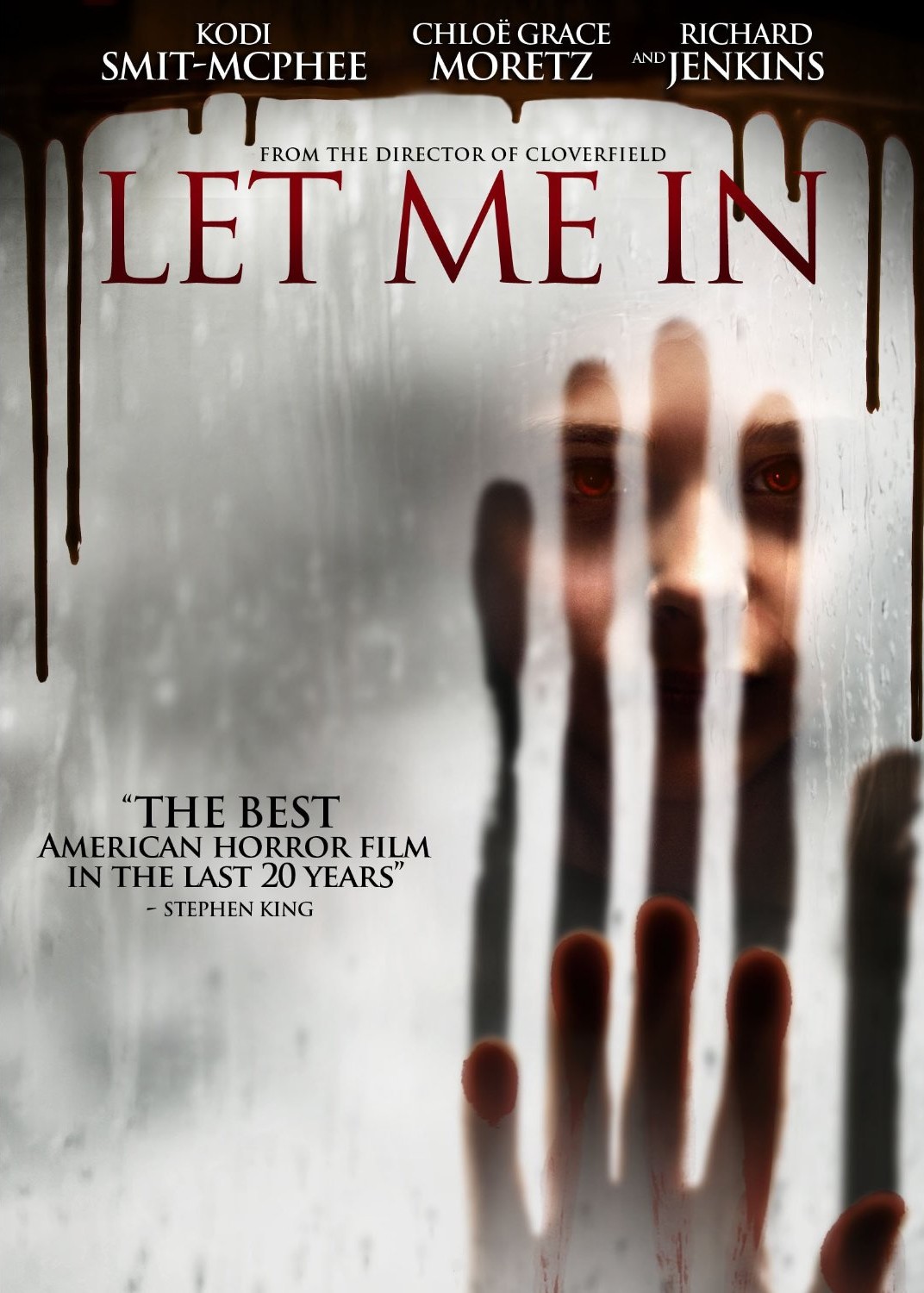
When you’ve got a good thing going, why stop? Reading Timothy Beal’s Religion and its Monsters put me in the mood for a vampire flick over the holiday weekend. I had watched with longing as Matt Reeves’ Let Me In flew into and out of theatres back in 2010. Advertised as a thoughtful vampire story based on John Ajvide Lindqvist’s novel, Let the Right One In, and having a real moral struggle unlike the Twilight saga’s dulled fangs, it had been on my “to see” list for quite some time. This movie doesn’t disappoint. The specific aspect to which I refer, of course, is the religious. Vampires may be the most religious monsters ever invented, and like all good, subversive movies Let Me In casts the religious aspect in an unexpected role. Religion and the vampire interact through the character of Owen’s mother. Her face never seen on the screen, she shuffles outside the range of view and tells her son of the need for prayer and belief. Her life is a shambles and 12-year-old Owen knows it.

Abby, the vampire next door, is a monster capable and desirous of love. Her vampiric self is not exposed to crucifixes or blessed communion wafers, but to the torment of outliving those she loves. Eternal life is her curse, and religion can do nothing to solve it. When Owen slips twenty dollars from his Mom’s purse to buy Abby some candy, Jesus is watching from the mirror. When the bullies torment Owen, Jesus is nowhere to be found. The symbolism, whether intentional or not, is apt social commentary. Our religion is there to punish us, not to help us. If in doubt, listen to the politicians and televangelists; God is intensely angry—Jonathan Edwards wasn’t even halfway there. Their surfeit of rectitude puts the rest of us to shame. Until they’re elected.

Vampires have their origin in creatures that steal the life-essence of the living. Whether blood, semen, or psychic energy, the vampire feasts while the victim withers. Let Me In, by telling the story of a pre-pubescent vampire, shifts the focus of culpability. A 12-year-old is beneath the age of responsibility according to the Judeo-Christian tradition. Unable to determine right from wrong, the child simply seeks what all living creatures do—the possibility of existence. When Owen discovers that his new friend, his only friend, is a vampire, he tries to find answers from his religious mother. She is asleep. He calls his absent father who blames the religion of his mother. The moral guidance here comes from the monster. The bullies would win if it weren’t for what the authorities call evil. Sometimes I think Jonathan Edwards got it all backwards, for when power determines who is righteous it is the bullies who dangle spiders over the fire.
Hic Sunt Dracones

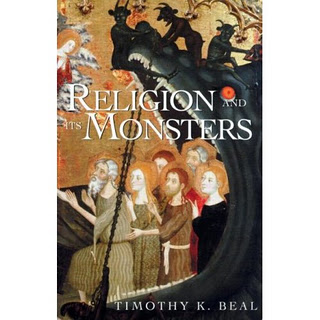
Even a visionary like Thomas Edison can’t know the directions in which an invention might be taken. The idea of the moving picture has immersed human beings in an alternate reality that is sometimes difficult to separate from the physical world we daily inhabit. As soon as movies were invented, producers and directors began to explore the depths of fear with the monster movie. What they were really exploring was the mystery of religion. I frequently write of the nexus of religion and the monstrous, and Timothy K. Beal wrote a book on that subject a decade ago in which I found another affirmation of my suspicion. Forthrightly titled Religion and its Monsters (Routledge, 2002), Beal’s playful yet serious exploration of the scary traces the origins of monsters to Genesis, and even earlier. Taking on Leviathan, the biblical sea serpent, Beal demonstrates the pre-biblical pedigree of this fierce monster and shows that, like most truly frightening entities, it began as a god. Indeed, what we call religion today grew up around fear of those forces beyond our control, a nature so harsh it could be none other than divine. The writers of the Bible clearly knew this story as Beal traces it from Genesis to Job, from Psalms to Jonah, from Leviathan to Devil.

In a shot/reverse shot formation, Beal takes us to modern-day monsters and shows their religious origins. Those things that frighten us on the big screen crawl there from their origins in the temples, shrines, and chapels of religions that don’t manage to subdue evil completely. The claims are made that the gods are stronger than the chaos that surrounds us, but they are still fighting nevertheless. From Dracula to Godzilla, the monsters have the gods on the run. And when the human protagonists finally get their monster pinned down, they discover that it is often God wearing a mask. Our monsters are gods gone bad. How else could they revive from the dead at the end of the reel? They never truly disappear. And if they do, there’s always more where they came from. The reason, Beal concludes, is that we are, in fact, the monsters.

According to the analysis of W. Scott Poole, Timothy Beal, like myself, falls into the “monster kid” generation. As I grew up, I quickly learned that to confess my interest in monsters was to risk the labels of juvenile, naïve, and immature. Grown ups are interested in money and sex and power. Only kids have any interest in dinosaurs, mythology, and monsters. An epiphany of sorts, however, seems to be unfolding. Scholars of religion in my generation are peeling back the rubber masks of our movie monsters and are discovering the face of the divine. Perhaps we are all adolescents at heart, fixated on the weird and bizarre because the paths to money, power, and temptations of the flesh are blocked to us. Or perhaps we are the Magellans charting a course for regions off the map. It is those regions, as Beal reminds us, that are illustrated with sea serpents and inscribed hic sunt dracones, “here be dragons.” Doubt it? Read your Bible and find out for yourself.