Hidden in Plain Sight

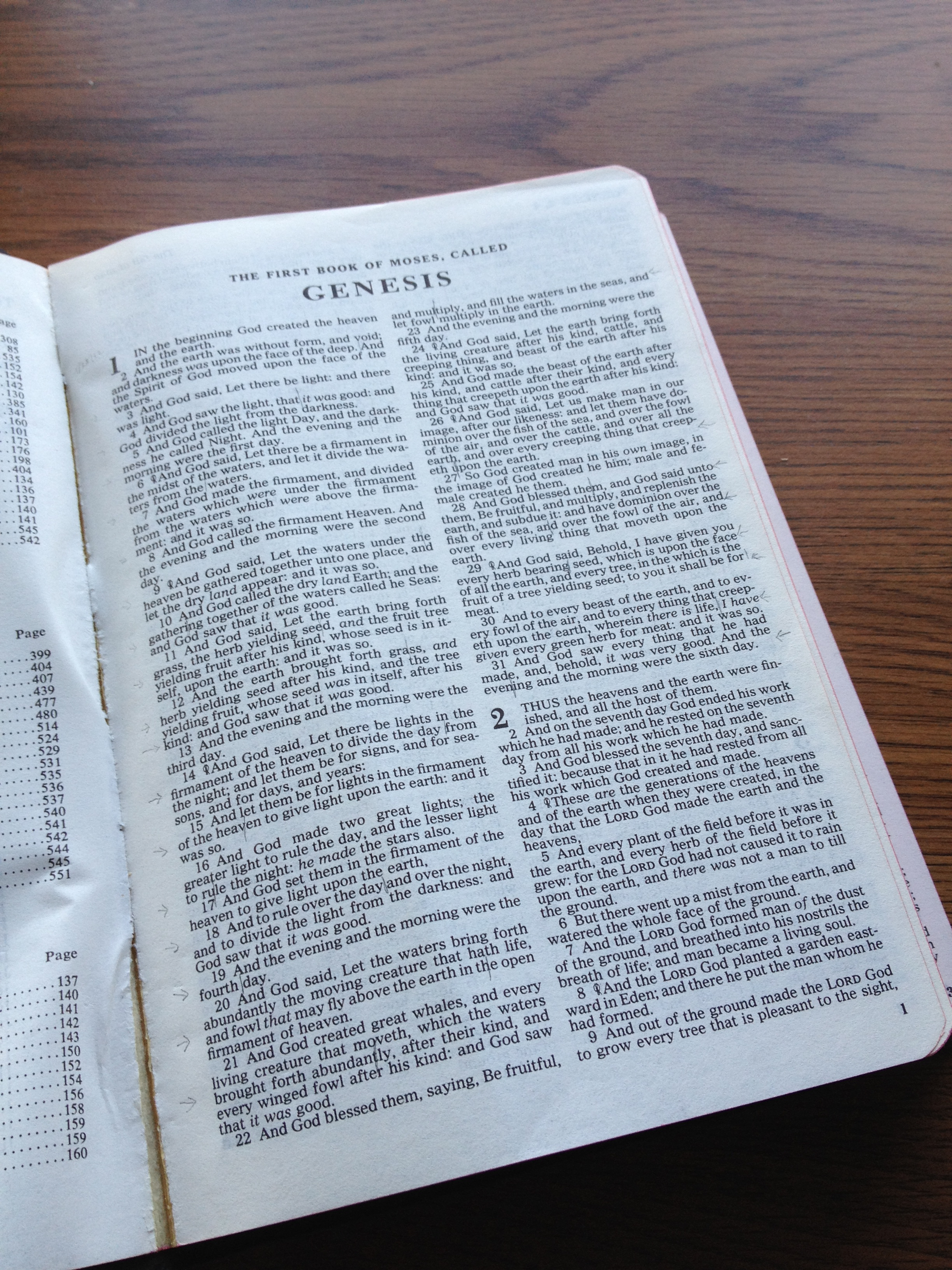
I have been tweeting the Bible for nearly a month now, and tomorrow—the thirtieth tweet—will see the end of Genesis 1 and the first words of Genesis 2. One of the occupational hazards of having been a biblical scholar for many years is the constant rereading of the same text over and over. I couldn’t even guess how many times I’ve read Genesis 1, in numerous languages, trying to find a key to unlock what is going on there. It is definitely not science—for that it would have had to have been written after science had been invented. Religion and science share that feature: they are human endeavors to understand the matrix in which we find ourselves. Anyone who is truly honest will admit to not being able to trust her- or himself all the time. We have all been betrayed by our convictions now and again. In this day of arrogant religious leaders and arrogant scientists we have little hope of coming to an armistice. Those who claim a special position for the Bible really couldn’t handle the truth in any case.

My twitter verse for today reads, “I have given every green herb for meat: and it was so. And God saw every thing that he had made, and, behold, it was very good. And the even”. Sense units in any text are where we, the readers, draw the limits. Taking this bit as a cue (indeed, the whole of Genesis 1 supports this), God intends humans to be vegetarians. The predatory gleam in the eyes of our religious politicians and televangelists belie their convictions given in public forums. The first rule God instates, after informing our primordial couple to have lots and lots of sex, is not to harm other creatures. At least the sex part seems to have gotten through, although many branches of Christianity repudiate it. The harm part we have received with ambivalence.

In a related development, an op-ed piece in yesterday’s newspaper gives instructions for properly disposing a worn-out Quran. While Christianity has no uniform opinion about where an old Bible goes to die, I find in this question a snapshot of the contradictions inherent in holy writ. We treat certain texts as sacred, and yet, is not the human expression in written form itself some kind of sacred act? Book-burning, no matter the book, strikes deeply at a visceral level those who’ve ever tried to reduce their ideas to what might be replicated on a page. It is our highest human achievement. All texts are sacred. Some may be misguided, and others are blatantly wrong—perhaps even evil—but they are the essence of a human endeavor. Perhaps this is the key I have been seeking all along.
Let there be light


Playing Doctor

Science, religion, humanity. People are a conundrum. Medical professionals have the unenviable task of sorting out what is wrong with this jumble of organic biological systems and also attempting to address the uniquely human aspect of their subjects. As far as life forms go, although we may not be on top of the evolutionary ladder, we are suitably, impressively complex. We haven’t yet sorted out how mental states figure into physical processes: a number of cases of “faith healing” seem to have been verified, but the mechanism remains unknown. Praying has been demonstrated to improve some physical conditions with the believer saying God is doing the work and the skeptic suggesting it is the healing aspect of our own minds. How do you treat a creature that may not even agree with you on the ground-rules?

A story in yesterday’s New Jersey Star-Ledger revealed that New Jersey hospitals are experimenting with human subjects. The subjects, however, are doctors, not patients. In an effort to bring science and the humanities together, several hospitals are sponsoring reading groups for doctors. Like a garden-variety Oprah reading club, the physicians read a novel and discuss the human elements with each other. The theory is that it may help them understand the softer side of the science – how to touch the human reality of a field of study that has become very scientific. Specialists in the sciences and humanities have grown apart.

The humanities have long been assigned to the “less necessary” side of both university programs and the job market. Ironically, among those who are most famous in our pragmatic, make-a-buck world are musicians, actors, film-makers, best-selling novelists – in short, masters of one of the humanities. A darker side exists here as well; even celebrated humanities specialists can turn on one another. Contradictions and conflicts are part of human nature. Religion, one of the humanities, is a stellar example of the heights and depths of human behavior. As physicians attempt to discover what really makes us tick, reading novels is a good place to start. Attending religious services may be a bit more chancy, but like any human endeavor, one might get lucky and make a truly groundbreaking discovery. Did Rasputin write any novels?

Playing doctor, once upon a time.


Cyclotrons and Stardust

While recently watching an episode of Morgan Freeman’s Through the Wormhole, a connection emerged between religion and science. In an episode entitled “What Are We Really Made of?” the viewer is taken deep into CERN, and shown the tunnel where the Large Hadron Collider slithers like a 17-mile metallic snake coiling back on itself. In a quest for what ultimately constitutes sub-atomic particles, the script informs us, when the Collider is up to full speed it will recreate conditions as they were nanoseconds after the Big Bang. Scientists will be witnesses to creation itself. Their book of Genesis, however, will not be as easy to read as the one we currently have.

From CERN's website; the apocalyptic LHC

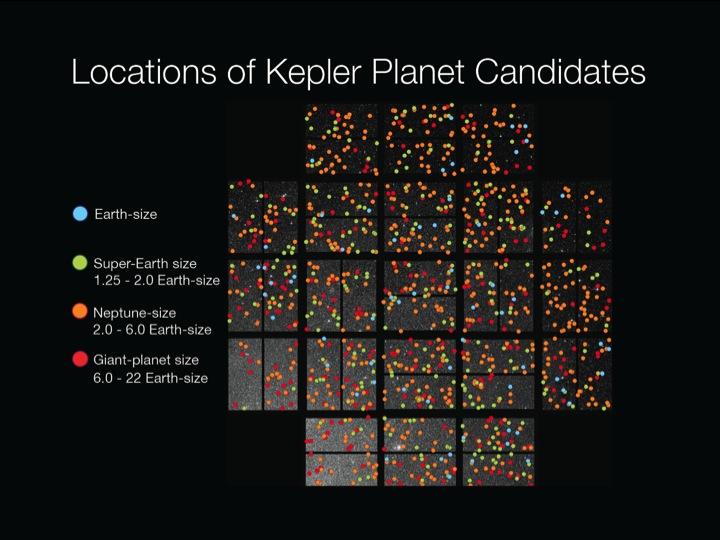
CERN represents perhaps the most sophisticated scientific instrument ever built. And the Kepler Space Telescope, one of the far-sighted members of our arsenal of understanding, has discovered rocky planets like our own 2,000 light years away. When the light of their sun left, Christianity was just beginning. Since then, millions of earthlings have died because of religious fanaticism. The deeper we peer, the less unique we become. Life is surely out there, and maybe building cyclotrons larger than CERN. The more we populate the universe, the lonelier we feel.

Kepler's guide to planets, from NASA

Scientists are also closing in on the creation of life itself. Working with self-replicating collectively autocatalytic peptide sets, they are nearing the point where we might say life has emerged independently in a laboratory. Where might religion be then? Human initiative in discovering the secrets of nature has balanced a divine creator on a precarious precipice. If life may emerge from a large soup of non-living peptides, and if we push the moments from the Big Bang back to merest fractions of a second while waving to our neighbors light-years away, have we consigned God to the unemployment line? I feel in better company now, although the light may have taken eons to arrive this far.


Build-A-Bible

Winter Term is underway, and one of the first aspects of the Bible I discuss with students is the fact that the Bible was a book that was compiled instead of written. In our society we are used to the concept of the Bible as a document that is unified by divine authorship, often forgetting (or ignoring) that none of the authors was intending to write a book with the tremendous authority the Bible now enjoys. Students ask how the Bible came to be; it was a process of gathering material widely utilized in Judaism. No one knows the actual composition history of the Torah, but after the Pentateuch got the process rolling, scrolls were gathered in collections and added to the Bible en masse. By the end of the first century of the Common Era, we had a Hebrew Bible.

Sometimes this historical reconstruction is a hard-sell to members of a society where a divinely written book is accepted alongside sub-atomic particles and super novas. Despite the technological sophistication that accompanies growing up in our engineered world, students are often ill-equipped to accept the Bible as a product of human exploration. The writers, whoever they were, traveled this same path of discovery that we continue to tread. They wrote down their hypotheses, based on their experience, just like modern people continue to do. The difference is they did this a very long time ago.

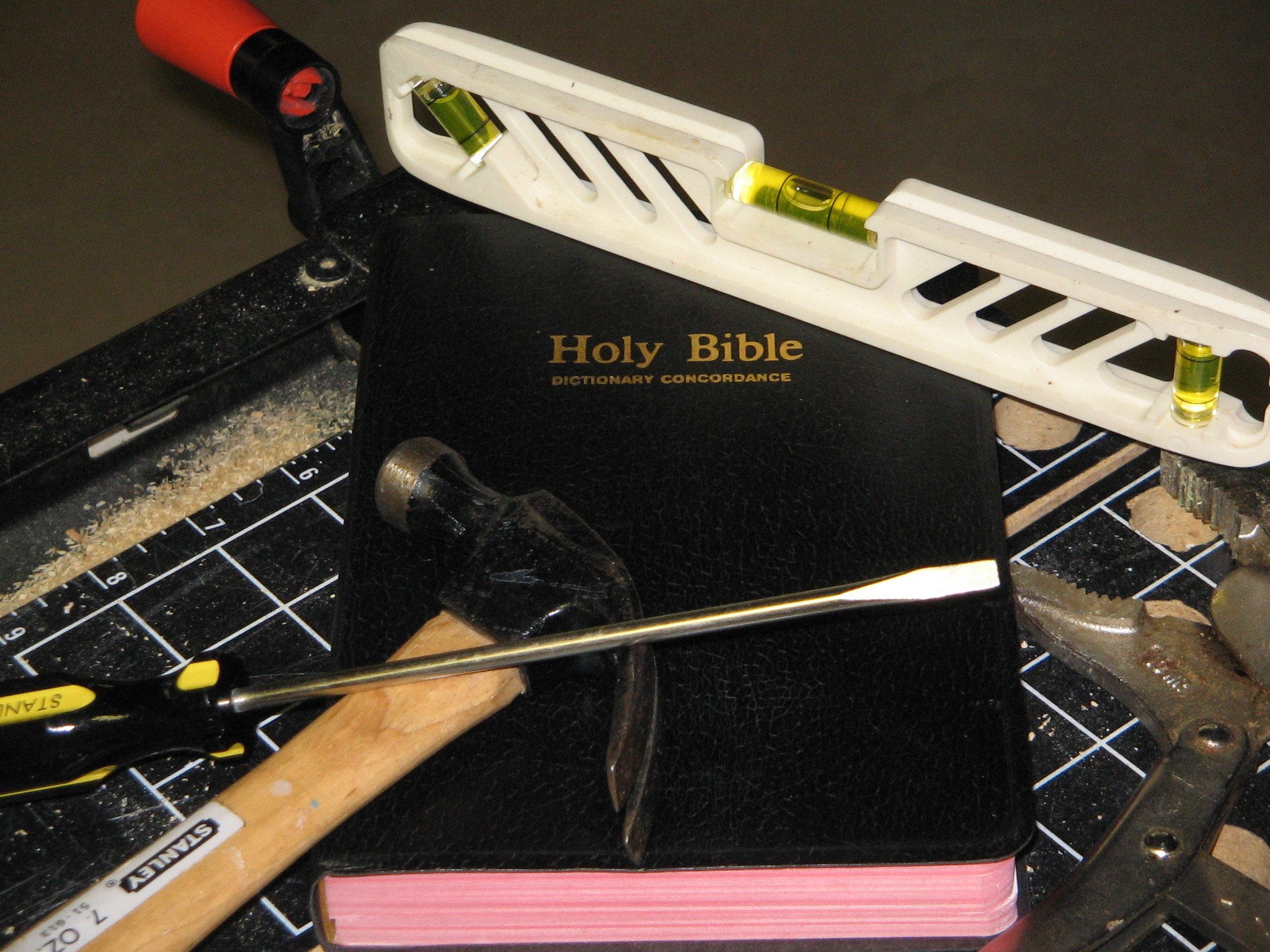
Those books that were selected for inclusion in the Bible became the defining documents of western civilization. Even though there is now an international space station orbiting out of sight above our heads, and even though quarks, leptons, and bosons fly out of cyclotrons large enough to encircle most small towns, God still holds a quill pen. The fixation just after the age of cuneiform is a curious one. If only God had held out for the invention of the Internet, the compilation of the Bible would have taken a very different course, I suspect. Instead of beginning its title with the word “Holy” it would more likely have commenced with “Wiki.”


Dispelling Myths

According to the Los Angeles Times yesterday, Danish scientists have debunked the folk-wisdom that a person can become drunk by soaking his or her feet in alcohol. In the spirit of science, three scientists submerged their feet for three hours in a washtub of vodka (I am very curious what the university requisition form must have looked like). At the end of three hours, the stone-cold sober scientists with pickled feet had dispelled “the myth.” Myth remains one of those loosely defined concepts that can be good and evil, in turns. If a falsehood is being disproved, the myth is misguided and wrong. If a deity is being described and worshiped, the myth is the ultimate truth. Perhaps we need a larger vocabulary.

A semester chock-full of mythology is drawing to an end for me. I taught on ancient Near Eastern myths, classical Greek myths, and biblical myths. Placing these religious stories side-by-side brings things into a sharp focus. No matter how funny or strange their results may seem to us, mythographers were people attempting to make sense of their world. Seldom do they get the scientific facts right, but that is not what they seek. In modern minds where the fine-tuning between truth and factual statements has been effaced, a conflict is inevitable. Especially since some fields of inquiry make lots of money (so much that professors can have happy feet) while others scrape by with the dregs of university funding. Aren’t we all climbing the same mountain?

One of the more disturbing aspects of teaching mythology is seeing undergraduates continually confusing mythology and history. This is not fine-tuning, the dial has broken off completely. I am astonished to learn that Heracles and Theseus really rescued (and sometimes violated) damsels in distress. Yet, on the first day of class, before the roster has been read aloud I could smell the alcohol in the air. A semester of dispelling myths lay ahead. “Kristensen [the Danish scientist] said it was important that the myth undergo scientific scrutiny to prevent students wasting their time experimenting with this activity,” according to Thomas Maugh. I wonder if it might not be best to keep the “mythology” alive – undergrads might well benefit from pouring the alcohol into their shoes rather than into their mouths.

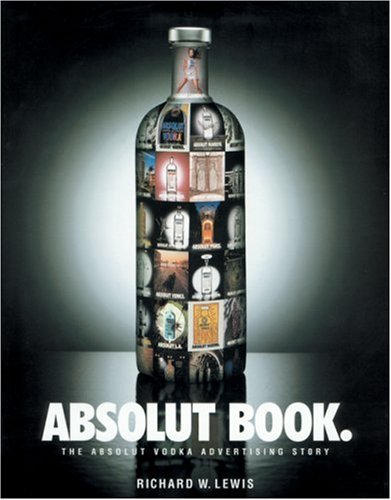
A book undergrads might actually read


Ouroboros

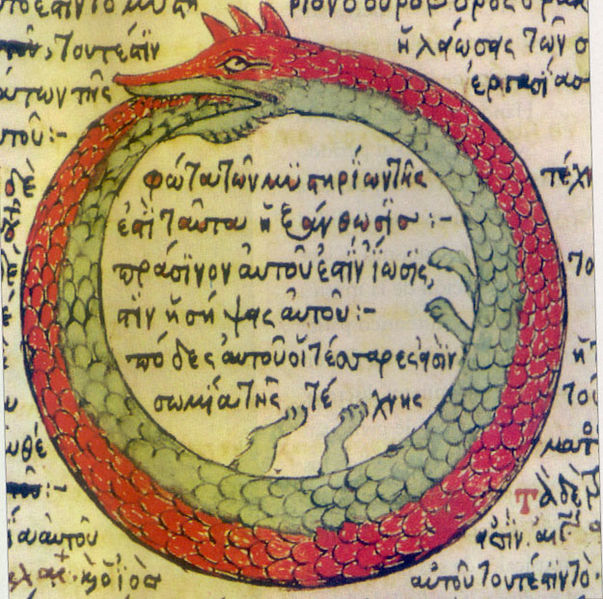
The Science Channel’s program, Through the Wormhole, hosted by Morgan Freeman, has a noble goal: help educate non-scientists with cutting-edge ideas. The series opens with an episode on God: “Is There a Creator?” Interestingly, in our society there are those who turn the question around. Religious folks ask the question: does science really have the answers? It is the classic ouroboros, the snake swallowing its own tail. Perhaps the best way to consider this entrenched issue is to consider its history. Gods emerged as explanatory figures. In the days when the Bible was the oldest known book, it was believable that God had dictated it and therefore the idea of God required no explanation: the ultimate tautology. When extra-biblical material predating the Bible was discovered, a warning bell rang. Most established religions in the western world simply pretended not to hear.

Snake, dragon, whatever.

Neuroscientist Michael Persinger of Laurentian University features in this Wormhole episode, demonstrating his “God helmet.” The principle is that stimulating the specific part of the right hemisphere of the brain that corresponds to the left hemisphere’s region of “selfhood,” a brain will fabricate a presence. While the experiment has promising results, it can’t fully explain God. Other neuroscientists are working on the issue as well. Historically we know that Yahweh was one among a polytheistic entourage of deities. With the stresses and mysteries of exilic existence, monotheism was born. Only one of those many gods survived. By studying the character of Yahweh’s departed compatriots, however, we can learn of the origins of gods as well.

Science entered the picture much later. By the time of truly empirical observation, God was an assumption as certain as ether. When science offered an alternative explanation, religion countered. “I see your Big Bang and raise you one Prime Mover.” And thus it will always go. With no witnesses, alas, no intelligence even yet evolved, our universe began. We can ask the physicist or we can ask the priest. Even if God is discovered and described in the laboratory, with or without a helmet, those standing outside will always believe, with Anselm, that there is an even bigger one somewhere out there.


Physics of Religion

As an observer on life’s sidelines, I rarely participate in the action. The subject matter is more important than the critic, so I tend to respond in this blog rather than create. Once in a great while, however, someone I know shows up in the media. A number of years back Neal Stephenson introduced me to George Dyson. I instantly felt an affinity for him, and found his book Darwin Among the Machines a great triumph of intelligible science writing. It was no great surprise, then, when George was mentioned in an article in December’s Atlantic magazine, comparing his outlook to that of his father, physicist Freeman Dyson. I was intrigued by physics in high school, but my overwhelming supposition that religion explained life overruled this predilection and so I’ve ended up an unemployed religion professor than a scientist. In the article, however, author Kenneth Brower brings these things together.

Brower asks a pointed question: how can a physicist as brilliant as Freeman Dyson hold factually inaccurate and apparently misguided ideas about global warming? The story contrasts Freeman with his son George as exemplars of two different religions. George represents the environmentalist religion while Freeman represents the belief in humanity’s ability to solve any problem. The use of religion as a means of distinguishing these views again raises a question of definition. I don’t dispute the use of the word – it is entirely apt in this context – but the functional definition here is that religion equates to something deeply believed. I am a little troubled by this. Not because no gods or deities or supernatural forces enter into it, but because for years many evangelicals have boldly declared that science itself is a religion. That idea has been used as leverage to get Creationist ideas equal time with those of science because it comes down to purely a matter of one religion against another.

Belief is a phenomenon that is not well understood. Most people have no difficulty accepting the truthfulness of factual data. Seldom do even religious zealots doubt two plus two equals four. At a more theoretical level, however, facts become formulas incomprehensible to most of us and critics are quick to call this “religion.” Faith in human ability to solve the riddles of the universe. Where is the line with religion crossed? In the year 2000 Freeman Dyson received the Templeton Prize, an honor reserved for those who make significant contribution to the spiritual dimension of life, often with a scientific component. It is the dream of every religionist to be considered for this great honor. Once again, however, the further out we peer into our universe, the more the lines become blurred. That does not worry me. What concerns me is how such ambiguity will no doubt be used by Creationists and their Neo-Con supporters who are only too glad to have a scientist of Freeman Dyson on their side. When religion trumps science not even 2 + 2 = 4 is secure.

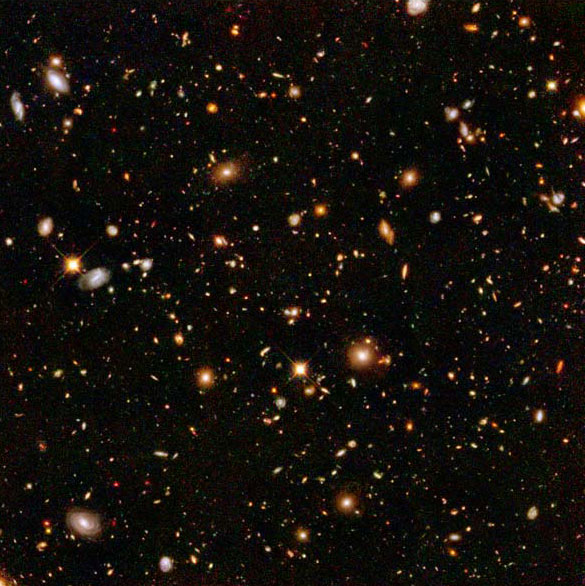
Hubble's ultra deep field has yet to detect any deities


Movie by Faith

Yesterday’s New Jersey Star-Ledger carried an article by film critic Stephen Whitty entitled, “Where script meets scripture: Recent films take a leap of faith.” The phenomenon he observes is that mainstream, big studio-backed film-makers are more and more turning to plots and scripts that emphasize faith. It is not always standard, revealed religion-type faith, but a belief that there is something else. Something beyond that with which our daily lives presents us. People are seeking, but traditional religions are having a hard time convincing them that they have the answers.

In a striking contrast, films that present a spiritual danger frequently revert to the stock image of a Catholic priest as the means of deliverance. When is the last time a Protestant exorcist took on a demon on the big screen? Torn though it is with its long and checkered history of imperialism, exploitation, and scandal, the Catholic Church with its obscure rituals is effective where the machinations of the Protestants are not. This too is a leap of faith, one that believes in the efficacy of ritual despite its origin or lack of scientific theory. Science provides a way of understanding the world that many people experience as cold and comfortless. Even many scientists choose simply to trust in what their spiritual guides teach them.

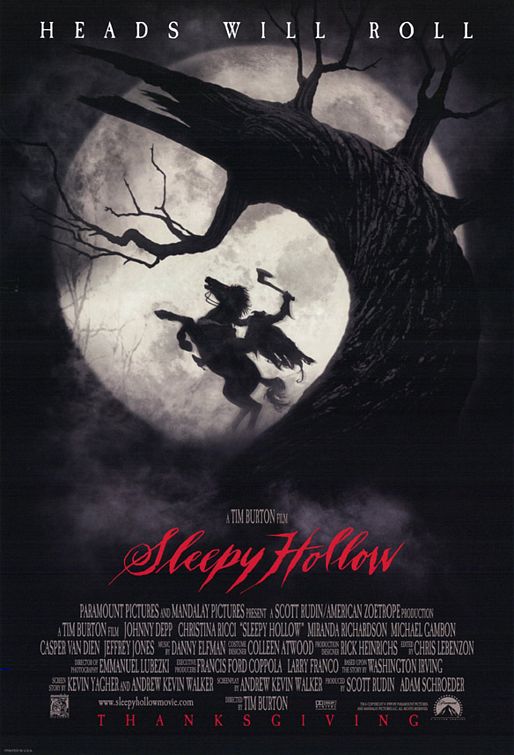
Over the weekend my wife and I watched Sleepy Hollow. It is an annual tradition; it is our October movie. In this film Tim Burton plays off the superstition of Sleepy Hollow – in fact real, in the movie – against the science of Ichabod Crane. In the end, Ichabod has to face the supernatural on its own terms in order to bring the world back to science. Having sent the headless horseman back to perdition, Crane once again returns to a New York City at the start of a new millennium, full of the optimism of science. It is the dilemma of the modern western world. People are tugged, torn even, in two diametrically opposed directions. Our experience leads us to believe in a “demon haunted world” while science placidly informs us that all can be explained. Movies do reflect the human outlook in many respects, and the end sequence has yet to be shot.


Aye, Robot

Being a “biblical scholar,” having an interest in robots might seem counter-intuitive. I was intrigued by the topic as a youngster, but convinced that if what the Bible said was true it deserved nothing less than full attention, I let my formal study of science lapse (although I kept an active reading life on it). Now, through the interest of my daughter, I have found myself mentoring budding young engineers, mostly by helping put things away and correcting grammar. Yesterday we took our robots outside for the local street fair. Almost always the response we get from local people is “Robots? Our school has robots?” Well, partly correct. The schools house the robots, but our robotics club is largely self-funded, so the robots might be said to belong to the team rather than the school. In any case, yesterday the robots played soccer in the street for the amusement of festive fair-goers.

People often fear “soulless machines.” They run by predetermined rules, set down explicitly in computer code, and do only what they are programmed to do. Some fear artificial intelligence for this very reason: what if robots or computers are programmed to think? Does this make them something more than physical machines? The standard, religiously biased, answer is that the soul, or even mind, is a uniquely human possession. Animals may act on instinct, some may qualify as having a limited mind, but definitely not souls. That would simply cross too many boundaries. When asked to produce a human soul for scientific scrutiny all religions come up blank. We don’t actually know what a soul might be – an everliving component that God might throw into Hell or spoil in Heaven seems to be the general gist. And it makes our moral choices for us.

In the Bible if any animal (say a bull) gores a person to death, and that bull had a prior reputation, not only beast but master could be put to death. It seems that the bull has a bad moral intention. If robots hurt people, in violation of Asimov’s first law of robotics, they are treated as acting with moral intention. We project souls onto them for the convenience of condemnation. If an animal, such as a zoo gorilla, saves a human child, that animal receives the treatment of a souled being for a while, until the act is forgotten. It seems that souls are immaterial components of a closed system used to reward or punish an individual. How much of themselves do humans have to put into their robots before they can have souls as well?

Robots among the people


Sects in the City

Newsweek ran a story a few days back asking an obvious question: with all the scandal surrounding an exclusively male Catholic priesthood, why not invite women into the leadership mix? The story, by Lisa Miller, makes the point that sexual scandals have continued to deepen and widen only to be treated lightly by a hierarchy that insists sex is only for procreation. Sex between men and women, that is. If an exchange is made between males, particularly if one is under-aged, well, no souls are going to be derived from that! Although Miller’s plea easily wins on the basis of reason, when power is so deeply entrenched reason is likely to be tied to the stake and set ablaze. No, the church has made up its mind, and well, darn the torpedoes!

The church seldom embraces scientific advance without an approval period. The sexual scandal is no different. Everything that has been learned about sexuality over the last couple of centuries suggests that it’s not just for reproduction any more. Nor has it ever been. At least not in primates (both religious and mammalian). Religious organizations often test their strength by seeing just how far into the lives of subscribers they can reach. What they can control they will. The problem with sex is that it is very hard to control. It can be hidden, castigated, descried, and shamed, but it will not go away. Sexuality is hardwired into all creatures that reproduce that way. No, this is actually about power and privilege. Unchecked power and privilege inexorably lead to abuse. We expect that for the corporate world, excuse it even. Yet we hold the church to a higher standard.

Thine is the power and the glory

It is difficult for an institution raised from infancy with the assurance that God loves it best to outgrow this fantasy. Most people never examine their religion too closely — the edifice is built upon the premise that the leaders know more than the laity. Simply believe what you are told to believe. Yet no religion can lay claim to authenticity without subjecting itself to critical examination. This is the nightmare the Catholic Church now faces: two millennia of posturing and assuring believers that everything is fine are coming unraveled. And ironically the instigator is sex; that common denominator for any species with a backbone, and even some without.