The New Neighbors

Apartment dwellers often ponder new neighbors. If anything gives the lie to being in control of your own destiny, renting your domicile does. Still using the old, aristocratic terms landlord or landlady, we know that we are under someone else’s authority. “As long as you’re under my roof,” my bully of a step-father liked to huff, “you’ll obey my rules.” When you rent, you can’t choose your neighbors. Those who own the property have final say. If they play the stereo too loud (“game” is probably the modern equivalent, but I was born before Pong even came alone) and won’t listen to your plea for a more monastic setting, you throw yourself on the mercy of your lord or lady. We got new neighbors this week. Not just us, but the whole galaxy. Seven new earth-like planets—surely ruled by Trump-like dictators—have been discovered. Let’s hope they’re early to bed, early to rise types.

During the Bush administration I often fantasized about the aliens landing on the White House lawn. I thought, with a president so obviously lacking intelligence, what would our new neighbors think of us? Would they complain to the landlord? You’d think that after that long trip across cold, vast interstellar space they’d maybe have the right to expect to find the brightest and the best in charge, right? Mission accomplished. The sign says so right there. Or to put it in a modern key, “Earth first, Earth first.” If they’ve got their intergalactic television on, I hope it’s switched to a different channel.

15207890820_d855b341e3_z

Contact, the novel by Carl Sagan, suggested the first contact from the aliens would be of Adolf Hitler. Among the first poisoned radiation this planet flung off into space was the fascist propaganda of 1930s Germany. Earthlings, not yet tempered by the Trump brand, were shocked. Surely this is a sign of hostility! Unless, of course, you control both the legislative and executive branches. Then you can just decide not to show up at the town hall and tell everyone you’ve got more important things to do. So, what will our new neighbors think? Do they just want the bodies of their compatriots from Roswell back, or is it a more serious discussion to be held behind closed doors? After all, African slaves were merely chattels in a negotiation between a more powerful culture and unhuman indigenous dullards with nothing better to do. On the spaceship back to their extraterrestrial slave mines, I do hope they have the common decency to keep the music down to a reasonable level.
House of Unsure

DSCN0216

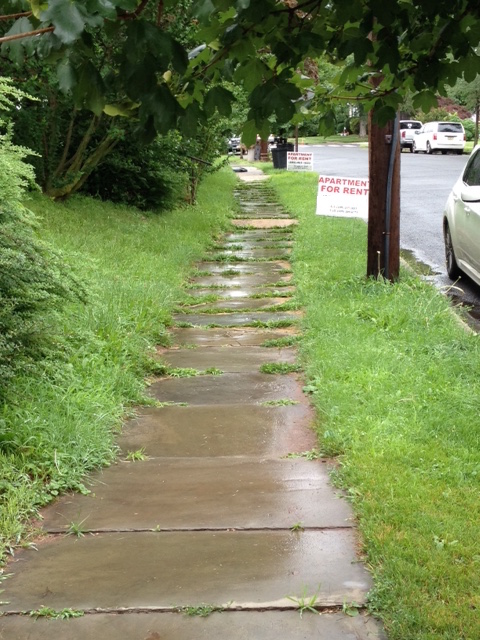
It’s that spooky time of year when nights have surpassed days and the chill in the air suggests an oncoming period of bleakness. Leaves are raining down off the trees and strange sounds fill the dark. So when a friend sent me an article on The Vintage News entitled “Website ‘Died in House’ can tell you how many people have died in your home & how” I had to look. At the story, I mean, not the actual website. You see, I’m not sure if I want to know too much about those who lived here before me—or died here before me. Like many people near a major city, we rent. I’ve never owned property (never had a job that paid well enough to do so) and as a renter you’re limited in what you know about your home. We’ve lived in our current situation a decade now. Of the four families in the two houses that make up the property, we’ve been here by far the longest. The house, however, has been here even longer. Has someone we’ve not met?

We live in a rational age, but we still fear ghosts. Belief in the lingering spirits of the departed goes back to the earliest written records and, we have every reason to suppose, far before that as well. We just can’t seem to shake that feeling, no matter what our rationality tells us. I didn’t go to the actual website, but Vintage News reports that it is a paid service. You want to check your address, you’re going to pay. And the results only go back to 1980. I don’t know about you, but to me it seems there’s a lot of years before that to wonder about. I mean, I was in high school in 1980 and there were lots of houses in my town that looked pretty old even then. If you’re going to pay to learn about ghosts, you want to be sure you’ve got the older periods covered as well.

I’ve lost track of the number of places I’ve lived. Some of them have been fairly old and some I have been curious about. Would I want to know if anyone had actually died there? I’m not so sure. One of the seminary houses I lived in had a spooky, neglected feel. I never saw anything that most people would characterize as a ghost, but I knew nothing of the history of the place when I moved in. It never occurred to me to ask. Now you can ask. A few keystrokes and a few dollars and you can learn if your house has “that kind” of history. The question is, with the increasing hours of darkness, and the wind whistling through the gaps around the windows, do you really want to know?


Ethics for Rent

Ironically, the Bible is the basis for the western preoccupation with land ownership. What with commandments against stealing and coveting, the Israelites had a sense of being promised a land by God. It was their land and no human motivation—including imperial conquest—could trump the divine will. In the western world, so heavily influenced by the Bible, the concept of private property is itself considered sacred. If enough land to sustain yourself is good, even more land than you need must be better. That’s logic. Land-grabs by the powerful are nothing new. In America (land stolen from the original owners) no better symbol of affluence exists than property ownership. Like many things biblical, this is often a myth. Although I’m a white, Anglo-Saxon, straight, Protestant, I grew up among renters. My family couldn’t afford a house. When my mother remarried, my step-father owned his house and it was in such bad shape that as soon as he moved out to a rental property, it was immediately razed. On my own, I’ve always been a renter because I couldn’t ever afford to be anything else.

After Nashotah House, my wife and I considered buying. Wisconsin, apart from having no jobs, seemed like a nice place to settle. We researched. Your mortgage payments should be no more than 30 percent of your income, we learned. Living in suspended animation since those days, we’ve rented in a variety of places and the 30 percent figure has also turned out to be a myth. Affordable housing, in the United States, is set at that benchmark. A recent news byte in the Christian Century notes that in not one of the fifty united States is it possible to rent a one-bedroom apartment on 30 percent of minimum wage. 49 hours of work a week would be necessary to meet that benchmark in South Dakota, the state with most affordable housing. I know professors of Bible who own summer houses. That’s in addition to their regular houses. Meanwhile, many who would like to own something much more modest can’t afford even that.

The biblical worldview is an idealistic one. Recognizing that greed is inseparable from human will (even among a chosen people) the hope was that the poor would be taken care of by those who had more than their share. As the statistically inclined like to say, the numbers don’t lie. Housing, one of the most basic of all human needs, is exploitatively expensive. Many renters can never break out of the cycle of paying too much in rent so as not to be able to save up enough to make a down-payment on a place of their own. Yet prices go up while raises don’t keep pace with inflation. It’s all about ownership. Laws are in place to protect those who take (“legally”) for themselves. The rest pay into the system at three times a tithe. And even this, the numbers say, isn’t nearly enough.

Rent