Omen, O Man!

Omen_ver4

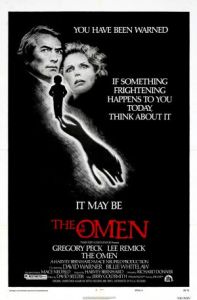
Of the unholy trinity of late-60s to mid-70s horror movies Rosemary’s Baby (1968), The Exorcist (1973) and The Omen (1976), the last always seemed the least effective to me. Having recently read about the Devil in American popular culture, and having a rainy Friday evening alone, I decided to give it a try again. Based as heavily on Hal Lindsey as it is, once one outgrows dispensationalism it is hard to be frightened by the idea of biblical end times. Everything from making up verses in “Revelations” to utterly bogus Holy Land geography (Megiddo is north of Jerusalem, not south—did the writers not even own a map?) contributes to a set of untenable tenets, even among the bibliterati. The film relies mostly on shocks and startles to earn its horror stripes, and after you’ve seen the movie once, these lose their power in subsequent viewings. Nevertheless, on this rainy May night, so close to June 6, I noticed new ways in which the movie undermines its own message.

The premise, of course, is that Damien, the son of the Devil (who apparently has a thing for bestiality), is plotting to take over the world through the means of politics. Having been watching the events of the past few months I have to wonder how the Devil could improve on progress through such channels. But I digress. His step-father Robert Thorn, US ambassador to London, discovers his “son”‘s identity and tries to kill him. With a strong anti-Catholic bias (the Antichrist is born in Rome, the seat of the church, and is protected by Roman clergy) the film nevertheless spawns sympathy for the Devil. As a child, Harvey Stephens hardly appears diabolical. Maybe it’s just because my brothers and I also spilled goldfish from their bowl once, but it seems to me he acts just like most little boys do. Who really wants to go to church at that age? As the movie approaches its climax, he’s represented as the biblical good-guy.

Thorn has to confirm Damien’s satanic identity. Like Delilah, he creeps up on the sleeping boy and cuts his hair. Convinced by a man who introduces himself “I am Bugenhagen” that he has to stab the boy, Thorn in a white car outraces police (so there might be a bit of prophecy here after all) to sacrifice the child on the altar. The movie casts Damien as both Samson and Isaac within a few short minutes. Apart from the film’s use of violence against women’s bodies (Thorn won’t allow an abortion, Kathy seems to have a penchant from falling from high places in slow motion, Baylock gets a fork in the neck) it actually seems ambivalent about the evil of the boy. An unfortunate birthmark does not a devil make. We’ve made it through the change of the millennium and many other hazards, yet dispensationalism is still with us, as is its anticlimactic Antichrist, Damien. He’s less scary than the real politics of an entirely secular age.

Grim Where?

An inordinate amount of my childhood time was spent on television. While the device of the day had been around for a decade already, I was among those who grew up learning that watching was easier than reading. Like most children, I took the path of least resistance. I watched. As a teen, however, I rediscovered reading and from that time television began to take a back seat to books. When the great switch-over to digital occurred we didn’t get a conversion box, and we could never really afford cable for as little TV as we watch. When a program gets commended, or if nostalgia takes too great a toll, we can always purchase programs—the price of watching television without the commercials. So it was that I began watching Sleepy Hollow. Very quickly in the first season the monster of the week trope was established as the plot grew more and more tangled. The Bible was so prominent in that season that I wrote an academic paper on it.

Sleepy_Hollow_-_Title_Card

Over the past few months my wife and I have been working through season two. The DVD version was delayed and we only watch on weekends. Recently we finished the eighteen episodes of the second installment. Clearly the budget had improved over the first season, but the Bible, it was also clear, had diminished. Throughout the first season the driving motif of the story was that biblical “prophecy” (from the book of Revelation) was unfolding in Sleepy Hollow. This is what one scholar has termed a “local apocalypse.” Throughout season two, however, the end of days is shut down. Molech, its architect, is killed. The headless horseman is less Death than a jilted lover. The second horseman, War, loses his armor and dies.

Magic, however, along with special effects, take on an increased roles. Instead of turning to the Bible to solve problems, the most helpful book to have on hand is a grimoire. Sleepy Hollow, which is anything but what its name suggests, is full of monsters. Powerful magic is required to contain them, and, it seems, the Bible is no longer needed as a tool to take down evil. Perhaps there is a parable at work here. I was drawn into the series by its biblical literacy, as well as its literacy in general. More action has been introduced, and fewer books. It’s a pattern I’ve seen before. I suspect I’ll watch season three presently. When I do I’ll be casting a wistful eye on the stack of books I have yet to read, and I’ll be wondering if reading may not have become easier than watching.


Matins

At a certain time of year, around November after the time change, early morning immigrants to Manhattan see the light. As they stumble out of the Port Authority Bus Terminal and head to the east, it is as if the sun is rising like a monster from the sea. In Midtown the streets run east-west and the avenues north-south. I trip out onto Eighth Avenue and have to make my way to Madison, and the entire walk is facing into the unrelenting sun. You might think at 7 a.m. this should be no great challenge, but then you would betray the fact that you don’t commute in early. Hundreds of people pour in a human stream out of the Port Authority and head in all directions, many of them east. The streets are crowded and you literally can’t see what’s in front of you. You are, in the words of a young Bruce Springsteen, “blinded by the light.” I’ve watched in fascination as this happens for the past four years now. It isn’t the much touted “Manhattanhenge,” but simply the angle of the sun at this latitude at this time of day. It may be fun for a few minutes, but then you realize how dangerous it might be.

IMG_2595

One of the most basic elements of religion is care for others. Indeed, some religions suggest that you should treat others as more important than yourself. When I was growing up I was taught to think of things from somebody else’s perspective: if you were in that position, would you want someone to do that to you? It’s a message I took to heart and to this day I can’t pass a homeless person without a backstab of guilt for not pulling out my wallet and dropping a dollar or two into their outstretched hands. Having been on the receiving end of a pink slip more than once, I can easily imagine being there. Seeing from another person’s perspective can be dangerous. Not considering that perspective can be even worse.

Those out and about at 7 a.m. are go-getters. Climbers. They get to work early. Some, no doubt, stay late as well. The person walking west has the sun at his or her back. The street in front of them is brilliantly illuminated but not blinding. How many times I’ve nearly collided with them because they don’t realize that those of us going east just can’t see. You have to step into the shadow of a banner or awning or streetlight post just to get a nanosecond of relief and make sure you’re not about to step into a hazard like an open freight door. The photo doesn’t do it justice because if it were truly to show what I see, you’d see nothing at all. Raised as I was I can’t help but think of the beast rising from the sea, and the woman clothed with the sun. And the homeless being awoken by beams far too bright after a night on the streets.


Detoxing God

There’s some pretty weird stuff in the Bible. Those who are only familiar with all the “thou shalt not”s are missing a great deal. Some of the material is strange enough to rival Alice’s tumble down the rabbit-hole (Charles Dodgson was, after all, a deacon). Anyone who’s read Ezekiel, or Daniel, or Revelation, knows the feeling of having been slipped into some kind of alternate state of consciousness. As students of the Bible have been saying for decades, “What was Ezekiel on?” I’ve always tried to put these unusual writings into context for my students. Nevertheless, some scholars still explore the possibilities that something more than revelation was going on in the desert. A friend of mine pointed out the website Time Wheel, which has a story about Moses and his experience of the burning bush. Time Wheel is an artistic collective, and the story about Moses is richly illustrated. The title, however, is the attention-grabber: “The Bible’s Moses Was On DMT Says Hebrew Professor.”

The article explores the thesis of Benny Shanon, who suggests Moses may have found DMT in the natural store of psychedelics available in nature. As the piece suggests, you have to accept a literal Moses for this to make any sense. Nevertheless, it does raise an interesting question: did ancient people use hallucinogens for religious purposes? We do know that cultures throughout the world have found alternate states of consciousness to be religious in nature. Before the days of controlled substances certain plants and fungi were known to distort reality. Alcohol was one of the earliest inventions of civilization, or perhaps even predating it. When other views of the world are available, it is possible to say that one is by default the true one? It’s a question we face every morning, to some degree. The dream, another biblical favorite for alternate realities, can be just as real as waking.

Controlled substances are dangerous in large groups of people. Not only have modern scientific techniques refined the active ingredients, but we live very close to one another and erratic behavior, perhaps fine isolated in the desert with a cognizant adult, can lead to problems when other people live right next door. Anthropologists assure us that the use of natural “drugs” is/was not uncommon among many peoples who don’t fall under the rubric of powerful centralized government. But was Moses among them? To me, the burning bush hardly seems fantastic enough to require a chemical explanation. In fact, detailed study of even such books as Ezekiel and Revelation often reveal a much more mundane reality behind the writing. Still, imagination is often the key to unveiling realities left hidden to more prosaic minds. So why not see what might happen when the religious are left to their own devices in the desert? The results could change the world.

278px-William_Blake_-_Moses_Receiving_the_Law_-_Google_Art_Project


Christian Cookie

During my childhood and adolescence, we didn’t eat out. Of course, food didn’t cost nearly as much then, and it was cheaper to cook raw ingredients at home than it was to buy something exotic that someone else had made. I clearly remember our first trip to McDonalds—it seemed so strange to buy food already prepared. It was so unusual that we went with our neighbors in a kind of exploratory posse, discovering this strange world of pre-cooked food. College, eventually, introduced me to the idea that, if done reasonably, eating out could be a reasonable choice. Particularly if you were wanting to impress a girl. Still, most of my meals were in the dining hall, and trips to restaurants were generally reserved for special occasions. Although Chinese food was known to me, it wasn’t readily available in rural western Pennsylvania. I did encounter my first fortune cookie in college.

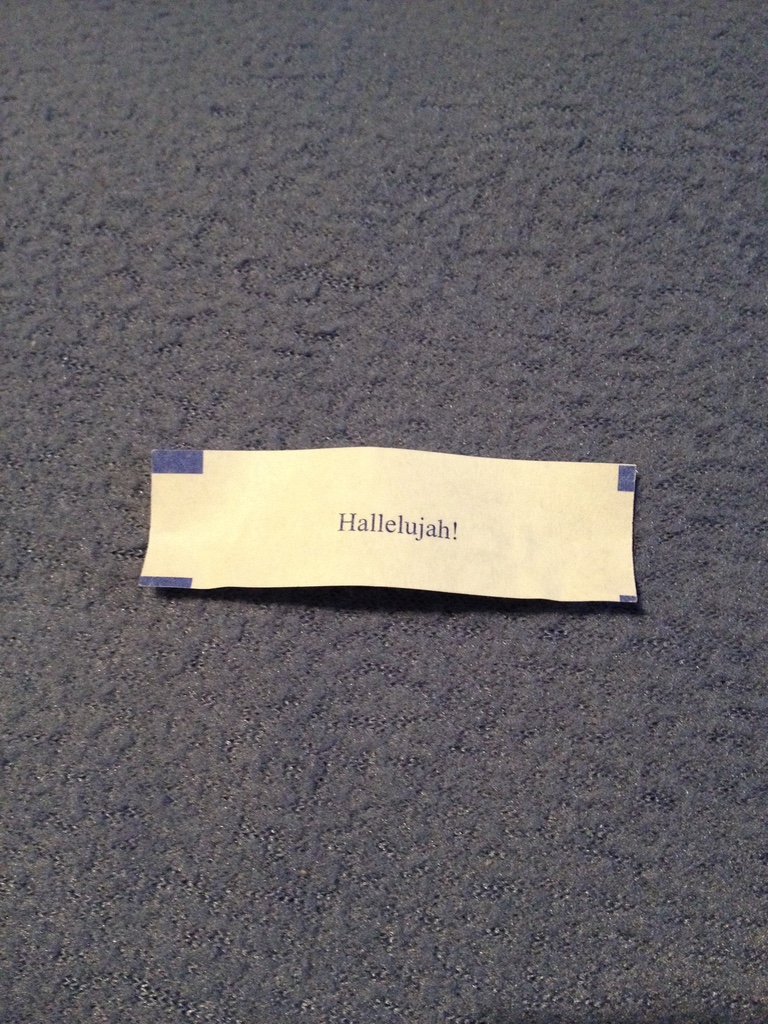
thumb_IMG_2185_1024There was something vaguely unsettling about a cookie that could tell your future. Prophetic comestibles were relatively unknown to me. Of course, the whimsical aphorisms seldom indicated any misfortune. They were more like horoscopes, harmless and often amusing. Recently we had carry-out Chinese. I’d noticed that over time fortune cookies had become more and more banal and less and less predictive. They claimed to know something about the world and I was supposed to believe because, well, would a cookie ever try to steer you wrong? My wife cracked open her cookie to find the “fortune” a single word: “Hallelujah!” An evangelical dessert? Was she destined to win the lottery? Perhaps we should play the lucky numbers on the next Powerball?

This really shouldn’t be bothering me, but what exactly was that cookie trying to tell us? It can’t be easy, I realize, to come up with millions of bits of advice so that those who often eat out don’t get the same prediction twice, but what if a Buddhist had ended up with this sweet? Or a Confucian? “Hallelujah” is, by its nature, a Judeo-Christian expression. Even so, it only occurs in two books of the Bible: Psalms and Revelation. My sneaking suspicion is that my culture is being pandered to. A bit of internet research revealed that Chinese fortune cookies are actually a Japanese recipe and were likely invented in the United States. They date back to the 1890s, at the earliest. I guess I shouldn’t be surprised then, at my wife being evangelized by her dessert. She does work for the Girl Scouts, after all, and they know a thing or two about the amazing abilities of the humble cookie.


Google Me This

Technology frequently flummoxes me. Although I use it daily, it changes more swiftly than I can hope to. Working for a British company, for example, my computer seems to be a loyalist. It supposes that it is in the United Kingdom even as it sits on my desk in New York. I’m told this has something to do with a mystical key called an “IP address.” When I search Amazon, prices come up in pounds. When I google something, I’m told that European laws restrict certain searches. And, interestingly, I discover that Google’s icons of the day have a British theme.

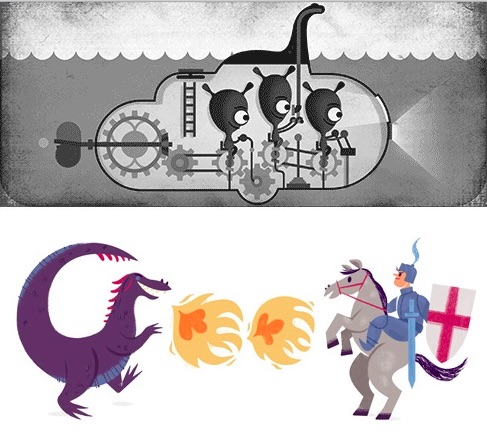
GoogleI’m assured Google is a fun place to work. One of those enlightened companies that believes reducing stress and increasing enjoyment of employees leads to good results. Were that all companies so enlightened. In any case, the famous Google logo is often decorated with a commemoration of the day. This past week, two such icons appeared on my UK searches. The first commemorated Nessie with something like the 81st year of her appearance. The icon puckishly showed Nessie to be a fake, a submarine actually piloted by aliens. Later that same week, on St. George’s Day, a dragon appeared on the icon. I began to wonder about this reptilian connection. If lake monsters are real, many make the claim that they must be plesiosaurs, their dinosaur cousins that most resemble them. St. George, clearly a character cut from the same cloth as Hadad, slays a dragon—an equally mysterious reptile.

We tend to associate dragons with evil, although in world mythology they appear equally as often as harbingers of good. Human interaction with reptiles has always been fraught. Somewhere along our evolutionary track we must’ve shared a common ancestor with them. Even today some responses, such as fight or flight, are referred to as those occurring in the “reptilian brain.” In Genesis 3 the serpent slithers in. According to Revelation, at the other end of the canon, the snake is still there at the end. It was only happenstance that Nessie and George’s unnamed monster appeared in the same week, I suppose. Nevertheless, there is a deep connection between them and us. We can’t seem to get away from them, even should we flee across the ocean.


Biblical Script

The popular perception of the Bible generally does not match the actual contents very well. Like most books, the Bible has its highlights: Creation, Flood, David and Goliath, Jonah, Daniel and the lion’s den, Jesus, the Apocalypse. Between all the fascinating narrative, however, come the instructions. More instructions, in point of fact, than most people would care for. Nevertheless, over the centuries the Bible has acquired an aura in western civilization. It has become what some colleagues call an “iconic book.” It is this aspect of the Bible that stands out most clearly in the Fox series Sleepy Hollow. I wrote a post about Sleepy Hollow as I began to watch the first season on DVD. The headless horseman is an agent of the Apocalypse, and clergy and witches play a prominent role in the story. I wondered if the role of the Bible would diminish once the audience was drawn into the conceit of the four horsemen thundering out of Revelation into Sleepy Hollow. Just the opposite, in fact, occurred.

Sleepy_Hollow_-_Title_Card

As the series unfolds, the Bible is drawn more and more into the story. Demons and detectives both want to get their hands on it. Not to read the Ten Commandments or the Sermon on the Mount, but because the Bible contains esoteric information. Those “in the know” can unlock its secrets and thereby save society. Ironically, this is a subtextual version of the biblical metanarrative. It is all about (from the Christian perspective) salvation. The means, however, are quite different. Jesus is not really part of the Sleepy Hollow story. The Bible belongs to George Washington, cryptically bringing politics into the story. The text is not secure; there are extra verses in Washington’s Bible, just as there are many excised bits in Thomas Jefferson’s. Washington leaves instructions for saving his fledgling nation from the evils that roamed its shores during the Revolution. Or is that Revelation?

Right up to the cliff-hanger ending of season one, the Bible comes back time and again, focusing the viewer on its magical qualities. It is a book of secrets and mysteries. Meanwhile in the real world, biblical studies positions are being slashed from universities as if the horseman’s axe were anything but fictional. We don’t want to know about the real Bible. Politicians, real ones, use it as their own sword to force their personal faith agendas onto the electorate, but we generally do not even understand what the Bible really is. We’ll fund economics, that dismal science, and business, and maybe even actual science. The humanities, however, the stuff that makes us human, we will gladly call luxuries and deny them fiscal security. So the Bible grows in stature even as it diminishes in stature. Those who don’t know the factual Bible can easily be swayed by the fictional one. Are those hoofbeats I hear in the distance?


The Last Word

The end of the world, it seems, never goes out of fashion. My wife shared a story on the BBC about CNN (such self-referential media hype may be a sign that society is collapsing already) having a video ready to release for the apocalypse. In a bit of end-of-time sangfroid, it is rumored, CNN’s Ted Turner ordered a last-second video to be made so that loyal CNN viewers would be ushered out with his version of the last word. The media, of course, is a powerful segment of society. Occasionally schools and businesses are shut down due to their meteorological predictions. The media tells us who the experts are, and why we should listen to them. The media provides us with some of the only fact-checked material from far-flung ends of the globe—or even outer space—to which we, the people, would not normally have access. The media, in other words, determines reality.

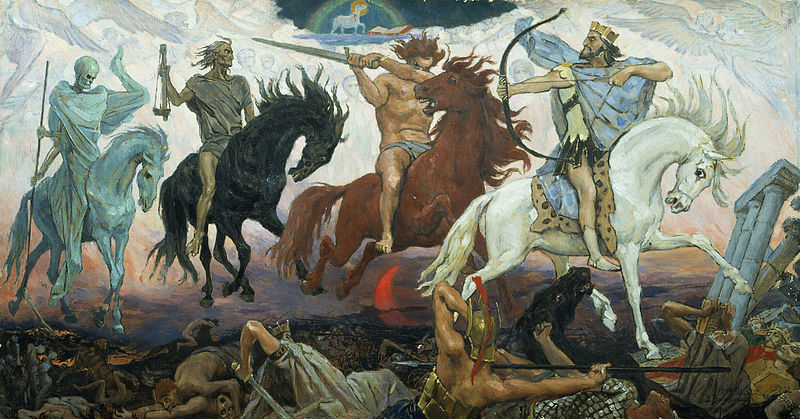
800px-Apocalypse_vasnetsov

Meanwhile I wonder, as I often do, what gives those who own media corporations the right to determine reality for the rest of us. For example, if the rumor of Turner’s video is true, what would give the rich and powerful the right to determine what flashes before our eyes as the world winks out of existence? The apocalypse, after all, is a religious concept. Although largely developed from biblical scripts, other religions do occasionally have their end-of-the-world myths, just like most religions have beginning-of-the-world myths. If you have billions of dollars, does that mean you have the right to determine end-times viewing? When money determines the truth, the world has already ended.

Nevertheless, the idea lives on. We are constantly reminded that one or another religious sect has declared that the end is nigh. We’ve heard it so often that we’ve ceased to pay attention. In a world where the media has largely dismissed the rest of the Bible (except when blockbuster movies come out featuring a biblical story) why does Revelation still hold such currency? After all, the apocalypse takes its very name from the final book of the Christian Bible, and without Revelation we might be none-the-wiser about the looming end of all things. Revelation was very much a product of its time. Despite the progress of science and technology that gave us the media corporations we blandly recognize today, we still harbor doubts deep down about the longevity of it all. Even those who write the news look to other media giants to get some hints of the truth. Ironically, they don’t seem to want to ask scholars about it. After all, sensationalism is news. At the end of the world, we really don’t care what scholars have to say, as long as we’re entertained.


Biblically Literate Ichabod Crane

I’m trying to pace my viewing of Sleepy Hollow, but autumn is never long enough for me. In many ways the FOX series exemplifies the current love-hate relationship popular culture has with the Bible. While its dictates and commandments seem tedious and petty, its prophetic view is so very full of possibilities. The millennium has passed but we’re not weary of the apocalypse yet. Even from the pilot episode with its cringing reference to “Revelations” three or four episodes into season one tidied that book title down to the proper singular and have begun to introduce other biblical characters along the way. Since the conceit of the series involves the four horsemen, the Bible is never far from view. Forensics can’t figure out what’s climbing out of the woods of the Hudson valley, but we already know that the demon is Moloch. Many fingers, I trust, have been scampering across keyboards to investigate this biblical figure.

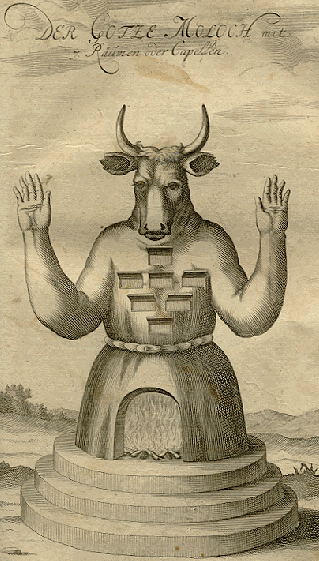
Moloch_the_godMoloch is a “Canaanite” deity. He is also one of the least understood of biblical archenemies. Scant references to making children “pass through the fire” for Moloch have led to widespread assertions of human sacrifice. Others have argued that the passing was just that—kind of like racing your finger through the flame of a candle—to appease the angry god. We don’t know that Moloch was angry. No extended myths about him have survived from antiquity. His name means “king,” an epithet fit for most gods. The vacuum left by the historical records allows imagination to fill in the gaps. Sleepy Hollow does that nicely, and although I haven’t reached the end of season one yet, I have my suspicions that he’ll be showing up for some time to come.

The Bible, viewed so disparagingly because of the ministrations of the likes of Jerry Falwell and Pat Robertson and their intolerant ilk, remains a mystery to many. Let’s face it—it’s a daunting book. Even with onionskin paper, it is a massive undertaking to read it all. Many a spiritual soldier lays slain on the beach-head of Leviticus, and that’s only three books in of the Protestant 66. What Leviticus doesn’t finish, Chronicles will polish off. And yet we have such colorful characters as Asherah, Resheph, Leviathan, and Moloch scattered throughout. Sleepy Hollow has brought back the dead. I regret that I no longer have classes of students to ask about such things, because I too, through the magic of television, am beginning to believe in resurrection again.


North Tarrytown

Ichabod Crane has undergone many incarnations since Washington Irving conjured him. Not very sympathetically described in the original “Legend of Sleepy Hollow,” he was gangly and somewhat clumsy and full of self-importance. The story of which he is forever a part, however, has become iconic of American myth-making. A deep symbolism runs through the story of the headless horseman, and for those who’ve actually been to Tarrytown, the modern incarnation of Sleepy Hollow, there may be a disconnect between the urbanity of a town so near to New York City and a rustic school teacher in a rural setting. Still, there seems to be quite a bit of buzz about the current television series “Sleepy Hollow” that I decided to see for myself what was happening. The conceit of Ichabod Crane reawakening, in a kind of Rip Van Winkle twist, in the present day is engaging. He is now a professor at Oxford University turned patriot to the American cause, which brings him to the point of actually beheading the horseman in the first place. But this literate, witty, and moody retelling involves more than Irving. The Bible is pretty much central to the series, at least as far as I’ve seen.

The headless horseman is none other than Death, the final of the four horsemen of the apocalypse, according to holy writ. Although the characters all refer to the Apocalypse as “Revelations,” something that causes premature baldness in biblical scholars, the program places the town of Sleepy Hollow at the crux of the oncoming end of the world, with the other three horsemen to be summoned along the way (Pestilence or Conquest, War, and Famine, for those who are keeping score). Also, witches, hearkening back to Salem, have a prominent place in the narrative, and the forces of rational law seem to be at their collective wits’ end to make any sense of religion breaking into a secular world. Without the Bible’s final book, Sleepy Hollow would have no legs (as well as no head).

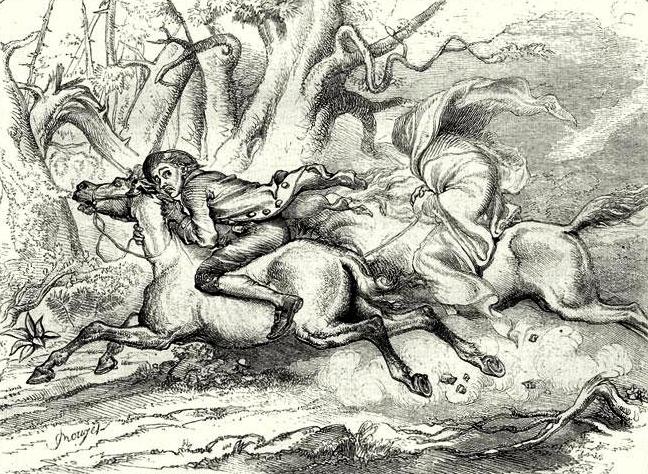
Ichabods_chase_crop

In Tim Burton’s Sleepy Hollow, Ichabod Crane came through as a detective plotting science against superstition. At the end, however, even the most rational had to admit there was more going on than the science of the day could explain. That is part of the appeal of the Sleepy Hollow legend. No matter how strong the light we shed on them may be, our psyches reach out for the immaterial, the ghostly, the supernatural. We like to believe in sacred books and spells to protect from evil. Even the Twilight Zone episode “The Jungle” plays on how in even the most advanced cultures we still build skyscrapers with no thirteenth floor, as if our towers represent an unknown hubris for which we may be held accountable. Irrational? Perhaps. But Sleepy Hollow is not so somnolent these days when the Bible once again takes center stage and hoofbeats are heard once again in the night.


Cave In

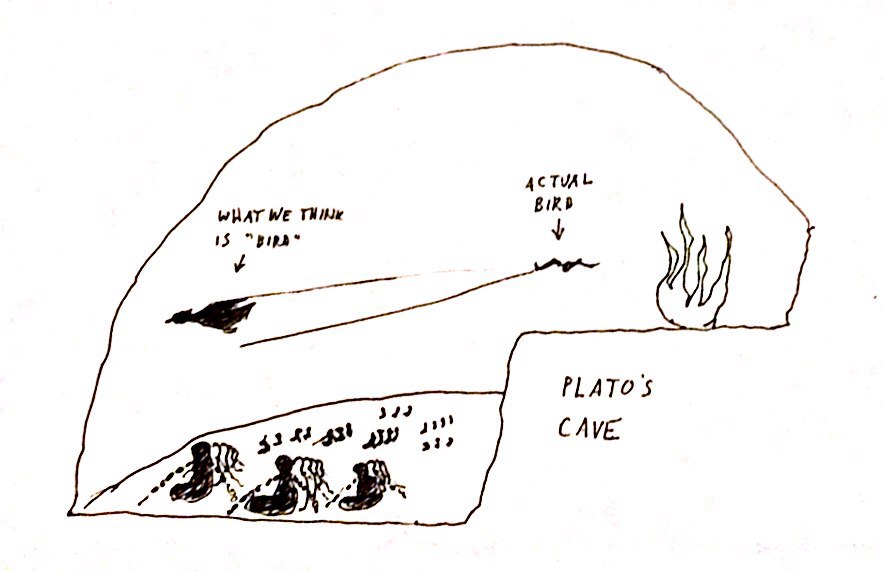
The conversation began, as conversations often do, with Plato’s allegory of the cave. The nature of reality was the topic of a chat I had with a very intelligent undergrad the other day. Plato believed in a realm of ideal forms. What we experience in life is not the actual forms themselves, but a reflection of them sufficient to alert us to what it is we encounter. Humans are sitting, as it were, in a cave. We are chained so that we face the inside wall of the cave and can’t look around. Behind us there is a fire and the ideal forms pass between the fire and people, throwing their shadows on the wall. Not having ever been outside the cave, we suppose the shadows are reality. We are, however, deceived. This led, naturally enough, to a discussion of Aristotle’s counter-argument that the “essence,” or entelechy, of things is something inherently within it. No need for an alternate realm of reality. And so, I asked, what is reality? What is truth?

PlatosCave

My young interlocutor said that reality is what we perceive. It is different for every person, and therefore there are a multitude of realities. Truth is simply the term we apply to our experience of reality. I began to feel as old as Plato. When I was young I believed, not exactly in a realm of ideal forms, but in a universe that contained abstracts. Abstract concepts objectively existed, and in a kind of neo-Platonism, we recognized them when we encountered them. Love, for instance. We may not be able to define it precisely (although materialists claim it is just a pretense to get sex), but we sure know it when we feel it. Or consciousness. What is it? No one reading this doubts, however, that it exists. And truth. I had always assumed that there was Truth with a capital T, objectively floating around out there. Perhaps, if the undergrad is right, there are multiple truths around. We chose the one that fits our experience of reality. Q.E.D.

C.Q.D.! C.Q.D.! Worldviews are in the process of changing. I tend to think the internet has democratized truth. Religions have tended to play their trump card—revelation—at this point. The unambiguous input from the divine should end all questions. But it only requires a moment’s reflection to realize that there are multiple religions and multiple revelations. Which one are we to believe? Some scientists claim there is no need for philosophy, religion, or the humanities. Objective facts, however, are interpreted subjectively. To privilege one reality above others is a kind of intellectual fascism. Perhaps my reality is different. We all sit in the same cave watching the same shadows play in front of us. We then decide what is real. Perhaps we need to get outside for a breath of fresh air. Even Plato knew, however, that that is against the rules.


Grendel’s Gods

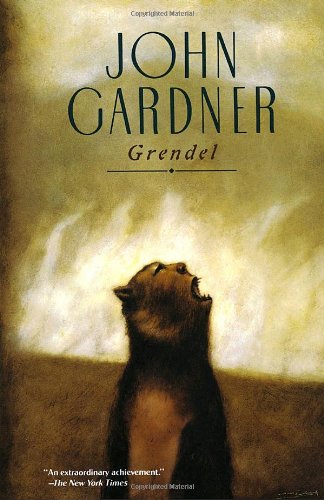
GrendelGardnerSometimes I think that if I had to do it all over again, I might’ve chosen Beowulf instead of the Bible. Let me define “it” here: if I had to pick a vocation that would lead to personal fulfillment and personal penury, that is. Beowulf is the earliest written story in English and, it’s a monster story. What’s not to like? In honor of Banned Book Week, I decided retroactively to read a banned title, John Gardner’s Grendel. An early parallel novel narrated from Grendel’s point of view, we are introduced to the introspective, existentialist monster who is really just wondering, like the rest of us, what the point of it all is. Not surprisingly, the protagonist often addresses the question of religion—indeed, it might even be at the heart of the story.

In chapter nine, Grendel sits in the darkness in the ring of wooden gods of the Danes when Ork, the great, blind priest stumbles in and believes the monster is the Destroyer god. As Grendel toys with his theology, the old priest understands this all as a revelation, and although Grendel gives him no answers, the words are taken as divine utterances. The other priests, finding their leader out on a winter’s night, insist that he has gone senile, that gods do not reveal themselves like that. The old man, however, is unshakeable in his faith. As in much of the novel, there is more going on here than meets the eye. The deluded priest believes a monster is his god.

The question of theodicy (literally, the judging, or justification of God) is never-ending for theists. The world is a problematic place (made so, I must note, by human consciousness) for the creation of an omnipotent deity who is good. Too much suffering, Grendel, too many failed expectations. Clergy and theologians have, for centuries, tried to frame a convincing answer to the dilemma. The tack they all studiously avoid is that God is a monster, although some posit that as a straw hypothesis quickly to be knocked down. Gardner, although not a theologian, was the son of a lay preacher and farmer. One suspects that elements of that childhood crawled out through the pond with Grendel. One of the truly tragic characters, a “son of Cain,” Grendel still has an immense power on the imagination. And that power, at times, might even appear godlike.


Dystopian Dreams

Hunger_gamesOne of the most terrible stories in the Bible is the slaying of the firstborn of Egypt. Of course, depending on your point of view, this was either a necessary evil or an act of wanton cruelty by a deity with anger issues. Still, it ends with a bunch of dead children. Then, as if that weren’t enough, a horrible reprisal comes at the birth of the child of the main character, with Herod slaughtering the innocents in Israel. And let’s not forget the very source of Kierkegaardian angst, the knife poised above a bound Isaac by his completely believing father. More recent, less literary examples could add poignancy and reduce the distance: Columbine, Newtown, Virginia Tech—the murder of children is beyond the farthest reaches of perversion into a realm that no longer classifies as human. I think the Bible might agree with me there. So it was with some trepidation that I read Suzanne Collins’ The Hunger Games, at the urging of my daughter.

Although written for a young adult readership, The Hunger Games is a classic dystopia with a dark future and repressive government mandating the killing of twenty-three children every year, just to make a point. Deftly combining teenage angst with the bleakness that just about any future-based novel seems to hold, Collins spins a sad but engrossing tail. Dystopias have grown in popularity since some of the earlier, Cold War exemplars such as 1984 and Fahrenheit 451. The number of dystopian novels grows every year. I suppose if I were an elected official I might cast a worried eye towards the increasing number of exposés of a society where consumers read so many books of the future gone awry. I know many intelligent, sober people who seriously wonder if we’ve already shifted onto that track. Tomorrow is only an extension of today.

Dystopias are among the most biblical of literary genres. The Bible itself is a bit of a dystopia. Consider the framing of a perfect world ending up with the original apocalyptic tale, the Apocalypse, or Revelation. It only ends well for 144,000. In-between there are pages and pages, chapters and chapters of oppression, violence, and suffering. Paradise gone bad. That’s the essence of the dystopia. Although Collins doesn’t make any overt biblical or religious references in The Hunger Games, the very genre she chose can’t escape the biblical bounds laid out for it. And besides, long before the year both Collins and I were born, the Bible had already set its vision for our society. And that vision, to our everlasting trembling, includes the massacre of innocents.


Corn is King

For those who no longer believe in Hell, the DMV can serve a very useful function. Actually, the Department of Motor Vehicles is truly the great leveler of society—just about everyone has to cross its threshold, it is just that they all try to do it at the same time. Waiting in lines has always been a problem for me. It’s not that I think my time is more important than anybody else’s, it’s just that I have so much to do without standing in endless lines. Especially since work keeps me away from useful pursuits for over eleven hours out of every twenty-four, weekends seem somehow too sacred to be spent at the DMV. But the Devil must be paid his due. When paying the Devil, I take along Stephen King to pass the time. So it was over the weekend that I found myself reading “Children of the Corn.”

Of course, like most horror movie fans, I have seen the movie a time or two. I’d never read the story before. This is one of the King tales based most directly on religion gone wrong; the children, as any reader/watcher knows, have distorted Christianity into a midwestern corn-god religion. It may seem unlikely to urban folk, but I have stood next to corn stalks that have towered high above my head, ominously silent like triffids on a sunny Wisconsin afternoon. It can be unnerving. Almost a religious experience. But turning back to King, the story differs from the movie, of course, and what the written version makes clear is that the children distort the New Testament, but leave the Old Testament intact. King, like many horror writers, is biblically literate. Yet, this picture of Old Testament god versus New Testament god is stereotypical and a little misguided. The god of Christianity is a deity of many moods. The wrath in Revelation, or even some of Jesus’ sermons, however, stems directly from Yahweh’s darker moments.

Diablefaucheur

How do we know what is demanded by this mercurial deity? The theological ethicists argue over this daily, but nowhere in the Bible does God have a problem with people treating each other as they would want to be treated. Some of the punishments for minor infractions seem a bit severe—or very severe—but the basic principle, given the Weltanschuung in which it operates, need not cause undue fear. Women, homosexuals, gentiles, Jews, anybody reading parts of the Bible will no doubt be offended by the details. As the saying goes, the Devil is in the details. And that’s why I’m spending my entire Saturday morning at the DMV.


And the Band Played

One of the more curvilinear sequences of numerals has taken on demonic attributes over the centuries. Even the most secular of people, at least in the United States, can identify 666 as some kind of bad juju. The more literate among them will be able to pin the origins more precisely to the book of Revelation, often likely as not misnamed “Revelations”—something sure to drive your New Testament professor as mad as a beast. Fans of true precision will surely want to add that it is Revelation 13.17-18 that makes the number infamous. The latter verse starts out with “Here is wisdom,” which already spells disaster, for who doesn’t want to think him or herself wise? 666 is said to be the number of a man, and is conflated with the “mark of the beast”—one of the quickest ways to bring evolution and economics into the discussion. In popular culture 666 is said to be effective in invoking the devil. This idea is not found in the Bible, but it sure makes for an easy way to identify the Prince of Darkness in movies and popular culture.

The other day I received a mysterious email at work from a “Dr. Strangelove” with the email username of “camus666ster.” Indeed, the topic was appropriately apocalyptic and it managed to make it through a pretty strenuous spam-filter. Here was something apparently supernatural during the work-day. I’m also conscious that a building visible from the window behind my desk is 666 Third Avenue, but I’m pretty certain that these two sexagesimal cousins have nothing to do with one another. It is only a certain religious sensibility that brings them together. Where else in the world do authorities have trouble with people stealing roadsigns for route 666? And why do I get the feeling that someone is watching me?

IMG_0696

Revelation may have had more impact on our culture than any other single book. Whether it’s checking your iPhone for the weather, or wondering what is going to happen next in the Middle East, we all want a view into the future. It is a view that some suppose old John saw while exiled on Patmos. Others recognize that Revelation was a thinly veiled contemporary account to give hope to persecuted Christians in an era of imperial violence. Either way, the book, despite some effort to keep it out, ended up having the final say in the Christian canon. In a nation where every person possesses several unique identifiers, we still look over our collective shoulders for an anonymous beast who is about to bring down society. Don’t worry, folks, I’ve got his number.