On Faithful Monsters

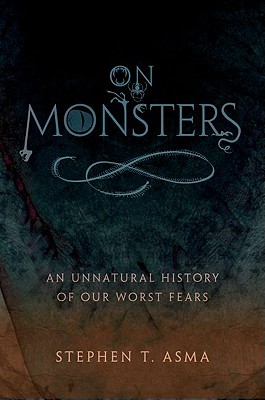
From the moment I saw Stephen Asma’s On Monsters summarized in the Chronicle of Higher Education, I knew I had to read it. Having been fascinated by monsters as a child, and then having grown out of that fascination, this book is a respectable way to indulge my juvenile interests while learning something. The book’s subtitle, An Unnatural History of Our Worst Fears, reveals perhaps why I was so compelled by this particular volume. Those of you who follow this blog know that I contend that religion and fear are very closely related, well nigh inseparable even. As Asma delves into the origins of our monsters, he pauses for a while on the Bible.

The Bible hosts its share of monsters. From lengthy descriptions of Leviathan and Behemoth to tantalizingly creepy references to Azazel and the night hag, the writers of holy writ were as aware of monsters as we are. Asma focuses on the fantastic beasts described in the apocalyptic material, Daniel and Revelation. Obviously not intended to be taken literally, the descriptions of these fantastical beasts represent various ancient empires that threatened the early Jews and Christians respectively. Their monstrosity rests in their intent to destroy, not their hideous physical form. To quote from our host, “monsters are not creatures of natural history but symbolic warnings of a horrifying life without the Abrahamic God (or, in the case of Christians, without his son).”

The ancient fascination with monsters very likely has religious roots. These beings appear to stand outside the rationally created order and lurk in places where the divine is not. The fear they engender leads to the very religion that shuns them. Vampires fear a crucifix, demons are banished at the name of Jesus, and even the headless horseman shuns a church. People run to their faith to protect them from monsters, and monsters, in their turn, provided early believers with a rationale for their faith.

By the Numbers

Just when you thought it was safe to go back to the airport, the Bible Code strikes again! This morning’s newspaper carried the story of Jose Flores, a would-be hijacker of Aeromexico Flight 576. Flores boarded the flight with a Bible and fabricated a pretend bomb out of a juice can (the story doesn’t specify exactly what kind of juice —) and instructed the pilot to fly around Mexico City a Jericho-esque seven times. Flores informed the flight attendants that he was part of a set of four hijackers, the other three, he later revealed to police, were the Father, Son, and Holy Ghost. The flight landed safely and Flores was extricated from the plane. Why all the fuss? Yesterday was 9/9/09. Flores realized (with or without the help of his three co-hijackers) that upside down this would be 666. Safely on the ground he told reporters “Christ is coming soon!”

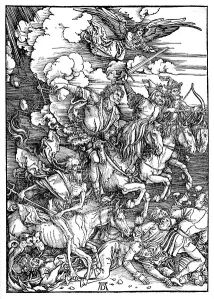
So once again we meet a believer in coded messages in the Bible. Clearly one of the most misrepresented books in the Bible is Revelation. This book is a textbook example of apocalyptic writing, a genre wide-spread and easily recognized in the ancient world, but which suffers from being taken literally by people living a couple millennia after it was penned. Even before the ink slipped from John’s pen (we don’t know John’s last name), people were looking for a new world to burst in on this old one in need of radical repair. That urgency has continued unabated for two thousand years.

Is life really so bad that we need it to end? Apocalyptic outlooks are perfectly understandable among the disadvantaged and persecuted that they were intended to console. It is a strange phenomenon, worthy of a sociological dissertation, why many affluent, educated people strain for the end of this god-awful world where they are so comfortable. Perhaps it is that we evolved from lemmings rather than primates, but it seems to me rather another example of the wealthy taking from the poor. Even their hopes of sticking it to the rich have been co-opted.

Something to look forward to?

Something to look forward to?