Ghost History

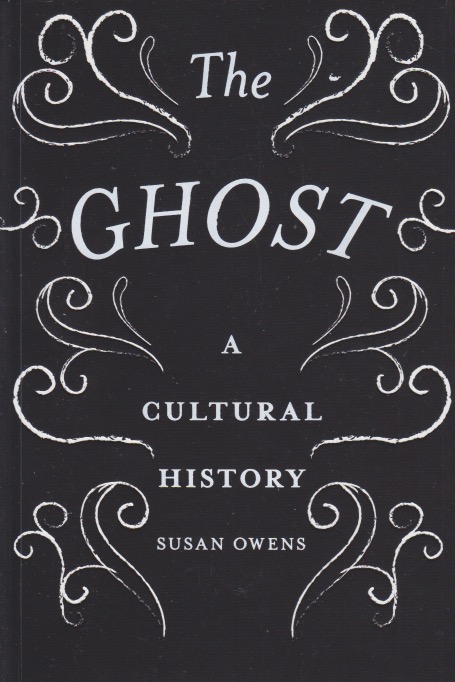
Books on art are often eye-opening to me.  When I was young and trying to escape the working-class hell in which I grew up, I discovered high culture.  This was mostly through local libraries.  I would check out classical music LPs and look at books of classical art.  I did the latter until I could identify several artists by their styles.  (It was probably originally because they’d painted pictures of Jesus and I went to see what else they’d done.)  In any case, I never studied art history.  I recently read an art-historian on the Devil, and now I’ve read one (Susan Owens) on ghosts.  The Ghost: A Cultural History does not address the question of whether ghosts exist, but rather traces the history of how they’ve been portrayed in literature and art throughout time.

Owens quite ably takes us through ancient to modern, pointing out that ghosts change to fit the Zeitgeist—the spirit of the times (not her pun).  In the early modern period ghosts were portrayed as physical revenants.  They were dead bodies that came back to physically harm the living.  We know this fear was widespread because some burials were clearly intended to keep the dead in their graves.  The idea of the physical ghost still comes up in modern horror as the monster you can’t kill because it’s already dead.  It was only gradually that ghosts became spirits and this was largely through emphasis on purgatory, which made it possible for the dead not to be in Heaven or Hell.  Once the idea caught on the literature and art began to focus on the spiritual nature of revenants.  As cultural interests turned towards ruins ghosts inhabited haunted houses.

This is a fascinating study of the way ghosts have evolved over time.  One of the things that struck me was that early commentators often didn’t distinguish clearly between ghosts, demons, and devils.  Demons, as we think of them, really depend quite a bit on The Exorcist.  The use of “devils” in the plural complicates the spiritual geography where we have God v Devil as the main poles of spiritual rivalry.  These ideas, and also those of ghosts, likely blended throughout most of history until a renewed emphasis on literalism came in.  Medieval scholars composed angelologies and demonologies, trying to keep everything straight.  They puzzled over ghosts, however, which don’t fit the scheme very neatly.  They would have benefitted, perhaps, if they had had Susan Owens’ book to help guide them.  It’s an exciting nighttime journey.

Rise Again

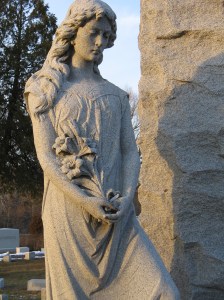
Resurrection, as I argue elsewhere, is a scary thing.  Since today’s Easter, at least in the western Christian world, people are—or should be—thinking about resurrection.  In the case of Jesus, a young man who died “before his time,” resurrection seems only fair.  Indeed, in the earliest biblical hints of the concept it applied to people in precisely that category.  The story’s different for older folk who are beginning to wear out and are ready to go to a better place.  Christianity made the idea of resurrection more palatable by stating that you get a new and better body next time around.  The creeds say, after all, “the resurrection of the body.”  Heaven, it seems, is an embodied location.  Resurrection is necessary to get there.

Horror writers and film makers have used revenants to great effect.  When they do, pop culture latches on.  Think about the vampire craze of the early 2000s.  Or the ongoing fascination with zombies.  Even your basic garden-variety ghost.  They’re all revenants that attract and repel us.  We’re not quite sure what to make of life after death.  It’s okay if it’s played out beyond human senses, but as much as we want life to go on we don’t want to witness it here.  Horror films like to play on this ambiguity.  They’re closely related to religious ideas.  I’m occasionally asked why I watch horror; it’s essentially the same question as why I study religion.  Sometimes you just need to look closely enough to find the connection.  Resurrection, as I discuss in Holy Horror, is tied to some of humanity’s most basic fears.

Just two days prior to Easter, Good Friday in fact, Lorraine Warren passed away.  A fervent believer in resurrection, she was half of the dynamic paranormal investigating couple of Ed and Lorraine, about whom I’ve posted from time to time.  This coincidental occurrence illustrates once again the connection between resurrection and horror.  The Warrens were fond of declaring that haunting spirits of the human kind were those that had not passed over into the next world.  Revenants were confused spirits (not to be mistaken as demons, which were something completely different).  Resurrection, presumably, awaits just the other side of the veil.  Clearly religion shares this roadmap with horror.  Just as the Warrens will be resurrected as characters in this summer’s forthcoming Annabelle Comes Home, such returns to life may take many forms.  It’s Easter for some of us, and it can integrate horror and hope, if viewed a particular, perhaps peculiar, way.


Religion or Death

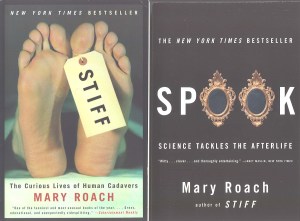
Researching traditions about death can lead to some occluded avenues shunned by many Ancient Near East scholars (generally anything after about the rise of the Roman Empire is irrelevant). It has long been my contention that death and religion are intricately intertwined, well nigh incapable of being teased apart. I’m also very interested in the research of writers on popular culture. Findings, no matter how erudite, if they don’t reach the public will only fail to impress. Mary Roach, ever masterful, wrote a morbidly fascinating account of the afterlife, so to speak, of corpses. This work (Stiff) was followed shortly by Spook — her foray into the science of ghosts. Anyone who can have you mortified one minute and laughing out loud the next deserves to be read.

Can't have one without the other

Can't have one without the other

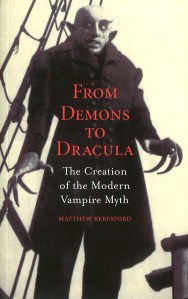
I recently finished Matthew Beresford’s From Demons to Dracula: The Creation of the Modern Vampire Myth (Reaktion, 2008). I was pleasantly surprised that Beresford ambled back to the Neolithic Period in his quest for vampire origins. A number of unexpected facts jumped out at me from his pages — vampires historically have very few traits that last through the folklore about them over the ages. Primarily all they share is being improperly dead. This horrific concept is among the most deeply rooted of human terrors. We prefer the properly dead who stay dead, thank you. Whether revenant or still alive, the vampire somehow threatens the lives of the living and must be dispatched by making him (or her) properly dead.

More rat than bat

More rat than bat

Having been a youngster and woefully unaware of international news at the time, I had never heard of England’s Highgate Vampire of the 1970s. A disjointed and confusing account involving an actual vampire-hunting Catholic priest, a rival vampire-hunting occultist, and ending with the actual staking of a corpse (in 1970! CE!), the tale in Beresford’s book is almost incredible. A little web research demonstrated that the story still has a much wider following than this blog will ever have. Overall, however, it convinced me that my inklings of the danse macabre between religion and death were as accurate as a vampire hunter’s stake.