Two-Eyed Cyclops

You can probably tell, if you read me regularly, that I’ve been going through an older movie kick.  A lot of these are easier to find for free on streaming services, so that’s been the path of least resistance.  So it was that I came to watch Doctor Cyclops.  I’d completely forgotten that I’d watched it about fourteen years ago.  In any case, a kind of precursor to The Incredible Shrinking Man, it’s the story of the deliberate shrinking of five people by a mad scientist with an endless supply of radium at hand.  The movie made a splash because of the use of Technicolor in a horror film (with no blood, however).  The story is a touch dull and the shrunken people (three scientists among them) spend most of their down time running around and saying very little.  They do face an alligator, which is kind of fun, and the big hand that holds the pompous Dr. Bulfinch is distinctly unnerving.  The movie received an Oscar nomination for visual effects.

There’s something distinctly enjoyable about these early sci-fi horror films that don’t explain much but nevertheless manage to employ some impressive cinematography.  The use of oversized props and forced perspective make much of this possible, perhaps making up for the simplicity of the tale.  Even by 1940 the “scientist goes mad and must be stopped” narrative was getting old.  The Second World War was underway but nuclear power wasn’t yet harnessed either for bombs or energy.  Interestingly, the source of the mad doctor’s radium is pitchblende, which one of the characters notes, is a source of uranium.  Of course, many movies were to follow where radiation mutated life forms in various ways, including shrinking them.

Coincidentally—it was a rainy Sunday afternoon—I watched the Twilight Zone episode “The Little People” later in the day.  Here was another story about the large oppressing the small.  This one, however, has a stranded astronaut who discovers the little people thinking that he is their god because he has the power to harm them.  The message here is much more profound, even if told with more brevity.  No clear motive is given for Dr. Cyclops’ work beyond his interest in pure science.  By the way, his real name isn’t “Cyclops.”  That refers to his being a giant with one eye—the latter because one of his glasses lenses gets broken.  Don’t worry, the shrunken people learn that the effect is temporary—their brush with radioactivity leaves no lasting harm.  There is, however, a decided danger to desiring to return to a “simpler time,” as Mr. Serling steps in to remind us.


Empowerment

Recommended as a worthwhile contemporary gothic novel, Alix E. Harrow’s The Once and Future Witches is a feminist tour de force.  Set in a world similar, or perhaps parallel, to ours, it follows three witch sisters in 1893.  The sisters are estranged, having been raised by an abusive father, and each has found her own way to New Salem.  The old Salem had been destroyed after the witch trials.  The three find their lives drawn together, not even knowing the others are there.  But there are also still witch hunters.  None worse than Gideon Hill, the leading candidate for mayor.  I’ve long known that books written after Trump are often fairly obvious for the hatred that oozes from political leaders.  This is one such case.  The story is one of female empowerment in the face of constant male opposition.  It goes fairly quickly for a book its size.

It’s an enjoyable read but it grows, well, harrowing towards the end.  You come to like these three very different sisters and appreciate the gifts they offer to their world.  Men, however, make the rules and often they feel that women have no place in making decisions for the public good.  I’m amazed at the number of people who still believe this.  It makes novels such as this so important.  Women with power are crucial examples to present.  The three sisters may cause mayhem, but it is generally good for the city.  When men are in charge, things tend to get repressive.  Sound familiar?

Conveying the gist of a 500-page novel isn’t a simple task so I’ll simply say that this isn’t a conventional witch story.  There’s never a question that witches are good, but capable of doing bad things.  In other words, they are pretty much like all of us.  That’s not to deny that some people become evil and that such people will gain ardent, blind followers.  The characters are memorable and likable in their very humanness.  As far as genre goes, this is a magical realism novel.  As you get drawn into Harrow’s world it becomes believable.  It’s a book that should be widely read and its plea for tolerance must be heard.  I can think of other comparisons—others have also conveyed that an unquestioning religion may become evil unintentionally.  Such conversions aren’t the kind publicly discussed, but they do fit with human experience.  I’ve intentionally left out spoilers since I want to encourage readers.  It certainly has left me thoughtful.


Who’s Stalking?

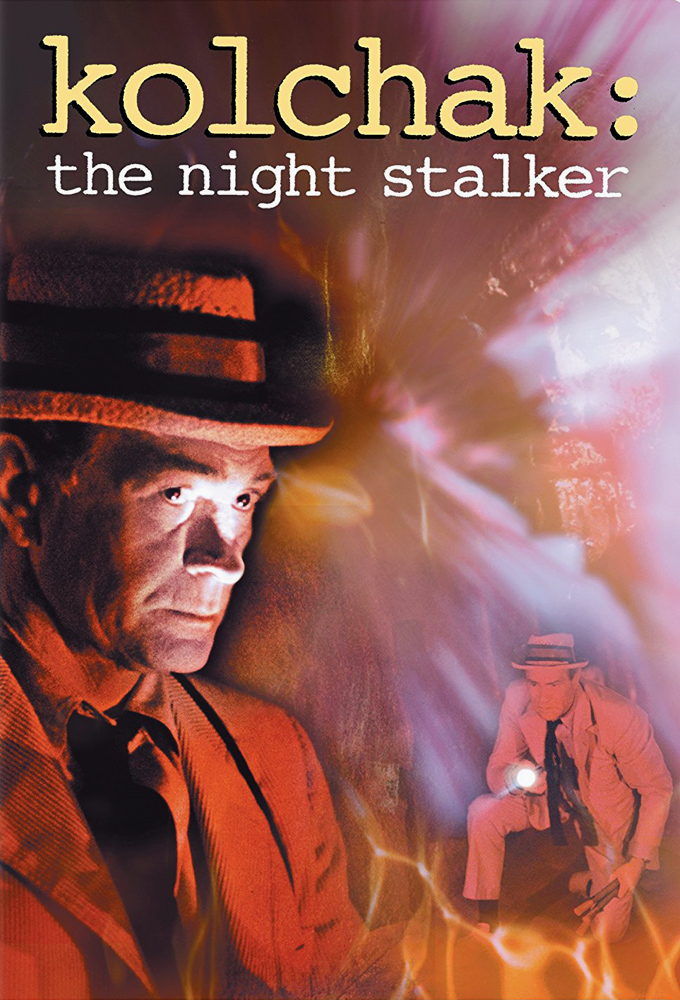
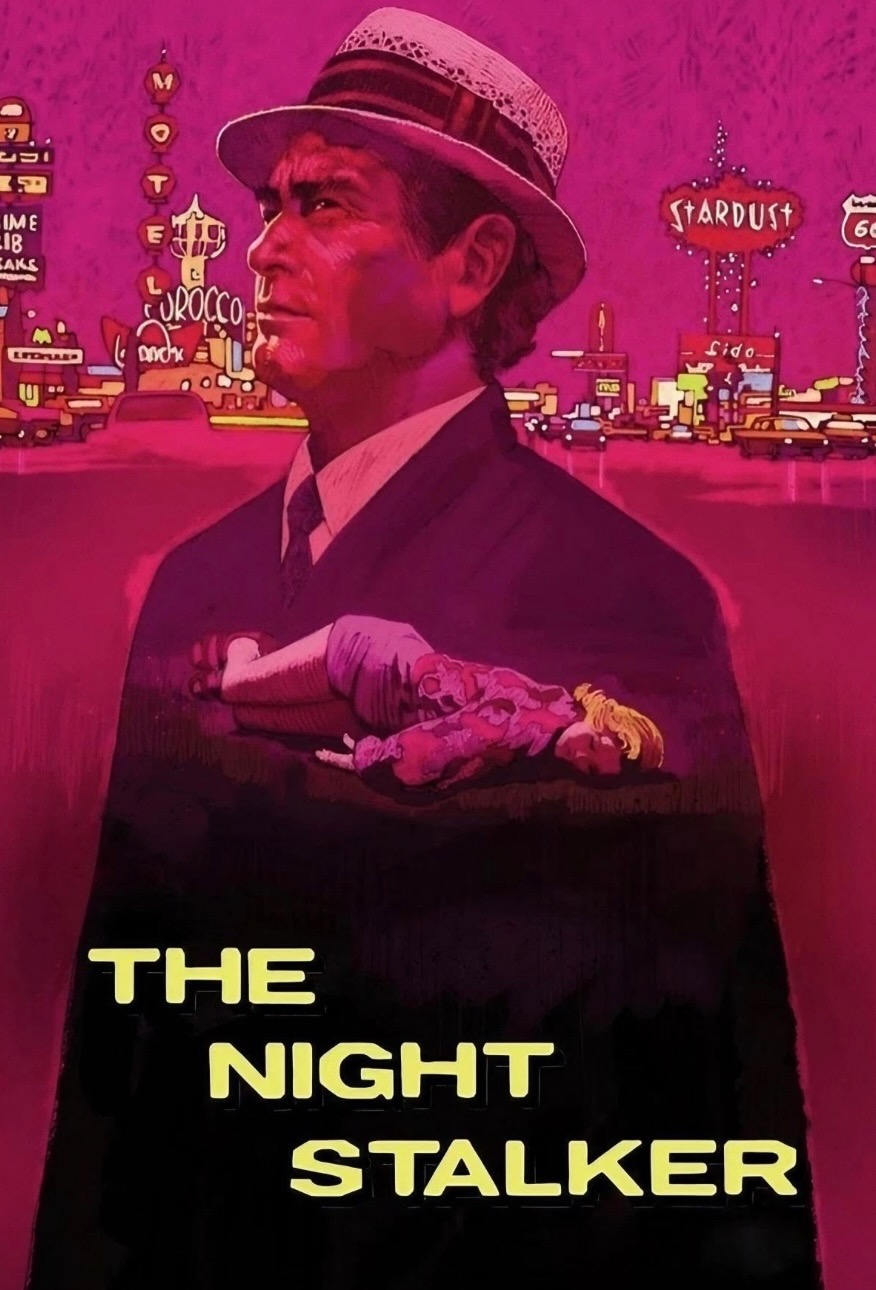
Television is a hungry beast.  Back before the internet it was probably less hungry, but still the desire for content was constant.  A few individuals worked the monster side of the tube, one of them being Dan Curtis.  Dark Shadows was Curtis’ idea, and it was in that context that he began to have an influence over my life.  I wouldn’t have recognized his name in those days, of course—do we ever really recognize those who become part of the arc of life’s direction when we’re kids?  Curtis produced a television movie that I’d never seen, taking on the vampire tale again.  The Night Stalker isn’t a great film—it was produced for television, after all—but it started something.  That something was the weekly series Kolchak: The Night Stalker.

I’ve been watching episodes of Kolchak and realized that I was missing something—the origin story.  As an historian I really like to keep things in order.  Since my research is conducted on my limited free time and limited budget, I still discover things others probably knew long ago.  In any case, I decided to hunt down and watch The Night Stalker.  It introduces, of course, the character of Kolchak.  In a way that seems unnecessary for 1972, it narrates quite a bit of vampire lore.  It even frames some scenes from Bela Lugosi’s 1931 Dracula.  As I watched this period piece for the first time, I realized that the actual night stalker wasn’t originally Kolchak.  In this movie it’s clearly Janos Skorzeny, the vampire.  The movie was based on an (at the time) unpublished novel by Jeff Rice.  And so began a number of cascading things.

I didn’t watch Kolchak as a child.  I do remember other kids talking about it, but it never made its way into our evening television watching.  (My mother was concerned that I had nightmares as a child and didn’t encourage scary things before bed.  Decades on I’m still prone to nightmares, but as I said, arcs get set early on.)  Kolchak is kind of a hapless character, rubbing people the wrong way.  The movie leaves many unanswered questions, but it was good fare for unreflective television monster purposes.  There had been monsters before—I think we all owe a great debt of gratitude to Rod Serling’s Twilight Zone—but Kolchak made the horror element, always laced with comedy, central.  The television movie received the highest ratings of any television movie to that point.  And we all know that such things lead to sequels.  Television is ever hungry.


Okay, Look Now

When you think of Daphne du Maurier’s film adaptations, Alfred Hitchcock probably pops to mind.  He shot Rebecca, Jamaica Inn, and The Birds, based on her works.  One non-Hitchcockian adaptation is Don’t Look Now, by Nicolas Roeg.  I’d made the decision to read the story first—which was a good idea—but it was long enough back that I couldn’t recall many details.  This was also good.  Don’t Look Now was the main release by British Lion, in Britain, with the B movie, The Wicker Man, as its follow-up.  While writing a book about the latter movie I’d wondered why this one was chosen as for lead billing.  It’s certainly more mainstream, and an art film in many ways.  Typically labelled a “thriller,” it’s also called “horror,” causing me to question the relationship between the two.  In any case, the movie.

Since this was released in 1973 I won’t worry about spoilers.  The film is a fairly faithful adaptation of du Maurier’s story as well.  Laura and John Baxter are in Venice, trying to recover from the accidental drowning of their daughter.  John has work there, restoring a church—there’s plenty of religious imagery—and Laura befriends two older women.  They’re sisters and one of them is blind but also psychic.  Heather, the psychic, claims to see their drowned daughter and Laura finds relief and comfort from hearing about it.  John is skeptical, but, Heather claims, he also has psychic abilities.  John begins to think he’s seeing their daughter still alive and she leads him down isolated alleys—this is dangerous because there’s a serial killer on the loose.  John then thinks he sees Laura with the women after she has flown back to England to attend to their son at his boarding school.

Movies, like stories, are open to interpretation.  Mine is that the psychic phenomena in the film are portrayed as real.  I had the same impression from du Maurier’s story.  Much like The Wicker Man, appreciation for Don’t Look Now has grown over the years.  It was fairly well received upon release, but is now considered even better than it was at the time.  Maybe not as essential as some Stephen King movies, it is nevertheless believed to be one of the more important films on the horror palette.  I’d been prompted to watch it by several references I’d recently come across.  Typical for me, however, I took it in the wrong order, having seen The Wicker Man years ago.  Classics back then, it seems, took longer to be recognized.


Shadow Half

Sometimes you just take a chance on a book you haven’t heard of.  You see, I keep a very active “to read” list.  The problem is that many books on it are a bit on the heavy side and it takes me a long time to get through lengthy books.  Every once in a while I go to a bookstore to browse for a book that’s short and speculative.  It seems that when I was growing up it wasn’t difficult to find fiction under 300 pages.  In any case, that’s how I found Sunny Moraine’s Your Shadow Half Remains.  It was in the “horror” section of a local bookstore.  (Even “horror” sections are now difficult to locate.)  It looked like it wouldn’t take me a month to read.  It was a good call.  It’s what I like in a scary story.

Not too gory and written with literary finesse, Your Shadow Half Remains is a pandemic story.  Well, not literally, but sort of literally.  It was published just this year and the story revolves around a pandemic in which people are infected by looking into each other’s eyes.  Nobody knows for sure how this happens, but people who are infected begin to act violently toward those around them before killing themselves.  Naturally, therefore, survivors begin to isolate themselves.  So Riley moves to a lake cabin where her grandparents got infected and died, but since there’s nobody else around the contagion can’t spread.  She lays in supplies and awaits, well, that’s just it—awaits what?  Her plan is interrupted, however, when she learns that she has a neighbor.  Maybe two.

One neighbor she starts to get to know, but they can’t look directly at one another and can’t really know each other’s motives.  Herein hangs the tale.  People are social creatures and the pandemic (in real life) caused much of its damage in the form of isolating ourselves from one another.  Other people, instead of being companions, were threats.  Especially in the early days when it wasn’t clear how the virus was spreading.  The safest thing was to stay home and avoid others.  It’s that aspect that Moraine really captures here.  A woman set to try to wait this thing out alone, but then, another person complicates things.  And how can you tell insanity from infection apart from insanity brought on by isolation?  Both seem to lead to the same results.  I took a chance on this unknown story, and it was a chance well taken.


Which Mountain?

Disney movies—and I still think of Disney primarily as a movie studio—were part of my childhood.  A small part, but there nevertheless.  We didn’t go to theaters often but we caught some movies on television (do you remember eagerly reading TV Guide to find out what was going to be on that week?).  We did watch The Wonderful World of Disney and some of their series—I recall the one ones on Daniel Boone and Davy Crocket.  Still, I missed a lot.  I didn’t see Mary Poppins, for example, until I was in college.  So the other day I got curious about Escape to Witch Mountain.  I’d not seen it as a child and never saw any reason to watch it as an adult.  I’ve been taking a break from bad movies, and, as it turns out, Disney.  So there may be spoilers below, in case you’re waiting to see it.

I didn’t know the backstory or the plot, so seeing this the first time I wasn’t sure what to expect.  The movie shows its age (I was a mere lad of twelve when it was released), but the story is interesting.  Tony and Tia are adopted but have to be sent to an orphanage.  We quickly learn that they have “powers,” and that adults like to exploit such things.  A wealthy villain has his fixer pose as their long lost uncle to get them to his house, under his control.  The children realize that they must escape to, well, Witch Mountain.  Actually, that takes some time and a sympathetic adult who can drive.  In the end it turns out that they’re aliens, not witches.

Not cheery like many Disney films, Escape to Witch Mountain, although you know it will end well, has a fair bit of tension.  Especially scary is the mob mentality that takes over the locals when they start their literal witch hunt.  Armed and dangerous, those who want to preserve the uniformity of small-town mentality are serious about their convictions.  As usual, they focus on the enemy without getting to know who, or what, they really are.  Obviously, there are larger issues to consider, as there are when anyone has an advantage.  But the kids, aliens, are sweet and mean nobody any harm.  All they want is to get back to their people.  Can humans, however, ever be satisfied knowing that there are others out there more advanced than we are?  Perhaps there’s a reason for cover-ups, after all.  Disney often says more than it’s given credit for saying.  Even if I missed it until now.


Colorless Sunday

Growing up, my Saturday afternoon horror movies were catch as catch can.  I never really had a plan and I’m sure that there are several films I saw that I have forgotten.  I’m sure one of them wasn’t Black Sunday.  I knew nothing of directors and their reputations then and I was unaware that Mario Bava made quite a splash with this moody movie.  I can now understand why (thanks to Amazon Prime).  This is an unusual vampire and/or witch story, and one which had quite an impact on future films, including one of my favorites, Tim Burton’s Sleepy Hollow.  Indeed, Black Sunday is about as gothic as they come.  A witch is murdered as the film opens, along with her lover.  Two centuries later a couple of doctors stop for the night in the Moldovan town where this happened.  They find the corpse of the witch and accidentally reanimate it.

The monster the witch raises (her lover, initially) attacks people like a vampire does and the victims become vampires themselves.  The best (but not only) way to kill them is by driving a sharp spike through their left eye.  This is quite violent for a 1960 film, but it certainly cemented Bava’s reputation.  In any case, the younger doctor falls in love with the local princess, but the witch has designs on her too.  The older doctor and the princess’ father both get transformed into vampires and get killed off.  By the end, only the young doctor and the princess remain, along with an Orthodox priest who helps with deciphering how to take care of occult monsters.  The plot is more complex than that, and the film is now understood as a landmark.

At the time and place where and when I went to college, courses in horror films were not on offer.  (I was rather preoccupied with religion, in any case, and might not have taken one anyway.)  By the time I was in college, however, I viewed monster movies with nostalgia, but I was trying hard to be respectable.  You always have to be proving yourself when you grew up poor.  Learning how these early horror films fit together is a form of self-education.  And it’s fun.  And horror movies offer an escape from a world where you know you’re having trouble fitting in.  Many of the movies I watch are still catch and catch can, but I think it pays to be more intentional about them.  And I’m glad I caught Black Sunday at last.


Filming the Void

Once you move away from major studios, it turns out that Lovecraftian horror is rather prevalent.  Seeing that The Void was rated higher than many offerings on FreeVee, well, why not.  It was compared to the intellectual works of Benson and Morehead, but to me it matches more closely with Older Gods.  Like many movies in this genre, The Void isn’t easy to follow and having commercial interruptions doesn’t help.  (In movies made for television, directors know to offer cues at specified times to allow for a break.  I’m not sure that those at FreeVee, or Tubi, or Plex, or their ilk, or even Hulu, know how to do this well.)  So there are these mysterious cultists—somehow “new religionists” just doesn’t seem to cut it—who apparently want to bring about the apotheosis of their leader in a rural setting. 

Meanwhile a local sheriff finds a young man fleeing from a couple of guys who are killing people and takes him to the hospital.  This hospital, however, is being closed down and there’s only a skeleton crew there to handle emergencies until it can be decommissioned.  Once the guys trying to kill the young man arrive, the hospital is surrounded by the cultists.  By the way, there will be spoilers—just saying.  It never is adequately explained how these killing guys know who these cultists are, unless it happened so fast that I missed it.  In any case, all trapped in the hospital there’s the problem with a monster that has tentacles (Lovecraftian) that takes over the body of a nurse, then a tries to get a state policeman.  Lots of axes and gunfire, and the numbers in the hospital are reducing.

It turns out that the kindly old doctor is the leader of the cult and he’s trying to raise the old gods so that he can bring his daughter back to life.  The sheriff, who’s been the protagonist all along, knocks said doctor into the eponymous void, leaving only two people alive in the hospital.  It’s not really explained where the cultists, who made it into the hospital, went.  Nevertheless, this is a good example of horror and religion (which is ironically Lovecraftian).  The doctor’s unconventional religion is the cause behind the hospital mayhem, and, apparently the killings being conducted by the interlopers are attempts to stop it.  As a horror film it’s effective, if a bit disjointed.  It seems that there’s still a lot to unpack from films that try to bring Lovecraft’s ideas onto the silver screen, major studio or not.


Le Fanu Fans

Sheridan Le Fanu is sometimes called “the Irish Poe.”  He was a contemporary of Poe but his name doesn’t bear the same cultural cachet.  He wrote a number of stories that are classified as “horror” in today’s genre settings, and one of the most famous is Carmilla, known as the lesbian vampire story.  Le Fanu didn’t use that terminology himself, that I know of, but Carmilla is a vampire and she does have fondness for other females.  I’ve watched a few lesbian vampire movies (I mentioned Theresa & Allison recently), since they give a distinctive taste to the lore.  I don’t generally research the free movies I watch beforehand, so when I saw The Carmilla Movie, I figured it was likely based on Le Fanu (it is) but I didn’t realize that it was a follow-up to a web series with the same characters.  Nevertheless, it’s a pretty good story.

Set in the modern day, with a cast of young people doing things for a living that weren’t options when I was growing up (internet content provider, starting a paranormal investigation business—I was laughed out of school for admitting I was interested in this stuff before the X-Files made it mainstream), the film updates Le Fanu’s story.   Carmilla has become human and has a girlfriend.  But then Carm starts to revert to vampire status.  (Fortunately there’s soy-based blood for her to drink—did I mention this is comedy horror?)  Although this is comedy horror, it’s not a silly story.  There are plenty of humorous asides, but you still feel for the characters and want them to overcome the evil they face.  Here that evil is a past that has to be rectified.

I found The Carmilla Movie to be intelligent and fun.  There are some genuine horror elements to it, and I suspect that being familiar with the web series might help answer a few head-scratchers for us non-initiated.  In general it seems that such independent films as this serve to raise the bar on movies as a whole.  The flip side is, however, that you can’t easily tell if a movie is a studio release or a television movie, or even a web movie without doing some research ahead of time.  Amazon Prime—my go to service—doesn’t distinguish them.  All I know is that if a movie is one I have on my watch list, I’m going to have to pay for it.  Carmilla was free and worth the time to watch.  And it’s good to see Le Fanu getting some deserved air time.


Not The Sting

Why do we make the decisions we do?  Watch the movies we do?  I have to confess that for me a number of strange factors combine to make for some weird choices.  For example, Invasion of the Bee Girls is difficult to explain apart from compounding oddities.  One is that Amazon Prime auto-suggested it too me (for free).  Yes, I have a history of watching bad movies and this definitely fits that bill.  Fuzzy-headedness during my weekend afternoon slump time probably played into it.  Along with the fact that I’d been researching bees and that brought the movie The Wasp Woman back to mind.  Wasp woman, bee girls?  It’s free and I’m not going to be able to stay awake otherwise.  The movie is about what you’d expect from a low-budget 1970s sci-fi horror film.  It did make me think I should read about movies before I watch them rather than after.

Nevertheless, I’m trying to develop an aesthetic for bad movies.  If you’re a regular reader you’ll know that I have a fascination with Ed Wood and his films.  I even read a book about him and also read a book on why it’s okay to like movies that we tend to label as bad.  No matter how you parse Invasion of the Bee Girls, it’s bad.  The acting, the writing, the plot.  Still, some of us have a taste for films from the seventies—it’s kind of a nostalgia trip since I was really only becoming aware of the odd world of science fiction about then.  Nicholas Meyer, who wrote the initial screenplay wanted his name removed after he saw the changes that’d been made.  That should be telling you something.

Meyer, while not a household name writer, did pen some good detective stories about Sherlock Holmes, and wrote, uncredited, both Star Trek II: The Wrath of Khan and Fatal AttractionInvasion of the Bee Girls has a somewhat salacious plot that fits the Zeitgeist of the seventies of which I was unaware, growing up.  The seventies were my sci-fi high point, it was good escapist material for someone living in a situation less than ideal for day-to-day living.  I watched, for example, Killdozer about that time and thought it was great.  Now that streaming is how we watch, the amorphous internet has a record of what we’ve seen and then recommends products for us based on our record.  I really thought we outgrew being tracked all the time.  Little did any of us know that it was only getting started in high school.  And as long as you have a penny to spend, those who track us will try to figure out how to take it.  You could get stung.


Not Bram

I guess I wasn’t sure if Stoker was horror or not.  It’s similar to Hitchcock in many ways, and some suggest it’s a “thriller” rather than horror proper.  One of the refrains of this blog is that horror is a poor genre designation.  Too many other genres bleed into it and it grows into several others also.  Still, Stoker was conceived of as a horror movie and it fits that, generally.  The title made me think of Bram, the most famous bearer of that surname, at least in my mind.  I’m pretty sure that others had the same impression, since some websites take pains to mention that this is not a vampire story.  It’s not.  It is, however, a story about a psychopath or two.  But it generally gets compared to Shadow of a Doubt rather than Psycho.  I’ll spoil things below.

On India Stoker’s birthday, the family receives the news that her father has died.  She was very close to her father and distant from her mother. During his funeral she notices someone watching from afar.  It’s an uncle she didn’t know existed and who’s decided to live with them.  This uncle, we learn, was released from an asylum.  As a child he’d killed his younger brother.  After arriving at the Stoker mansion, people who recognize him disappear.  India was trained as a hunter by her father and senses something is wrong.  The uncle meanwhile seduces her mother so she doesn’t see his obvious faults.  (He’s a charming psychopath.)  He’s goal is to have his niece, India.

There’s a creepy atmosphere throughout, and it’s difficult to determine what India’s end game is.  She’s able to take care of herself, mostly.  She does rely on her uncle to save her, though.  India discovers that he’d been institutionalized at the fictitious Crawford Institute, interestingly in Crawford, Pennsylvania, not far from where I grew up.  Instead of accepting his plans for her, however, she charts her own violent course.  This is an odd film as far as determining character motivations go.  It’s not really clear what India or her mother really wants.  The uncle’s straightforward about it, but he’s a serial killer.  It’s difficult to know upon whom to cast your sympathies.  A movie about family dynamics as much as about horror (a character kills both his brothers, his aunt, and a housekeeper that he feels is in the way), it has no clear message.  And there are no vampires anywhere to be seen.


Loving Vampires

Vampires caught my attention early in life.  I believe, apart from ghosts, that they were the first monsters I learned about.  Apart from the fangs and perhaps an ironically anemic look, they appear to be just like us.  I’ve seen a great number of vampire movies over the years—I can’t seem to resist them.  I don’t care for the blood and gore, but the idea of the conflicted undead is a powerful draw.  It’s this conflicted aspect that brought Theresa & Allison to my vampire radar.  This movie is not for the squeamish, and I have to say up front that it is a lesbian vampire movie, with all that that implies.  You have been warned.  Theresa & Allison is also an indie movie—I’ve been watching quite a few of these lately because they’re often free.  This one is also smart and fairly original and it explores humanitarian concerns as well as vampiric ones.

Said Teresa is “made” when a drunken vampire (they get drunk when their victims are inebriated) decides to turn her (make her into a vampire).  She soon learns that vampires are organized and sanctioned by the government, and there are rules to be followed.  Also, some of the standards for vampire lore, we’re told, are male bovine droppings.   Teresa was lesbian before she was turned, and she’s befriended by fellow vampire Allison.  We learn that two major vampire “families” range about New York City—one graceful and kind, the other brutal and unfeeling.  Teresa has real trouble killing people for blood and she’s confused about what she’s become.  She doesn’t know what to make of it when the kinder vampires offer to let her join.  Instead, she follows Allison and finds herself in a blood-drenched nightmare.

Vampire movies are often full of social commentary.  Especially the spate of movies made available by independent auteurs.  Theresa & Allison asks the question of what makes something right or wrong.  It also explores what it means to accept who or what you are while also having the ability to change some aspects of it.  It reflects, it seems to me, the moral landscape of the young.  In that respect, it makes sense that those of us from older generations (let’s not kid ourselves) may have been raised with very different standards.  Culture, however, has continued to evolve.  The internet sped all of that up immensely.  Still, the acceptance aspect of the young is written all over movies like this.  And the internet means there will undoubtedly be more to come.  Vampires are sure getting interesting.


Which Love

Perhaps some content creators use genre as a guide when writing, or when filming a movie.  Some categories are pretty well defined—the western, the romance, or in writing specifically, the literary.  Others are less easily settled.  Horror is particularly slippery.  Although The Love Witch was an interesting story with a feminist message, the horror trappings weren’t entirely obvious.  In fact, it reminded me quite a bit of The Wicker Man.  (Not in any literal way, of course.)  Afterward I read that it is also a comedy and that helped make sense of it.  It gets generally high marks although, to me, the acting seemed pretty wooden.  The Love Witch follows Elaine, a young, present-day witch, who’s moving to a small town in California that tolerates witches.  Her husband has recently died and flashbacks imply that Elaine may not have been entirely innocent in the matter.

Once she settles in Arcata, she starts looking for her “prince charming” as she continues to practice the craft.  She finds an emotionally unstable professor who take her home readily enough, but he quickly proves to be too needy.  Part of this is because he took a love potion she gave him.  He dies that very weekend.  Elaine seems less than distraught as she buries him and begins seeking the next possibility.  The husband of a friend comes over when the friend is out of town and he too proves emotionally immature.  After their affair he dies by suicide.  A policeman investigating the missing professor comes to suspect Elaine, but he too feels drawn to her.  The locals, meanwhile, aren’t as witch-friendly as they seem.  They riot in a burlesque club, chanting, “Burn the witch, burn the witch!”  I won’t spoil the ending.

I was watching all of this with the genre “horror” in my mind.  I’d not seen it labeled as “comedy,” and, as an art film there’s nothing so crude as a laughter track or cheesy and obvious comic music.  Instead, the film is an example of “the female gaze.”  Film analysts, and even religion scholars, have long written about “the male gaze,” which looks at women a certain way.  This movie’s writer, director, and producer, Anna Biller, experiments with the female gaze instead.  The results for some men, I suspect, are disturbing.  They certainly aren’t in control in this film.  Retro in execution, it’s unlike most other horror I’ve watched.  Unusual for the genre, the critics responded well to it.  It was a fun flick, but I’m still not sure how wide “horror” stretches, but I do sense that it’s quite inclusive.  And I applaud the female empowerment on display, even if I’m confused.