
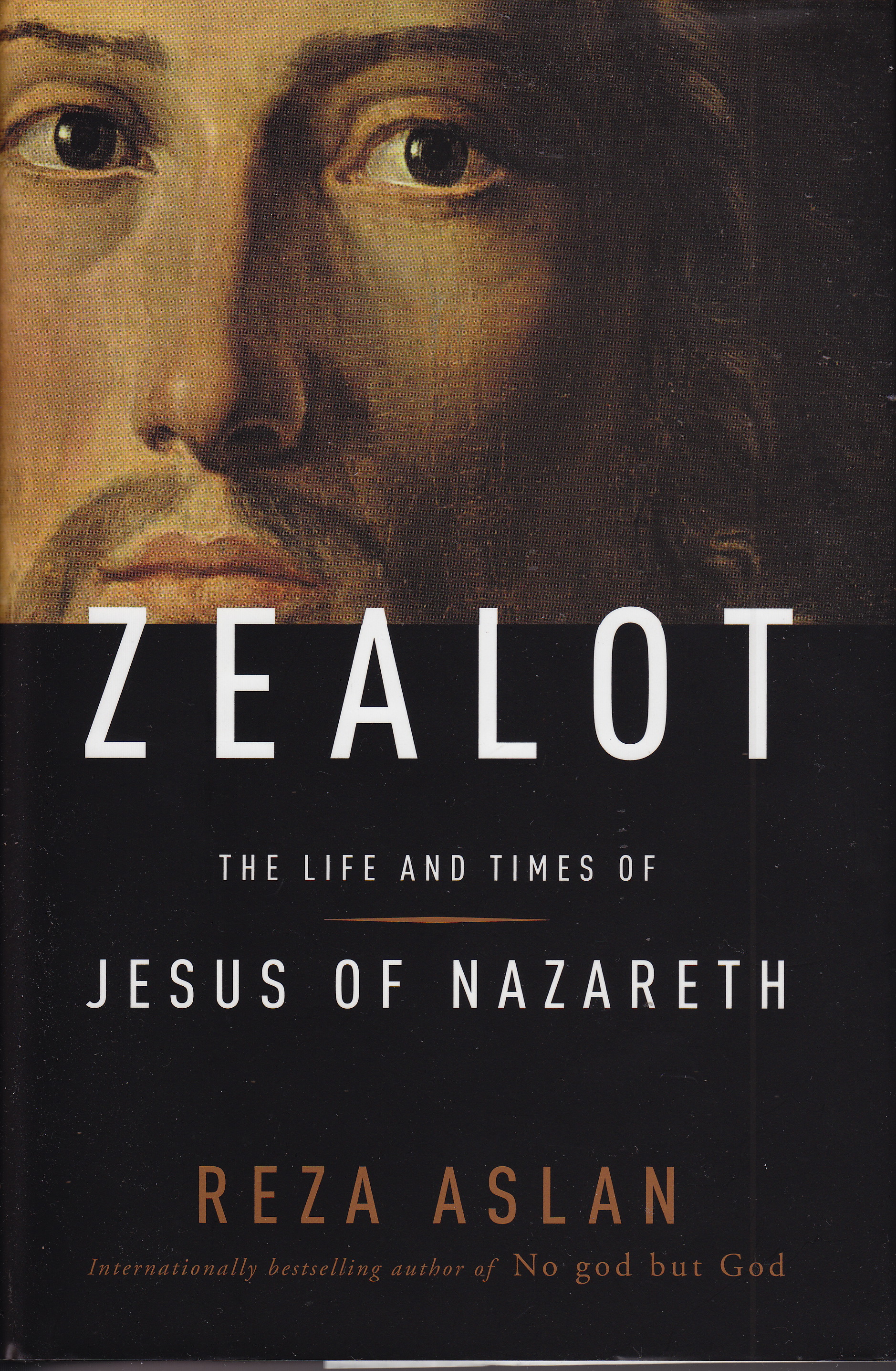
 A question that has no answer: who was Jesus of Nazareth? Well, no single answer, anyway. When Reza Aslan’s Zealot: The Life and Times of Jesus of Nazareth came out, there was uproar. (Something, by the way, that publishers love.) How could someone suggest that not only do the Gospels disagree, but that they’re not even literal when they do? For those of us who’ve studied the Bible academically, there’s nothing too surprising here. Aslan’s perspective is often refreshing, even if he makes some basic errors (those of us who study the Hebrew Bible are pretty forgiving). For me, having the social circumstances of the New Testament spelled out in terms of the intense unrest of the first century explained a lot. It was a period of unremitting violence and frustration on the part of those coming to grips with life under Rome. Jesus was born and came of age when any outré idea could easily get you crucified. When it happened in his case, it was, as the Gospels point out, fully expected.
What might bother many readers is that Aslan doesn’t accept the story at face value. Jesus wasn’t unique as a healer, revolutionary, or messiah in first-century Palestine. In fact, Rome’s appointed rulers grew tired of such sons of gods that thousands of people were nailed up to warn others of the costs. Still, unlike the others, Jesus remained in contention even after his death. The belief in the resurrection didn’t hurt. Since Aslan is writing history, he can’t judge whether the resurrection or the healings actually took place. The traditions, he notes, are strong. He is surely correct that the Gospels aren’t attempting history. Written well after Christianity was already established, the writers had theological templates at their disposal. Not only that, they also had Paul.
Something I’d never considered was the dispute between Paul and the Jerusalem church. Yes, I’d noticed the stark contradictions between the letters of Paul and the one of James, but seeing the underlying conflict of those who knew Jesus personally (James, Peter, John) and Paul just never occurred to me. Paul doesn’t dote over the historical Jesus. His Jesus is divine from the start, and those who try to preserve Jesus’ words get in the way of the theology he’s developing. His letters express anger at those who teach what Jesus said over who he was, spiritually, anyway. Only with the destruction of Jerusalem was the way cleared for Paul’s gentile Christianity that eventually won out over Jesus’ teachings. It’s all very interesting, but I can’t buy it all. There are too many convenient connections here, and history abhors neatness. Nevertheless, Zealot is well worth reading. It tells an old story from a new perspective. And even if your Jesus is different from Aslan’s you’ll find something profound here that will only make your image stronger.
 Steve A. Wiggins