Religious Studies

Prominent public intellectuals, as opposed to us obscure private ones, often brashly castigate religious thinking.  They may be aware that the vast majority of the world’s population is religious, but there’s  a kind of arrogance that comes with public adulation, I suppose.  I was just reading about the European Middle Ages and I was reminded once again just how seriously religion was taken and how the very foundation of civilization is based on it.  During said Medieval Period everyone knew—note I don’t say “believed”—knew that human beings had eternal souls.  They also knew there were eternal consequences to our actions and therefore correct religion was absolutely essential.  The Enlightenment began to change some aspects of received wisdom, but not all.  Many intellectuals who led the charge still believed in God and Heaven and Hell.
Whenever I consider the sorry state of academic religious studies today, and look at how politics are unfolding, my thoughts turn to history.  Just because we no longer think in a certain way is no reason to forget just how formative religion is to human life.  The Republican Party has cynically accepted this as a means to power.  While leaving left-leaning intellectuals to debate their choices, they roll toward electoral victory.  They acknowledge that people are religious, and that’s what it takes to win their trust.  Where was Dawkins when Brexit was decided?  It may not have been religiously motivated, but nationalism is closely tied to religious thinking.  While religious thought may be gullible it’s not necessarily so, and without those who think religiously there’s no way to a true majority.

I’ve always had more questions than answers, and one of my largest unanswered ones is why prominent public intellectuals don’t think studying religion is important.  Religious thinking isn’t going away just because they say it is.  In fact, the data show exactly the opposite.  The Middle Ages are quite instructive for understanding the way people behave.  Although belief in the religious structures may be eroded, people still want to find a way to continue their impact beyond their earthly lives.  Modern Nimrods are just as concerned with image as religiously motivated Nimrods were.  To understand where we are it’s necessary to look back.  Looking back entails a certain comfort level with ways of thinking that many moderns find embarrassing.  Religion is part of who we are.  Looking around we can see the consequences of denying it. 

Scientists, Unplugged

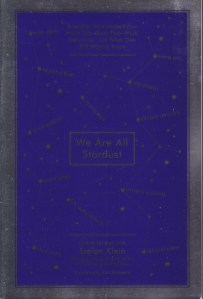
Feeling inferior is common among religionists. When cultures list their brightest and best, scientists often top the list and those who specialize in religion are nowhere to be found. This situation gives the lie to the fact that many scientists think about, and are influenced by, religion. That became clear to me in reading Stefan Klein’s We Are All Stardust. Not Klein’s best-known book, this is a collection of interviews with well-known scientists, unplugged. There are many big names in here, such as Richard Dawkins and Jane Goodall, as well as some less familiar on a household level. Klein, himself a Ph.D.-holder in physics, asks them somewhat unconventional questions, with the goal of bringing a more human face to scientists.

When asked directly, scientists admit to thinking quite a bit about religion. Of those interviewed, several are hostile to it while others accept some tenets of one faith system or another. Most of them indicate that either religion or morality plays an important role in society, if not in science itself. The sad part is almost none of them seem to realize that the study of religion can be (and among the university-trained, generally is) scientific. In academia, religious studies is often vaguely tossed in with the humanities, while others would suggest it fits under social sciences—as a sub-discipline of anthropology, for example. Few understand the field, in part because many specialists enter it for initially religious reasons, somehow tainting it.

While I enjoyed the book quite a lot—it was a quick read with plenty of profound ideas—it also had a disturbing undercurrent. The explanation that many of the interviewees gave for why they went into science was “curiosity.” The implication was that those who can’t stop asking questions, and have intelligence, go into science. Again, this feature is true of most academic fields, if they’re understood. Greatly tempted to go into science myself, I simply didn’t have the mathematical faculties to do it. While I took advanced math in high school I wouldn’t have gotten through without my younger brother explaining everything to me. My real concerns lay along the line of ultimates. Learning about Hell at a young age, it made the most sense to me—very curious and scientifically inclined—to avoid going there. To do so, the proper target of my science should be religion. While many scientists in We Are All Stardust are friendly to philosophy, religion is considered a far less worthy subject by not a few. True, religion often behaves badly in public. It doesn’t bring the money into universities that megachurches reap. But unplugged even scientists still think about it.


Camping Season

Summer is the time for camp. I’m not into extreme sports, like sleeping outdoors in the snow, so in my mind, summer is the time for camp. While in college I spent two summers as a counselor for the Western Pennsylvania United Methodist Conference camps: Wesley Woods, Camp Allegheny, and Jumonville. These were formative experiences for me since I’d never camped as a kid (beyond sleeping on the front porch and an ill-fated attempt at Boy Scout camp one winter), and certainly not in a Christian context. My wife recently sent me a story in The Guardian about Jesus Camp. The documentary is a decade old now, and people are wondering if the religious indoctrination of children is child abuse or what. As always in such situations I tell myself the real issue is that you can’t understand Fundamentalism unless you’ve believed it. Really believed it.

IMG_2856 copy

Some psychologists claim children can’t conceptualize God. Many adults can’t either, but for those who try, what they believe is true. The Fundamentalist parent doesn’t attempt to deceive his or her child. The thought of having your own children suffer eternally in Hell is a wrenching, and very real one. A convinced adult is morally, viscerally, and utterly compelled to teach her or his child the truth. Anything less would be monstrous, hideous, and inhumane. Critics from the outside say that such nonsense damages children psychologically. I have to admit that watching Jesus Camp made left me feeling enraged and, in some measure, victimized. The untold reality, however, is that apart from some cases of deep insincerity, most Fundamentalists truly believe what they teach their children. They’re not trying to abuse any more than a parent who teaches their progeny that the stove is hot. They want the best for their kids and life is full of uncomfortable truths.

Richard Dawkins, notably, has argued that teaching children religion is a form of child abuse. The fact is nobody knows the truth about religion. All we can do, scientists included, is believe. Believe for or against or somewhere in the middle. God, by definition, stands outside the reach of empirical evidence. Perhaps it’s just a trick of consciousness, but we have to leave the possibility open. We don’t even understand consciousness yet. Rare aberrations apart, people love and care for their children. They try to give them the best that they can, and that includes their religion or lack thereof. I saw some strange stuff at church camp. It wasn’t in any sense “Jesus Camp,” but it’s safe to say it changed my life. On the brink of fully legal adulthood I was coming to learn that certainty was impossible, and the only honest way to be in the world was to admit that we all, in some form, believe.


Doubting Dawkins

A recent Guardian introspective on Richard Dawkins reminded me of the dangers of idolatry. Dawkins, an internationally known intellectual pugilist, the article by Carole Cadwalladr intimates, is as human as the next guy when you can catch him off the stage. Ironically, it is evolved primate behavior to adore the alpha male, but, at the same time, to prevent abuse of power and to get away with what you can behind said alpha male’s back. We are worshipping creatures, at least when it suits our best interests. Anyone who’s been intellectually slapped down (something yours truly has experienced multiple times) knows that it is an unpleasant experience that one doesn’t willfully seek out. We try to keep out of the way of those who assert themselves, preferring the safer route of just doing what we’re told and apologizing for something we know isn’t really our fault. It’s only human.

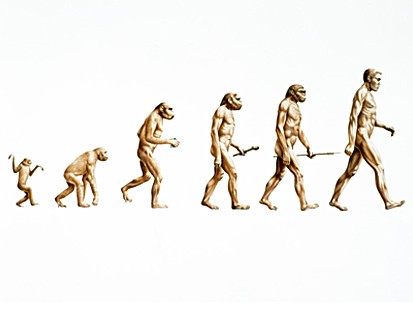
Evolution

The media have provided us with ever more expansive ways to build our “experts” into gods. Dawkins, a biologist, has become one of the go-to experts on religion. The media don’t seem to realize that hundreds of us have the same level of qualifications as Dr. Dawkins, but in the subject of religion. Many of us are not biased. And yet, when a “rational” response to religion is required, a biologist is our man of the hour. Granted, few academics enter the field in search of fame. Most of us are simply curious and have the necessary patience and drive to conduct careful research to try to get to the bottom of things. We may not like what we discover along the way, but that is the price one pays for becoming an expert. Those who are lucky end up in teaching positions where they can bend the minds of future generations. Those who are outspoken get to become academic idols.

I have no animosity toward Richard Dawkins or his work. I’ve read a few of his books and I find myself agreeing with much of what he says. Still, a trained academic should know better than to “follow the leader” all the time. (Some schools, note, are better at teaching independent thought than are others!) The academic life is one of doubt and constant testing. Once you’ve learned to think in this critical way, you can’t turn back the clock. One of the things that those of us who’ve studied religion know well is that all deities must be examined with suspicion. Especially those who are undoubtedly human and who only came to where they are by the accidents of evolution. I’m no biologist, but I inherently challenge any academic idol. I’m only human, after all.


Religion Is Fundamental

One of the books on my shelf growing up was a cheap paperback entitled How to Be a Christian without Being Religious. The idea appealed since having to do all that “religious” stuff seemed kind of like Catholicism or some other formal system of behavior rather than a kind of organic relationship with God. Ironically now, fast forward an indeterminate number of years, and the “spiritual but not religious” demographic is quickly rising. From the secular side. As a sign of this new direction society seems to be turning is the Hart and Crescent Award, designed for Girl and Boy Scouts who are members of a nature religion. Perhaps the most widely recognized religion of this category is Wicca, the modern incarnation of witchcraft, according to some, simple nature religion according to others. The award, according to the website, is open to any young person who completes the requirements to learn about the earth and earth religion.

762px-Shaman_tableau

Also worthy of note is a story in last week’s Time magazine about atheist churches. Ministers from a number of traditions, disenchanted with belief systems that just don’t match what we know of reality are starting to form congregations of unbelievers. This may distress some materialists who find no reason to be spiritual, but the fact is, people naturally are. The article cites, for example, Bill Maher who stands against the idea. There is security in numbers, and in a society where people find themselves increasingly isolated from others, joining together on a Sunday morning for time with likeminded non-believers may not be such a bad thing.

One aspect of Josh Sanburn’s article has me a little puzzled, however. He notes that Richard Dawkins has torn religion apart in his books, and yet, here it is. Dawkins and Maher and other vocal atheists seem to believe that religion has brought us nothing but evil. How quick we are to forget that civilization itself is typically defined as having a formal concept religion, as well as several other components of what it means not to be “savage” or “barbarian.” That religion may not be Christianity. It may be Wicca. It may be the Houston Oasis and its atheistic system. People need common cause. Reason is great, indeed marvelous as far as it goes. People, however, are not entirely rational. They can be spiritual without being religious. And they can be religious without being believers. If you persist in it, your Scout can even earn an award for caring for the earth. And that should be no cause for complaint.


Born Identity

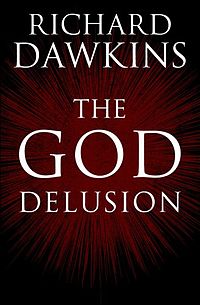
Richard Dawkins, most famously in The God Delusion, made the claim that children are born without religion. Faith is something we’re taught in the growing up process, and we generally learn it from our parents or guardians. A recent piece in The Guardian (the newspaper, not ersatz parent) by Andrew Brown, stakes a bold, and surely correct, counterclaim: children are not born atheists. This isn’t just wishful thinking. As Brown points out, study after study has shown that people, especially children, are prone to belief. Where Dawkins does have a claim to verisimilitude, however, is that religious branding is not a product of nature. We have to learn what flavor of religion tastes good. As Brown points out in his opinion piece, we also have to learn to be the nationality that everything from our passports to our job applications requires of us. I can’t decide to be Scottish or Canadian. I’ve tried both, and here I am, an American mutt, just as I was assigned at birth.

What should  I believe?

What should I believe?

Like nationality, religion is frequently a matter of where you are born. Take a look at a world map of religions and see. India is the most statistically likely country to be born Hindu. It can happen elsewhere, but it would be unlikely where no Indians live. Life sometimes offers the opportunity to change belief, generally through education or through proselytization, but it is fairly uncommon. Most people don’t think too deeply about their religion. You accept what your parents tell you about what’s poisonous and what’s not, and how to drive a car. Would they steer you wrong on religion? Not willfully, surely.

The tabula rasa myth has been one of the most difficult to eradicate. We’re born with all kinds of things going on inside already. Specific religious belief is not one of them, but the tendency to believe is. We believe because it is human nature to do so. We can learn not to believe, and we can even become wealthy by sharing that outlook vociferously. You can also get a good deal of money by being religious and selling alternatives to science. The Institute for Creation Research is well funded, from what I hear. The one place where there is no money, and where you’re not likely to be noticed, is in the middle. Some of us are born as middle children. We had no choice in the situation, and no matter what we decide to believe, we’re no less Episcopalian than we are atheist, or vice versa.


Apes and Atheists

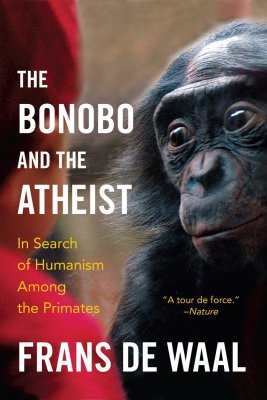
Bonobo&AtheistFrans de Waal is among the sanest of popular science writers. I’ve been following his non-technical work since Our Inner Ape through The Age of Empathy to The Bonobo and the Atheist. As de Waal himself explains, he tended to leave religion out of his earlier works since, for a scientist such topics are generally taboo. His direct address to religion in The Bonobo and the Atheist is refreshing and enlightened. As he notes, de Waal does not believe in God, but he doesn’t believe in the abolition of religion either. This sets him against his fellow biologist Richard Dawkins, who is so bright that the rest of us are burnt out dimmer bulbs by comparison. As de Waal soberly asks: what does science offer in place of religion? What is the point of taking away something that has evolved from our early primate days without offering anything to fill its spot? Even an ape would object.

What makes The Bonobo and the Atheist so engaging, apart from de Waal’s writing, is the openness of his outlook. De Waal suggests that the origins of morality and empathy can be glimpsed in apes and monkeys. He cites the reaction of chimpanzees to rain storms and even waterfalls that hint at early religious development. As I’ve suggested on this forum before, religion may even be allowed to animals. Their experience of religion is certainly not the same as ours, but there is evidence of both thought and feeling. When these are brought together they form religious belief in Homo sapiens. Why not in our ancestors and fellow animals? No, animals don’t develop elaborate doctrines or precious rituals. They do, however, reverence the powerful, ponder death, and feel emotion. Some of our great thinkers are ready to cast all that aside in the name of progress. More humbly, and circumspectly, de Waal considers that evolution is telling us something. And when evolution speaks, its children should pay attention.

Descriptions of reactions and behaviors that we consider unique to humans among the animal world draw me to de Waal’s books. As a scientist de Waal has to draw logical conclusions, and those conclusions point to an inner world that is not so much unique in humans as it is evolved. Religion, I believe, is one of those traits. If animals show some of the early stages of religious development, including a basic form of ethics, how does that devalue our human efforts to explain our universe? Religion is in good company, along with opposable thumbs and basic language comprehension. Looking at how we treat each other, I consider being related to animals a compliment most of the time. Without a doubt some of the ethics Frans de Waal illustrates among the bonobos exceed those I’ve experienced at the hands of many who think of themselves as made in the image of God.


Darwinian Dawkins

Richard Dawkins seems like he’s probably a nice guy in person. You can tell quite a bit about somebody from their writing, and even when Dawkins is being abrasive in script, you can almost see a gleam in his eye. When I read The God Delusion, for example, I found myself nodding in agreement quite a bit. Not that I agree with everything he wrote; as an academic I can’t, in principle, agree with everything anyone writes. Nevertheless, Dawkins expresses himself with passion and clarity, if with a bit over overstatement. I was interested to read the interview with him in the 10 Questions section of this week’s Time magazine. When one is building a case, it is easy to pile on rhetoric, and pretty soon the force of an argument takes on its own life and sometimes a few casualties are left bleeding in the wake. Still, it is a good exercise to sharpen the mind.

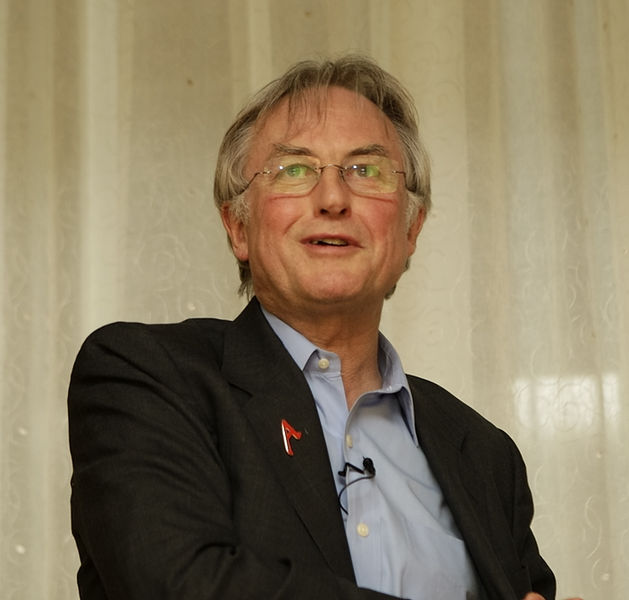
Wikipedia Commons, photo credit: Mike Cornwell

Wikipedia Commons, photo credit: Mike Cornwell

The last of Time’s 10 questions deals with how Dawkins can be certain there is no God. Dawkins, in a conciliatory move, declares that there is much of which we can never be certain. Noting that future science will discover realities that we simply don’t foresee, he suggests, “it’s extremely unlikely that it would happen to home in on an idea from a Bronze Age tribe in the desert.” I found this final sentiment a touch off-kilter. We have plenty of scientific developments that have come out of the “Bronze Age tribes,” but God is not one of them. “Desert tribes” gave us metal smelting, bovine and caprid domestication, and, perhaps most importantly of all, writing. God, however, comes from a much earlier evolutionary strata. In fact, by the time that the Sumerians appeared, multiple gods were already in their train.

In fact, evolutionary scientists seem to indicate that our brains have contrived some need for God/gods. That God isn’t a semitic desert mirage, however, is attested by people all over the world developing the idea independently. Not only did the Israelites and their forebears have deities, so did the Vedic cultures that we now call Hinduism. So did the Native Americans, indigenous African religions, and those who developed in isolation on Australia. Gods evolved everywhere. It doesn’t take a scientist to figure out that this means that we have some need of them. I like what Richard Dawkins writes. I enjoy his candor and passion. We do, however, have to credit the desert tribes with much of the thinking that leads to science, but the gods, they are far more ancient than that.


Disorganized Religion

In an Advice column in last week’s Chronicle of Higher Education, subtly pseudonymed Madalyn Dawkins contributed a piece entitled “Dodging the God Squad.” Dawkins, the wife of a senior college administrator, is an atheist and she shares anecdotally the woes of non-believing administrators everywhere. Even in state universities administrators must not reveal their lack of belief because powerful donors may withdraw their support or other administrators may bring them down. This leads Dawkins to posit a “God Squad” that silently polices university administrators, ensuring a kind of conventional belief structure. Of course, with any covert operation speculation must be involved. Dawkins notes that instructors may declare themselves non-believers with few consequences, but for administrators the game is much more political.

Doubtlessly covert religious groups exist; we discover them all the time. In this case, however, I wonder if Dawkins has wandered into that territory some of have written about for years but to which most academics are blind: the world is actually a very religious place. I sympathize with Dawkins. Those who are educated cannot unlearn what they’ve discovered on their academic journeys. What they often do, however, is suppose that others have kept apace. I see this all the time in the public posturing of the other Dawkins, Sir Richard, that is. Railing against belief as if it is a disease, he doesn’t seem to understand why the unwashed masses don’t get some kind of flu shot of the mind and destroy this pesky infection. What academics sometimes—often—forget is that religion serves many valuable functions in people’s lives. In a world where the privileges of an academic lifestyle are rare and becoming rarer, the disparity is only going to increase. There is no “God Squad.” There is society and there is academia.

I’ve been around the quad a time or two. I know that academic administrators often see no reason to study religion. Many of them are non-religious, as I’m sure many people know. Supposing that all others share their views, however, they cancel funds for the study of religion (one of the departments hardest hit by the “it doesn’t lead to a job squad”), as if silencing the rational voices in this discussion will make the phenomenon go away. Higher education exists for the sake of society. Those who are educated can help to educate others and slowly, slowly progress will ensue. Some of us have tried patiently to do just that over our years in the classroom. I never belittled a student’s religious belief. I did try to raise questions, and I tried to teach students to raise their own questions. My positions, however, were repeatedly cut out from under me by eager administrators. There is no God Squad. For the sake of us all, however, it would be best if administrators acted like this mythology is really true.

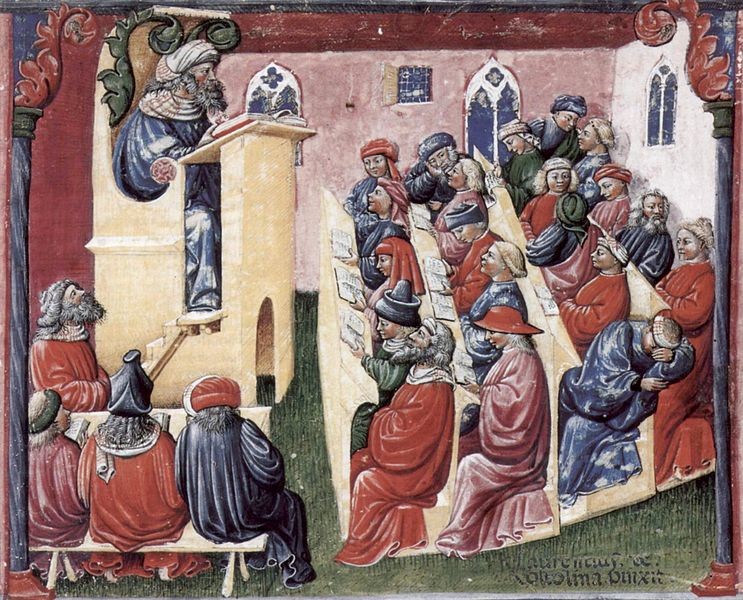
An early view of higher education.  Literally.

An early view of higher education. Literally.


Holy Hostage

HostagetotheDevilA chance glimpse at a textbook shelf in a university bookstore made me aware of Malachi Martin’s Hostage to the Devil, although it is several years old. I was intrigued that a major, secular, state university would offer a course requiring a book about demonic possession. I’m not completely naive about college students, but this seemed just a tad extreme. Nothing is more dangerous than a book dangling in such a context, like the Necronomicon of Abdul Alhazred. The world of the demonic is freighted with arcane rules and a decided Catholic superiority. Even to the rational it can be insanely frightening. As I read Martin’s account, I frequently found myself puzzling over the unseen world he so meticulously describes—after all even the Bible has little to say about it. And Martin is a great lover of verbosity, detailing more than the reader needs to know about the five exorcisms he elaborates. If you want to know what a dying priest looks like, in great detail, you’ve come to the right place.

Perhaps the most jarring aspect of reading such a book is how such obviously intelligent people can come to such diametrically opposed worldviews while looking at the same evidence. Here was Malachi Martin, convinced that demons lurk about the world in great numbers. There is Richard Dawkins, convinced that we are nothing but particles and proteins walking around. Manhattan—the haunt of countless demons, or the febrile accident of firing synapses that means ultimately nothing? Although much of what Martin describes could probably be mental illness, one has the distinct impression Dawkins has never attended an exorcism. Both write with great authority and even greater conviction.

Hostage to the Devil is not an easy book to read. Martin’s style is smooth, like a novelist, but the length of his book keeps demons on your mind for a protracted period. Rationality can be worn down by attrition, and even the non-believer can be made to wonder. Would priests and their chosen attendants lie? Do the possessed really levitate, and contort, and cause objects to fly around the room in defiance of the physics so highly valued by atheists? For over 450 pages Martin will keep you wondering. You’ll also find out what an exorcist ate for his boyhood breakfast back in Ireland decades before facing the Prince of Darkness. Hostage to the Devil is a deeply disturbing book where the monsters we’ve all learned to shove deeply into the closet come springing back out. And the only effective help in the known world is the Catholic priest who happens to be an exorcist. And who can argue with that?


Curing Fundamentally

Despite the many problems with Richard Dawkins’ religious reasoning, he correctly notes that children are religious because they are taught to be. (That’s actually further than Dawkins is willing to go, since in The God Delusion he states that children are not religious at all, but are only claimed to be so by parents.) Belief is something that we are only beginning to understand, but it is clear that children are taught their religion, generally, by those who raise them. By the time most of us finish high school or college, however, we have learned that religion is limited to a relatively brief segment of our otherwise busy, secular lives. Over the years I have met many people whose religion I have studied in more depth than they, mainly because it was of little interest to them. God made no sudden appearances in their lives, the miraculous never occurred, and so life is business as usual. Religion was for Sunday morning (or whenever).

481px-PhrenologyPix

I was raised as a Fundamentalist. Although my readers may clearly see that I am no longer one, I do know that this bundle of neurons in my head has been made what it is, at least in part, because of that early training. Now a neuroscientist is suggesting that such thinking might be a curable mental illness. In an article in the Huffington Post, Kathleen Taylor, a neuroscientist at Oxford University, suggests fundamentalism may be a treatable disease. Looking over the secular headlines, there is no doubt that much of the misery in the world is caused by religious literalists acting out their fantasies in deadly ways. The suggestion that they might be treated for mental illness, however, raises profound—exceptionally profound—questions. Since I work in a city of millionaires and billionaires, I ponder how it is that extreme selfishness is not counted a mental illness. The desire of an individual to acquire far more wealth than one person can ever use seems to be an illness. Aesop might call it being a dog in the manger. No one is suggesting their brains be reprogrammed.

The even larger issue is who has the right to decide “the new normal.” Richard Dawkins may be correct that children reflect the religion of their parents, but as soon as adults declare what religion is acceptable we find other adults colonizing new continents, with the attendant misery that such migration entails. Where do we draw the line? If Fundamentalism programmed out, will Baptist neurons be allowed to remain? Methodist? Presbyterian? Mormon? The issue raised by Dawkins must be placed in context; if parents decide on a child’s beliefs do other adults have the right to decide on what is the correct belief? (Orthodoxy means precisely that.) Is a strict rationalist mentality what we want? A life without Hayden, Picasso, or Charlotte Brontë? What would Mr. Spock do? Will the real Randle Patrick McMurphy please stand up? Our rich fantasy lives are what make us human. If we are going to program out religious freedom perhaps the brave, new world is already here.


Coexistence

Sometimes I think I’m a punching bag. Not uncommon among scholars of religion, I suppose. I have read my fair share of overt attacks on religion: Hitchens, Dawkins, and even Jillette, and sometimes limp out of the ring wondering why I even bother. Still, science doesn’t completely explain the universe I inhabit either. Thus is was with some glimmer of hope that I read a story in Monday’s Chronicle of Higher Education entitled “Does Religion Really Poison Everything?” There can be no doubt that religious behavior has a track record of some execrable atrocities—some very bad behavior has been engendered by fervent religious belief. At the same time, those who despise religion have a hard time explaining it. As the Chronicle piece points out, religion is likely an evolved trait. There is some survival value in it, otherwise it would, by natural selection, disappear. Religion is seldom a rational enterprise. That doesn’t mean that it can’t be rationally studied, but rather that religion is primarily experienced as an emotional phenomenon. We find ourselves motivated by feelings, although reason will often drive us to do things we don’t feel like (like going to work). And emotion is necessary to be truly human.

It is often difficult to respond to those who castigate religion as an evil or poison, not for lack of reason, but because of feelings. Having spent most of my life with religion, it is not surprising that attacks on it often leave me feeling ashamed. But ah, that is an emotional response! It seems rational on the surface, but really, shame and embarrassment are typical emotional responses. This is the realm of religion. Reason may indeed indicate with great accuracy the way the universe works—of this I have no doubts. At the same time, I’m not sure the entire universe is something that humans can adequately comprehend. I have a hard time remembering what’s on a short shopping list if I accidentally leave it at home. Our brains aren’t equipped to the task of comprehending universes. Feel overwhelmed when facing a physics test? That overwhelmed feeling is an emotional response. With considerable cheek, might I suggest it might even be a little bit religious?

The Chronicle is a high-profile source for academic rectitude. I am pleased to see Tom Bartlett pointing out that the line-drawing in the sand between religious Fundamentalists and pro-science New Atheists will not solve anything. Religion is often guilty as charged. It is not, however, pure evil. There is enough evidence out there to suggest that religion is a tremendous coping mechanism for billions of people. And coping is not a bad thing, all things considered. Wisdom that is often attributed to the Greeks suggests that “all things in moderation”—the golden mean as it’s known—is the way to human happiness and success. The idea is older than the Greeks, and indeed, can even be found in the Bible for those who are willing to look. One need not be religious to see that, like most human inventions, religion has both good and evil uses. Evolution gave us religion, and it gave us science. It also gave us brains divided down the middle and strong reasoning that must dance with creative emotion in a tango that frequently makes abrupt shifts of direction. Our job, as humans, is to learn the steps to the dance.

Different, but equal.


Supernatural or Supernormal?

For anyone who’s honest, a person has to confess to doing weird things every now and again. Often we don’t even know why we do them. Those who write about our animal cousins after observing them closely offer a storehouse of explanations. Much of our behavior derives from our evolutionary heritage. In Supernormal Stimuli: How Primal Urges Overran Their Evolutionary Purpose Deirdre Barrett presents a most cogent case for why humans take things to the extreme. Everything from sex to overeating to television to our attraction to the young to why we kill each other in conflicts may be explained by the incredible attraction of supernormal stimuli. Beginning with the bird and bee studies of Niko Tinbergen, Barrett explains how we are often simply acting out eons’ old patterns that sometime prove to be destructive when left unchecked. The way to escape from them, she notes, is to become aware of them.

A bird will often favor an exaggeratedly large and crudely patterned egg over her own. Leopards will sometimes attempt to raise baby monkeys after eating their parents, because the babies are so cute. Thousands of citizens will prefer to watch athletes on television while eating unhealthy food rather than exercising themselves. Why? Supernormal stimuli have an immeasurable biological draw, and humans are in no way exempt. Tinbergen, the eventual teacher of Richard Dawkins, saw this as one of the dangers of Christianity. By separating humans radically from animals, religion presents us with false reasoning as to why we act the way we do. Science explains, religion makes up excuses.

The most poignant aspect of Barrett’s fascinating study has to do with war. Territorial animals make frequent displays of force that, in humans, translates to war. There does seem to be a biological basis for the male predilection for aggression. As Barrett notes, “Women throughout history have said—as do contemporary ones in Israel and Palestine—that a group of mothers could sit down and hash out in one afternoon an agreement that has eluded male rulers for years.” If men could lay down their posturing and be willing to let others have a fair share of the goods, life might be more amenable to all. It’s not all bad news, however. Nature endows us with endless curiosity as well. Is that not what brought you to this blog? I hope that curiosity extends to Deirdre Barrett’s Supernormal Stimuli and we will all learn to overcome the baser parts of natural selection.


Dawkins Dilemma

Some of my regular readers may have divined that I’ve been reading Richard Dawkins’ The God Delusion. It is a book well worth more than one post on a blog, but it is also one of those troubling and liberating books all at the same time. Dawkins is a gifted writer who explains things clearly. He sometimes makes mistakes in the details, but his logic is flawless and consistent, at times running up against the limits of reason itself. There is a dilemma here, however, and that is the ghost in the machine. It may not be supernatural, but even Dawkins must occasionally refer to “enlightenment”—a term derived from Buddhism, and “essence”—something that does not actually exist, and other turns of phrase that wander beyond the strict purview of science. Nevertheless, his point, hammered home repeatedly, is well taken. The perpetuation of religion is not very healthy, and in a way, contains the seeds of its own destruction.

As a specialist in religion reading this book by a world-class scientist, it feels like awaking in the morning after a stranger has broken into your room at night and beat you soundly while you slept. Religion is what we do, our thing. That voice of indignation whimpers, “why must scientists come in here and trash all our stuff?” And yet, that is the way of reason. It takes no prisoners. Back at Nashotah House I used to argue points of Scripture with students. Often there would be someone who would resort to, “reason is fallen and is therefore not to be trusted.” I would always respond, “how do you come to that conclusion if not by reason? Can you trust it?” If reason be true, it must be true the entire journey, as anyone who has ever flown on a plane knows. When reason meets religion, however, fireworks fly.

Dawkins does an admirable job illustrating the troubles into which religion has led the human race. It is very unlikely, however, that the human race will ever outgrow religion. Perhaps it is one of those evolutionary mechanisms set into our brains in order to ensure that we are not too successful. With the exception of crocodiles, sharks, cephalopods, and many insects, life forms are continually evolving and dying out. Maybe religion is our apocalypse, the mark of the beast. The original sin. Call it what you will, but religion often acts as a massive deterrent to human progress, and especially to the ideals that it often promulgates. Sometimes it takes a biologist to sort out the menagerie.