One out of Three

While reading about Dan Curtis, I became curious about Trilogy of Terror.  As a child subject to nightmares, my “horror” watching was limited to Saturday afternoon movies on television and Dark Shadows (also a Dan Curtis production).  In other words, I didn’t see Trilogy.  While we were allowed to watch The Twilight Zone from time to time, I understand my mother’s reluctance to let us watch scary content.  She was trying to raise three kids on her own, one of whom (yours truly) was plagued with bad dreams.  Why would you let them watch scary stuff, particularly before bed?  In any case, Trilogy was a made for television movie; Curtis did some theatrical films, but mostly stayed with television.  It consists of three segments starring Karen Black, based on stories by Richard Matheson.  Only the third one was scary.
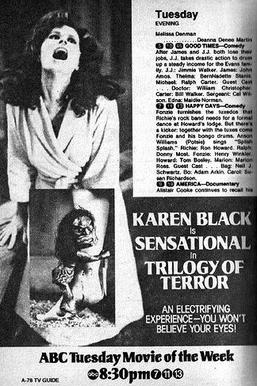
Poster, from TV Guide, courtesy of Wikimedia Commons, copyright: TV Guide

The first two segments feature Black as either the apparent victim of blackmail or being controlled by a drug-addicted sister.  The stories, being Matheson, have twist endings, but they don’t really scare.  The final segment, for which the movie is remembered, involves the trope of the animated creepy doll.  That made people sit up and pay attention.  This wasn’t the first creepy doll exploited by horror, but it did predate Child’s Play and, of course, all those Annabelle movies.  The doll here was a Zuni fetish.  Its purpose is to enhance hunting skills and, of course, it comes with a warning.  Don’t take off its golden belt or the spirit trapped inside will be released.  The belt comes off, of course.  The doll naturally attacks Black and, not being really alive, can’t be killed.  The movie made an impression back in the day and is difficult to locate now without shelling out a lot for a Blu-ray disc.  (Diligent searching will lead to streaming options, however; trust me.)

Having inherited more realistic scary dolls in the franchises mentioned above, it takes a bit of imagination to realize how frightening this would’ve been in the mid-seventies.  Although a Zuni fetish isn’t a toy, killer toys had appeared before and would appear again.  They all seem to rely on the uncanny valley where things resemble people but we know they’re actually not.  We survive by being able to read other people and getting an idea of their intentions.  The fetish here has pretty clear violent intensions, being a hunter with pointy teeth.  We all know that there are some people like that.  Such television movies aren’t always easily found, and if they’ve become cult classics like Trilogy of Terror, discs are priced pretty outrageously.  If you’re unrelenting in your searching, you might just find your possessed doll.  And an early example of what’s still a pretty scary idea.

Terrible Comedy

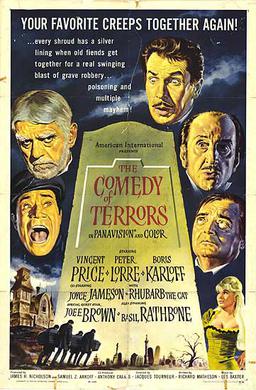
Frankly, I expected better.  The Comedy of Terrors seemed to have a lot going for it.  With my current interests in American International (AIP), Vincent Price, Jacques Tourneur, and Richard Matheson, watching it for free was a no brainer.  And I mean, no brainer.  Maybe it lacked the Roger Corman touch.  The premise is cute enough, bring together horror icons and have them take the mickey out of Shakespeare’s Comedy of Errors.  Peter Lorre and Boris Karloff join Price and Matheson scripts generally don’t disappoint.  Tourneur had a string of great horror movies behind him.  But the magic just isn’t there.  Comedy horror, or horror comedy, is difficult to pull off well.  Particularly if it’s deliberate.  What Young Frankenstein got right just went wrong in Comedy.

All of this makes me more conscious of just how impressive a great movie is.  With so many moving parts, films leave plenty of gaps where things can go awry.  The vast majority of movies perish with little notice, of course.  Success—earning more than it cost you (still waiting for that with my writing)—comes to some, and that’s what has me vexed here.  Tourneur was a talented director.  The actors all had proven themselves repeatedly.  Matheson brought life to so many horror and sci-fi movies and television shows.  Even AIP had a number of hits after starting out as notorious for their low-budget approach.  The jokes in Comedy aren’t funny and the horror’s not scary.  Some have opined that the sarcasm is spot-on, but it didn’t seem so to me.  There’s even some disagreement as to whether the film earned its budget back or not.

Horror movies come in all stripes.  And spots.  Even solids.  Comedy horror isn’t my favorite, but some of the gems of the genre (Rocky Horror Picture Show, Gremlins, Shaun of the Dead, Ghostbusters) show that the combination can work but ought to serve as cautionary tales.  (Both Ghostbusters 2 and Gremlins 2 failed to capture the magic of their forebears.)  If everything falls together just fine, step back and bask in wonder.  Trying too hard (of which I’ve been accused) sometimes doesn’t work while you’re attempting to be funny.  It’s pretty clear that Nicholson and Arkoff thought bringing all of this talent together was a recipe for success.  Of course, there are plenty of moving parts and a director, or even a producer, is entitled to a blunder or two.  I like a good laugh as much as the next guy, and after seeing this flick I could use one.


New Gremlins

I haven’t seen the movie Gremlin in years.  I’m adding it to my Christmas list this year, however.  Probably because I watched Shadow in the Cloud recently.  And although that gremlin wasn’t cute, it led me on a journey of discovery, and that counts for something.  I have to admit, first of all, that I’d never heard of Roald Dahl before a kind family member sent us some of his books when our daughter was young.  We became rather hooked.  His novel The Gremlins was among those we read but there was something I didn’t know (one of trillions of somethings, of course).  And that is that Roald Dahl was probably the reason anyone outside the Air Force knew about gremlins at all.  Dahl was a pilot with the Royal Air Force.  His first children’s book was the aforementioned Gremlins.

Image credit: US Government, public domain, via Wikimedia Commons

I first learned about gremlins from The Twilight Zone.  “Nightmare at 20,000 Feet” came close to giving me literal nightmares.  (And Nope reminds us that there may be things in the atmosphere that we really know nothing about.)  That particular episode was based on a short story by Richard Matheson.  It was also incorporated into the 1983 Twilight Zone movie which I have, unaccountably, never seen.  Of course, I saw Gremlins in a theater back in my college days.  That was before I understood, or really had any interest in holiday horror.  This is one of those instances where the birth of a monster can be traced and its lore can be watched to grow, in real time.

Dahl took something he’d heard about—gremlins weren’t believed to exist by anyone—and made it literal, in the form of a children’s book.  Soon after, other vendors, such as cartoon creators, picked it up.  In the Twilight Zone it began its transition to horror.  Then a regular horror movie was made of them.  All of this has taken place since World War II and there are plenty of people alive who were around at the time.  Shadow in the Cloud was a reboot of a monster generally underused.  There are few times people feel as vulnerable as when they’re flying.  Heck, climbing a tall ladder is enough to give me the willies.  And the movies have shown us that even on the ground we’re not really safe from the monsters of our imagination.  That’s why it seems like a good idea to me to watch Gremlins again.  And to dream of the monsters we invented.


Believing Beyond

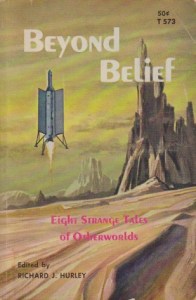
The closing line “I’ll come back to you—in the sunlight” is all I remembered from this little book.  Perhaps I hadn’t read it all the way through, but likely I did.  An unapologetic fan of science fiction as a kid, I must’ve picked up Beyond Belief at a fairly young age.  Although it’s a Scholastic book, it is appropriate for older readers as well.  I picked it up again because I start to get anxious when I can’t post about a book for a while.  My current reading projects are either very long or somewhat technical, meaning they take time to finish.  I’m running out of my ready stock of shorter books (mostly collections of stories from the time before book prices were hiked up and publishers felt the need to make them thicker so consumers wouldn’t feel so cheated.

I had put off reading this collection edited by Richard J. Hurley because of that one story I remembered.  As a kid I recognized the name of Isaac Asimov, but probably not that of Theodore Sturgeon, Richard Willey, or Richard Matheson.  These stories were masterpieces of sci-fi in its golden era.  Although they seem antiquated—perhaps even quaint—now, they are the kinds of stories that inspired young pioneers of space travel and may have contributed in some measure to this strange world in which we live.”Phoenix” by Clark Ashton Smith, has stayed with me for decades.  This tiny tome is old enough that I’m not going to worry about spoilers.  I’m only grasping for an emotional thread with childhood.

The sun has gone out.  Two young lovers talk on the eve of the earth mission to reignite the sun by a series of thermonuclear reactions.  The male, of course, is on the mission, but he assures his love that he will return to her in the sunshine.  Something goes wrong, of course.  The ship crashes into the sun, reigniting it, but annihilating the ship and crew.  As the future lady looks out on the newly illuminated world, she knows her love cannot have survived, yet he has returned to her in the sunlight.  That powerful story of self-sacrifice and love left unfulfilled stung my young psyche.  So much so that reading the other seven stories in this book was like reading tales I’d never heard before.  Beyond Belief was a quick read interjected in much more  complicated literary endeavors.  Like childhood, it didn’t fail to bring a warm glow after far too many years.


I’m No Legend

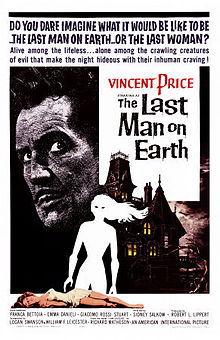
First there was The Last Man on Earth with that rare, disappointing performance by Vincent Price. Then there was The Omega Man, putting Charlton Heston into the role that fit him better than Moses. Finally, returning to the original title, I Am Legend featured Will Smith as Robert Neville. Having watched all three movies, I knew I should have read Richard Matheson’s short novel first. After all, it was a vampire story, and who doesn’t feel utterly alone once in a while? I finally decided to make an honest man of myself. It occurred to me as I started to read that I didn’t know how this story would end. All I had ever seen were cinematic treatments—and who writes anything serious about genre fiction? Still, I needed to know.

Last Man

Matheson was one of the writers who had caught Rod Serling’s attention on the Twilight Zone. Having read some of his short stories I could see why. Not knowing the ending, some of them can actually be scary. I Am Legend isn’t exactly frightening. It is, however, thought-provoking and sad. Matheson, a New Jersey native, wasn’t among the most literary of writers. Nevertheless, he conveys some deeply disturbing images of humanity in this particular novel. After all (spoiler alert!) Robert Neville is the evil one. He has been killing vampires with a cold calculation, no matter whether they are living or undead (good or bad). Who has a right to kill whom depends on your point of view.

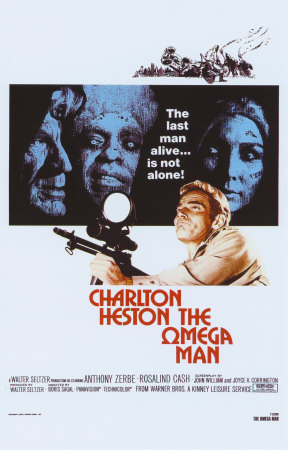
The-Omega-Man-Poster

In I Am Legend, Matheson makes it clear that Neville, the last man alive, is an atheist. The problem, as it usually is, is theodicy. How could a god allow such a massive tragedy to strike not only himself, but the entire world? After the vampire virus had spread, Neville finds himself dragged into an evangelistic meeting by terrified survivors who had turned to religion to make sense of their tragedy. Neville escapes as quickly as he can. The movie versions tend to ignore this poignant aspect of the narrative. After all, the audience watching must sympathize with Neville or the whole draw of the movie is off. In a nation where atheists are trusted about as much as vampires, it seems that Matheson left us a parable as well as a legend.


Omega Alpha

The-Omega-Man-Poster Perhaps out of a warped—perverse even—sense of self-punishment, I watched The Omega Man. Being unemployed will make you react that way. I have a pretty high tolerance for theatrical assault, as my regular readers will know. For those of you with less self-destructive penchants, The Omega Man was the second cinematic adaptation of Richard Matheson’s novel, I Am Legend. The first movie version, The Last Man on Earth, was released in 1964, starring Vincent Price. The most recent version, borrowing the novel’s name and starring Will Smith, is the third and best attempt so far. In any case, The Omega Man opens with Charlton Heston thinking he’s the last man alive, and even that doesn’t stop him from taking his shirt off at every opportunity. That I could tolerate, however, had the movie not strayed from what I thought was its central premise—that Robert Neville was alone with a city full of vampires. Although Vincent Price did not, uncharacteristically, make a convincing last man alive, the earliest version at least retained the vampires. The Omega Man, perhaps in the spirit of 1971, substituted them for religious fanatics.

The substitution didn’t bother me so much, but the religious fanatics were pathetically acted. Leibowitzian, anti-progress monks, hating the science that led to the nuclear holocaust that made them photophobic night dwellers, they snack on sardines and graham crackers, but only come out at night to kill scientists. Well, only one, since Neville seems to be, uh, the last man on earth. They accuse him of making the wheel and using technology as they run around in off-the-rack children’s Halloween costumes acting otherwise infantile while Heston strikes dramatic poses, grimacing with a variety of machine guns in hand, as he simply shoots them. That’s not the way the world’s supposed to end. The vampires have become a religious society doing everything short of handing out tracts on the corner. Well, maybe it is the end of the world after all.

It is difficult to portray loneliness effectively. Those of us who’ve been there know it intimately, and somehow Charlton Heston has too much fun with it. Even Vincent Price had trouble making it look convincing (I mean, who still uses a saucer when having their coffee and wears a tie after the apocalypse?). Will Smith at least showed a man occasionally breaking down in tears. Charlton Heston doesn’t cry. And he doesn’t shy away from god-like delusions. When he finds the other survivors (or they find him), we learn that Neville has been attempting to cure the religion virus. Dutch says, “Christ, you could save the world.” Neville doesn’t deny the obvious messianization of his mission. In fact, pseudo-crucified on a piece of modern art, Neville receives a spear-thrust to the chest, and dies in cruciform posture in a pool of his own blood. His blood that has the antibodies to save the world. Sound familiar? For all the blood, the vampires are gone. And when I feel that the world is against me, I want to see vampires.


Last Call

A believer in equality across media, I decided to balance out my recent viewing of The Last Woman on Earth with its chronological sequel, The Last Man on Earth. I have seen I Am Legend a time or two, but I have not yet read the Richard Matheson novel. Knowing that the first cinematic attempt at the story was the Vincent Price version, I was curious to see what the last man and the last woman had in common. Not surprisingly, it was a church. The story has been around long enough that spoiler alerts are superfluous, so here goes: basically, vampires have taken over the world. Somehow Robert Morgan has survived and spends his days hunting vampires and whiling the nights away with jazz and booze. As the opening sequence rolls, the camera lingers on a church where the marquee reads “The End of the World.” Of course, in a quasi-literalist sense this is true. Robert is the only non-infected person left. He is eventually located by the infected-but-inoculated crowd and chased down to be staked to death at the altar of a church. The culmination is strikingly similar to The Last Woman on Earth where the final scene also involves a death at the altar in a church.

The noticeable difference, however, revolves around gender. There is very little in the way of sexual suggestibility in The Last Man. Even the scenes of Robert with his wife are chaste and emotional distant. The appearance of Ruth does not even tempt him after three years alone. The Last Woman, however, revolved precisely around this axis—one woman, two men. The sexual tension is the fuel that moves this entire movie along. Of course, the 1960s became the decade of the sexual revolution, but even so the female is decidedly an object in Last Woman. Even in The Last Man, the woman leads to Robert’s death. She was sent to betray him, and although she changes her mind and attempts to save him, it is in vain. Robert dies in her arms. This fear of female power has never dissipated. How many women have been elected president since the 1960s?

While maybe not the heart of the matter, religious constructs may be the lungs or stomach of the situation. Although current religious thinking often insists on equality of the sexes, a tremendous cultural freight placing women in an inferior status continues to weigh heavily on our cultural mores. The largest Christian body in the world still denies women access to the priesthood. Even the idea of denying access underscores just how deeply this sentiment runs. The movies of the early 1960s had neither the budget nor the cultural support to suggest that things should change. Indeed, in both Last pictures the message was that the world had ended already—why bother trying to change anything at this late stage? The final shot, the stolid interior of a church, underscored the message: the status quo has the sanction of the divine.