
Rutgers University, College Avenue Campus. I recall coming out on a sweltering night once in a while during a summer term, only to find a street evangelist inveighing against undergraduate evils. He, and it was invariably a he, may have delved into the darker sins of graduate students, but I didn’t stay around to find out. Colleges attempt to educate while street preachers try to halt the process. Shall we go forward or retreat? I occasionally run into off-campus preachers on my university visits. I still look like a professor, I suppose, so I am treated to their version of salvation along with the people less than half my age, facing all the temptations of adulthood. The last evangelists I saw were handing out tracts about the evils of tattoos. I know tattoos are very popular, although I’ve personally never seen the draw. With one eye cast warily ahead, I think of what happens when that firm bit of skin starts to sag and the bold decoration begins to shrivel to make us look less like rebels and more like crepe paper left too long in the rain. Besides, I could never think of a picture that I’d want attached to me for the rest of my life. Too many changes come along, best leaving tattoos for those who appreciate a strong dose of irony.
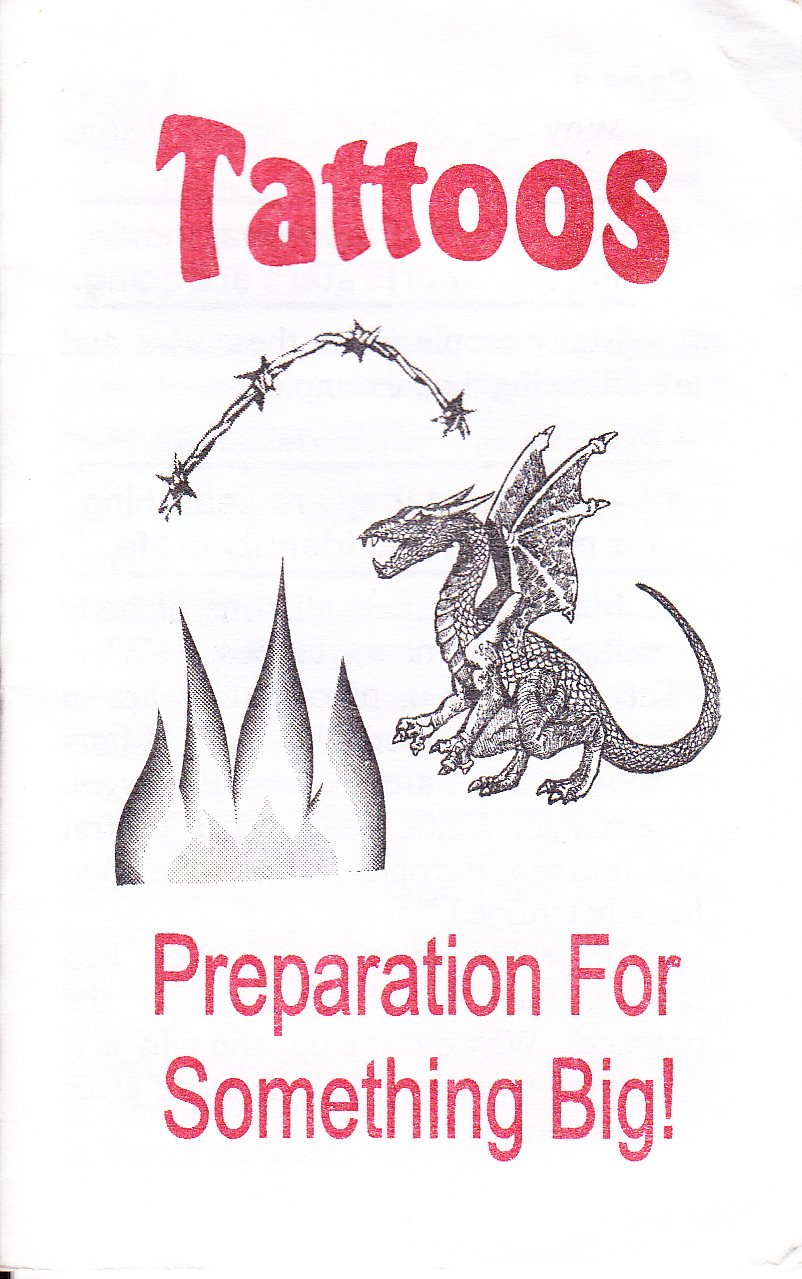
Our evangelist friends, of course, object because tattoos are expressly forbidden in the Hebrew Bible. “Ye shall not make any cuttings in your flesh for the dead, nor print any marks upon you. I am the Lord,” so the Lord declares in Leviticus 19. I resisted the urge to ask my ersatz savior if his clothing contained any blends of materials, forbidden earlier in the same chapter. Or if he trimmed the hair on the sides of his head. Or rotated his crops. The problem, according to the tract, is that tattooing was considered a heathen or pagan activity as Christianity spread to new lands. Presumably the very popular cross or crucifix tattoo design had not yet evolved. The tattoo is a tribal mark, indicating loyalty to a (presumably unChristian) group. My tract sets itself out on a history of tattooing, and suggests that it became popular as a form of entertainment, suggestively knocking on the door of that devil, idleness. They even cite Rick Warren as making church too entertaining. This isn’t supposed to be fun, people!
The real problem is that tattooing is getting society prepared to receive the mark of the beast. With echoes of Hal Lindsey’s Late, Great Planet Earth (now severely dated), the tract tells us that the mark is a tattoo and that among the most popular designs is the dragon. China, which venerates the dragon, is hostile to Christians—coincidence?! And, it should be noted, “Studies have shown that WOMEN who get DRAGON tattoos become more SELF CONFIDENT and ASSERTIVE” (emphasis in the original). And that, they want us to believe, is a bad thing. At least with Fundamentalists, agendas are rarely hidden. Too many assertive women and scheming foreigners are trying to lead us to the very tattoo parlor of the beast. Who knew that so much could be unpacked from half a verse in Leviticus? The name Levi, by the way, some suggest, comes from the same root as leviathan, the dragon.

 Steve A. Wiggins