Sudden Monoliths

Okay, so I’ve been captivated by the monoliths.  You know, the ones that even make the New York Times.  These artistic pieces show up, unexpectedly, and unexplainedly, around the world.  The trend began in 2020 in Utah, as far as anybody knows.  These shiny pillars are excellently meme-worthy and are darlings of the internet.  And their history goes back before 2020.  Even before Stanley Kubrick.  You see, most news stories point out that Kubrick’s 2001: A Space Odyssey—one of the most influential movies ever made—established the idea of monoliths as being alien beacons (a favorite kind of beacon).   People instantly know what a monolith symbolizes.  Or at least they think they do.  But monoliths have so, so much more to offer.

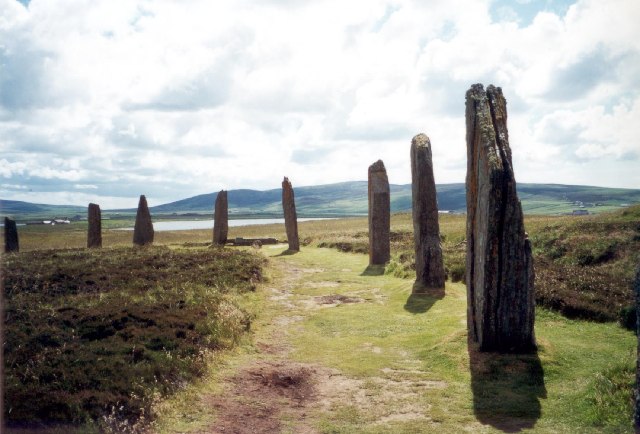
Perhaps the most famous monoliths in the world are found at Stonehenge.  Mysterious and beautiful, this monolithic ring has captured the imagination for generations.  When my wife and I lived in Scotland, we made a point of seeing as many stone circles as we could.  Way up in the Orkney Islands the Ring of Brodgar was probably the most impressive of them, owing to, in large part, its remoteness.  Standing next to these tall monoliths makes you realize how small people are but also what they can achieve when they cooperate.  While the UK may be better known for its monolith circles, even older ones appear elsewhere.  Rujm el-Hiri, for example, in Israel.  Although not a circle, the monolithic pillars at Göbekli Tepe should be rewriting history books.  Why the monolith?
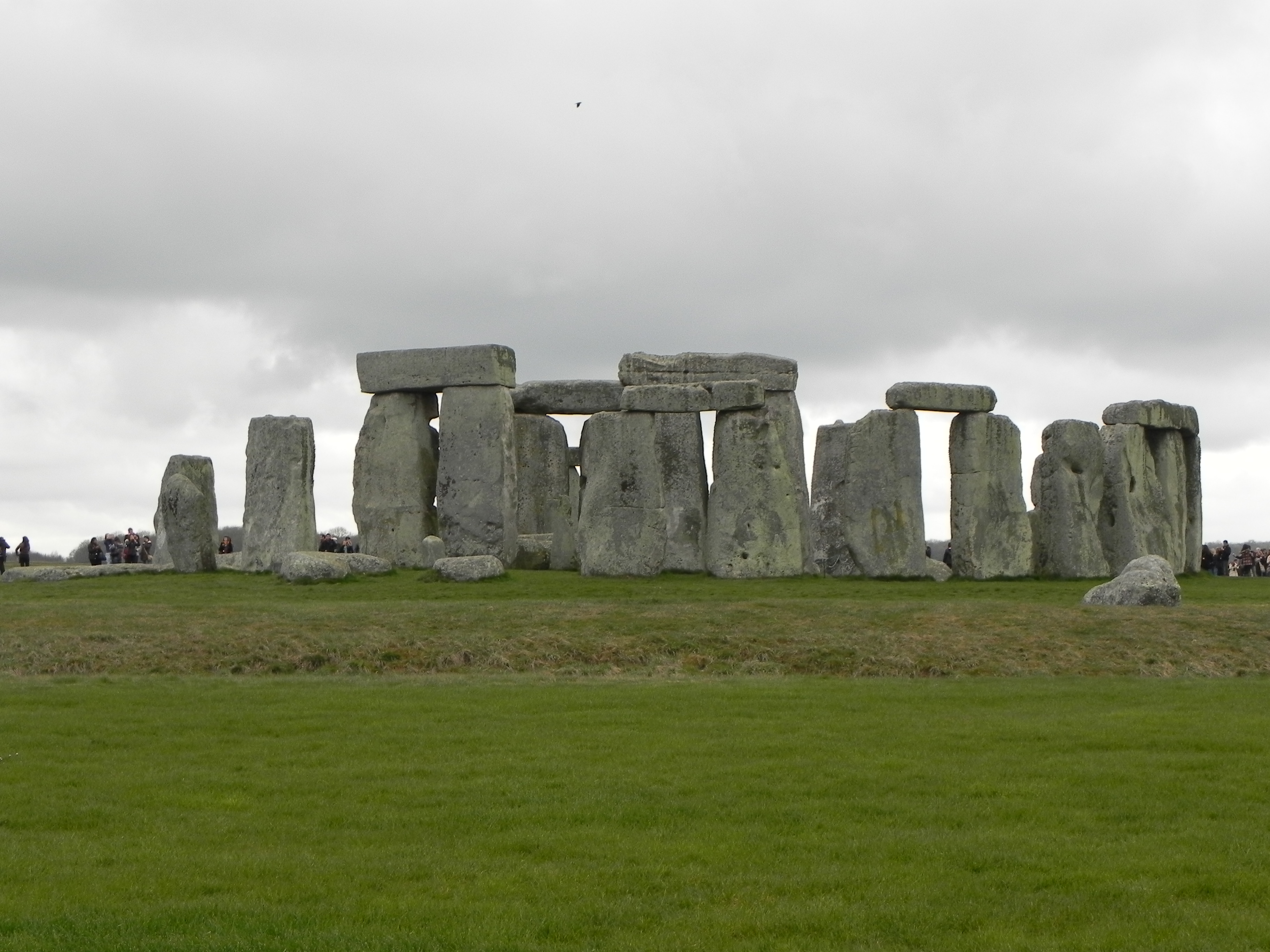
Freudians would point to Tuto Fela in Ethiopia or other phallic architecture, but my mind tends toward Rapa Nui, or Easter Island.  The human being tends to stand taller than wide.  Evolutionary biologists tell us that was to help us see over the tall grass of the savannah.  (And if you doubt grass gets that tall, visit my yard sometime in the summer.)  These monuments seem to symbolize more that the procreative architecture of male human anatomy.  They seem to point to our ability to see over the obstacles in our way.  They seem to say, when people are divided against each other the plains remain barren.  When they decide to work together, Stonehenge emerges.  I don’t know the motivations of these modern artists.  I do admire their ability to put these monoliths into remote locations without leaving evidence of how they did it.  I really appreciate those creatures that stand tall and have a spirit of cooperation, even if others just don’t see the point.
Windmills of My Mind

Stonehenge may be the best known stone circle in the world, but it is by no means the only one. Not too many miles from its more famous cousin lies Avebury, a village that is built on the site of an ancient stone circle and henge. Far to the north, in the Orkney Islands the impressive Ring of Brodgar stands sentinel over Stromness on Mainland. My students were sometimes surprised to learn that the Middle East also has its ancient stone circles. Some speculate that the town of Gilgal in the Hebrew Bible derived its name from such a circle. In the 1920s a series of large stone circles were discovered in what is now the kingdom of Jordan, and these circles are back in the news as archaeologists try to decipher the purpose of these huge rings. Unlike their European relatives, the Jordanian circles are only a few feet high, but they are about 400 meters in diameter. Eleven are known. Clearly not high enough to pen animals, the circles remain a mystery even today.

Ring of Brodgar, Photo credit: Alex Cameron, WikiMedia Commons

Ring of Brodgar, Photo credit: Alex Cameron, WikiMedia Commons

Most ancient circles have uncertain functions. We don’t really know what they were for, but considering the tremendous amount of labor involved at such sites as Stonehenge and Avebury, clearly they were considered extremely important. Likely religious. Circles, of course, are an embodiment of mystery—they have no beginning or ending. Even pi, a necessary figure in circular calculations, seems to be an infinitely non-repeating decimal value. Adding to the questions of the Jordanian circles is the lack of a decisive date. They seem to be a couple of millennia old at least, perhaps significantly older.

Like the lines on the plains of Nazca in Peru, the significance of the circles can only be fully appreciated from the air. People have long left drawings for the gods, it seems. Circles, however, suggest a kind of utility as well as just a pleasing shape. One of the problems of archaeology, however, is that it can’t always tell us why people built unconventional structures. Archaeologists are sometimes left guessing just as much as the rest of us. The stone circles of antiquity are, in their way, humbling feats for us to ponder. If they were religious features of the landscape, their construction in an the neolithic period points to a significance beyond the level of the great medieval cathedrals of Europe. It seems no wonder, then, that religion has been with us ever since, despite its frequently announced demise. What are the Jordanian circles? Religion often steps in to explain what reason cannot. Given what we know, this guess may be the best solution.


Prehistoric Steps

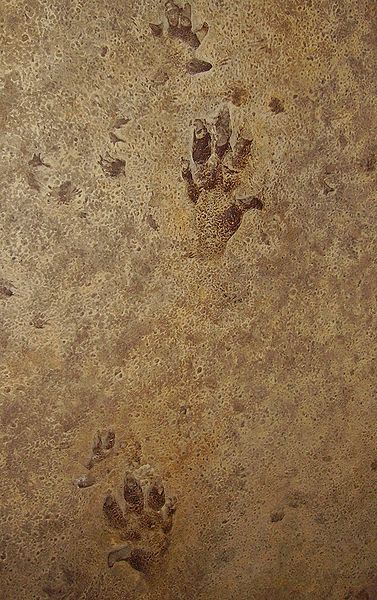
Britain has always had a share in the great events of the past (speaking strictly from a western hemisphere point of view). Not only did the ten “lost tribes” of Israel end up there (according to some, with apologies to Joseph Smith), but young Jesus traveled there with Joseph of Arimathea (according to others, with no apologies). While these stories are obviously non-historical, Britain does have an illustrious heritage that has left Stonehenge and the Cerne Abbas giant in its wake. It is thrilling to read, then, that fossilized footprints from some 850,000 years ago were recently discovered. Coastal erosion, similar to the event that revealed Skara Brae to the world, uncovered the footprints for a short time in Happisburgh, near Norfolk. About 50 footprints were discovered, according to The Independent, with a group comprised of women, men, and children. They were walking alongside a stream, apparently looking for the Pleistocene version of carry-out fish-n-chips at least 844,000 years before Adam and Eve.

The British landscape boasts an ebullient antiquity. Our years spent in the British Isles involved exploring everything from Lanyon Quoit in Cornwall to the Ring of Brodgar on Mainland, Orkney with our friends. It is a land where the past lives on into the present. No wonder some speculated that the biblical past made its way here as well. At least now we know that some very early humans did as well. Homo antecessor, the makers of the prints, visited a Britain replete with elephants, hippopotami, rhinoceri, and hyenas. It is speculated that they may have domiciled on off-shore islands to keep safe from the predators that roamed pre-Roman England. One thing we know for certain about people is that they do get around.

Chirotherium storetonense  trackway, photo credit: Ballista

Chirotherium storetonense trackway, photo credit: Ballista

Homo antecessor is an extinct species. Many of the hominids that contributed in some way to the possibility of our existence are long gone, creating endless headaches for scriptural literalists. Their lives, as The Independent speculates, may have involved being preyed upon by large predators and the constant search for food. They also liked to walk on the beach. I wonder how far they had come on the road to religious belief. Constant fear of predation must surely have played into it. We don’t know how far back the evolutionary chain religion goes, but we do know that it is a profoundly human outlook. You can’t stand beneath the towering Neolithic menhirs of the Ring of Brodgar and not feel it. Sometimes a walk along the shore is all it takes.