Undead Again

I had intended to see it in the theater, but holidays are family time.  And not everyone is a fan of horror.  Last night I finally did get to see Robert Eggers’ Nosferatu.  Eggers is a director I’ve been following from the beginning.  Here’s a guy who pays very close attention to historical detail.  No slips in letting modern language expressions creep in.  Costume and setting designs immaculate—nothing incongruous here.  I was surprised that he was taking an established tale that’s based on a technically illegal film from Bram Stoker’s Dracula as his starting point.  Still, I’m looking forward to Werwulf, probably about two years from now.  (And speaking personally, I’d love to see his take on Rasputin.)  In any case, Nosferatu.  I avoided trailers and online discussions because I wanted to come to it fresh.  He’s managed to make a disturbing story even more disturbing.
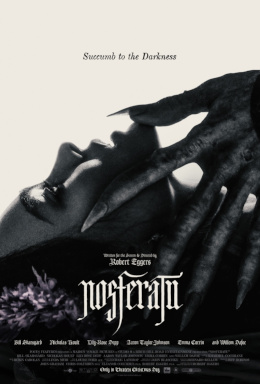
If you’re reading this you probably know the basic story.  F. W. Murnau’s 1922 Nosferatu was in violation of copyright of Dracula, and so the basic story is similar.  Eggers manages to bring to the fore the vampire as sexual predator angle.  He prefers to bite chests and take long, slurping drinks.  I said it was disturbing.  And Orlok really looks the translation of the title, “undead.”   Even at over two hours Eggers has difficulty fitting in all the elements of the story.  And there are some unexpected aspects thrown in as well.  In my mind, I couldn’t help compare it to Werner Herzog’s remake.  Both are art-house treatments of Murnau’s work, which was itself German expressionism.  All three are memorable in their own way.

The one character I didn’t fully buy was Willem Dafoe’s von Franz (the van Helsing character).  This often seems a difficult one to cast.  In Bram Stoker’s Dracula Anthony Hopkins just doesn’t do it for me either.  It must be difficult to pull off eccentric but deadly serious.  The unsmiling obsessive.  That, to me, would be even more disturbing.  Ellen Hutter’s fits are amazingly done and there’s a menace to her melancholy that really works.  I’ve never seen Lily-Rose Depp in a film before, but she seems poised to become a believable scream queen.  I was exhausted after watching the movie after a long day at work (there’s a reason to see things in a theater over the holidays, I guess), but after a night of strange dreams, I awoke to find myself wanting to watch it again.  That’s the way Eggers has with films.  They reward multiple viewings.  And although this story’s familiar from the many versions of Dracula out there, it emphasizes some elements that have, up until now, often only lurked in the shadows.

Though This Be Madness

Shakespeare could turn a phrase, alright.  Along with the Bible he’s one of the two most unwittingly quoted sources in the English language.  But he liked to borrow ideas.  Writers have always done this, and it came home to me again watching Robert Egger’s The Northman.  My wife and I intended to see it in the theater two years ago—life gets too busy even to get out to a movie, it seems.  So we had to settle for Amazon Prime.  In any case, I don’t read about films in advance and I avoid trailers when possible.  I couldn’t help hearing, however, that it was a viking revenge story.  Still, it wasn’t until my wife said, “Isn’t this like Hamlet?” that I made the connection—Amleth.  Hamlet.  Scandinavian. Danish.  Okay, so The Northman is based on the legend of Amleth which is the direct basis for Shakespeare’s Hamlet.

Like all of Egger’s feature films so far this one is meticulously researched and very moody.  More than once it made me glad that we live in a civilized society, such as it is.  Those of us who were the runts of our family litters know that bigger kids often get their way by dint of physical intimidation.  The vikings—and this was a good representation of a berserker—took what they wanted because they could.  But Amleth couldn’t have what he really wanted.  He witnessed, as a child, his uncle murder his father, the king.  Said uncle takes the throne and the queen and Amleth vows revenge, but what can a young boy do?  Then as an adult, he’s told by a seer that he made a promise so the viking heads home to exact revenge.

The Northman really isn’t a standard horror movie, although Egger’s previous two films fall into the genre fairly handily.  His next project is Nosferatu, after all.  And The Northman isn’t a retelling of HamletHamlet was a retelling of Amleth, and this is another retelling.  Those who’ve been following Egger’s rise know that his films are intelligent and melancholy and literate.  They also have a way of disturbing that peaceful acquiescence that comes after viewing a less thoughtful movie.  It would probably have made even more of an impact had we been able to get to it in a theater.  If it weren’t for Shakespeare most of us probably wouldn’t know the story of Amleth, but Norse mythology has a way of remaining relevant, despite the fact that we tend to credit the ideas to others.  Just check the name of the day of the week and see if that’s right.


A Symphony of Horror

Horror season is upon us.  One could argue that it never left since summer has its fair share of horror when air conditioning is required.  The one horror director my wife seems to like, apart from the departed Alfred Hitchcock (and some would say he’s thriller, not horror), is Robert Eggers.  Eggers’ breakout The Witch worked on so many levels, even for non-horror fans.  The attention to historical detail and the solemnity of his approach and the slow build all helped.  The Lighthouse was moody and profound, with superb acting throughout.  The Northman, his viking epic shot in Iceland, is due out next year.  Rumor has it that his fourth film will be Nosferatu.  Anya Taylor-Joy, it is said, will be returning for it.

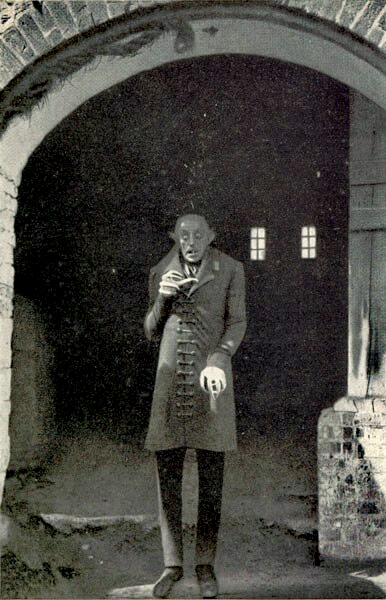
Nosferatu has, as of next year, a century of credibility.  F. W. Murnau’s classic, released in 1922, was technically a violation of copyright and was very nearly lost as copies were ordered destroyed.  This now iconic film, despite its subtitle A Symphony of Horror (eine Symphonie des Grauens), appeared before the category of “horror film” was assigned, and so it’s normally not considered as part of the genre.  The original was given a shot in the arm by Werner Herzog’s Nosferatu the Vampyre in 1979.  My long-suffering wife once agreed to watch it with me.  There are parts of the movie that are distinctly disturbing, but it remains one of the best vampire films ever made.  Many would classify it as an art film more than a horror film, just as Murnau’s was considered Expressionism rather than horror.

It remains to see how Eggers will handle this script.  The original plot was based on Bram Stoker’s Dracula, one of the formative novels of the western canon.  The story of an unassuming individual unexpectedly encountering, through a small conspiracy (in the films), the supernatural.  That which we’re all told is not really there.  Many are beginning to wake, after the election of Trump revealed that evil does really exist, to the understanding that not all is as it seems.  It’s hard not to sympathize with the vampire in the movies, particularly when he’s the victim of a curse.  A vampire’s got to eat, right?  The original, of course, made him out as a devil.  That was in the days when selfish bloodsucking was considered evil, not business as usual.  We have a lot to learn from vampires, and I, for one, am eager to see how Eggers will handle Nosferatu.

Image credit F. W. MurnauHenrik Galeen, and Fritz Arno Wagner; Public Domain in the United States, via Wikipedia

Watching The Witch

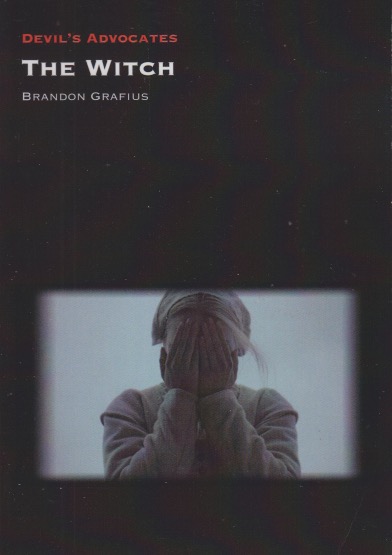
Good things often come in small packages.  I’ve read a couple of Brandon Grafius’ books before, and I’ve had The Witch on my reading list since I found out about it.  This is one of those books that benefits from knowing the raison d’être of the series of which it’s a part.  Devil’s Advocates is published by Auteur Publishing as a set of brief books on specific horror films.  If I didn’t have other financial obligations I could see myself purchasing the entire series.  Fortunately this volume was on a film I’ve seen (horror films have become so prolific that I can’t afford to see all of those I’d like either).  The Witch is a provocative movie, having gained critical acclaim as well as box office success.  It’s also a complex film.

Grafius ably takes us through the Puritan background that’s necessary to understand the social, and familial tensions that make this movie work.  Robert Eggers is a director known for his meticulous attention to period detail.  Even while weaving the fantastic into his stories, the plots are entirely believable.  Grafius has a solid grasp on how religion and horror interact.  That’s on full display here.  Looking at The Witch as an exploration of folk horror, he illustrates the importance of the landscape to the tale as well as how isolation sets a family off against one another.  The Puritan religion creates a monster, as it were.  Grafius doesn’t shy away from the misogyny behind the developing idea of the witch, either.  His explanations of—not excuses for—it are insightful.

Granted, horror films aren’t everyone’s cup of tea.  Or coffee.  As I sensed when writing Holy Horror, fans of the genre enjoy reading about it.  I often wonder why those of us who watch it do so.  In my case, in any way, it feels like a compulsion.  It’s a coping technique and perhaps an antidote to the headlines.  Horror can be an intensely creative and socially aware genre.  The best of it critiques the flaws of society.  As Grafius points out, Thomasin only wants to be a good girl.  The Puritan society into which she was born projects the image of the witch upon her.  Eggers gives us a real witch in the woods, of course.  Grafius explains how this becomes the aspiration of a young woman who’s only trying to do what’s right.  I have a feeling I’ll be going back to the Devil’s Advocates series again.


Horror Homework

Although I haven’t been writing much on horror here lately, I’ve been doing my homework.  At least for homeroom.  Horror Homeroom, that is.  I’ve published on Horror Homeroom before, and, surprisingly, they’ve let me do it again.  This piece is on the films of Robert Eggers.  It’s pretty unusual for me to get in on the ground floor with a director’s oeuvre, but my wife has a tolerance for what is being called “smart horror” or “intelligent horror,” or even “transcendent horror,” and so we can get to the theater to see movies like The Witch and The Lighthouse before they go to DVDs or Amazon Prime.  In order to write up my thoughts about these two films I had to rewatch them a few times.  There’s so much going on here that both stories are difficult to summarize.

Holy Horror treated The Witch in the context of its biblical worldview.  The Calvinistic religion of William, and by extension, his family, is pretty scary stuff.  In The Lighthouse we find two men each grasping for their own ideas of the divine, as found atop the eponymous structure they inhabit.  Both films explore the psychology of isolated individuals, and, perhaps not surprisingly, finds frightening things.  We are social creatures, even those introverts among us.  When deprived of the interaction of those who think differently (hear this, o Republicans!) we soon begin to wilt.  We need not agree with all we hear, but conversation cannot be had without being open to at least the possibility that one might be wrong.  Nobody wants to think they are incorrect, but unless they can admit that possibility, there will be no discussion, by definition.

Horror quite frequently thrives on separating people from their fellows.  One of the fascinating aspects of the genre is the way in which it does this.  Groups, even, that separate themselves from the rest of humanity soon begin to behave in odd ways.  Checks and balances are necessary for any health in a society.  Those who claim absolute positions often can’t admit this.  Do I hear the violins of Psycho coming to life?  I suppose community is why I try to publish once in a while in wider venues like Horror Homeroom.  Even people who like to watch horror prefer not to do so alone.  Maybe having seen The Witch and The Lighthouse in theaters was a crucial part of their impact upon me.  And what is a good shudder without someone with whom to share it?


Houses of Light

The Lighthouse is a movie we’ve been waiting a month to see.  Since its opening weekend my wife and I haven’t had two consecutive hours free during any weekend showtime.  Now that we finally managed it, I’ve been left in a reverie.  Robert Eggers, whose film The Witch opened to critical acclaim, has repeated the feat with this one.  His movies require a lot of historical homework and the end results have a verisimilitude that pays the viewer handsomely.  The details of the plot are ambiguous and the influence of King, Kubrick, Melville, Hitchcock, Poe, and Lovecraft are evident as two men in isolation grapple with insanity.  Also obvious is Greek mythology, with one reviewer suggesting Tom Wake is Proteus and Ephraim Winslow is Prometheus.  The end result is what happens when literate filmmakers take their talents behind a camera.

Naturally, the symbolism adds depth to the story.  The eponymous lighthouse is phallic enough, but the light itself—often a central metaphor of religions—is, like God, never explained.  Encountering the light changes a person, however, and the results can be dangerous, even as Rudolf Otto knew.  This light shines in the darkness so effectively that no ships approach the island.  The monkish existence of the keepers requires a certain comfort with the existential challenge of isolation, even if God is constantly watching.  The light never goes out, even when a reprieve would be appreciated.  Having reading Barbara Brown Taylor’s Learning to Walk in the Dark since the film opened, this makes some sense.  Horror movies lead the viewer into such territory when they’re thoughtfully made.

The concept of light is central to at least two similar forms of religion that have moved beyond doctrinal Christianity.  Both Quakerism and Unitarian Universalism emphasize the light as central to their outlooks.  Whether it be divine or symbolic, light is essential to spiritual growth.  In novels like Cormac McCarthy’s The Road the idea of an inner light keeps the father and son going.  In The Lighthouse the external light, when taken internally, leads to madness.  Since I watch horror with an eye toward religion—I do most things with an eye toward religion—I didn’t leave the theater disappointed.  I knew that, like The Witch, I would need to see it again but when it comes down to the price range of one ticket for repeated viewings.  Finding the time to get to the theater once was difficult enough, despite the payoff.  


The Witch

IMG_2679

The Witch, by Robert Eggers, is a parable. The movie accepts, and to appreciate it the viewer must too, that there is actually witchcraft in New England. Unless the witch too is a parable. Set in the days before the Salem Witch Trials, the movie is worthy of Lars von Trier on history. William and his family are exiled from their unnamed community due to differences of religious opinion. William and Katherine are a devout couple, steeped in the Puritan belief that all people deserve Hell and those who are good have no choice in the matter. They have a family of four children, and after they set up homesteading in exile, a fifth comes along. When the baby disappears, the eldest daughter, on the cusp of sexual maturity, is blamed. Portraying well the boredom of children raised in a world with no diversion, the girl, Thomasin, tells her little sister that she is a witch. In reality, she is a fearful, sin-sick girl, frightened for her future salvation. There is a witch, but it is not she.

Tragedy follows tragedy for the isolated family. Their religion permits them to believe it can only be punishment from God. They pray, recite Bible, and work hard. Their oldest son, abducted by the witch, returns home to die. The two youngest children begin to have fits, claiming that Thomasin has confessed to being a witch. Her mother, Katherine, believes them. Her father too, convinces himself that she is a witch and urges her to confess. The paranoia grows and Thomasin accuses her two younger siblings of witchcraft, speaking to the family’s black goat as their familiar. Confused, angry, and out of hope, the father locks the children in with the goats for the night, determined to find the truth in the morning.

I won’t add any spoilers for the ending here. Suffice it to say, this is a parable. Thomasin’s very name suggests “sin,” and her doomed brother is Caleb, the Hebrew word for “dog.” His recitation of the Song of Songs is distinctly creepy. God is absent from the movie, despite the family’s constant prayers. The only voice heard is that of the Devil. This is a parable of what happens when a religion goes wrong. The family left England to exercise their religion freely and the free exercise of it turns them against each other. The only ones who seem to find peace are those who leave their faith behind. It is a movie that I’ll ponder for many days, I suspect. Less a condemnation of religion than an open probing of what it’s logical outcome might be, The Witch is one of those movies that demonstrates the ongoing power of parables.