Parson’s Poe

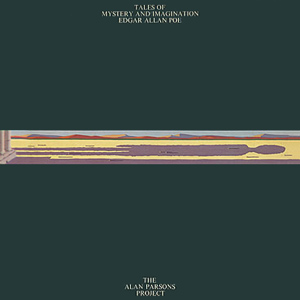
Some things just don’t mix: oil and water, cats and dogs, intelligence and Republican policy.  That’s the way of nature.  I don’t have a lot of time to listen to music—unlike some authors, I can’t write with music playing.  I end up paying attention to the music rather than what I’m trying to do.  So the other day when I had the opportunity, I went through our CDs to see what I hadn’t heard for a while.  I’d completely forgotten about the concept album Tales of Mystery and Imagination Edgar Allan Poe by The Alan Parsons Project.  Now, I’m not the biggest fan of Alan Parsons, but some of their songs are among my absolute favorites.  One of them can almost invariably make me tear up and my throat clench.  And I think Ammonia Avenue is one of the great albums of all time.

You’d think their mix of alternative rock would be favorable to Poe.  Poe is extremely personal to me.  I’ve read probing biographies and put them down thinking how much my perspective is similar to that of Poe.  I mention him in my books because he’s my writing companion.  APP just doesn’t get it.  Neither did Lou Reed.  Like Black Francis, I like Lou Reed.  But I like Poe more.  Not even Poe (sorry Anne Decatur Danielewski) comes close.   I have heard rock adaptations of Poe that I do like, so why didn’t Alan Parson, Lou Reed, or Poe (Danielewski) do it for me?  It’s difficult to say.  Music is very personal to me.  It stays in my head for a very long time, so I have to be careful what I let in there.  I don’t write much about music on this blog because I just don’t know you well enough.

I got the Alan Parson’s album long after it was published.  I can’t remember how I found out about it, but I had great hopes for it.  I guess Poe (the man) has a certain sound profile in my head.  It’s likely because, to me, Poe is more than the author of tales I read when I was young.  He is a symbol, coming to represent more than just another writer who struggled and was likely never understood in his lifetime (if ever).  As those who write and attempt publication know, this is a hostile business.  It’s difficult to get published in the traditional way and then it’s difficult to get your work noticed after it’s published.  These days a “like” and a “share” can go a long way (click “like” if you do), but even so my Poe music will be mine alone.


November Nightmares

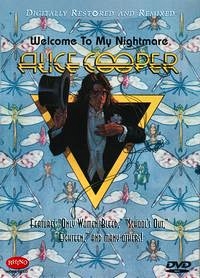
Music videos weren’t really a thing then.  And “Welcome to my Nightmare” was theater as well as rock.  I knew a movie of it existed, but I only made an effort to see it as October was slipping through my grip.  I have a strange, one-sided history with Alice Cooper.  We listened to the radio back when we were kids and we all knew Cooper from “School’s Out,” an unofficial anthem of the seventies.  We didn’t have much money when I was growing up (some things never change), but I had a copy of the album Welcome to my Nightmare.  I couldn’t recollect how I’d got it until my brother clued me in.  We were at Jamesway just outside Franklin one Friday night.  My mother, frugal to the day of her death, saw that Alice Cooper’s new album had a song called “Steven” on it and she bought it for me.

Now Mom knew full well that my official name is “Steve” (she named me).  There’s no “n” in there anywhere.  Yet still, even as I knew this, I found that song spoke to me.  Like the Steven on the album, I was prone to nightmares.  And the sequence of “Years Ago” and “Steven” on that concept album never left me.  Mom would not have approved of the movie version—I found the misogynist parts difficult to watch myself—but it did answer a question I always had: how did he perform these songs in concert?  They seemed too big for that.  They weren’t the snippets I always assumed rock stars did.  (I never attended concerts, so what did I know?)  Alice Cooper is still the only rockstar I’ve ever seen in concert, but the theatrics were brought way down and his back probably ached like mine did after that event.

I’d been looking for a horror movie to finish out the month, you see.  I keep a list of movies that, apparently, are never free on Amazon Prime or Hulu.  It ended up taking nearly all the little time I allot myself for such indulgences to try to find something.  Then I remembered Alice.  It was raining outside and I had caught up on my emails for the moment.  This step into a yesteryear I never knew made me realize just how creative people can be.  We have to get someone to pay us for doing something, and if you can sing and strut, well, you might consider sharing your nightmares.  Something many of us have in abundance, even in November.


God’s Rain

Photo credit: Micahmedia, Wikimedia Commons

Photo credit: Micahmedia, Wikimedia Commons

Music has been in the news this week with the death of the artist formerly and forever known as Prince. Also, in a lesser covered story, Bono’s friendship with Bible translator Eugene Peterson. This post will focus on the former former artist. I’ll have to circle back later to pick up Bono and Peterson. I have to admit that I haven’t listened to Prince much lately. I saw “Purple Rain” when it came out, and some of his songs have resonated with me throughout the years. What makes him such an intriguing figure is his view of sexuality. My source here is the Washington Post, specifically, an article by Michelle Boorstein stating that Prince was, beneath the sexy exterior, a conservative Christian. Specifically a Jehovah’s Witness. He would not be alone in this role since Alice Cooper is famously also a conservative Christian. Life upon the stage is that of the actor. With Prince, as Boorstein points out, the question goes deeper: he wrote about religion, but he also wrote about sex.

Those of us who indulge in creative writing know that poetry is perhaps the only place where dishonesty is impossible. Song lyrics are true. Prince often cites Christian tropes (see Boorstein’s article for samples), but his material is deeply sexual as well. This leads to the suggestion that he saw sex as a means of worshipping God. Once again, Prince doesn’t find himself alone in this place. Scholars brave enough to examine both religion and sexuality often find a connection there, and not just a tangential one. Both are about communing with something greater than the individual. Thinking back to my first viewing of “Purple Rain” I can say it wasn’t the religion part that stood out to me.

Histories of Rock-n-Roll are rife with stories of performers’ untamed sexuality, so that’s hardly news. What really strikes me is that with recent deaths—David Bowie, and now Prince—the media seems intensely interested in their views of religion. We don’t often look to artists for advice on how to live our lives, but as the polar opposites of scientists and rationalists, they are in touch with and willing to share their feelings. And we the people want to know what they thought of God. Often because it is so surprising. It’s easier to put someone in a box. Religion, however, is way more complex than most non-specialists think. It has room for creativity, for sexuality, and for exploring the meaning of life. I many not listen to Prince much, and when I do it’s not for religious advice. I am, however, inclined now to think in new ways about colorful rain.


Christian Rocks

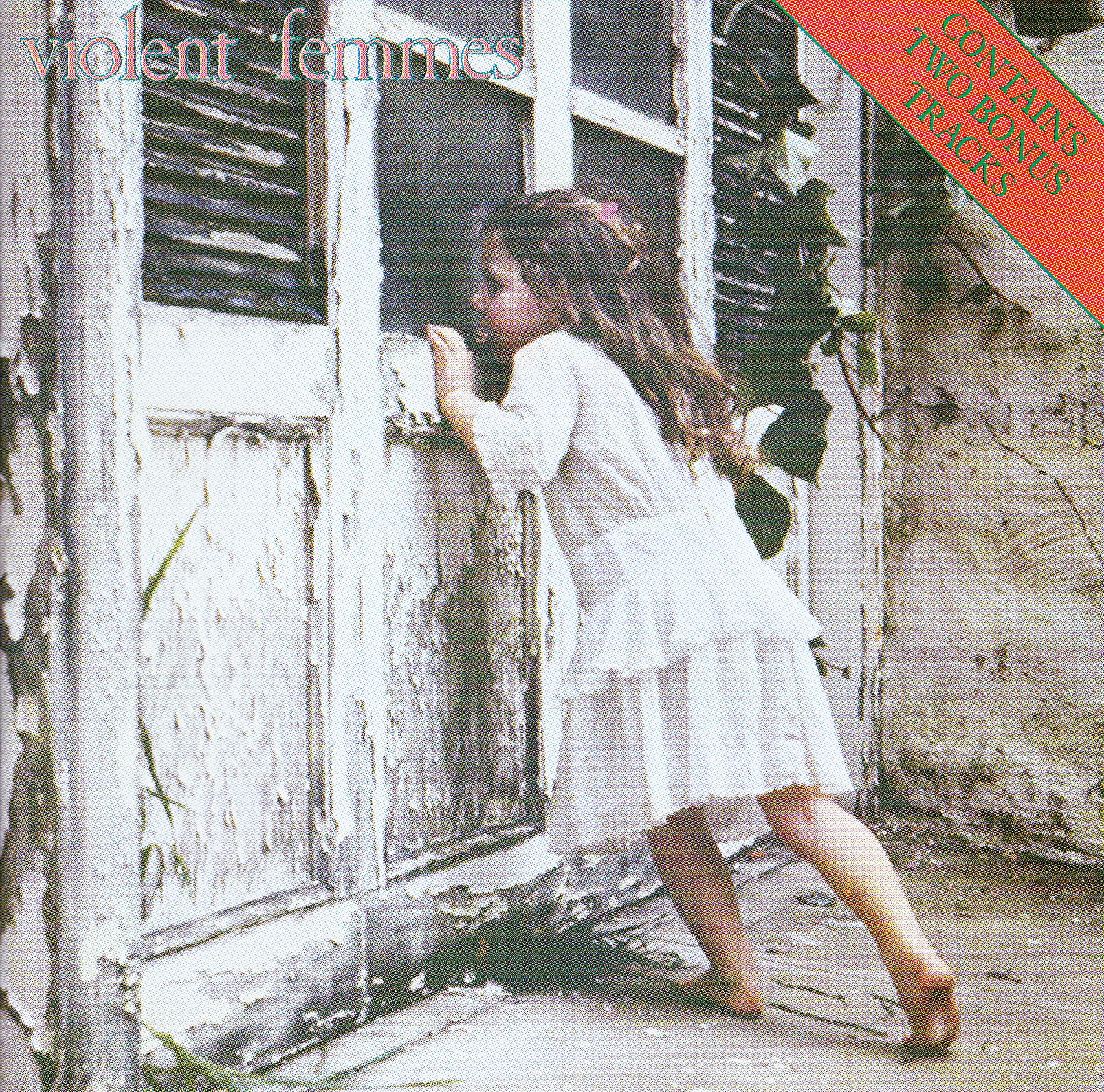
ViolFemsSitting in traffic outside the Lincoln Tunnel, I see that the Violent Femmes are coming to town. The billboard sends my mind spiraling back to college, when the Violent Femmes had released their debut album. Not that I ever listened to it (then), but in the fervently evangelical atmosphere of Grove City College, many students rooted and grubbed for any whiff of esoteric Christianity in a culture on the—pardon the genre-switch—highway to Hell. Rumors abounded that the Femmes were covert Christians, just like another up-and-coming band called U2. Not only the Femmes were violent—reaction to such Christianizing assertions was as well. I remember one of the dorm-mates in my housing group getting into a shouting match that U2 was not a Christian group and slamming his door to sulk, literally for hours. This was important stuff. We were Christians in an underground world.

Of course, some of us knew that Gordon Gano clearly betrayed the influence of Larry Norman in his voicing. And there were rumors and rumors of rumors that the Violent Femmes were coming out with a Christian album, despite the popularity of “Blister in the Sun,” the homage to masturbation that raised the group to stardom. This rumor turned out to be partially true, as Hallowed Ground took on spiritual themes, a little bit country, a little bit soul. There was some tension in the group as Gano’s lyrics began to suggest something more overtly Christian. All of this was going on long before I discovered the Femmes. At Nashotah House I taught a guest lecture on Christian themes in rock music. I researched the Violent Femmes and found that I liked their sound. They made the cut for the lecture.

In a culture as deeply steeped in the Bible as ours, it is difficult to avoid Christian imagery altogether. The Femmes were from Milwaukee (not far from Nashotah House, as the raptor flies), the heartland where beats the pulse of unadulterated religiosity. Even Iron Maiden, after all, had released the platinum album The Number of the Beast. And David Buckna points out in a recent MuseMash post, that even Ozzy Osbourne has some religious aptitude. (I always thought there was more going on in “Iron Man” than meets the ear.) This may all be chalked up to cultural Christianity—there need not be too much conviction here. Those who feel oppressed, however, huddled together in their evangelical college dorms, will always suspect that there is something more beneath the surface that makes even the “Prince of Darkness” the bearer of light.


The King’s Bible

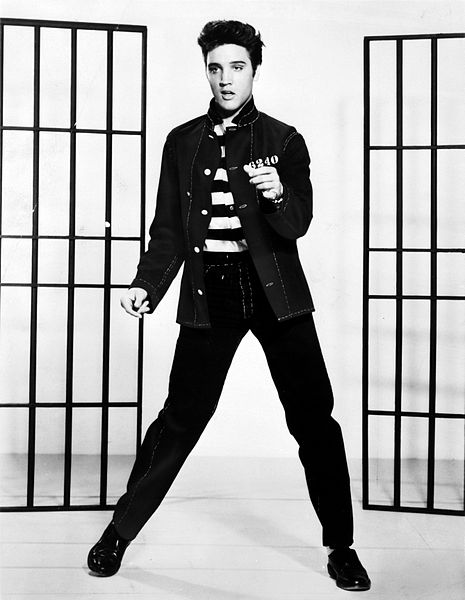
Thumbing through last week’s Time, I found a Bible. Actually, stories of religious interest appear frequently in Time, but this was one of those small blurbs of human interest. It appears that Elvis Presley’s Bible just sold for $94,600 in the UK. Of course, Elvis was known for his gospel recordings as well as his formative role in rock-n-roll. A boy from the south in those days would have known his Bible. What struck me as worthy of comment is the reason the artifact was priced so high—not because it is a religious book, or the putatively divine content, but because of who once owned it. The Bible is a common enough item—billions have been printed—and in our world of value based on rarity, it is hardly a specialty item. In fact, they are often given away.

We have all felt the draw of fame now and again. We wonder what the lives of the rich and famous are like. Sotheby’s and Christie’s thrive on people wanting to possess articles from their deceased heroes. Studies have been conducted to demonstrate just how much laundering devalues clothes worn by both the famous (bad) and infamous (good). In the case of a Bible, perhaps one is put in touch with the spiritual residue of the owner. According to Time, Presley scribbled many notes in his Bible. Perhaps there is some eternal message there? A message untainted by years of study. A message from Graceland.

The King (of kings?)

Elvis Presley was not acclaimed for his great intellect. He had a singing voice and swinging hips that changed an entire culture, but his was not the world of the library and study. Naturally it is the more flamboyant that capture the imagination of the largest numbers. I can imagine the (a) Bible of Rudolf Bultmann, Charles Briggs, or William F. Albright on the auction block. There would be a flurry among some scholars, for sure, perhaps to pool their money enough to make a bid some order of magnitude less than Presley’s sequined presence of the auction table demands. Probably it would not even be worth the effort of the auctioneer. After all, no matter what doggerel he might have scribbled in the margins, the King always outranks the mere pawns.


Strawberry Meatloaf

Strawberry ice cream. It tastes like summer in a waxed cardboard carton. While having a small dish of it recently it occurred to me that strawberry is my favorite flavor of ice cream. This was the first time I’d had any in perhaps twenty years. I am not diabetic, but I am extremely phobic. I avoid the things I like out of fear. There always seems to be plenty of bad to go around, but I’m always afraid the good will run out. Waiting two decades for something I like is a small price to pay. This same phenomenon accompanies my musical tastes. When I listen to music, generally, I listen to music. I’m not a background music personality. Life has been so busy lately, however, that I don’t have the time for music that I would like. I bought a CD (yes, they still make them) of Meat Loaf’s Hell in a Handbasket shortly after it was released. I just listened to it over the weekend. (It has been that busy.)

Since I had a lot to accomplish last weekend I listened to the CD as background music, violating my own standards. That meant that I had only impressions of what was going on rather than the full impact. Immediately, however, I was struck at how socially conscientious this album is. I realize that Meat Loaf is primarily a singer, performing songs written by others. Nevertheless, it seems that a singer must have some investment in the songs they perform to put the kind of empathy into them that Meat Loaf does. The theme that seems to be running through these selections is that violence and greed have become our paradigms, and we are heading to, well, Hell in a handbasket.

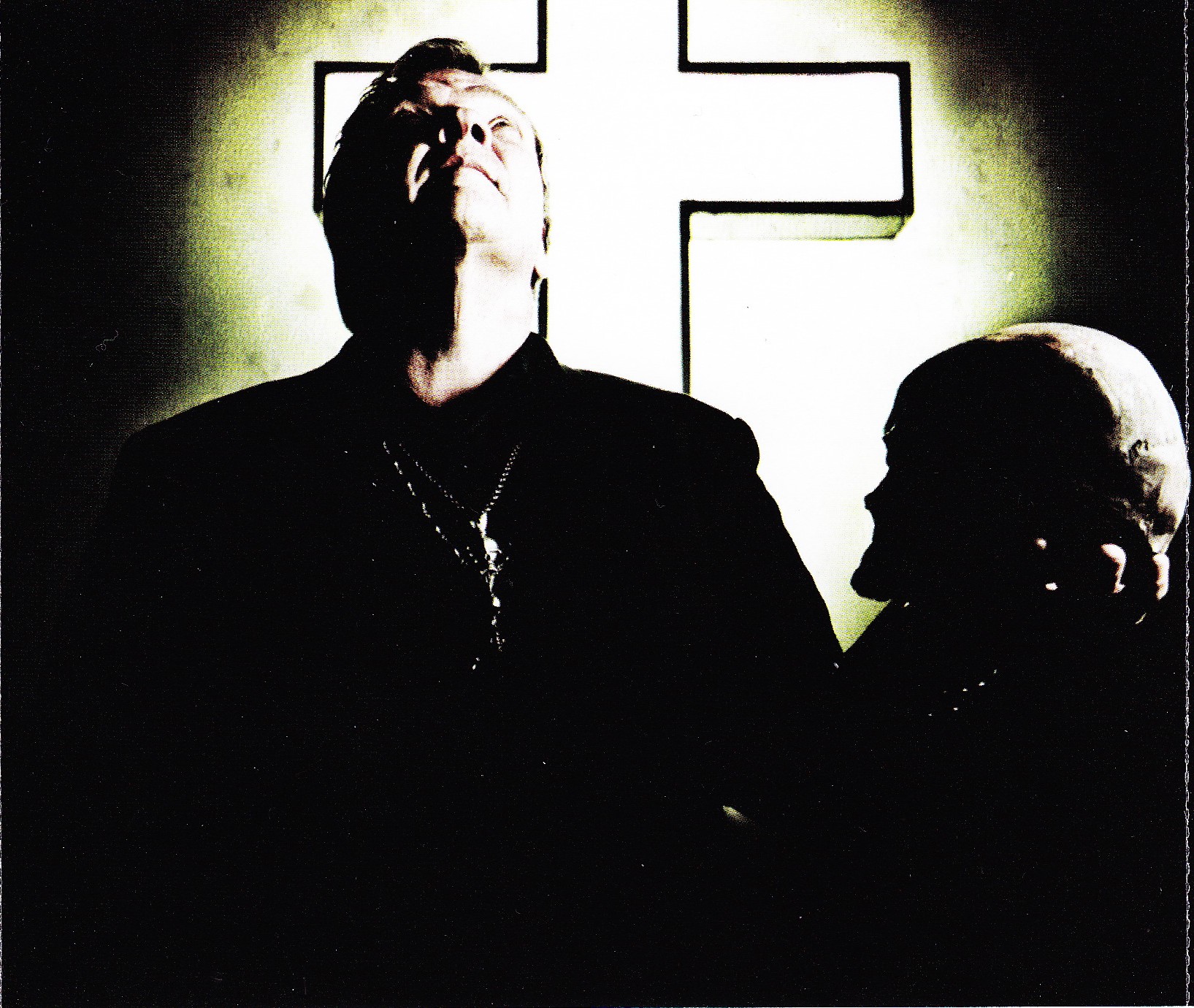
I’m old enough to miss album art. I don’t miss the hiss, skips, and pops of vinyl, but the square foot of album art was often a gift. The album art is part of the message of the music. Inside the back cover of the Hell in a Handbasket CD, behind where the disc is mounted, is a gothic photo of Meat Loaf holding a skull, Hamlet-like, before a large cross. Around his neck is a chain that holds another skull, and, with a bit of imagination, perhaps a small crucifix. (Like most people who still remember album art, my eyes aren’t what they used to be.) Something is happening here that I can’t quite define. Jim Steinman is not on this album, and my fear seems to rise. Then I listen and I hear my social consciousness being in some small way affirmed. It may not be Wagnerian rock, which I fear is rapidly running out, but it is worth another listen when I’m able to set aside the world for maybe an hour or two.


Beside Metallic Waters


My brother recently pointed out the story of Rev. John Van Sloten, a Canadian pastor who has written a book about how he’s come to see the gospel in the songs of Metallica. Yes, Metallica. Even the members of the 1980’s hard rock band found the association a little surprising. It all came about, it seems, through an open mind. The story is narrated in basic form on the Gibson guitar website. Young parishioners at Van Sloten’s church suggested he should listen to Metallica. Perhaps aware of the principally negative conservative Christian reaction to rock in general and hard rock in particular, the pastor says he ignored the advice. Then the minister was presented with Metallica tickets. A divine mix was in the works.

At the concert the pastor had a revelation: the issues wailed against by the band resonate well with the concerns of Christianity. In fact, some of the band’s concerns sound downright prophetic. The concept of prophecy today often revolves around a prediction of future events (à la Harry Potter). Prophecy in the Hebrew Bible far more often concerns social justice, speaking out against the oppressor. Metal bands, from their inception, were vehicles for protest. Disillusionment against a system that perpetuates unfairness either at a governmental or a cosmic level. When I sat down to listen to the lyrics of Black Sabbath for the first time, I was surprised how biblical many of them were (don’t tell Ozzy).

Many religious folks prejudge heavy metal as “satanic” and evil without even listening to it. I have always been struck by how much these groups frequently draw on bleak biblical images. Today we treat biblical characters as paragons of emulation. The Bible does many of its characters no such disservice. Prophets are to be heard, not emulated. We think of Isaiahs or Jeremiahs as pleasant supper guests who happen to have a divine word inside. In the Bible their actions often lead to recriminations, but their uncomfortable message is sound. I grew up in a tradition that discouraged heavy metal, as if something in the music were inherently evil. I applaud Rev. Van Sloten for approaching one of the formative bands of the genre with an open mind. Truth may be found in some very unlikely places.