The Colbert Confessions

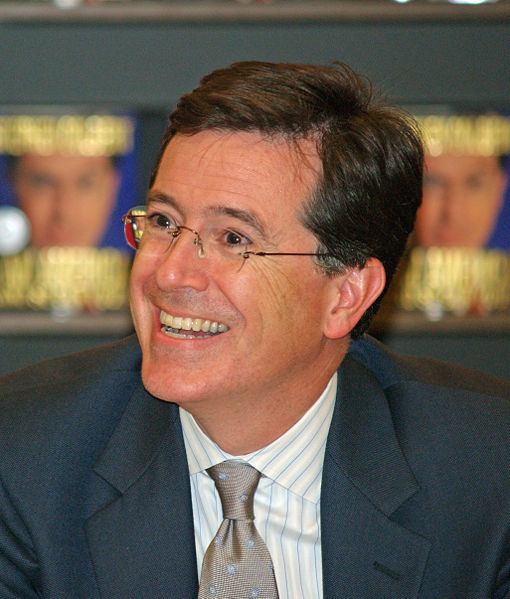
Gnu WikiCommons image by David Shankbone

The New Jersey Star-Ledger ran a human interest story on Montclair resident Stephen Colbert yesterday, “outing” his Catholicism. Well, given the fact that his religious affiliation is available on Wikipedia, maybe this isn’t so much news as filler. Nevertheless, the story repeatedly makes the point – cited by Colbert’s colleagues – that the mere fact that he is a practicing Catholic makes Colbert an evangelist every time he mentions the church. This is a bizarre concept, and one that would likely surface only in the United States. Many famous people in a variety of media are practicing Catholics (and I even hear, some public officials) and many of them would be shocked to learn of such an avocation being applied to them. Is the mere fact of belonging an affidavit? Does the government know about this? Does Christine O’Donnell even care?

What was noticeably absent from the piece was humor. Yes, the columnist mentioned that Colbert is a comedian and has a show on Comedy Central. She even noted that Colbert makes jokes about religion. What I mean by humor here is that little allowance is given for the fact that religious humor crosses some invisible line in our society, as if God is deeply offended when people use the sense of humor he gave them against him. Colbert is not shy about making fun of religion when it is appropriate, and for the last few decades, it has frequently been appropriate.

One of the surest signs of health in an institution is its ability not to take itself too seriously. Academic institutions are just as guilty, if not more so than churches, at presenting themselves as above reproof. Nevertheless, churches, colleges, synagogues, universities, and mosques are human institutions. Run by humans, they are bound to lead to comedic errors. When these happen it is standard procedure quickly to draw attention elsewhere while damage control is done. What Colbert does is evangelize for laughter. It is all right to take one on the chin now and again, but religious institutions, always in stiff competition with their rivals, do not give themselves much time to laugh. I say we need more Steve Colberts who aren’t afraid of the well placed snicker. And can you imagine having him as your Sunday School teacher? Montclair looks better all the time.

Sharks and Apostles

There are sharks in the water. For the third day in a week, some New Jersey beaches have restricted access to the ocean because of sharks. As a particularly hot July trundles along, this is not really welcome news. Also yesterday, the Vatican codified revisions to its clergy sexual abuse crisis. According to an Associated Press article in the New Jersey Star-Ledger, women’s ordination groups are angry because sexual abuse and the ordination of women are classed together as crimes against the church.

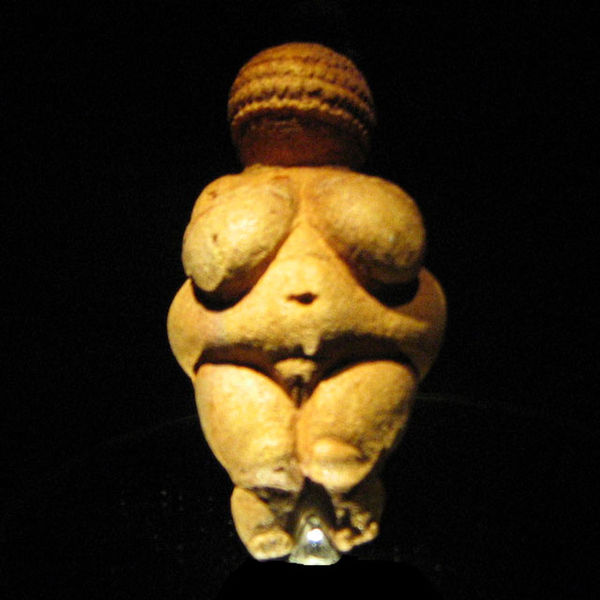
Venus of Willendorf

Even before civilization began, it seems, religion and sexual dimorphism were tied together. Beginning back 35,000 years ago Paleolithic humans carved female figurines. In a hunter-gatherer society where struggle for survival was the best paying job available, the execution of such objets d’art in a brutish, hostile environment reveals religious sensitivities. Stone Age humans knew something that organized Christianity forgot within its first century: sexuality is never far from religion. The Bible itself, particularly the Christian Scriptures, emphasize that celibacy is a putative gift, not something that can be learned or forced on someone. In typical Roman fashion, however, the church quickly mandated celibacy as the norm and ruled that women were the source of evil.

Nothing could be further from the indications of both Paleolithic remains and scientific thinking. Women, long the source of spirituality, were now cast aside in an arrogant aberration of earlier practice. Largely based on the angry writings of one man, the church decided that men alone should determine the eternal fates of others. Masculine men who knew self-control and who could turn off millennia of evolutionary pressures by a sheer act of will. Centuries later, and the Vatican with its own Pontifical Academy of Sciences, the church still can’t get beyond basic reproduction and sexuality issues. I would go to the beach to try to think this one out, but there are sharks in the water.


Dissing Mother T.

I pity the fool who challenges a powerful religion. Compelling religion. Tall towers. Tears of regret. The Empire State Building has a famous tower light show. Depending on the occasion, diverse wavelengths of light splash off the iconic skyscraper, and those who have the scorecard can see what’s important. In a city like New York there are countless occasions – holidays, Yankees and Mets games, significant birthdays. New York also houses a significant Catholic population. So it was not a popular decision on the part of the owner of the building to turn down a request to light up the town in honor of Mother Teresa’s centenary. I’m sure it was uttered with the purest of intentions, but the words of Bill Donohue, the president of the Catholic League, made me shiver just a little: “His [the owner’s] decision to double down at this juncture – in the face of massive support for our request – is something he will regret for the rest of his life” (according to the New York Daily News).

Mother Teresa, to many, is the epitome of Christian charity and selflessness. Devoted to helping the poorest members of a cruel world, she lived a life that many religious leaders could stand to emulate. On the front page of the same newspaper carrying this human interest story was the headline of how Seton Hall’s finalist for university president withdrew from the search after requesting a $300 K salary for the job. He is a priest, after all. Beg pardon, a Monsignor. And a professor of Christian ethics. I pity the fool who takes ethics seriously.

Somewhere between a 300,000 dollar salary and abject poverty, many religious believers are boggled by the mixed messages broadcast by their leaders. Most people in western religions are trying hard to avoid hell, complying with the traditions and new demands made by the spiritual CEOs. In a seminary setting someone once said to me that if Mother Teresa had advocated for responsible parenting (that great lumbering demon of birth control) perhaps the roots of the great poverty she daily redressed in Calcutta might have begun to dissipate. But the word from on high had been uttered and was immutable. She would not live to see her name up in lights. From what I’ve read about her, I have a strong feeling that Mother T. is just as happy to stay out of the limelight. I pity the fool who doesn’t understand.

A picture is worth $300,000


Sects in the City

Newsweek ran a story a few days back asking an obvious question: with all the scandal surrounding an exclusively male Catholic priesthood, why not invite women into the leadership mix? The story, by Lisa Miller, makes the point that sexual scandals have continued to deepen and widen only to be treated lightly by a hierarchy that insists sex is only for procreation. Sex between men and women, that is. If an exchange is made between males, particularly if one is under-aged, well, no souls are going to be derived from that! Although Miller’s plea easily wins on the basis of reason, when power is so deeply entrenched reason is likely to be tied to the stake and set ablaze. No, the church has made up its mind, and well, darn the torpedoes!

The church seldom embraces scientific advance without an approval period. The sexual scandal is no different. Everything that has been learned about sexuality over the last couple of centuries suggests that it’s not just for reproduction any more. Nor has it ever been. At least not in primates (both religious and mammalian). Religious organizations often test their strength by seeing just how far into the lives of subscribers they can reach. What they can control they will. The problem with sex is that it is very hard to control. It can be hidden, castigated, descried, and shamed, but it will not go away. Sexuality is hardwired into all creatures that reproduce that way. No, this is actually about power and privilege. Unchecked power and privilege inexorably lead to abuse. We expect that for the corporate world, excuse it even. Yet we hold the church to a higher standard.

Thine is the power and the glory

It is difficult for an institution raised from infancy with the assurance that God loves it best to outgrow this fantasy. Most people never examine their religion too closely — the edifice is built upon the premise that the leaders know more than the laity. Simply believe what you are told to believe. Yet no religion can lay claim to authenticity without subjecting itself to critical examination. This is the nightmare the Catholic Church now faces: two millennia of posturing and assuring believers that everything is fine are coming unraveled. And ironically the instigator is sex; that common denominator for any species with a backbone, and even some without.


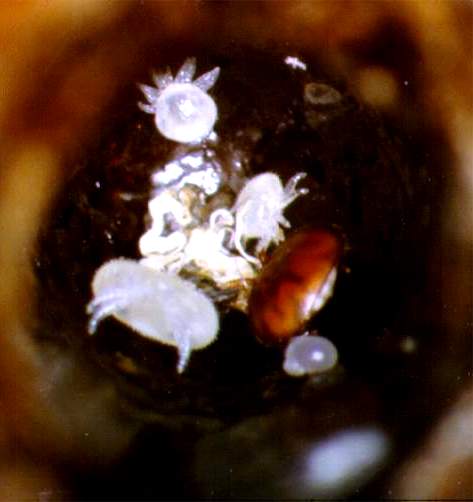
Two Mites for the Truth

“Abuse scandal puts heat on Vatican for more transparency,” runs a headline on the front page of today’s New Jersey Star-Ledger. The reference, of course, is to the recent divulging of alleged abuse that implicates the brother of the Pope. The wording of this particular headline, however, contains the kernel of a very important religious preserve. Like the X-Files, religious structures thrive on secrecy. If the mystery were removed from religion, what would be the motivation to believe? Science provides facts and theories that do not require as much belief as they do acquiescence. Religion, on the other hand, deals with intangibles shrouded in murky darkness.

Religions cannot be transparent. “Naked business” models simply do not work when the wealth of the ages is at stake. Few religious believers ever question how or why the leaders of their traditions hoard wealth and valuable objects and real estate. The great medieval European cathedrals, as magnificent as they are, represent loss, pain, and toil on the part of a great many faithful. Those with severe consciences will always drop an offering in the plate, basket, or tray when divine pressure is laid upon them. Even if they really cannot afford it. Two mites for the salvation of an eternal soul is a real bargain!

No one can truly claim to have comprehended the whole of a religion. After all, many religions have centuries of accumulated lore and tradition that must be passed along in ways opaque to the general issue believer. If glass walls were erected around every seminary and religious training institution, those who have not had the experience of being involved in clergy instruction would find the sight blinding. No, religion will never be transparent. Nor will it ever be extinct. It is simply far too easy to believe what one is told.

Two mites, and then some


Love Slap

Over the past few days news stories have emerged raising concerns about implicating very high authorities in the Roman Catholic hierarchy of at least being aware of problems in the church. These problems are by now familiar to all who follow religious news: allegations of abuse, physical and/or sexual, known, perpetrated, and hidden by clergy. The recent spate of cases has come from Germany, home territory to some high-ranking officials.

The church has never done well at steering free of controversy. After all, in Niebuhrian terms, this is “Christ against Culture.” Nevertheless, our human sensitivities have continued to grow, and it is recognized that children, swept into religious institutions because of the belief structures of their parents, often end up victims. Unless something radical happens, those children, imprinted from youth with the stamp of their family religion, spend their lives bearing its marks. What religious leaders command must be obeyed. They, after all, hold the keys to the kingdom.

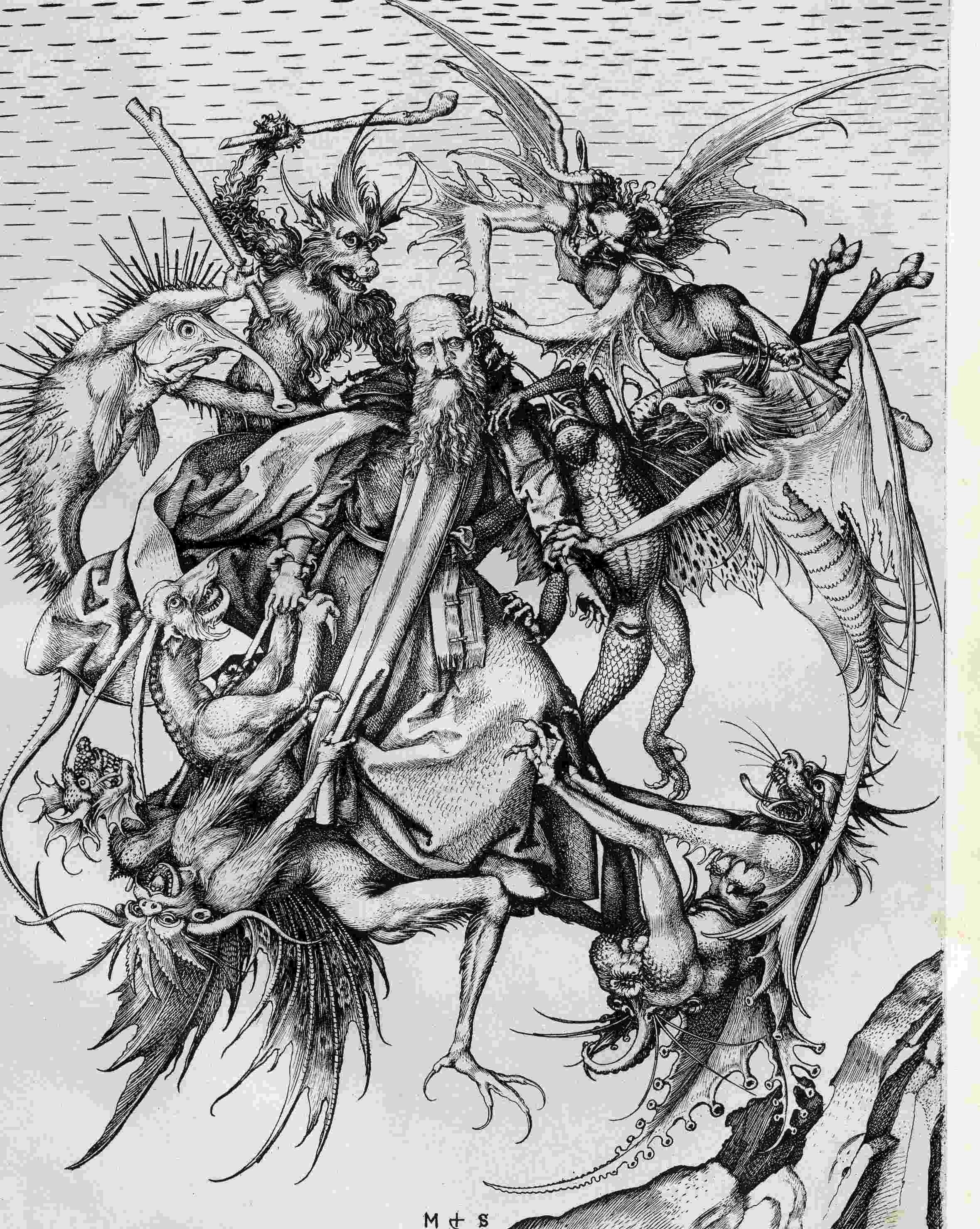
Slapping choirboys (and worse) has underscored the weakness of human clergy. Any religion that is mediated by human agents will be susceptible to abuse. It should not be accepted, excused, or tolerated. Temptation to give in, however, marks an indulgent modernity. Although largely mythical, the torments of ancient saints drew the moral lesson that mere humans could withstand the urge to give in to temporal vices. Perhaps clergy ought to stare long into the patient face of St. Anthony and ponder the implications. (Notice who does the abusing.)

The last temptation of Tony?


Fear of Voodou

The Associated Press fed a story this morning entitled “How an earthquake shook the Haitian’s faith.” Among the aftershocks of last month’s horrific disaster, many groups have ignored Rush Limbaugh’s charitable advice and have gone to Haiti on humanitarian missions. The story reports how many of these groups, generally Christian, dispense their aid outside churches and that many of the native believers in Voodou are being encouraged to convert to mainstream Christianity. Voodou priests are worried about this since, in the words of one, “by rejecting Voodou these people are rejecting their ancestors and history. Voodou is the soul of the Haitian people. Without it, the people are lost.”

Many of the missionaries bearing gifts, among them Jehovah’s Witnesses, Scientologists, and members of the Church of Jesus Christ of Latter Day Saints, see Voodou as a strange and pagan religion. The fact is that Voodou is a form of Christianity blended with indigenous African religions during the unfortunate days of slavery. Retaining their African spirits in the guise of Roman Catholic saints, the slaves of the Caribbean developed a religion they could truly believe in as they were forced to “believe” in Catholicism. In mainstream Christianity their religion is viewed with fear and distrust primarily because the religion it blends with is non-European in origin. Most Christians are unaware of the blended variety of their own faith. Early Christian missionaries into Europe found it much easier to convert native gods into saints in order to convince local populations that Christianity wasn’t such as radical a switch as it seemed. The old gods could still be worshiped, only as lesser deities.

In the “New World,” Christianities continued to evolve. Today’s Fundamentalism has very little in common with the Christianities of the first century. Jehovah’s Witnesses, Scientology, and the Church of Jesus Christ of Latter Day Saints are all religions that have developed in or since the nineteenth century in America, quite often from blends of traditional Christianity and new religious sensibilities. Religion is not immune to evolution, and the history of religions proves that fact beyond any doubt. And yet to those who do not know the origins of Voodou it appears non-Christian and worthy of conversion. Is it not possible to help those of another variety of religion simply because they are humans in need rather than requiring a baptismal certificate in order to claim your daily bread?

A Voodou service from WikiCommons


Dog-Headed Saints

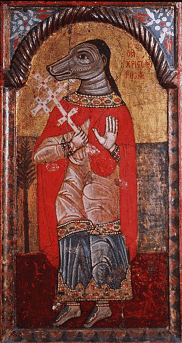
Eastern Saint Christopher

In Stephen Asma’s recent book, On Monsters, he discusses the role of early Christianity in perpetuating or perhaps even inventing various monstrous creatures. As is clear from sources going all the way back to Sumerian times, ancient religions are the spawning beds for monsters. One of the monsters Asma mentioned that caught my attention was the familiar St. Christopher. According to sources as orthodox as St. Augustine, there lived races of dog-headed people in Late Antiquity and the early Middle Ages. These Anubis-like cynocephali were barbarians in the extreme, eating human beings like the more familiar werewolf.

In some Eastern Orthodox traditions, St. Christopher was said to be among the cynocephali. Converted to Christianity, the dog-headed saint was martyred and entered the great kennel in the sky. The message proclaimed by this strange story is the tolerance of the early Christian movement. While battles raged over Orthodox vs. heterodox vs. Gnostic vs. pagan, there was still room to allow dog-headed humans into the fold. (They could be quite useful in rounding up straying sheep as well, one supposes.)

One of the hallmarks of modern Christianity is its exclusiveness. Naturally, not all Christians fit this profile, but many of the current movements define themselves by those not permitted to enter. In the sordid history of the Religious Right there are many chapters demonstrating a stark mistrust of non-Anglo believers. Roman Catholicism maintains that it is the only historically correct version of the faith. Other religions also erect barriers to keep others out. If religions truly promoted tolerance we might see a few more dog-headed saints in the news today instead of those who earn headlines for their exclusive claims on the truth.


Sects Sells

Once again the headlines tell the story of a child molested by a “celibate” priest now suing the church as an adult. That money dropped in the collection plate goes to cover the cost of sin. The disclosures continue to find the light of day not only in the Catholic Church, but across the religious organizational spectrum. It is an extremely unfortunate situation, but I can’t help wonder if religions are naturally susceptible to sexual expression.

Sexuality and religion go back a very long way. I have suggested elsewhere on this blog that some of the earliest evidence for religion, all the way back to the Paleolithic era, is sexual in nature. One of the blatant aspects of our own cultural conditioning is that we can no longer see the connection. We inhabit a post-Victorian world, a world that strenuously repressed sexuality and removed it from the sphere of human discourse. One of my favorite examples of this is when the standard classical Hebrew-English dictionary (Brown-Driver-Briggs, for those of you who need to know!) makes reference to sexual activity in the Bible (and it is abundant), the editors delicately slip from English to Latin, so as not to offend the sensibilities of clerics and other gentleman-scholars reading the entry. This antipathy to the human condition can be traced even further back to the Greeks who felt that the physical body was much more base than the spiritual, or intellectual aspect. Sexuality was a source of embarrassment and perhaps even shame.

I’m not a psychologist, but it is pretty clear what occurs when strong feelings and drives are repressed for a long time. The early Christians who believed Jesus’ second coming to be imminent did not wish to be caught in flagrante delicto. Sexuality was to be avoided since time was short. When this became formalized and priests, probably very decent people overall, were forced to relinquish their sexuality, it was assumed that it would simply evaporate into the ether and harm no one. We have known for decades that this is naively wishful thinking. As the margarine commercial used to say, “it’s not nice to fool Mother Nature!”

What's Mother Nature hiding?

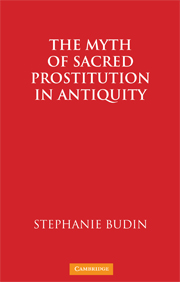
Ancient sects were not sexually depraved. Stephanie Budin (The Myth of Sacred Prostitution in Antiquity, Cambridge, 2008) has done a good job showing that the case for sacred prostitution in the ancient world has been grossly overblown. Nevertheless, sexuality had a natural place in ancient religions. Any number of nervously giggling teenagers who’ve just discovered the Song of Songs in the Bible know that! The problem arises when our religious culture refuses to acknowledge the obvious. We bottle it up and try to keep it hidden, but when it finally appears the price tag is very steep indeed.


Sacraments and Sea Cucumbers

Directly across the fold from each other on pages 4–5 of today’s New Jersey Star-Ledger are two articles that my brain comprehends as related by more than mere proximity. On page 4 the headline reads, “In sunless depths, marine life thrives.” In an Associated Press article bi-lined New Orleans (where many of my colleagues are currently enjoying the Society of Biblical Literature annual meeting), scientists reported that over 17,000 deep-seas species have been found below the point where sunlight ends. What was thought to be a barren zone just decades ago, it turns out, is teeming with organisms adapted to living without light.

One page 5 the headline reads “Bishop admits barring Kennedy from sacrament.” In a ploy that has become distressingly frequent of late, the Roman Catholic bishop claims that Representative Kennedy’s political views on abortion effectively excommunicate him. I find it unconscionable that clergy feel that they have the right to direct public policy when they are not publicly elected officials. Any clergy attempting to coerce officials democratically elected are guilty of abusing their putatively divinely appointed trust. The millions of Catholic laity who privately support freedom of choice they may rhetorically chastise from the pulpit or by some papal bull but they do not deny them the sacrament. Let’s be honest here, this is about politics, not theology.

I have been reading Max Blumenthal’s Republican Gomorrah, perhaps the scariest book I’ve ever read. In it Blumenthal demonstrates how the Catholic Church got onto the pro-life bandwagon in the intricate political maneuverings of the “Religious Right.” They quickly learned techniques up to and including lying to get their agenda across. It should distress all members of a democracy that their leaders are being led by dishonest clerics of all stripes. Those who mix their religious views with politics seek to end the religious freedom that allowed them to be born in the first place. They practice late-term religious freedom abortion.

What does this have to do with the wondrous world of the great deeps? They represent, to my mind, two forms of life that thrive far from the enlightening rays of the sun.


Papal bull?

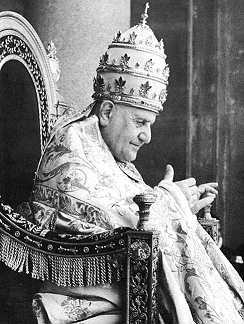
In world news, yesterday’s paper ran an article entitled “Pontiff praises Africa as font of spirituality” (New Jersey Star-Ledger). This brief piece concerning a clerical meeting about Africa (held in Italy), dredged up some interesting concepts: that the African continent is a font of spirituality, but it suffers from materialism and fundamentalism. Having never been to Africa, I am not in a position to assess how materialistic the continent is, but from the images seared into my brain of barely clothed, starving children who own nothing, having this comment come from the opulence of the Vatican is jarring. Teaching by example is far more effective than, well, pontificating. Perhaps if some of the art and Christian swag were sold to invest in the poor, there might be reason to listen to rebukes from foreign potentates.

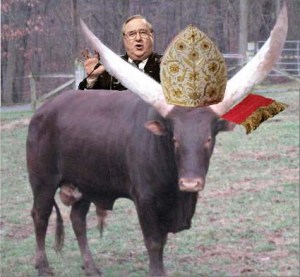
Catholics and Fundamentalists sometimes share political agendas and cooperate to get their holy candidates elected, but clearly they clash when it comes to issues of religious praxis, and especially, authority. I watched with horror over the last two decades as Roman Catholic bishops paired up with the likes of Pat Robertson and Jerry Falwell to support the Bush family legacy because they agree on the same conservative side of the issues. I even saw this on a small scale at Nashotah House. Once the victory is won, however, the honeymoon is over and the claws come unsheathed and fangs are bared.

Religious fundamentalism is an extremely dangerous force, and Rome is right to call it a “virus.” Like Catholicism, however, it is based on fear of dissing the almighty. If we dare probe deeper, underlying all the obsequious servility towards the divine, both forms of Christianity thrive on their own power. Being able to control the masses with claims of sole spiritual authority — sorry, only one set of keys to the kingdom — is also a dangerous thing. Benedict IX, meet Jimmy Swaggart; Jimmy, meet Bennie.

Jerry blesses a papal bull

Jerry blesses a papal bull