Flea the Obvious

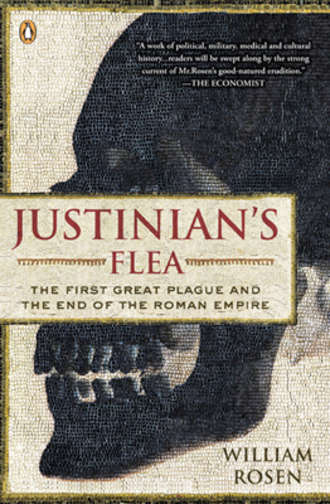
In one of my personal ironies of history, the period of ancient times that I find least interesting is the one I’ve been reading most about. Part of that is based on my lack of coherence when it comes to selecting reading material. I take recommendations seriously, so when a friend suggested Justinian’s Flea by William Rosen, I figured I’d better read it. I had fairly recently read Philip Jenkins’ Jesus Wars, about the nearly unbelievable shenanigans of post-apostolic Christendom, and so I felt up to taking on the Plague. Justinian’s Flea is about the fall of the Roman Empire. At Gorgias Press, where Justinian’s former prostitute wife Theodora was subjected to revisionist history that made her a lifelong saint, I learned to discount most of what went on during this time period. I was, it seems, a bit too hasty. Justinian and Theodora’s reign is quite interesting, and it is, as intimated, largely because of ecclesiastical politics.

Rosen begins his study by laying out the background to Justinian’s imperial days in Constantinople. In describing the disputes between what specialists now call various Christianities (formerly true believers versus heretics), Rosen notes that Christians had particular disdain for Gnostics, largely based on interpretations of what Jesus’ death might mean. At one point he writes, “Monotheistic religions are famously intolerant of apostasy, even when they disagree about what constitutes it.” Here he hit the flea on the head. “I doesn’t know what it be, but I’m ag’in it.” This attitude of religions has long been the motivation behind massive campaigns of bloodshed and intolerance. Often in the name of religions that claim peace and tolerance as the highest goods. So it was in the early church; heretics were routinely martyred for their “wrong” belief.

Not to throw in a spoiler, but the first great wave of the Plague does nearly draw an end to the ailing Roman Empire. Justinian’s expansions were mere band-aids trying to hold together a Frankenstein’s monster of many nationalities. So riding home on the bus I was surprised first of all that the driver engaged a passenger in conversation (generally frowned upon) and second of all, that he ranted for many miles about politics. It isn’t very comforting in the stressful traffic around New York City to hear your bus driver cry out, “the Roman Empire collapsed—maybe it’s time America did as well!” The prospects of getting home seldom looked dimmer. And I had just been reading about that very empire’s last days. I try to stay away from predictions because I dislike being proven wrong—the end of the story hasn’t been written yet. Rosen, however, has given us a great cautionary tale; if the humble flea can help bring down the world’s mightiest empire—one ruled by a leader overwhelmingly concerned with religion—maybe it’s time to canvass what the infidels like to take in their coffee.


Attack of the 50-Foot Women

A society will be remembered by its lowest common denominator. At the mention of the Roman Empire many people immediately think of the decadence of that once mighty power in decline. Rome ruled the world at one time—or so it seemed—but Nero had his fiddle and Caligula favored his horse Incitatus as a senator (today we’re more accustomed to seeing asses in government than horses). The madness of Napoleon. The insanity of Hitler. Mighty powers crumbling under their own weight. Walking through Times Square is an education. Recently a fifty-foot woman appeared, looming over the heads of commuters, tourists, and the homeless. Unlike the classic 1958 sci-fi flick, this woman is apparently happy, smiling broadly, and nearly naked. She is an advertisement for Sports Illustrated’s soft porn swimsuit edition. Stories above us all, she pulls back her hair and, if she weren’t a fantasy, I’m sure she’d be chilly dressed like that in a New York winter.

We’re talking lowest common denominator here. As I man I can’t help but to understand the appeal. Advertisers know it too. At the corner of 42nd and 7th, there is another fifty-foot woman, apparently nude, sitting in an office chair for Go Daddy with a QR card across her torso offering to those who would scan her, “See More Now!” It is difficult to be judgmental when advertisers are using basic psychology to sell their products, and studies have shown that men are very easily aroused by visual images—our juvenile imaginations never do grow up. But women this large? In 1958 Nancy Fowler Archer was salaciously considered a monster, but the producers knew teenage boys would watch in fascination. Such simple creatures.

There is a disturbing subtext here. Men are weaker than they pretend to be, but that doesn’t bother me much. Vulnerability is where humanity is most authentic. The problem with the fifty-foot women in Times Square is the message to American society that women are a commodity. They, like everything else in Times Square, can be purchased and owned. They exist solely for the pleasure of men. I am not a prude, but I do believe that such blatant shows of the female body for sale bear as a subtext “mene mene tekel upharsin.” A society that cheapens its women in such a forum is creating the standards by which a hopefully more advanced future will remember it. Standing beneath the open thighs of the fifty-foot woman on my way to work, I am profoundly sad. This is Rush Limbaugh’s American Dream writ large.


Frippery or Faith?

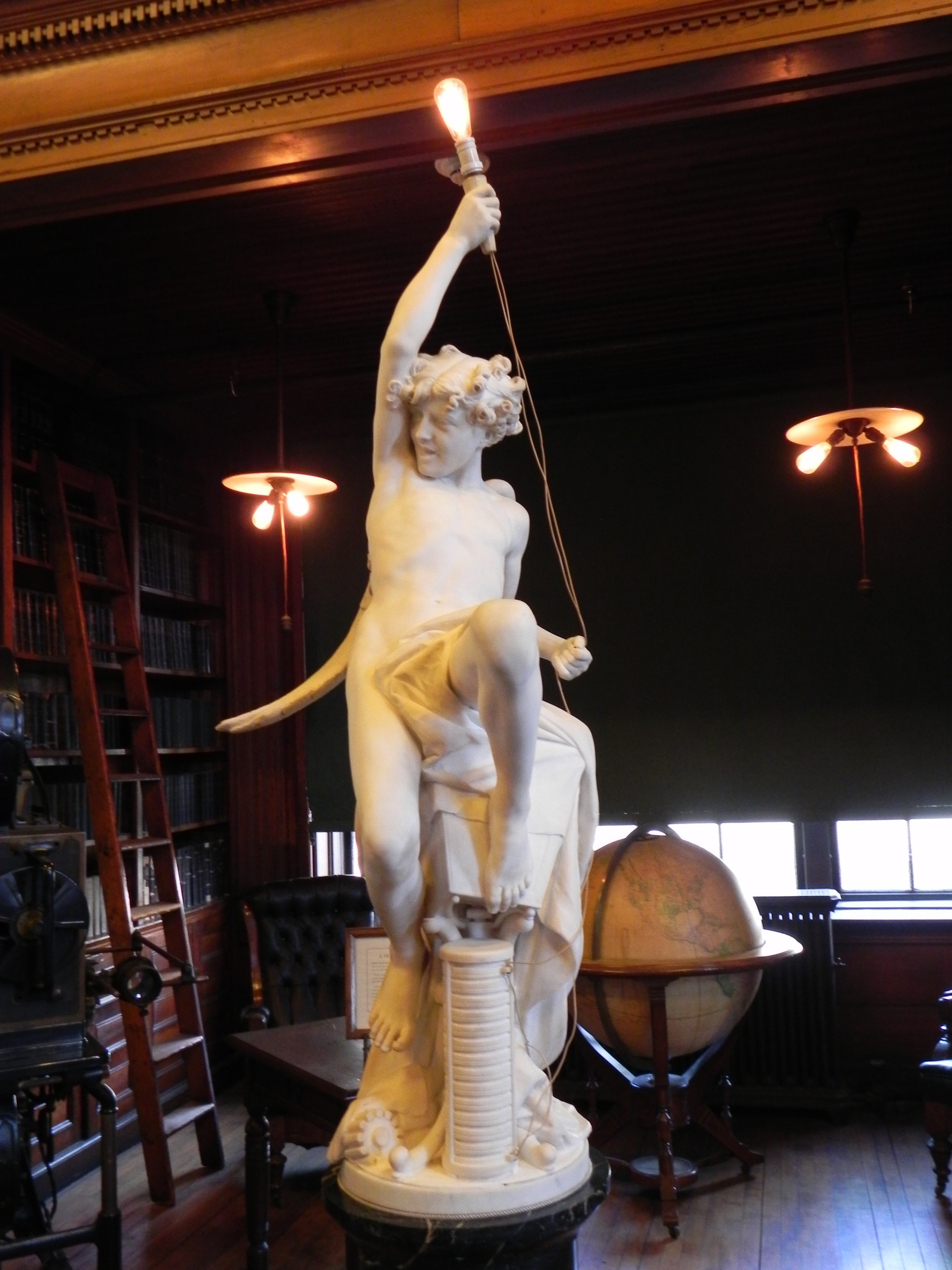
A lesson quickly learned in New Jersey is that the state has housed its fair share of geniuses and that inspiration takes many different forms. From Albert Einstein to Thomas Edison, these thinkers have changed the complexion of not only the state and country, but also of the entire world. While on a visit to Edison’s final factory and laboratory in West Orange yesterday, his devotion to thinking could not be overlooked. With little formal education, Thomas Edison taught himself what was necessary to become one of the most prolific inventors in the history of the world. The key to what he believed to be purpose of human existence is, sadly, under fire from politicians who’d rather keep the populace in the dark while they (the politicians) make the important decisions. “The man who doesn’t make up his mind to cultivate the habit of thinking misses the greatest pleasure in life.” So Edison said. Bully governors would rather turn out the lights.

As politics and conservative Christianity become even more intimate – if that is even possible – those who do not share their views are considered dangerous outsiders. As a religion specialist, it is difficult to gauge how sincerely such politicians take their religion. As their lifestyles clearly indicate, what they practice is as far from what they preach as the east is far from the west. Manipulating sincere, if misguided, believers into marks that will propel them into seats of power, they talk the talk. “Faith, as well intentioned as it may be, must be built on facts, not fiction – faith in fiction is a damnable false hope.” So said Edison.

If we measure the religion of the Religious Right in terms of action, it clear that their principles have far less to do with what Jesus said and did than with securing personal gain. Women are placed in subordinate positions; the poor, minorities, those who work to keep the economy afloat while the wealthy suck in more than they could possibly use, these people become targets rather than neighbors. Roman emperors knew the society was dissatisfied and provided bread and circuses. The Religious Right is perfectly capable of learning the more insidious lessons of history. If they had been around in Edison’s lifetime, no doubt they would have tried to turn off the lights so that we’d all remain in the dark. In such a situation it might be wise to leave the final words to Edison: “Religion is all bunk.”

Let there be light!


The Return of Christendom

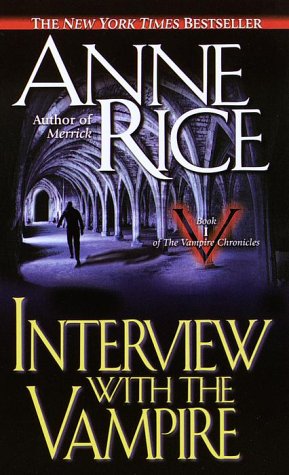
Well, the Internet is shaking because Anne Rice has left Christianity. Not exactly, however. In her own words, according to her Facebook page, “I remain committed to Christ as always but not to being ‘Christian’ or to being part of Christianity. It’s simply impossible for me to ‘belong’ to this quarrelsome, hostile, disputatious, and deservedly infamous group.” For years I have observed decent people “quitting” Christianity because the name has been co-opted by intolerant, bigoted Neo-Cons who more often than not have political agendas in mind. I think the battle has been lost, the trademark name of Christianity must be surrendered to those who claim it most loudly. The meek have disinherited the earth. How many Catholic students have introduced their comments to me with “Christians say…” as if Catholics aren’t part of the club?

There was a perfectly good word for what Neo-Cons are calling themselves. It used to be “Christendom.” Harkening back to the imperial days when Orthodox Christianity ruled the East and Roman Christianity ruled the West, Christendom implied the power and the glory in its very name. Beyond a religion, it was a system of rule. The world was fine as long as everyone stepped in line to a magisterial faith that held the only set of keys to Heaven. Then Islam. Then Reformation. Then Enlightenment. The keys began to jangle amid many others on that divine keyring. Christendom seemed pretentious when there was no military might to back the strappado or red-hot iron. Christianity was but one belief system, deeply fragmented, among others.

Under the vision of James Dobson, Ronald Reagan, George W. Bush, and their minions, Christianity in its Neo-Con armor has once again become a forum for abuse and intolerance. Bearing little resemblance to the ethics and outlook of the carpenter of Nazareth, this religion would find an easy home in imperial Rome or medieval Aragon. As Ms. Rice notes, she is committed to Christ, but not a Christian. Although my impotent voice bears little weight in this overly loud and hyper-productive world-wide web, I would humbly suggest that Christendom be reinstated, instead of Christianity, to describe the Neo-Con religion. Christendom, after all, retains the imperial bearing and absolute authority the movement craves. Those, like Ms. Rice, who prefer to follow the teachings of Jesus might then have use of the traditional term of “Christian” once again.