Religion Embraces Science

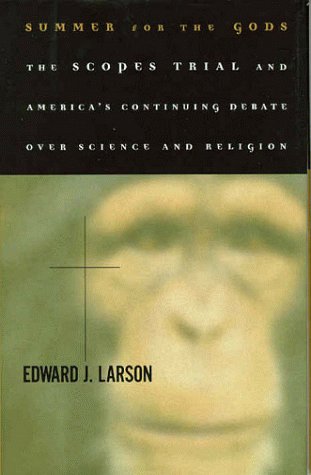
My colleague and one-time dean, Michael Zimmerman of Butler University, has brought his Clergy Letter Project to the Huffington Post. Well, he has written an online piece for the Huffington Post entitled “Redefining the Creation/Evolution Controversy.” His article is clear and to-the-point: the Creation/Evolution debate is not about religion versus science. That has been shown repeatedly for those who care to examine the history of this controversy. Evolution barely caused a ripple among clergy when it was first becoming popular among scientists. Ministers assumed it was just one of God’s mysteries and went about their clerical duties. The issue became a public relations boondoggle with the Scopes Trial of 1925. One of the best books written on that subject is Edward Larson’s Pulitzer Prize-winning Summer for the Gods.
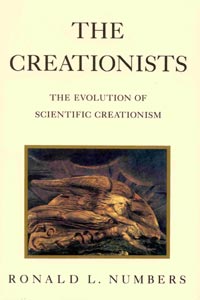
As I have stated in my podcast on this issue, Creationism is a splinter movement within Evangelical Christianity. Over the years it has drawn in members of a wide variety of Christian groups, including Roman Catholics and mainstream Protestant denominations. It has publicized its concerns so well that many people assume that this is the “Christian” viewpoint and that all other views are, by definition, non-Christian. This is the perspective that has driven a wedge between religion and science, creating a false front that has led to many confrontations between Evangelicals and scientists. My favorite history of the Creationist movement is Ronald Numbers’ The Creationists.
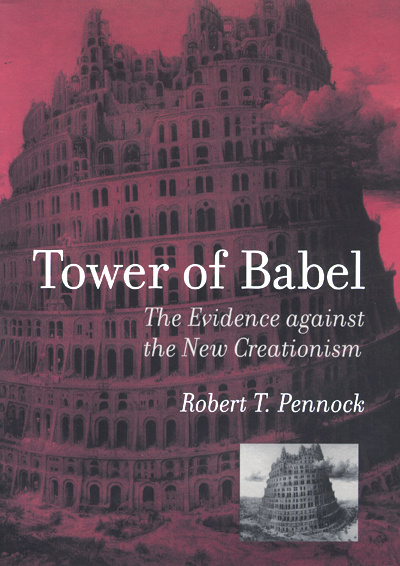
The true motivation of the movement is, without doubt, political. While many sophisticated people scoff at the apparently simplistic machinations of the Creationist movement, what they do not realize is that it is a highly organized and politically savvy alliance of special-interest groups. Robert Pennock’s Tower of Babel was an academic exposé of the inner workings of the Creationist movement. It is perhaps the most important book written on the subject. Published by an academic press, however, it has not found the wide public readership it deserves.
Do yourself a favor: read Dr. Zimmerman’s post. I believe he has framed the dilemma in the correct way: the struggle is one within a specific religion, Christianity, not one between religion and science. The more the public knows about this issue the better off we all will be in the long run.


Daniel in the Lyin’s Den

Yesterday I found myself. Online, that is. I was cited ambivalently as “some guy” in the Uncommon Descent blog comments, noting my Creationism’s White Box podcast. For those unfamiliar with Uncommon Descent, this is a blog hosting many posts by William Dembski, a leading creationist. Finding myself there, I instantly recalled that Daniel was never masticated in the lion’s den.

Not being one to judge without good cause, I read the critique with care. It read: “Some guy I read in the last few days here [link to my podcast] has suggested (to the approval of a few clerics) that creationism is an early 20th century phenomenon but all he’s really done is conflate creationism with the Creationist movement that grew out of, or was associated with, the publication of ‘The Fundamentals’.” Since academics like to split hairs (and even atoms), I thought I’d use today’s post to explain, in History 101 style, the problems with this assertion.

Creationism, like any other human enterprise, has a history. Christianity was born in a literalistic age, of sorts. Early Christians took the Hebrew Bible (pretty much The Bible in those days) literally. Belief in a flat earth and mythic beings still predominated the upper cortices of early brains too. My detractor could have been correct had the conflationism charges been laid at my door prior to the Enlightenment. The fact is that everyone born since the eighteenth century (academically speaking) has had access to science and the facts we’ve ascertained about our world. One of those sets of facts has had to do with evolution, and another with the history of the Bible. Interestingly, both of these sets of facts coincide perfectly: biological evolution took place and the Bible was a product of its environment. These truths have been available for centuries for any who would look at them.

The veracity of this statement is attested by the nearly universal acceptance of evolutionary theory by Christians in the western world in the late nineteenth century. Creationism, as such, did not exist at this time. It was in reaction to a number of social and theological factors that Creationism first hatched around the turn of the twentieth century. It was a new bird (I’ll avoid saying “hopeful monster”). Any claim that it was a default version of Christianity is strictly Retro — any such claim is tantamount to declaring that the Enlightenment never happened. I’m not a supporter of revisionist history, so I just can’t accept this flimsy construct. Fact is, Creationism is relatively new.

There is a great bibliography out there for anyone interested in getting the actual facts. Start with Ronald Number’s The Creationists: The Evolution of Scientific Creationism (University of California Press, 1992) and read on. Otherwise, feel free to believe in a flat earth — you can find good proof of this in central Illinois or Kansas.