Vive la compagnie

I’m cleaning out the closet at work. I doubt that either J. C. L. Gibson or Nicolas Wyatt envisioned my future thus. Edinburgh University was exotic and optimistic, designed to make my curriculum vitae stand out. More like standing out in the rain. “We have to ask what’s best for the company,” I’m told. I’m not a proud person, but earning a Ph.D. to take out the trash seems like a strange allocation of resources to me. “Take one for the team,” we’re told, since we’re part of a company and when the company prospers, we prosper. On a pro-rated scale, of course. It’s not that taking out the trash is beneath me. I willingly do it at home; my first career aspiration was to be a janitor. Only now I’m dressed in work clothes for the City. And I spent nine years in higher education to get here.

Lately I’ve been pondering how this “for the company” trope is a one-way street. Knowing in advance that Nashotah House could be a Hindenburg career for a liberal, I gave it the old college try. Writing about 90 pages of class notes a week for my first year of teaching, attending mandatory chapel twice a day, I tried not to step on any toes. Even though the theology over which I was forced to chew smelled a bit like this garbage I am now carrying, I made no fuss. Don’t rock the boat, especially if it’s a garbage scow. Take one for the team. After fourteen years of not making a fuss, I was summarily dismissed. I found out, literally, how hard it is to get a job as a garbage man.
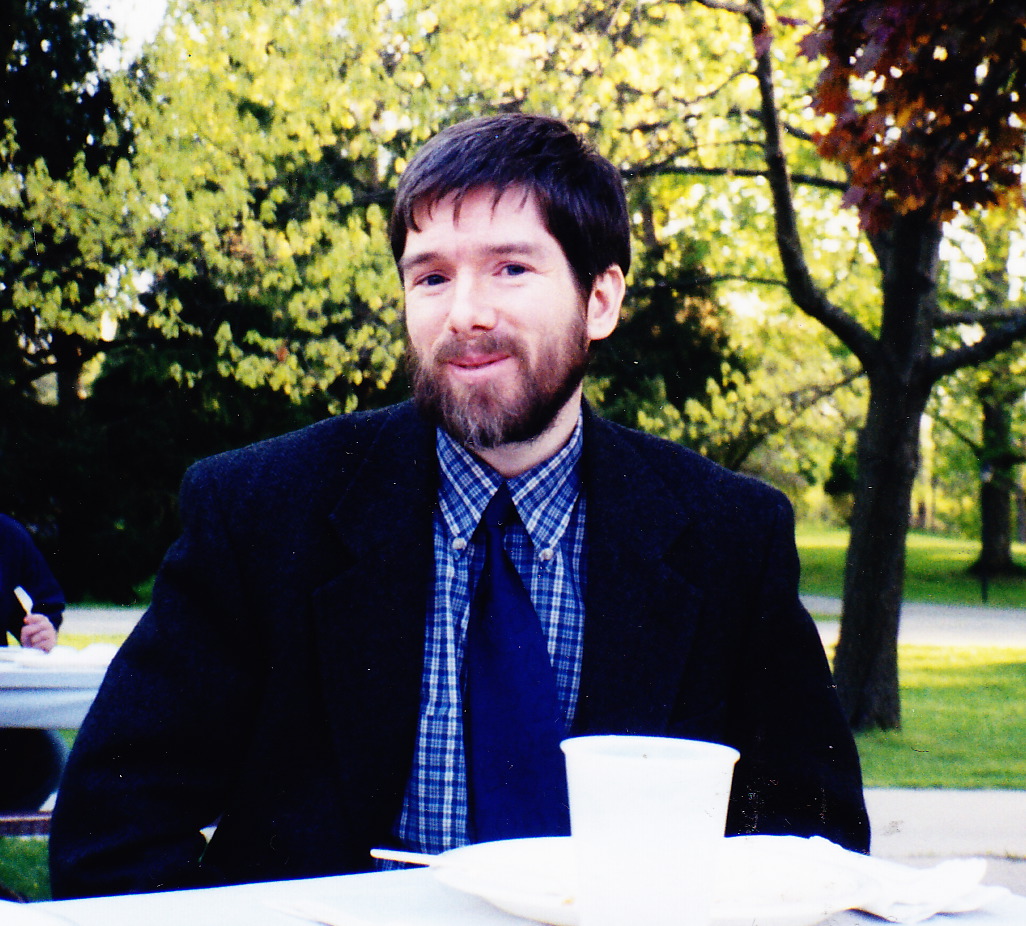
Portrait of a livelihood about to end.

Portrait of a livelihood about to end.

Eventually I landed a job at Gorgias Press. Neither prestigious nor lucrative, it was a job and I had already proven I could take one for the team. Positions evaporate around here like dribbles from a spilled cup of coffee. So I found myself at Routledge, jetting around the country, spending long hours on the bus, being told to think what was best for the company. Only don’t expect the company to do the same for you. Stoking egos, I tried to get people with qualifications I could match to write a book for me. At Nashotah House I played on the football team (don’t laugh, it’s true). We had only one game a year, against our rival—the now defunct Seabury-Western in Chicago. During practice one day, one of my students blocked me with a forearm to the chin that left me on my back, seeing stars. I can take one for the team. But sometimes the company needs someone to take out the garbage. Ask the guy with a doctorate in rubbish removal. He always thinks about the company.


History Department

Rather like an embarrassing personal blemish, many universities tend to hide the fact that they were originally servants of the church.  Ouch!  I know that hurts.  When I was working at Routledge I had to educate some of my fellow employees about the strange interaction between religion and higher education.  Most of the earliest universities were founded primarily as theological colleges.  That stands to reason, since as light slowly began to dawn at the fading of the Dark Ages, the practice of literacy had largely been the domain of clerics, and even today, the clergy are among society’s most dependable readers.  Universities sprang up because churches desired leaders who were informed—educated, even.  Men (at that point) who knew how to reason well.  This impetus eventually led to the kind of thinking that allowed science to emerge, although it soon had fights with its parents over who had the better perspective.  Some things never change.

University or church?

University or church?

Even considering the Ivy League here in the United States, we have schools that were generally founded for clerical purposes.  Harvard was founded mainly to train Puritan ministers.  Yale was intended to provide clergy and leaders to the colony of Connecticut.  Brown was founded by Baptist clergy, while Columbia owes its origins to the missionary wing of the Church of England.  Princeton was founded for the training of Presbyterian clergy.  Dartmouth’s Puritan clergy founded wanted a school for preparing missionaries.  Even non-sectarian Penn had clergy among its early leaders.  Cornell was the lone gunman of the truly secular schools.  The pattern even reaches to state universities that now cower at the thought of expanding or sometimes even maintaining their religion departments.  Rutgers, where I had the privilege to teach as an adjunct for a few years, was originally founded as an enterprise of the Reformed Church in America, scion of the old Dutch Reformed Church, thus giving rise to the small New Brunswick Theological Seminary that still sits in the middle of the College Avenue Campus of the State University of New Jersey.

Every now and again, I ponder this state of affairs.  Religion, love it or loath it, is foundational not only for higher education, but for civilization itself.  If the evidence of Göbekli Tepe is to be believed, religion may have been the very glue that brought societies together in the first place.  Despite the decline in mainline denominations, public survey evidence indicates Americans are just as religious as ever, or at least spiritual.  How quickly we forget that it was biblical mandates to go out and spread the news that led to the idea of a literate, educated society.  The lure of money and technology is great, and has managed to reshape the higher education landscape.  If you look, however, at the lists of institutions of higher education in the United States, even today, the largest subset is either currently affiliated with, or had been founded by, Christian groups wanting to offer education to their children. Today there are still hundreds of universities and colleges affiliated with religious groups.  Somehow I get the sense that the affection showed is not completely mutual.


Backyard Archaeology

Among safe topics for discussion among strangers and casual acquaintances, the weather tops the list. It affects each and every one of us continually, and there’s nothing we can do about it. The ideal neutral subject. In fact, however, the weather is highly freighted with religious thinking, deeply sublimated. If you listen closely, you will hear it. Well, this year, at least in the northeast of the United States, winter has been the topic. We still have snow on the ground in New Jersey, and it has been here continually since January. The thaw has begun, however, and when I went to fetch the paper I noticed a newly melted item on the lawn—an archaic newspaper. Obviously the paper-deliverer missed the front steps that day, and by the time I stepped outside it had already been buried. Curious, I brought it inside to get a first-hand look at the past. It was the Monday, February 3 paper. The day after the Super Bowl. Apparently nothing much else was happening in the world a month ago. I don’t even know who played in the game.

IMG_1237

Religion and sports have a long pedigree. One of the first books I signed up at Routledge was on religion and sports in American culture. Routledge decided to sack me before the book was published, so I haven’t had the opportunity to see it yet. Nevertheless, it is clear that the meaning once provided by the strong arm of the Lord is now covered by the stronger arm of the athlete. I’ve watched in fascination as reporters question the players after the game, panning for bits of wisdom as if they might actually get us up off the couch and lead us to a few minutes of physical glory. Instead cliches trickle out: “we saw what needed to be done and did it.” “I took it to the next level.” “First of all, I want to thank Jesus.” Each one like a nugget of pure gold. I still don’t even know who was playing.

On my kitchen table, however, sits a soggy newspaper with the answers to that. The news is old news. And damp. We’ve had an entire Olympics since then, and war seems to be breaking out in the Crimea. Wait a minute, what century is this again? It seems that no matter how old the news is, it still isn’t old enough. One of the oldest news flashes received by humankind, if the Mesopotamians are to be believed, is that there is a huge flood coming. I turn on my browser and lo, a flood indeed! Noah will be released later this month. Posters began to appear in Manhattan as soon as the Super Bowl cleared out. Move on to the next big thing. And, unbeknownst to me, a newspaper laid buried beneath the snow, containing all the information I needed to know. I’m still wondering how that flood turned out.


Silver and Gold

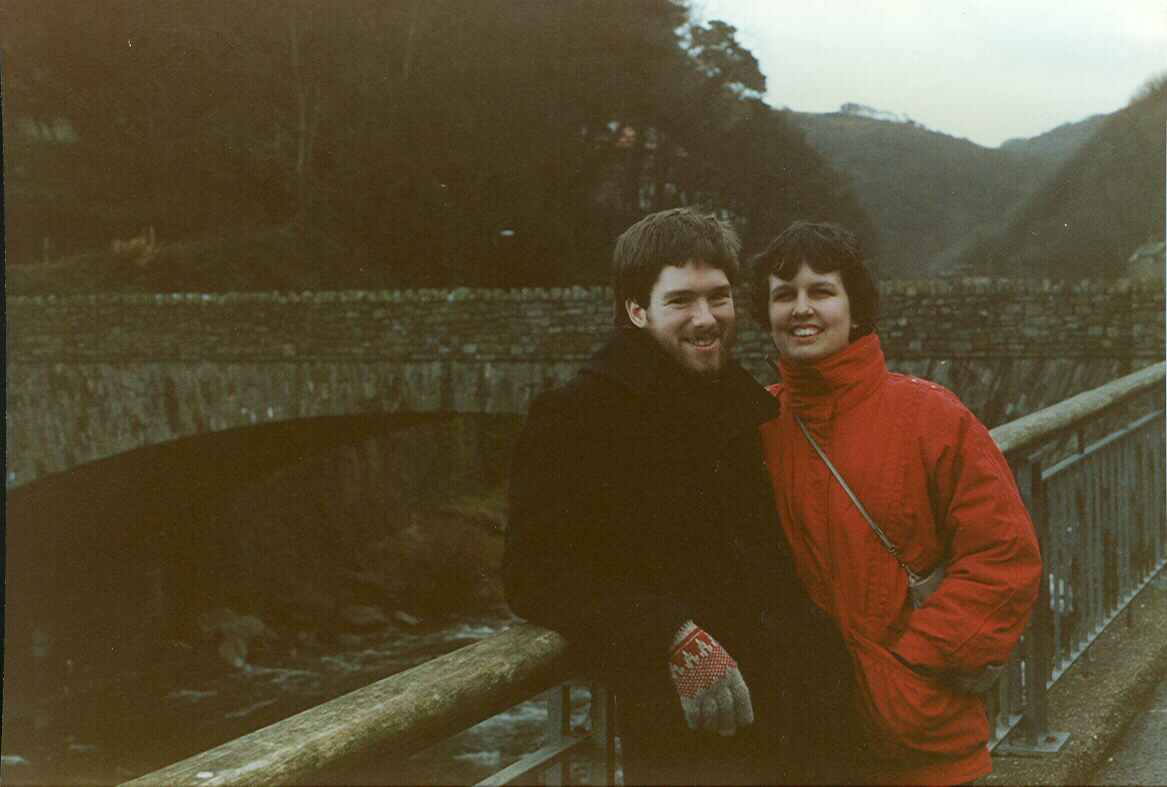
“He has also set eternity in the human heart,” old Ecclesiastes lamented at the end of the most famous passage in his book, noting that it is nevertheless impossible to conceive. We mark the passing of time in centuries. I suppose we like a good round number, but it is also a convenient frame since few of us make it much beyond the century post, so we can keep it in our eye as a reminder of how long we might have left. Life has held more fear for me than death, so I approached and passed my fiftieth birthday without much anxiety. When it comes to others, however, the caviler perspective soon fades. Centuries are important. And so are halves. And so are quarters. At twenty-five the world stretches endlessly before you. But to what have we really committed to twenty-five years? How much have we changed in that time? Today is my twenty-fifth wedding anniversary. The “silver” anniversary they call it. Although I’m not much of a Hallmark kind of guy, the fact that one woman has put up with me for a quarter century continues to amaze me, and we had made plans for a grand celebration. Then Routledge slashed my job. Fortunately, Oxford University Press came to the rescue.

Ah, but with provisional requisites. You see, I had saved a week’s worth of vacation so that I might spend my anniversary at home (or on a little trip) with my wife. Publishers do not get the week between Christmas and New Years’ off. While our academic counterparts are sleeping late and spending time with their families, we’re rising early, commuting into the City, and sending emails that won’t been seen for a few weeks at least. Business rules. Routledge took away my accumulated vacation days, carefully squirreled away during the long year, and since I’m a new hire at Oxford, I haven’t earned any vacation yet. Twenty-five years, and I can’t even give my wife a day. Silver in a world defined by gold. It’s not easy being married to me.

I began work at age 14. With a single exception I have never quit a job. I am a very hard worker and I have never had a performance review that did not say as much. Since Nashotah House set about ending my academic career, I have suffered through three dismissals, all following very positive reviews. You may be forty, forty-five, or fifty, but you are starting over again. Bottom of the pay scale, bottom of vacation days earned. Child in college and eternity in your heart, you have to watch those pennies and be to the office on time. Nobody’s stopping you from going to a nice restaurant (as long as it’s not too expensive), but the bus will drop you off about 7 p.m. and you’d better be asleep two hours after that so that you’re not groggy at work the next day. My old friend, Ecclesiastes, you are wiser than your years. And Kay, thanks for an amazing quarter century. I know of nobody else who would’ve put up with it.

A young couple's anniversary in Wales.

A young couple’s anniversary in Wales.


Away as a Stranger

I’ll admit it. One of the things many scholars secretly enjoy about the American Academy of Religion and Society of Biblical Literature annual meeting is discount rates at fancy hotels. Unless things have changed drastically since my teaching days, professors don’t make enough to spend nights at four-star hotels as a matter of course. This year, however, Routledge pulled the rug out from under me less than a month before the conference. I had to cancel my reservation and forget the dreams of a leisurely train ride to Baltimore, a nice walk to a luxury hotel, and four days of schmoozing with the intellectuals (or at least those who are considered smart enough to write books). Then, Oxford University Press. I started work on Monday, and by Friday I was attending AAR/SBL. But with a twist. All the hotels were full—not a room in Bethlehem, I mean, Baltimore. So I had to find a run-down hotel several miles away and drive four hours to get there frazzled and decidedly unacademic. Still, map is not territory.

worldmap

Getting back to the hotel from the Convention Center, I had technology issues. You see, I didn’t have time to plan the trip out this year. I had no maps, figuring my smartphone was more intelligent than I (I don’t set a very high bar). Alas, for the GPS on my phone knows Baltimore less well than me, apparently. When the scenery turned industrial and I could see the ocean although my hotel is miles west of the city, I knew I was loss. My GPS, groping for dignity, kept instructing me to make u-turns on the interstate. Finally, I pulled off an exit and tried to use dead reckoning. Baltimore, like most cities, has problem areas. My GPS took me on a tour of them, as darkness was falling. Boarded up row houses leered at me as I took each turn the phone dictated. I noticed with alarm that the low battery indicator had come on and I was nowhere near anything that looked like a conference center, highway, hotel, or even Salvation Army. I had trusted technology, and it had let me down. Finally, with 8 percent battery power remaining, I spied my seedy hotel in the distance. I was never so relieved.

I have attended this conference since 1991 (I’ll leave the reader to do the math), and only one year did I not stay at a conference hotel. I think I remember why. People are discarded here. Entire cities left to crumble. Without a map, I witnessed territory that I’d rather not have seen. My academic friends, I know, were tipping back a glass, knowing that they had only to find the elevators to be home. Map is territory. And the terrain is untamed. We have created our urban jungles, and it will take more than a GPS to get our way through them. Tomorrow I will try again, if my trembling fingers can find the ignition, so that I can drive to where the more fortunate dwell. Some dreams are best left undreamt.


Oxford’s Hire

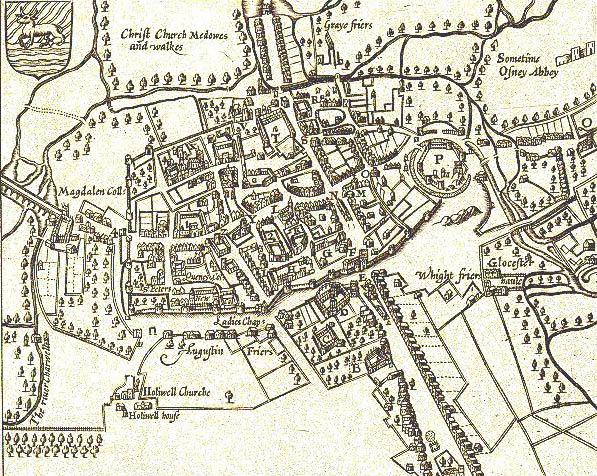
In 1478 the first book printed in Oxford heralded the eventual founding of Oxford University Press. Just two years earlier Vlad III, the Impaler, had been assassinated. In 1478 the Tribunal of the Holy Office of the Inquisition was established in Spain. Just over a century earlier, the Black Death decimated the population of Europe. Things looked a bit dark at that time. Nicolaus Copernicus, however, was five years old in 1478 and the Enlightenment was just around the corner. The printing press had been, well, hot off the press for just a couple of decades at the time. The University of Oxford had been around for nearly four centuries already, making it one of the oldest and most prestigious centers of learning in the world. Oxford University Press early on began the business of printing Bibles and shedding light on a world where things were somewhat dim. Progress often brings misery with it, but the idea that a literate public stood a better chance of improvement bore an optimism that has occasionally been realized, even in free market times. I’m very glad for Oxford University Press.

These are among my thoughts as I prepare for my first day as Associate Editor for Bibles and Biblical Studies at Oxford University Press. It is a heady sensation. Bibles were among OUP’s first printing projects. As part of an increasingly secular society in an increasingly religious world, I’m aware of the power the Bible has had and still has. Love it or hate it, it has shaped this thing we call modern culture in ways both profound and facile. The opportunity to work in this division is sobering. A little unnerving, even.

John_Speed's_map_of_Oxford,_1605.

Ironically, my career has largely been Anglo-oriented. Perhaps it is because those based in England appreciate the solidity of a degree from Edinburgh University, although this is only speculation. Nashotah House was a profoundly anglophile institution, at least once upon a time it was. The founder of Gorgias Press had studied in both Oxford and Cambridge. Routledge is a British-based publishing house. Ironically, British culture is not as prone to Bible-reading as that of the United States. My jobs, which have largely focused on the Bible, have been British-oriented. I try to add it all up but get lost in the midst of the numbers. Call it first day jitters. Twenty-five years ago at this time I was preparing to get married and to move to Scotland. Little did I suspect that a quarter-century later I would be coming back to an ancient university of the United Kingdom again.


Time in a Bottle

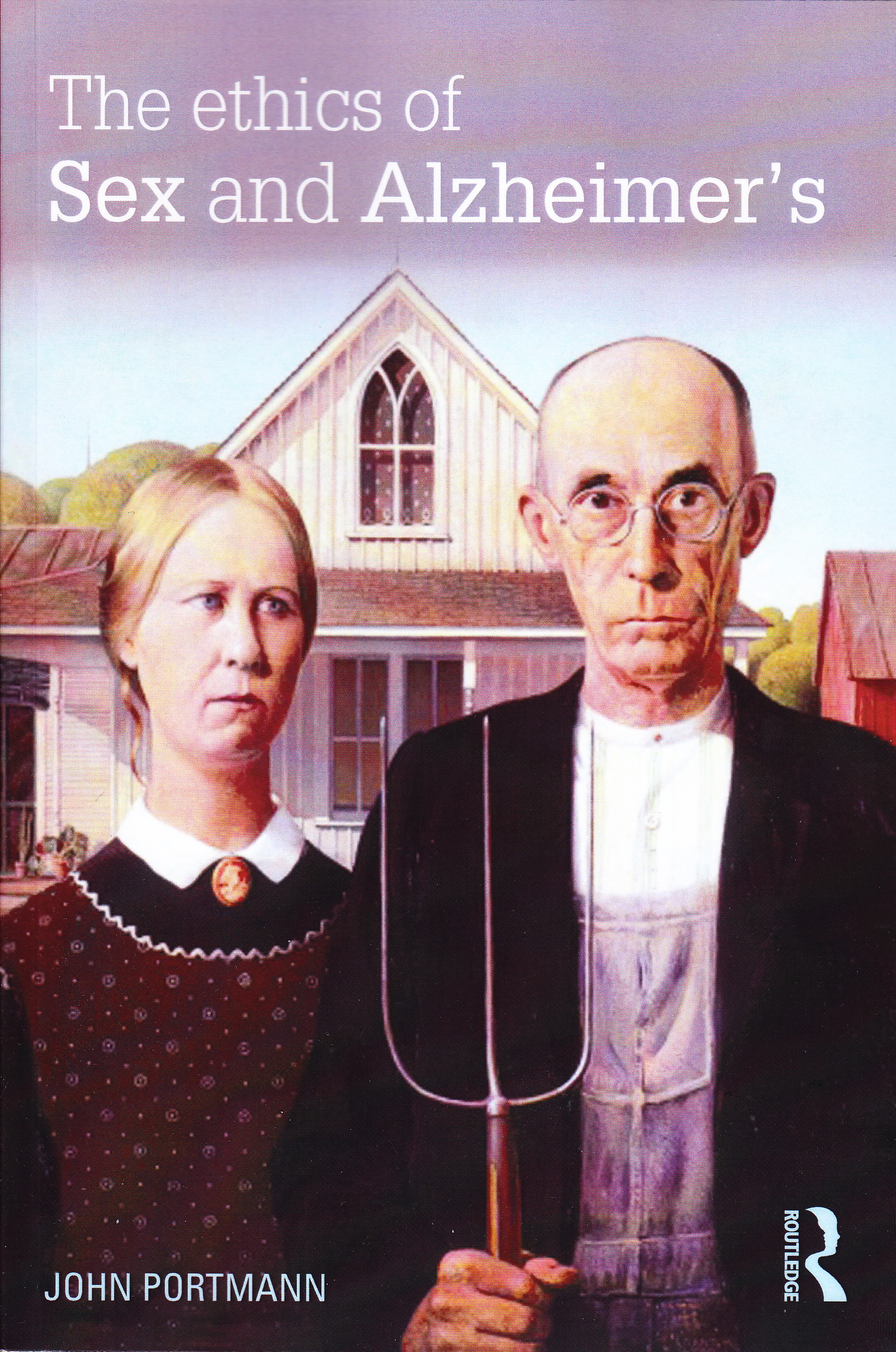
Portmann On of the intangible tangibles of my humble job is seeing a book move from an idea to a published product.  A little bit of joy rained down on my day yesterday as my first Routledge book appeared.  It also helped that this is an important book and no matter what the reader feels about the conclusions, it will be crucial in getting the question out in the open.  John Portmann’s The Ethics of Sex and Alzheimer’s places a face squarely on an issue that will only increase as time without a cure for Alzheimer’s grows.  As a culture, we don’t like to acknowledge aging.  We know it’s happening constantly, but we somehow think if we avoid it long enough, it might somehow, miraculously, disappear.  Portmann, an ethicist and religious studies scholar at the University of Virginia, puts the question boldly: what happens to marriage when one of the partners no longer recognizes the other?  This is a thorny issue.  And that’s an understatement.  We are conditioned to assume that wedding vows, with their origins in an era before people lived long enough for Alzheimer’s to become a plague, must still apply.  Portmann isn’t so sure.

I won’t spoil the book for you by giving away the conclusions of his carefully argued case, but I would like to consider for a moment the importance of ethics.  The religion in which I was reared knew little in the way of uncertainty about right and wrong.  Gray areas were scarce, and often diabolical.  I’ll never forget when I took my first ethics course as a religion major.  It was if someone had thrown open a door to a sunny Arctic day while I was seated in a warm, dark den.  It was blinding.  And disorienting.  I hadn’t thought of issues in that way before.  Simple answers wilted and died by the thousands.  Figuring things out, ethically, was costly and required an awful lot of mental energy.  No matter which answer I chose, there was a good case for an alternative choice to be made.  Morality is seldom black and white.  That’s why when Dr. Portmann pitched me his book, he had my attention from page one.

Ethics is the process of trying to figure out the best way to decide on the right course of action, given any alternative.  Little ethical issues crop up constantly: should I pretend I didn’t see that homeless person stealing an apple?  Should I tell that person who got the job that I wanted when he’s got a mustard splotch on his beard he can’t see?  Should I hold the elevator for that woman down the hall when I really want to get to work a few seconds early today?  Issues-issues everywhere!  Alzheimer’s forces the issues.  We know it is right and good to continue to care for the sufferer.  It’s no sin to forget who you are or when you are.  But what of the partner who’s not ill?  Immediately our moral sensibilities kick in.  And with a population rapidly aging (I know I’m doing my part in that department) the question will likely continue to press on our collective consciences.  Ethics reaches its fingers into those dark spaces we’d rather not put our hands.  There might be spiders in there, or bugs.  It might be something far worse.  Not everyone will agree with Portmann’s answers, but I think we can all agree that he has raised a very necessary, if prickly question.


Guide Me, O Thou Great

You are an apostate, or worse. Unless, that is, you belong to the relatively select religion known as Jehovah’s Witnesses. Having grown up in a town bereft of Witnesses, my first exposure came as the result of an American Religions course. Grove City, Pennsylvania was not an ideal locale to experience religious diversity, outside the Protestant Neapolitan flavor. When we had to visit a religious service outside that milieu, I joined some classmates for a trip to the local Kingdom Hall. There are few situations as uncomfortable as watching other people being religious. It is so intimate. When Watchtower study began, my classmates and I, good Christians all, were shocked to hear even a young child answer one of the questions put by the leader with “the Christian apostates!” She was quite enthusiastic. If you were not a Witness you were an apostate.

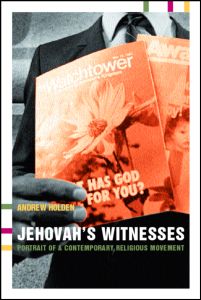
Since that time, Witnesses have been no strangers to my door, so I read Andrew Holden’s Jehovah’s Witnesses: Portrait of a Contemporary Religious Movement (Routledge, 2002) with interest. Holden is a sociologist who undertakes an analysis of the ascetic, millenarian group in a conflicted situation. Modern society proves quite difficult to reconcile with Witnesses’ authoritarian biblical literalism. The assertion, now quietly overlooked, that the world did not end on cue has proved an embarrassment more than once. Most recently Armageddon was scheduled for a 1975 time slot, but this stubborn, old world just keeps limping along. In many ways, it is a sad tale. Witnesses advocate clean living and fair dealing, but if you’re not part of the club you are a danger to those who are. Non-monastic, they nevertheless shut themselves off from much that the world has to offer.

Holden’s study is a model of fair-minded analysis. He is not out to humiliate or insult the Witnesses or their lifestyle. He remains true to the evidence (but not the doctrine) and offers a rare, objective look at a New Religious Movement. Distinguished as one of the few religions to have started in Pittsburgh (the city that also gave us the cinematic zombie), Witnesses are now a six-million strong, worldwide religion. While Holden gives only a cursory glimpse of their doctrine, he does offer a rare view into an exclusive faith struggling for the end of a pluralistic world. It is a study well worth reading. Especially for an apostate.


For the Love of Gold

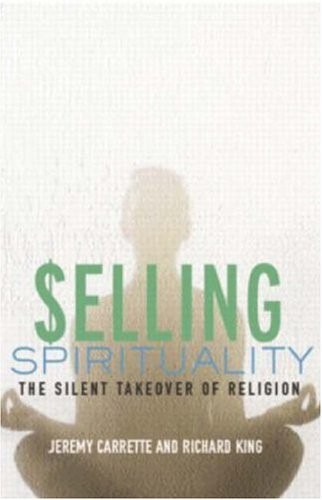
Do you ever get that feeling that you’ve been led along by a false premise that has gotten out of hand, like a practical joke that has gone too far? If I had to rate the books discussed on this blog in terms of urgency, Jeremy Carrette and Richard King’s Selling Spirituality: The Silent Takeover of Religion would top that list. I’ve felt for a long time that something’s been wrong, but I didn’t possess the training or resources to discern what it might be. I think Carrette and King may have named it. Just a few pages in and I knew there was profound insight here. Religion has been taken over by capitalism and the result is that alternatives to the godless, sanctified free market are rapidly disappearing. In a truly Orwellian sense, we have been taught the language of capitalism and have lost the ability to frame our ideas in any other way. Free markets take no prisoners—one must assimilate or die. Religions, which had traditionally served as correctives to selfishness and greed, have been co-opted into the forces of unbridled gain for the few. Amorphously marketed as “spirituality,” what sounds like religious conviction now lives in the service of consumerism.

By slowly shifting all our language and metaphors into those of Reaganomics (the very fact that you know what that means shows how far gone we already are) the capitalist machine, supported by the flaccid terms of spirituality, has established a new god—capital—and has pilloried any who dare question it. Think of the trashy phrase “prosperity gospel” for just one minute and you’ll see what I mean. Those of us who disagree with the orthodoxy that meaning can be found in money have become the resistance in a war we did not start. The twin hellions of privatization and corporatization have sunk their fangs deeply into the jugular of society and its old-fashioned value of caring for others. People are, like strangers in a strange land, just marks for the powerful. We’ll buy anything if it looks attractive enough.

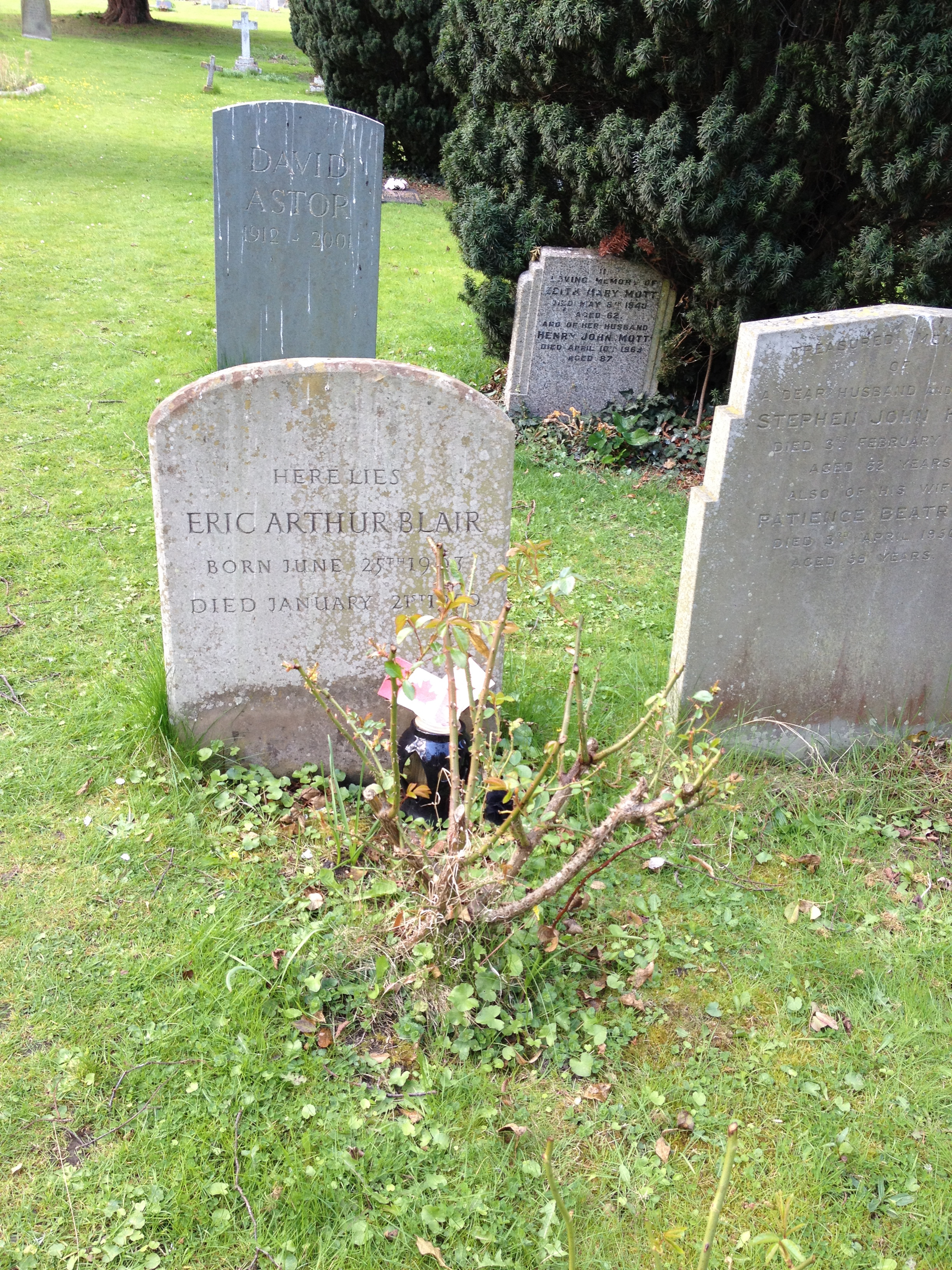
The problem with consumerism is that it is easy. We all love to play along because—who knows?—we might end up getting rich in the process. We have gained the world and lost our souls. Carrette and King show clearly how entrepreneurs have learned to market the language of religion while divesting it of its venom. Go along, it urges, everything is fine. Even the economic collapse brought on scarcely two decades after Reaganomics has failed to convince the average citizen that they are but a petroleum bi-product to grease the unrelenting gears of commerce. Anything, even salvation, can be sold. Back in April I stood beside the graves of Eric Arthur Blair (George Orwell) and Karl Marx. And maybe in an unguarded moment I shed a tear or two that critical thinking seems to have been buried along with those who were brave enough to state the obvious.


Sutton Courtenay

Sutton Courtenay lies sleepily outside the bustling business complex known as Milton Park. Over my work time at Routledge in the United Kingdom, I have been immersed in the frenetic world of academic publishing. Putting a book together and selling it may seem a simple prospect, but in reality it involves many people at multiple stages who specialize in everything from writing content to ensuring that the four-color print of the cover looks just right. Sometimes working in publishing one can get so close to the trees that the forest really does become invisible. So it was that a friend of mine took me to Sutton Courtenay over lunch one day. The hamlet was very quiet. Next to the clattering pub—the only real sign of life here in midday—stood the gateway to an abbey long decayed to dust. Iconic thatched roofs and brilliant grassy greens make this place seem very far indeed from the negotiations and dealing that take place just down the road in Milton Park.

In a silent cemetery dotted with yew trees just behind the twelfth-century Norman All Saints’ church, rest a couple of very influential people. Lord Asquith, sometime Prime Minister, holds the most prominent place. A few paces away in an unassuming grave are the remains of Eric Arthur Blair. Unless you knew his penname, you wouldn’t be aware that you were in the presence of George Orwell. Orwell never lived in Sutton Courtenay. When he died in 1950, requesting to be buried nearest where he died, there was no room in the interment grounds. Millions of people live in London and millions have died there. The image conjured in the mind is distinctly Orwellian. Sonia Brownell, his widow, with the help of David Astor, found a resting place in Sutton Courtenay.

Today one would be hard-pressed to find a school child in Britain or the United States who has not been assigned to read one or both of Orwell’s prescient novels. Orwell’s anti-fascist views were often eerily prophetic. In 1949 1984 seemed a long way off. As the latter year came and went, some heaved a sigh of relief that Big Brother never arrived. Those who labor away in busy office parks, those who attempt to board a commercial airliner, those who live in cardboard boxes on busy city streets, and those who pay taxes so that the wealthy won’t have to, however, know that Big Brother is indeed alive. He has grown crafty with age and is well adapted to camouflage. He is known by many names: Free Market, Laissea Faire, Unrestrained Capitalism. One place he is not to be found is in a quiet churchyard in Sutton Courtenay contemplating a simple stone to a man named Eric Arthur Blair.


Denying Truth, For Profit

Sometimes I’m questioned about why I bother with creationism. Everyone who’s intelligent knows it is religious ideology masquerading as science and people will eventually figure it out. But will there be time? An editorial in yesterday’s New Jersey Star-Ledger pulls the curtain back on creationism’s incestuous cousin, climate-change denial. As the editorial notes, key documents of the Heartland Institute—one of the major propagators of climate change as “just a theory”—have been leaked and show that they have learned their lesson from creationist tactics. They want “debate the question” instilled in science classes in lieu of facts. And much of their money comes from big oil. It is the hope of such institutes that an American public already woefully pathetic at understanding science will be led to believe “just a theory” equals “likely not true.” The data are stacked completely against them and the entire rest of the developed world knows that.

While the issue may seem less religious than creationism—which is based on getting Genesis 1 in the classroom as science, no matter what you call it—it has deep roots in that same insidious cocktail of politics, religion, and dirty money. Biblical literalists tend to believe the world is about to end. The belief has been around for at least two millennia. It is a damning and damaging belief that declares the world was made for raping because it is about to end. This deranged thinking is fueled, literally, by unrestrained economic interests. Sometimes the groups can’t see beyond the Bible to realize that they too are being screwed. Science is objective, and it is science that has been challenged by various religious and political groups since the 1920s. Today, when there is far too much information for anyone to stay on top of it all, and in an American society deeply distrustful of higher education, I smell an explosive amount of methane in the air.

Climate change is real. The “theory” is so well supported by evidence as to be fact. Is anyone really surprised that supporters of the Heartland Institute have also backed Newt Gingrich’s campaign? We have placed ourselves in a very dangerous position as the last remaining “superpower.” I tried to read a book on environmental issues that Routledge published, but was so scared after the first three pages that I had to put it down. What is the lesson here, class? Is it not that money is the root of evil? And that, my dear literalists, is biblical.

The future of human economic evolution


Wired for God

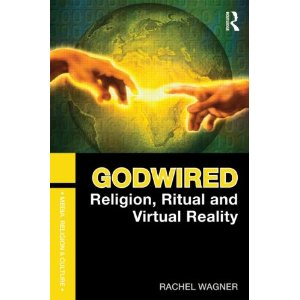
I am not now, nor have I ever been, a techie. When my fascination with the newest technological marvel borders on the rhapsodic, I suddenly realize it’s all electrons and immediately the fascination dissipates. It feels like an illusion. I am a guy who likes the sensation of a paper book in his hands and prefers conversation accompanied by all the subtle biological clues of being in the same room with somebody. Maybe it is lack of imagination on my part, but I will often get bored on the Internet and pick up a book instead. One book I recently picked up, and one that challenged my perception of reality, was Rachel Wagner’s Godwired: Religion, Ritual and Virtual Reality (Routledge, 2011). Wagner is one of that generation of younger scholars who is asking what the implications of electronic culture are for religion. If concepts such as online prayer walls, chat-bot salvation, and storing sacred texts on the same device as secular ones intrigue you, do yourself a favor and read this book.

As Wagner ably points out, religious individuals are tapping into the vast communications’ potential of the Internet to spread their faith abroad. There are apps to help you pray online, there are electronic games to prepare you for the fictitious rapture, and there are virtual churches. We have indeed sealed God in an Xbox, and we have beamed the divine across wireless networks and learned to confess our sins in cyberspace. And physicists are starting to confirm that, at our most basic level, we are energy rather than matter after all. Maybe we are tapping into ultimate reality here. Wagner explores how the level of engagement with virtual worlds constructed by software engineers (the new gods) becomes so intense as to provide an alternate reality. It all depends on how you define what is real. And it is clear that for many people, life without the Internet is now unimaginable. Those of us born before the supercomputer scratch our physical heads with amazement. How did Nebuchadrezzar or Alexander ever conquer the known world without GPS technology? Does my iPhone have a secret life about which I know nothing?

Within our culture live many older people who have never touched a computer. They exist alongside grandchildren practically born with some iDevice in their grasp (may be a choking hazard for children under three). I have lived long enough already to have witnessed keyboarding being replaced by thumbing, and research having shifted from long treks to the library in the snow to a few taps on a glass screen that can feel the electricity from my chilly fingers. From the comfort of my lonely room sings my soul, how great thou art! Perhaps Terminator didn’t go far enough, perhaps Skynet really is god. Maybe this matrix of blood, muscle, bone, fat, and spit is really just an illusion and the Internet is true revelation. Wagner pries open some very important questions in her book. And none of us should be surprised if, when we approach the pearly gates, we find a touchpad next to the electronic lock inscribed with this legend: “Welcome to Heaven. Please enter username and password. Type in the letters you see in the box below.”


Seedless

“And Onan knew that the seed should not be his; and it came to pass, when he went in unto his brother’s wife, that he spilled it on the ground, lest that he should give seed to his brother” (Genesis 38.9). During the conference last week the Routledge booth stood across from that of an evangelical publisher. One of the realities of conference life from the point-of-view of an exhibitor is over-exposure to what is fresh, clever, or cute upon first blush. Harper One’s continuous loop video, however, demonstrated that N. T. Wright, Desmond Tutu, and Bart Ehrman can sound repetitive, and even Colbert loses his punch when you hear the jokes for the twelfth time. The evangelical publisher across the way, however, had a large cartoon drawing that mapped out the believer’s life, book-by-book through the Bible. As probably anticipated, I can’t get that silly cartoon out of my head. After four days of exposure, I finally succumbed to asking for a flier. It was the usual evangelical fare, and the warning against adultery on back used the traditional term “seed” for “semen.” I found myself pondering the implications.

Since the King James Version shares the pre-scientific worldview of the ancients, the term “seed” has been preserved in the literalist mind. Even Alice Cooper uses it in his lyrics (his father was, after all, a preacher). Well, since the Bible is Holy Writ, it seems that semen has been transubstantiated into seed. The seed, as biologists tell us, contains all the genetic material to grow a new plant. Just add water, warmth, and a little light. Presto! Life sprouts. Since evangelicals tend to be fluent in biblicalese, even today men—the default, fully equipped model of humanity—come complete with abundant seeds. Agway should be so lucky. It feels, however, as if half of the equation is missing. If the Bible-writers had raised chickens, perhaps men would be full of eggs.

Thinking life cannot exist without metaphors. Metaphors are very dangerous in the hands of religion where they get taken literally. Too easily imagery slips into facticity. The male seed demonstrates a diabolical gospel truth: men alone provide the next generation. Women, as usual, are largely superfluous. The biblical male dominates the biblical female. The man owns the wife and must be enticed to share his precious seed. If conception fails, it is inevitably her fault. The metaphor has become a thumb-sized rod. Let us speak plainly here. The Bible has betrayed womankind. Judas Immaculate. In ancient times this was accepted fact. The microscope and biology should have buried this seedy metaphor centuries ago. But once again, the unthinking promulgation of a biblical trope survives at the expense of women. I have no seeds. No man since Adam has.

An obscene photograph?


I Left my Bible in San Francisco

Gideon prays for a Bible

I’m staying at the Hilton, Union Square in San Francisco. Surrounding me are over 10,000 (is that a proper myriad?) religion and Bible scholars gathered for the American Academy of Religion and Society of Biblical Literature annual meeting. I travel light. Having left my Bible behind I went to look up something in the Gideon general issue. It is not here. The world’s largest academic conference focusing on the Bible, four hundred years after the King James Version hit the shelves, and I am Bible-less in my hotel room. Of course, once I get to work I will be surrounded by Bibles, some of them walking, talking resources who have the whole book memorized. Yes, the Society is that kind of place. The Gideon hotel Bible is an American institution. It feels like a constitutional right. When my daughter was very young and we stayed in a hotel, she found the Gideon Bible and asked what it was. We explained that the Gideons leave a Bible in hotel rooms all across the country. “That’s just weird,” she said with all the conviction of a pre-teen.

There are current movements to remove Gideon Bibles from hotels. They do, after all, represent a privileged position to Christianity in a nation founded on religious freedom. No one is forcing you to read that Bible, but it is there, like a tell-tale heart, in your bedside table drawer. Thumping incessantly. To read or not to read? What’s on the TV?

My favorite discussions at conferences like this are with scholars who find the privileging of one religion distressing. Our culture is so grown up in so many ways; we are more enlightened about sexuality and gender and race, and yet, and yet… We still like to have that Gideon Bible nearby. We like our political candidates Christian. Preferably Protestant, although a Catholic will do if he (inevitably he) is on the right side of the right issues. We are vaguely and implicitly afraid of those who don’t share our convictions.

In a moment of levity near closing time yesterday, a customer stopped by to say Routledge should have more gimmicks. Many publishers have giveaways, and some have little games that bearded, bespectacled professors sometimes even play. The customer suggest darts, or even a little shooting range. I said, “Guns and theology are sure to lead to trouble.” Although he laughed, I was serious. Few things in this world can be justified as easily as religiously motivated slayings, at least in the minds of the perpetrators. And to borrow a phrase from a budding genius, “That’s just weird.”


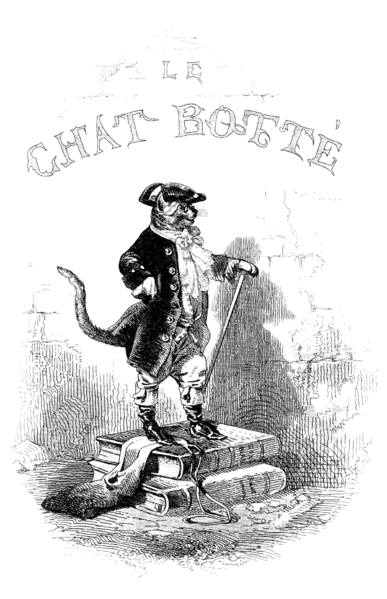
Master Cat

Okay, so I’ll confess having gone to see Puss in Boots yesterday. The movie had been getting good reviews and I’ll admit to really liking the first Shrek movie. The second Shrek movie, with Puss’s debut, was not bad. After that something changed. Anyway, it looks to be an intense week ahead, and I needed a little mindless release. Often on this blog, I mention horror movies and how fear ties into the concept of religion. Since working at Routledge—a publisher noted for its many books on religion and film—I’ve taken a renewed interest in finding the religious imagery in many different genres of movies. This is something I regularly undertook as a religion major in college and beyond, but it is an area of renewed interest in my mature years. So it was off to the theater.

One aspect of Puss in Boots, however, proved a distraction to me. The character of Humpty Dumpty scrambled in my mind with the same off-color image of the egg man in Jasper Fforde’s The Big Over Easy, a book I read this summer and blogged about earlier. In both stories, the egg was not what he seemed to be. A foodstuff with a decidedly darker side. In both stories, however, Humpty Dumpty was somehow vindicated, more a victim than a perpetrator of crime. It is not always easy to be a good egg. In Puss in Boots, however, this is where the religious imagery came in. The fractured fairytale storyline has Puss and Humpty (and Kitty Softpaws) growing a giant beanstalk and stealing the golden goose’s gosling. This is part of a twisted effort at revenge by Humpty; a kind of egg’s Benedict Arnold moment. Well, this is a children’s movie, so nobody is really bad. Humpty repents and sacrifices his own life to save the town. When he falls to his death, a golden egg is revealed inside. Mother Goose flies the golden Humpty up to the castle in the sky, disappearing in a blaze of heavenly sunlight. Life after death, the eternal reward. Heaven, Hollywood style.

Movies often serve as a source for and reflection of social values. Thus watchdog groups keep a close eye on what the silver screen reveals. Puss in Boots passes the test on highlighting the redemption theme. Although he is still a wanted criminal by the end, Puss (as well as Humpty) achieves redemption by making good on all the wrongs he committed against society. Almost sermonizing at points, the movie is another example of how mainstream media ends up on the side of traditional values. A deeper truth, however, may lurk beneath the celluloid. The true hero here is the Spanish Puss rather than the Angelo Humpty (and decidedly red-necked Jack and Jill). The religion it underwrites is, naturally, the civil religion expected by American audiences. Just maybe there is an awareness of social justice here as well.

The original