Virtues of Fiction

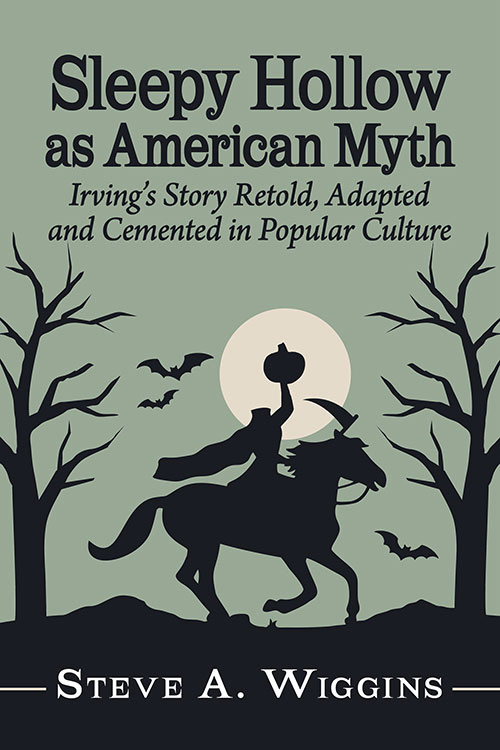
So, my first royalty statement for Sleepy Hollow as American Myth arrived.  It is my poorest selling book ever, not even notching up to Nightmares with the Bible, and that one was twice as expensive.  A couple things: I know that nonfiction books had a hard year last year.  Also, “academic” books tend to do better in the subsequent years after their initial release, for those of us with no name recognition.  In any case I’ve decided to try focusing on fiction.  The compulsion to write is deep-seated in me.  My nonfiction books are creative explorations of ideas neglected or never before brought together.  They’re also priced too high for the trade market.  I was pleased to see, recently, that The Wicker Man is now in over 400 libraries, according to WorldCat.  That makes it my second best-selling book, after Weathering the PsalmsA Reassessment of Asherah has been viewed over 9000 times on Academia.edu.

So, fiction.  I write my fiction under a pseudonym.  I currently have one novel out for consideration and another very close to being ready.  I have several in the wings.  What strikes me as crazy about all of this is that I’m told (as I have been since high school) that my writing is quite good.  I’m not the one to assess this claim, since I’m far too close to it.  It does make me wonder, however, what it takes to earn a little cash at it.  My last royalty check for a new book was half of what they usually are.  Good thing inflation is under control and the economy booming.  So I hear.  I do believe that the most impactful books tend to be fiction.  People like a good story.  And they can last for many decades.  The nonfiction that stands the test of time is a very narrow shelf indeed.  At least compared to our fictional siblings.

For fiction you need to keep at it to improve.  I think of all the years I’ve poured into my last four nonfiction books.  The only real critique I’ve seen of Holy Horror was that it was “too well written.”  When’s the last time someone said such things about fiction?  Oh, I’ve got three nonfiction books underway as well.  One of them I’m quite excited about.  But then I take a look at this royalty slip sitting in front of me and wonder if I’ll ever learn.  I have to write.  I’ve done that since fifth grade as a means of coping.  Here I am at over half a century at it.  There’s no danger of giving it up now. But the form it may take, well, that’s up for grabs.

Writers Reading

A lot of misconceptions about books abound out there.  One of those misconceptions that has become clear to me is that authors write books to teach.  (Or to make money.  Ha!)  That may well be part of the motivation, but for me, the larger part has been writing books to learn.  You see, the frontiers of human knowledge cannot be reached without stretching.  Writing a book is a way of learning.  Long gone are the days when a person could read every known published work.  Indeed, there aren’t enough hours on the clock for anyone even to read all published books on the Bible, let alone the far bigger topics these days.  And so writing a book that deals with a biblical topic—let’s say demons—is the ultimate learning exercise.  It’s a very humbling one.

I recently read an article where book pirates (yes, there is such a thing!  I should explain: there are those who believe authors are ripping off society by getting royalties for their books.  These pirates, like those of galleys of yore, take ebooks and make them available for free on the internet.) call authors “elitists” for wanting to earn something from their labors.  These folks, I’d humbly suggest, have never written a book.  Most books (and I’m mainly familiar with non-fiction publishing here, but the same applies to the other kind) take years to write.  Authors read incessantly, and if they have day jobs (which many do) it is their “free time” that goes into reading and writing.  They do it for many reasons, but in my case, I do it to learn.

The doctoral dissertation is accomplished by reading as much as possible beforehand and writing up the results quick, before someone else takes your thesis.  It is the practice I also used for my second book as well, Weathering the Psalms.  The third book, Holy Horror, was a little bit different.  Yes, I read beforehand, but much of the research went on after the body of the book had largely taken form.  I had to test my assumptions, which are on ground most academics, needing and fearing tenure, tremble to tread.  I read books academic and popular, and having been classically trained, often went back and read the books that led to the first books I read.  It is a never-ending journey.  I could easily spend a lifetime writing because I’d be learning.  But like other misconceptions, those who write books don’t lead lives of luxury.  They work for a living, but they live for the chance to learn.  And that’s worth more than royalties.  Besides, the nine-to-five demands constant attention.