State and Church

An interesting article by Grace Davie notes how Patriarch Kirill,  the Patriarch of Moscow and all Rus´, has been backing Vladimir Putin in his war of human atrocities against Ukraine.  Why? Both men fear “godless” influence from the west.  Think of it as a “Russia first” policy.  Both believe Russian Orthodoxy preserves the “one true faith,” and so an ecclesiastical leader yet again believes he (aren’t they always he’s?) understands politics even as women and children are killed in the bringing of God’s kingdom on earth.  The distorted theology of imperialistic Christianity has caused untold suffering in the world.  God backed by nukes is an apocalyptic situation, but then the Orthodox don’t really take too much stock in the book of Revelation.
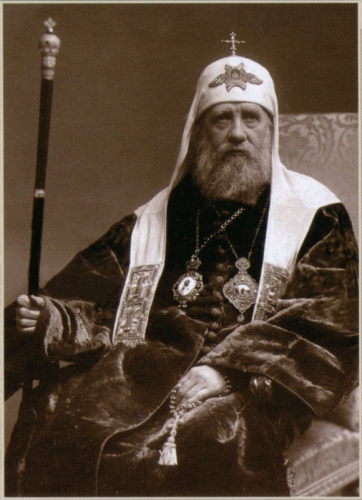
Photo credit: Michael Goltz, via Wikimedia Commons

In the midst of all of this, as well as our own versions of it in America, I wonder where the teachings of a prophet who advocated care for the stranger went.  Too bad he never stated directly, “Love thine enemies.”  That sounds radically leftist, doesn’t it?  No, those who think like this ignore the constant refrain of love in the New Testament to focus on a verse or two that say a man shouldn’t lie with a man.  Where’s Socrates when we need him?  Or even Tchaikovsky?  Religion becomes doubly dangerous when it has political backing.  “Love thy neighbor” becomes “kill thy enemy.”  And you must say your country is the greatest in the world and all others are inferior.  Sounds like something a carpenter from Nazareth would’ve agreed on.

Too much gold in the eye, it seems, can lead to spiritual blindness.  Established churches grow quite comfortable when governments hold them close.  The problem is an ancient one.  Even in the biblical world temple and palace mutually supported one another.  The idea of a country where no church ruled the state was a new one a few centuries back.  If different churches ruled neighboring nations the result was, of course, war.  Davie makes the point in her article that the Ukrainian Orthodox wanted some autonomy, which is the Orthodox way generally.  But the coffers in Russia swell more when you get cuts from all the others.  Churches and other businesses worldwide seem to know that by instinct.  But to back a ruler who has civilians, women, and children murdered to keep the godless out?  If that’s godly behavior then we’d better all get down on our knees.  


Under Who?

Who is God anyway? The question occurred to me as I read about the current Superior Court decision in New Jersey that “under God” in the Pledge of Allegiance remains constitutional. The American Humanist Association had sued to have the offending prepositional phrase removed, based on first amendment rights to religious freedom. I’ve always found the whole indoctrination of swearing to a flag somewhat provincial and perhaps even damaging to the unity of humankind. Nations, after all, are about keeping things for ourselves, something that the God of the Bible seems to find naughty. During the Cold War, waged against the “godless Communists,” the questionable phrase was added in 1954, only after we’d secured nuclear weapons. Does any nation that has the bomb have the right to declare divine sanction? I guess so, on second thought.

IMG_0962In his decision Judge David Bauman said that God, in this context, is not about religion, but about the state’s history. Granted, one of the New Jersey delegates to sign the constitution was a clergyman, and president of Princeton College. The same Princeton that became the home of the man who would open physics enough to let us begin a nuclear reaction. But I’m getting ahead of my story. This concept of God being an arcane aspect of history as opposed to a present and active force motivating people’s lives is a curious one. In order to keep the deity, he (and the historical God is male) must be demoted to an historical relic. If that is true of divinity, what does it say about the concept of nationhood itself? Have we come to admit that it is all a fiction to keep status quo ante?

Humanist and atheist groups have argued for years that public school (which no government takes that seriously) should not be a forum for religious indoctrination. Some religious groups (such as Creationists) clearly see such schools as a mission field ripe for proselytizing young minds. Such was clearly the case in 1954. Today we see the Russian Orthodox Church becoming a supporter of the government in Russia, where godlessness might be more a factor on the ground than on paper. In the United States we have a culture that provides lip-service to the almighty while the true god is secreted away in the shrines of bank vaults and expense accounts. It is really about a way of life, after all. Should we keep or remove “under God” from a pledge to personal gain? It is all a matter of how you define “God.”