
 Copyright is a strange thing. Without it there would be no making a living as a writer or artist or even music composer (or so I’m told). The idea is straightforward enough—someone comes up with a “marketable” idea (how marketable varies widely), and therefore owns the exclusive rights to the expressed form of that idea. If, for instance, the idea becomes a published book the publisher (generally) owns the rights and pays the writer royalties for the use/ownership of those rights. Copyright, however, like fresh food, expires. Written work or music or art becomes part of the public domain and can be reproduced by any with the gumption to do so. There are publishers, such as Gorgias Press, that got their earlier starts by doing just that—finding public domain material, scanning it, and republishing it for a price. All above board.
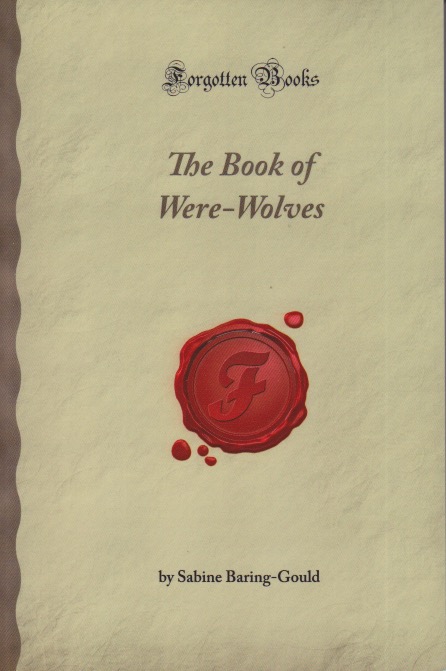
Back before I worked long in publishing I was going through a werewolf phase. No, I am not a lycanthrope, but I was reading about werewolves. I knew one of the main sources of folklore was Sabine Baring-Gould’s The Book of Were-Wolves. Being strapped for cash (some things never change), I bought a copy published by Forgotten Books. They’re rather prevalent on Amazon. Although the content is free online, some of us prefer to have a book in our hands and leave the devices aside. I soon discovered why my Forgotten Books version was so inexpensive. It is simply a printout of the scanned book, apparently with optical letter recognition software utilized. No serious formatting or proofreading required, a book is produced, covered, and sold. It is a disorienting experience reading such a book.
Readers look for landmarks just as surely as a hiker or traveler of any sort. Old books have layout and typesetting to help the reader navigate. My copy has “Error! Bookmark Not Defined” instead of notes. First editions of Baring-Gould, it turns out, sell for upwards of $6000. So I continued reading. A lack of italics and the occasional optically misread word make me wonder just how much of Baring-Gould I’m really ingesting. Any book that begins with a disclaimer regarding possible errors should’ve been assigned a copyeditor. SBG likes to use lots of foreign words. They may be spelled correctly or not. I have no notes to check. Caveat emptor, n’est-ce pas? The technology that allows scanned, unread by human eyes products to be sold as books makes me wonder. No, I haven’t forgotten books.
 Steve A. Wiggins