Christmas Music

While reading about holidays recently, I came across the idea of Christmas as a cultural holiday as well as a religious holiday. Now that it’s here, it feels like a little of both. My wife grew up in a musical family and Christmas music was a large part of her experience of the holiday. Although I grew up in a family where the religious aspect of the holiday was as preeminent as it could be with young boys, I don’t recall music being much a part of it. Perhaps we had enough of Christmas carols in church and on every shopping excursion. I don’t recall having a record player beyond maybe a close-and-play for our few 45’s. Now a large part of our holiday experience is the music. We listen to contemporary secular and classical religious and, to borrow an expression from popular parlance, it’s all good. Music spans the sacred and secular and suggests that we might all get along if only we were willing to try.
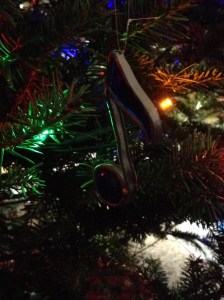
IMG_2649

Scanning our shelves we have a wide variety of Christmas music. It begins with Medieval carols and spans to a Very Metal Christmas and the most recent Pentatonix album. Even Amy Grant has a place in there from my college days. Like a kid I awake early on Christmas, from the long habit of getting up around 3:30. The house is quiet and, rare for New Jersey even the street outside is silent. In the hush I can still hear a kind of music. The music of peace, of a dream, of an ardent hope, of Christmas.

Christmas is all about sharing. We know Jesus of Nazareth was unlikely born this time of year, but we take it as a symbol. The peace of a silent night is best enjoyed in mixed company. With the political rancor of exclusion burning in our ears other days of the year, maybe we could think about sharing today. Sharing our land. Sharing our sense of hope. Sharing our music. The world could be such a wonderful place if we would only listen for Christmas.
Secular Sacred

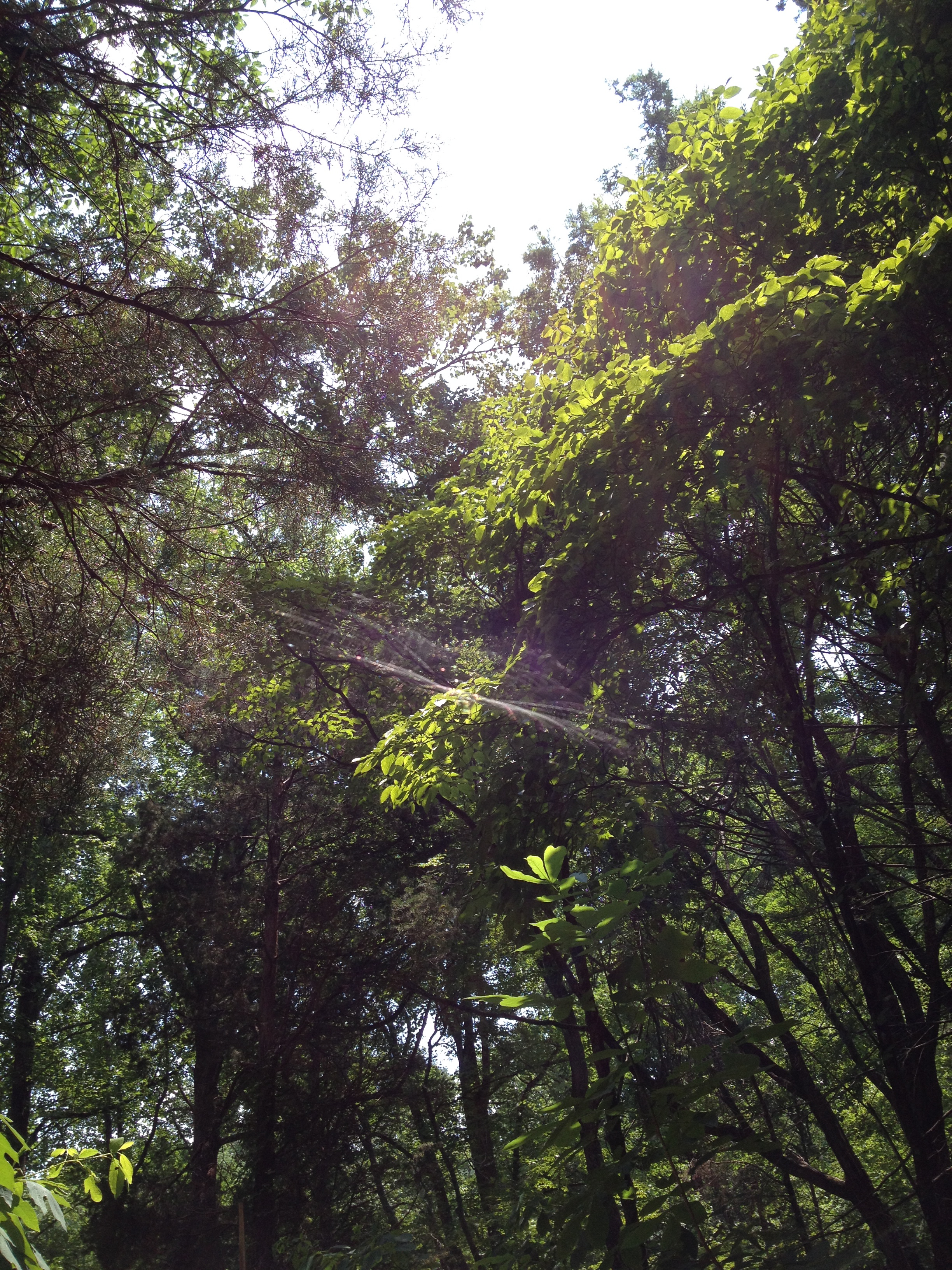
IMG_1472On a family walk in the woods, along came a spider. Actually, the spider had already been there quite a while, given the amount of work that its web represented. Few sing the virtues of spider brains, but there is a captivating symmetry here, an aesthetic that nature endows on the work of one of its most feared yet skillful creatures. As I ponder this web, I can’t help but to consider the word sacred. Oh, I don’t suppose the spider is worshipping an eight-legged, arachnid deity, but there is something more than simply utilitarian about its creation. And I wonder why the sacred is so often shuffled off to the realm only of the religious. Increasingly scientists and philosophers are using the word sacred for a trope when superlatives fail. They don’t mean a guy with a beard on a throne in the sky, but rather those things that give us pause in a busy life to stop and think that something more is going on than just the electro-chemical storm in our heads.

At the risk of offending some, the sacred need not be tied to the gods at all. It is, rather, a sense of reverence toward the amazing world in which we find ourselves. Yes, this web can be measured with precision. Its arachnid host captured and studied. We can count the number of insects it catches as a measure of its efficiency. All this and we still won’t have encapsulated the web in its entirety. The sacred is like that. I don’t know why it is that I find some places special. Why it is I linger outside where my childhood homes once stood, or on the hill where stood the hospital in which I entered the world. Although I’m not divine, these places are sacred. So I pull the car to the side of the road and stare at that lot where our house once stood. It was a web. Fragile and necessary. And it was on the edge of the woods.

A walk in the woods is a form of rebirth. Some of my earliest memories are wandering among the trees. I was, like many children, terrified of spiders. No doubt there were thousands of them here. And yet I cannot keep away. Perhaps it is because nearly every day of the week I trundle to Manhattan and there is nothing around me that doesn’t bear the scars of artificiality. I don’t recall the last time I saw a spider in New York City, apart from a man in a blue-and-red costume pretending to be one. I’m sure they’re here. I’m sure they spin their webs and there are those who marvel at how complex and beautiful they are. The unexpected spider will always frighten me, I suppose. That doesn’t mean, however, when I come upon a web, that I haven’t met the secular sacred once more. Especially if it’s on a stroll in the woods.


Blessing Nature

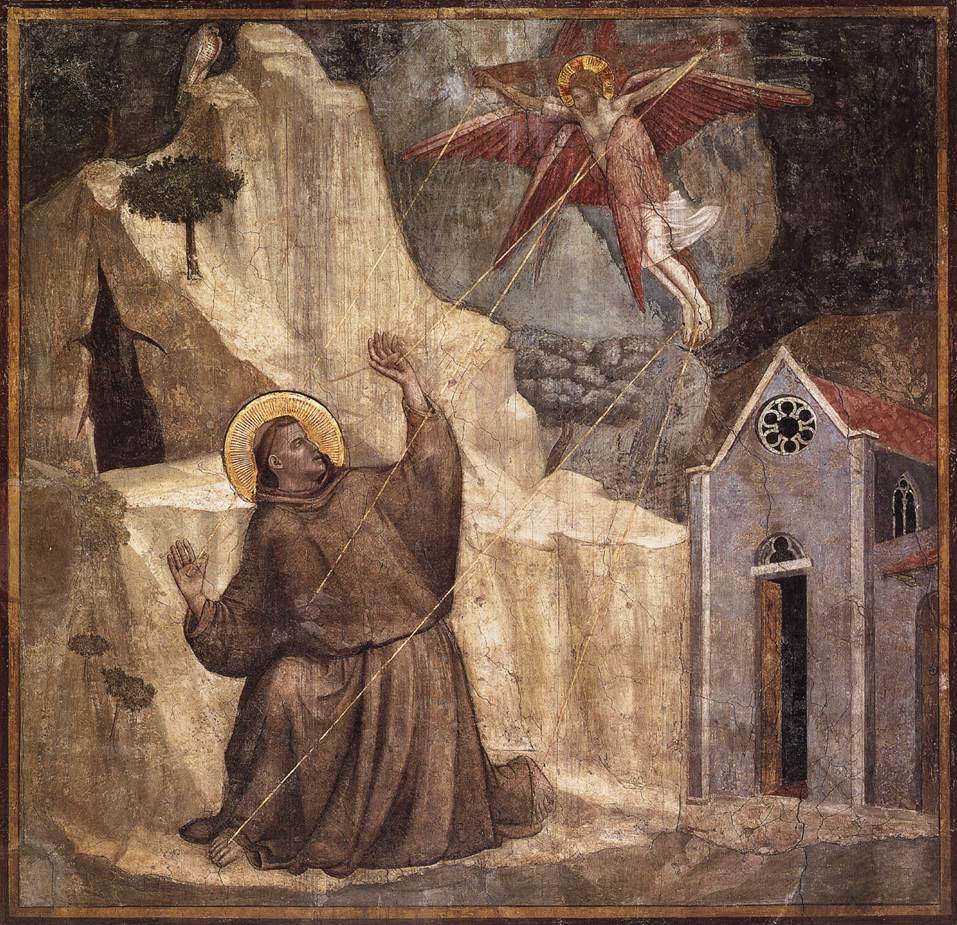
Today is the traditional Feast of St. Francis of Assisi. Yesterday the local Episcopal Church celebrated this feast with the somewhat Anglophile practice of the blessing of the animals. This is not generally an event to which my family pays particular attention – although we are animal lovers the only pets we have are hermit crabs and the spiders and bugs that naturally make their home along with us. Yesterday also happened to be a beautiful day for the local street fair and my brother and his family joined mine for the event. His family includes a dog and we noticed a sign advertising the local blessing of the animals. As my brother noted that his dog might better do with an exorcism, we decided to pick up a free blessing while the offer was good.

Normally animal services are held outdoors. This in itself is a commentary on the true equality of species. Many people feel it sacrilegious to bring animals into churches. Biologically speaking, however, that would exclude us all. Perhaps for allergies or the price of carpet cleaning it may be more expedient to bless the critters outside. After all, animals do fend for themselves out-of-doors, right? As we sat in an informal circle, the priest emerged from his office with his own dog at his side. A makeshift card-table altar had a simple wooden cross atop it to sanctify the area. As soon as they reached the center of our circle, the priest’s dog squatted to defecate on the lawn. It was a lighthearted moment, but it also spawned some reflection.

When it comes to religious settings and ceremonies, many normal behaviors and actions are considered inappropriate. This invisible divide reflects the time-honored division between the sacred and the profane. There is no tangible way to distinguish between the two; sacredness is a matter of cultural taste. Absolutes for sacred and profane simply do not exist. A priest’s dog following the dictates of nature is about as sacred an example of life as experienced by all creatures on this earth as any other. Expelling of waste is one of the characteristics of life as we know it. While some may find dog droppings offensive in sacred settings, I have a feeling St. Francis would simply have laughed.

Your dog did what?