All Is Bright

As a Christmas present to myself I finished my third book yesterday. I’ll be posting details once the title is finalized. And “third” is only an approximation. I wrote another non-fiction book before this one which I decided not to send to publishers. That “fourth” book joins the six completed but unpublished novels resting on my hard-drive. Writing, for some of us, is a way of life. Not a way to make a living, mind you, but a way of life nevertheless. Literacy is a gift too often taken for granted. It’s easy to forget that the rapid scientific and technological progress that we’ve made has only come about since the invention of the now nearly defunct printing press with moveable type.

Among the first books printed was the Gutenberg Bible. This was a book of progress, as difficult to believe as that may be. You see, the Bible wasn’t always a means to enslave. It was once a tool of liberation. As I try to steer my thoughts from politicization this holy day, I can nevertheless not neglect to reflect on how Holy Writ has been weaponized. We’re warned to keep Christ in Christmas although we know the story isn’t history. Scripture becomes a blunt object of superiority and supersessionism. We sometimes forget that sacred time is a gift, no matter what anyone believes. Literature has built this world for us—some sacred, some secular. Our proper response ought to be celebration.

I now awake on Christmas morning—from long habit—at a time I would’ve thought a boon as a child. In the pre-dawn stillness of 4:00 a.m., sleeping in for me, I think about the great gift of quiet time. This is my writing time. Book three is done, and books four and five are already in the works. For those of us who write as readily as we respirate, this morning stillness is a gift. Time to compose, arrange thoughts that will only be scattered in the coming busyness of the day. The means are quite different than those employed by Johannes Gutenberg, and the results will be read by far fewer people. None of that really matters, however. Today is a holy day because it involves writing. Angels, shepherds, and wise men may come later with the stories we tell of how this day began, but remember they are stories. And no gift should be taken for granted. Not even the unbroken silence of 4:00 a.m.
Biblical Stories

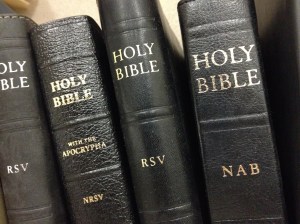
The Bible had quite a week last week. It went from being vetoed as the “state book” of Tennessee to making it onto the list of the ten most challenged and banned books of the year for the first time. Did you ever get that feeling that you should’ve thought a bit more closely about career options? I mean, the Bible’s not half bad. Yes, it has some naughty bits, a few instances of cursing, and adult situations. There are homicides, suicides, and genocides. It endorses slavery and advocates religious intolerance. It’s not all bad news, however.

IMG_2634

We find it easy to make summary judgments based on our own tendency to elevate human products to divine status. That which is most holy, after all, becomes the most profane when it’s defiled. The Bible itself can be like any other book. Printed on paper, bound between two covers, it contains ideas that must be interpreted. There’s no such thing as “just reading.” Even that road sign that says “slow children” is open to hermeneutics. What is objectionable is the use to which the Bible is put. And that use is objectionable due to the claims made about it. Saying that God rolled up his immaterial sleeve and took a transcendent pen into his incorporeal hand and began to scrawl is a bit naive. We know that people wrote the Bible—and much of it is sublime—and other people compiled it into a book that eventually acquired sacred status. It wasn’t born holy, it had to grow into it.

Once the Bible became objectified it turned into what people eventually use all objects for: a weapon. We can take sticks and stones and break your bones (no, that’s not in the Bible), and we can take paper and ink and hang you as a witch. Or pillory you as a liberal. Or say that it forbids the love you feel in your God-given heart. Something strange has happened here. The Bible’s not a bad book. It’s a bit on the long and repetitious side, but it has many, many memorable sayings and noble sentiments. Entire civilizations have been based on it. Or readings of it. They’ll ask you to put your hand on it and swear in court, and then they’ll ban it so your kids can’t read it. It’s been a tough week for the Good Book. Somehow, however, I don’t think we’ve heard the last of it because people love a conflicted story.


Call it Civilization

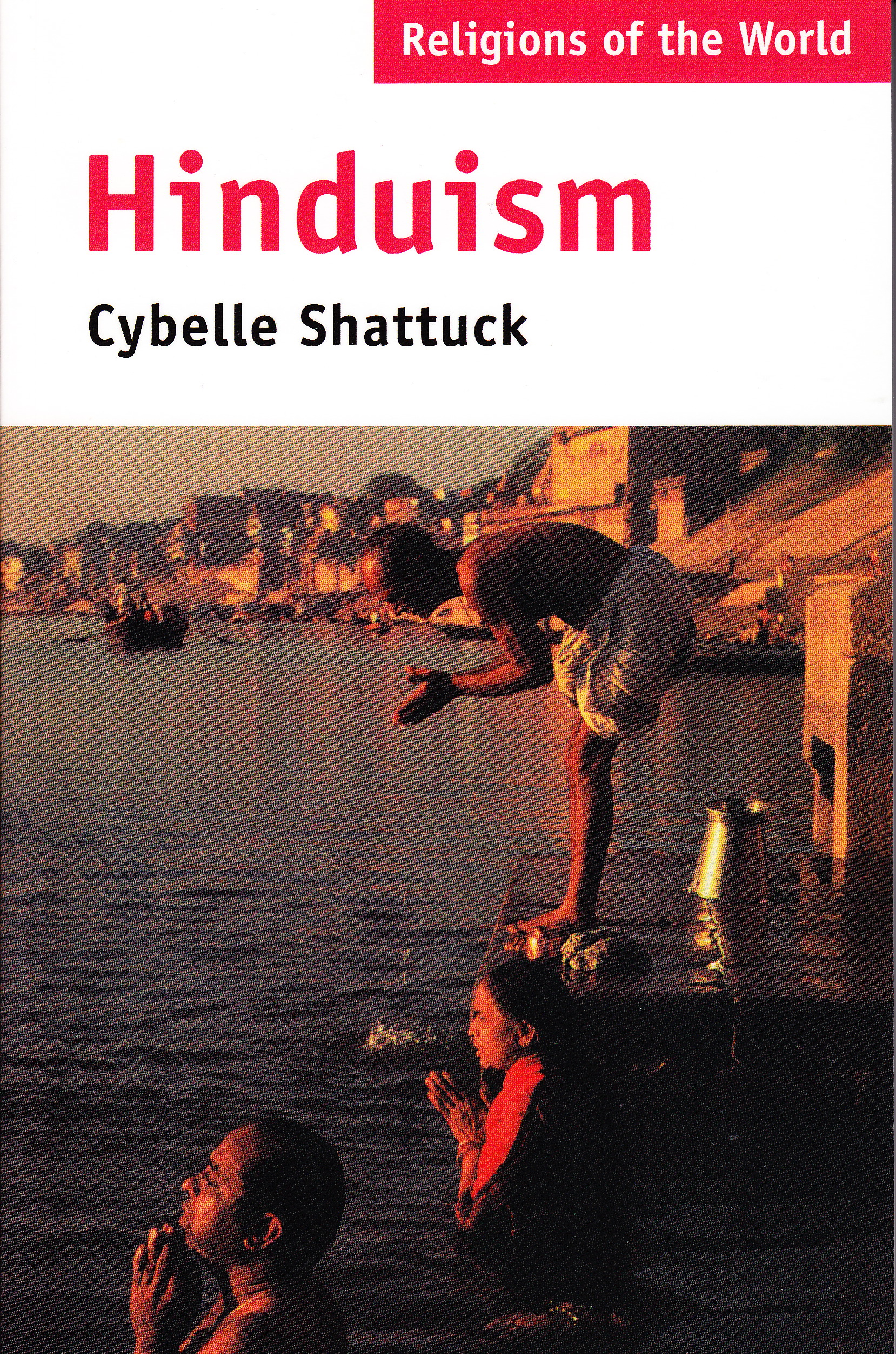
HinduismWhile brushing up on Hinduism by reading the book of that title by Cybelle Shattuck, it once again occurred to me how the concept of religion distorts itself. Prior to the Roman Period, the concept of religion really had no name. In fact, religions were sets of folk beliefs held in common by people of a single culture. These beliefs had many functions: keeping social order, establishing common practice, undergirding a kind of optimism in the face of inevitable death. Since long-distance communication was rare and unreliable, communities separated by more than a few miles soon developed details that fit their own situation and would hardly apply universally. Until they were written down, anyway. In Hinduism—which is in no sense a unified religion—even the “sacred writings” were not held to be authoritative for all people across all places and times. That concept would emerge with Christianity, a religion that would define the term and try to make it stable.

Hinduism is the oldest continually practiced “religion” in the world, as far as we can tell. The religions of the Mesopotamians and Egyptians eventually died out (although they have been revived by some in recent times) but the folk belief—or better, folk practice, of ancient India has continued relatively uninterrupted while new religions from Israel and Arabia changed the rules of the game. Monotheisms quickly demand heresies. A single God would not tell people different truths. Something upon which Shiite and Sunni, Catholic and Protestant, Pharisee and Sadducee all agree. One Lord, one faith, one baptism. By fire.

Meanwhile, even with Muslim and Christian missionaries afoot, Hinduism continued its accustomed continuity. To be a Hindu doesn’t mean worshipping the same god with the same ritual as everybody else. It is a way of living intended to keep dharma and avoid bad karma. And even as trendy westerners stretch themselves into impossible yoga postures, they are participating, at some level, in ancient practices that we call the religion of Hinduism. Shattuck’s brief introduction is a nice little primer that explains this time-honored folk tradition in a way even a believer in religion can understand. There are, it turns out, more things in this philosophy than our universe has ever dreamt of. Or perhaps the one dreaming is really Vishnu after all.