Saints and Angels

From Wikipedia Commons

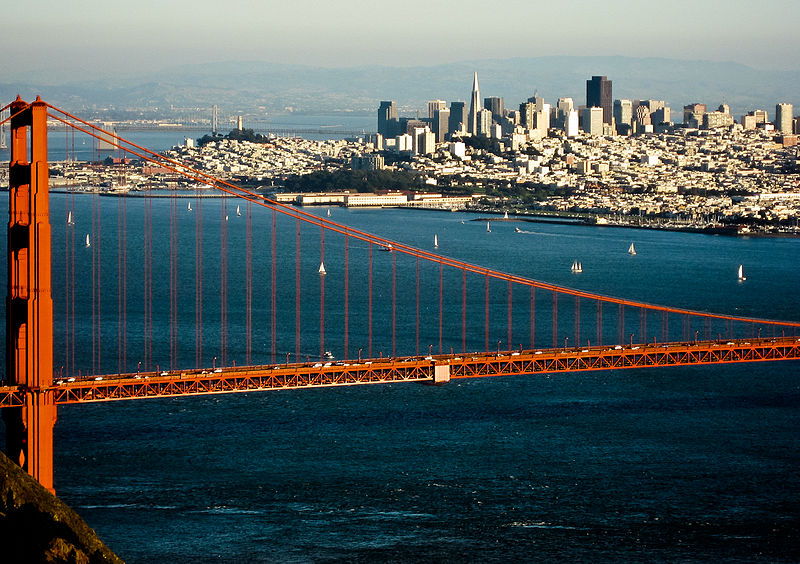
San Francisco. As I take a look down the coast I see Santa Barbara, Los Angeles, San Diego. So many saints and angels. And, of course, San Luis Obispo. I’m here in the city of Saint Francis (an odd choice for a rustic saint) for the American Academy of Religion and Society of Biblical Literature annual meeting. Before I began this blog, I attended this conference every year, and then the societies decided that they didn’t like each other any more and had a trial separation. Unwittingly, they were following religion, American style. If we don’t like you, even if you’re in the same tradition, we’ll take our marbles (presuming we have any) and go form our own denomination. This easy divorce of dogma is very American.

For such a religious nation, the United States is remarkably prone to hatred. Even scholars of religion can’t get along. We call each other names like “liberal,” “conservative,” “evangelical,” “secular,” “atheist.” Each a swear word. Long ago it was recognized that these two academies have more in common than not. I mean, come on! Dowdy professors studying utterly impractical, arcane beliefs bridging magic and modernity? Who do we think we’re kidding? I used to give papers here based on one single word of the Bible! So in the city of Saint Francis we are together again. American Academy of Religion, meet Society of Biblical Literature. In the same hotel, but maybe not yet ready to share the same bed.

We reflect the society we inhabit. Christianity in America has a venerable tradition of splitting and reuniting. Evangelical United Brethren, United Methodist, United Church of Christ, anybody but the Unification Church. We come together and soon learn that some molecule of doctrine is out of place—time for an atomic reaction. We are the scholars of religion, and we can’t stand each other. So we’re leading the way, America—we’re reconciling! We’re trying to get together for awhile. Next time let’s make it in a Protestant city.

September’s Child

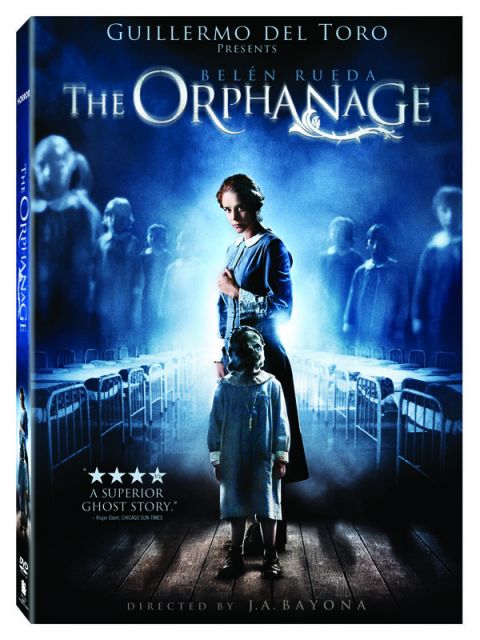
This was an appropriate weekend for a scary movie. With Guillermo del Toro in the news of late, I selected The Orphanage to fit the mood. Foreign language films can present a challenge when too much action is interspersed with dialogue, but the pacing and deliberate unfolding of The Orphanage solved that problem. As always when screening horror films, I was watching to see how religion played into the plot. The story follows the disappearance of a child adopted by a couple who wish to open a home for special needs children. Laura, the mother, is unwilling to accept her child’s disappearance while her rational, physician husband, Carlos, feels that the outcome is inevitable. In a show of support, however, Carlos lends Laura his Saint Anthony’s medal, just until their son is found.

The association of Saint Anthony—perhaps the most famous Franciscan after Francis himself—with lost items is a worldwide phenomenon. The city of San Antonio bears his name (although it is easily found). In the movie he is invoked to find the lost child. The distraught Laura religiously wears the medal until the child is found (in what state I’ll not say, for the benefit of those who’ve not seen the film). When Carlos comes to seek his wife, he finds the medal, bringing the movie to a close. The orphanage also features a very gothic chapel that sets the mood in a few scenes as well. “The Good Shepherd” is the very biblical name of the institution. Although not central to the story, religion is woven throughout, demonstrating once again that fear and religion are closely related.

Like Saint Francis before him, Anthony was born to a wealthy family in the Middle Ages. Both young men forswore their material goods to seek spiritual wealth. Both died relatively young (not uncommon in the Medieval Period) and in poverty. Choosing such a selfless character as the means of recovering that which has been lost may seem counter-intuitive, and The Orphanage exploits that idea very nicely. Over this gray weekend when many people were thinking about loss, an orphanage seems an appropriate metaphor. Although a Saint Anthony medal may inspire confidence, it can never restore what is truly gone. Even so, religion may assuage the anxiety, but in the end we still must find our own way home.