
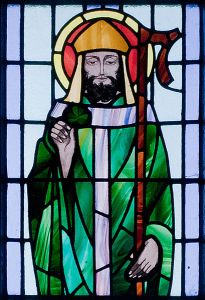
Photo credit: Andreas F. Borchert, Wikicommons
Lent, among the denominations that observe it, is intended as a time of intense reflection. Beginning on Ash Wednesday the fact of one’s own mortality becomes a foremost consideration as the faithful are reminded that they will die. It has always struck me as paradoxical that St. Patrick’s Day always falls in Lent. Those who abide by the liturgical calendar readily acknowledge that Lent is a punctuated season; saints’ days and feasts can still occur, temporarily disrupting the heavy contemplation. While at Nashotah House we never celebrated St. Patrick beyond a brief mention during a collect of the seventeenth. His day, rich in Celtic mythology, it seems, was inappropriate to the mandated gloom so highly valued by the soul-sick. Having some Irish ancestry, I always felt a little slighted by this aloofness regarding a saint most people can actually name.
College campuses, I later learned, tend to schedule their spring breaks to include Saint Patty’s Day because of the damage drunken students may exact. The stereotypical besotted Irish have become an excuse for excess during Lent, although, I suspect the forty days have little to do with it. A saint becomes a justification for sin, it seems. And Lent continues the morning after. There’ll always be Lent. The tray holding the ashes of last year’s palm branches is never empty. Two once religious observations clash in mid-March of each year. During a brief spell the historically oppressed Irish are celebrities for a day. Such are the vicissitudes of liturgical calendar clearing.
Today many people celebrate a saint they wouldn’t otherwise recognize. One that mythically drove the snakes from the Emerald Isle, and who perhaps hid a pot of gold at the end of the rainbow. A holy man who has made it possible for anyone to be Irish for a day. Leprechauns and clovers are in fashion as the ironic luck of the Irish closes down major thoroughfares for parades in the midst of ashes and dust. Outside there may be snow or budding trees. Perhaps both at once. There’s a richness to these conflicting symbols that belies the commemoration of a missionary with alcohol. The day is part of the complex of equinox holidays, whether intentional or not. The green man of yore begins to awaken as light starts to outstrip darkness for half a year. We’ve had enough of dusk. Anticipate the light. The rules state that Lent will still be here tomorrow. But the light is beginning to grow.
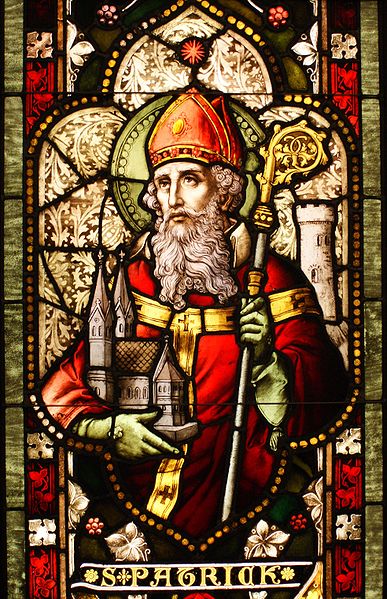
 Steve A. Wiggins