Shaping Halloween

Halloween is the favorite holiday of many.  I suspect the reasons differ widely.  Although the church played a role in the development of this celebration, it didn’t dictate what it was to be about.  It was the day before All Saints Day, which had been moved to November 1 to counter Celtic celebrations of Samhain.  Samhain, as far as we can tell, wasn’t a day to be scared.  It commemorated and placated the dead, but it wasn’t, as it is today, a time for horror movies and the joy of being someone else for a day or a few hours.  There isn’t a preachiness to it.  Halloween is a shapeshifter, and people love it for what it can become.  If December is the month for spending money you haven’t got, October is the month for spooky things.  Halloween is the unofficial kick-off of the holiday season.
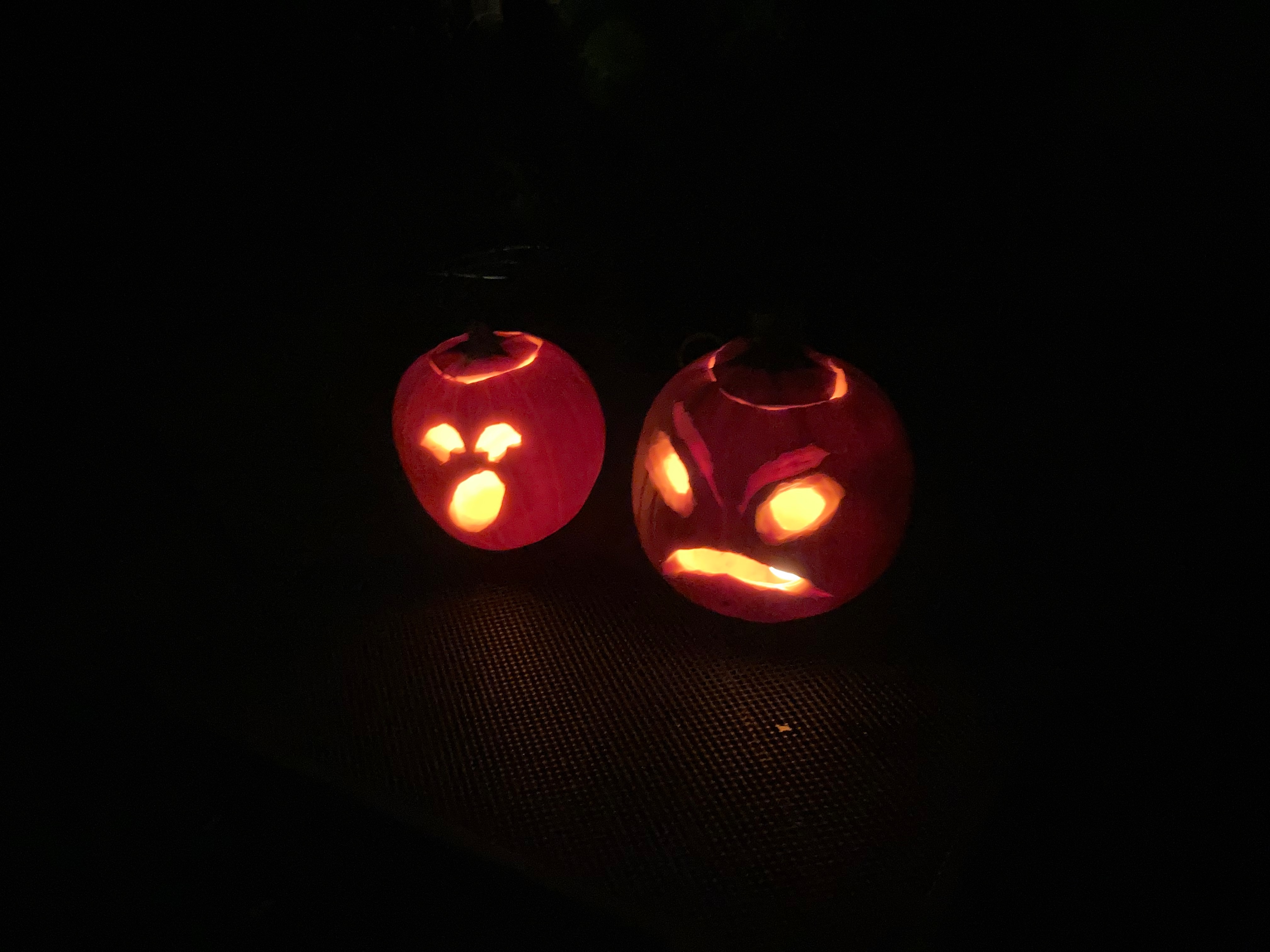
For me, it’s a day associated with dress-up and pumpkins.  Both of these bring back powerful childhood memories.  The wonderful aroma of cutting into a ripe pumpkin can take me back to happier times.  I remember dressing up for Halloween as far back as kindergarten.  I could be someone else.  Someone better.  It was a day when transformation was possible.  I’m probably not alone in feeling this, although I’m fairly sure that wasn’t what was behind the early use of disguises this time of year.  I’ve read many histories of Halloween and they have in common the fact that nobody has much certainty about the early days of its inception, so it can be different things for different people.  Even within my lifetime is has moved the needle from spooky to scary, the season of horror movies and very real fear.

There’s a strange comfort in all of this.  A knowledge that if we can make it through tonight tomorrow will be somehow less of an occasion to be afraid.  It is a cathartic buildup of terror, followed by the release of being the final girl, scarred, but surviving.  And people, from childhood on, enjoy controlled scares.  Childhood games from peek-a-boo to hide-and-seek involve small doses of fear followed by relief.  The future of the holiday will be open to further interpretation as well.  As a widespread celebration it is still pretty young.  And like the young it tests its limits and tries new things.  At this point in history it’s settled into the season of frights and fears in the knowledge that it’s all a game.  I wonder, however, if there isn’t some deeper truth if we could just see behind its mask.

Holiday Season

Halloween, in some ways, is the unofficial kick-off of the holiday season.  This was made clear to me when someone recently played the song “Soul Cake” in the context of Halloween.  I’d only ever heard the song in a Christmas context before, and a little research led to the discovery that asking for soul cakes originated as a Halloween custom (before it was called Halloween, even) but was considered appropriate anywhere from All Hallows through the twelve days of Christmas.  The common thread here is, of course, gift giving.  We tend to keep our holidays discrete for commercial reasons but there is a natural continuity from All Hallows Eve through what used to be known as Epiphany (now Insurrection Day).

Holidays help us prepare for things that we know are coming.  For the Celts, Samhain—which led to our Halloween—was the start of winter.  With no Daylight Saving Time to oppress them with the changing of their clocks and throwing everything off for weeks at a time, this was the dark part of the year.  Holidays are helpful in getting through times when natural light is lacking.  From Halloween you can almost see Thanksgiving.  At Thanksgiving we anticipate Christmas.  The winter solstice holidays see us through the shortest, darkest days of the year.  I’m no fan of capitalism, but as long as we’re stuck with it I wonder why we don’t advocate for Halloween as an official holiday.  The start of the holiday season.  In my local town the Christmas lights went up on November 1.

East and south Asian religions spend considerable energy teaching that change is the only permanent aspect of life.  Western cultures, on the other hand, focus on the status quo, the assumption that once something is established, it will, or should, remain as it is.  Time reminds us that change is constant.  We can allow entropy to win by sitting by and letting things fall apart, or we can try to build something useful to prevent a collapse.  Holidays change over time and over religions.  Halloween was a pre-Christian new year celebration.  From there it changed into a solemn holy day to remember saints and then the dead.  Incorporating aspects of Samhain and some customs such as soul cake begging and guising, it grew to a more fun celebration.  Now it’s a commercial occasion to rival Christmas.  The year is constantly changing.  Just when I start looking for my sweaters I see my light summer clothes haven’t yet been put away.  I look forward to Halloween as the start of the holiday season until we get past the longest night just before Yule.


Spirit of Halloween

So it’s Halloween.  It’s also Sunday.  I’ve been thinking quite a lot about the spirituality of this particular day.  Now it’s often treated as a trick, a consumerist holiday with too much candy and befitting spooky decorations.  Like all holidays Halloween has evolved from its origins to how we celebrate it today.  Other than Wiccans and Neo-pagans, however, not too many take it seriously.  At Nashotah House, and therefore likely at some parishes scattered around the world, All Saints Day—which is tomorrow—was a day of obligation.  What we call Halloween was the day before this major festival of praising the faithful.  There is some evidence that All Saints was moved to November 1 to counter the lively celebration of Samhain, or the Celtic fire festival marking the onset of winter.

The Celts included an intellectual class known as Druids.  Druids seem to have been the “theologians” (oh, that word!) of the Celts and they mandated that their teachings not be written down.  A great deal of information was passed on by intensive memorization and only became known to us outsiders because after Christianization it began to be written down.  Their idea of the afterlife seems to have been that it was being born into the other world.  In the otherworld life was different and apparently in some respects better.  When our time there drew to a close, our death led to our birth into this world.  The cycle continued on and on.  Samhain was the time when crossing between worlds could occur.  Death wasn’t a cause for sorrow since the otherworld awaited.  Birth into this world was more problematic.

Fear of death seems natural enough to us.  Even though it’s inevitable and this world’s graveyards are full, somehow we seem to think we can avoid it ourselves.  Our evolved survival instinct runs out of control since we’ve eliminated many of the causes of death that have plagued our species (and many other species) for millennia.  Eons.  As we’ve done so we’ve distanced ourselves from death—dying in hospitals, our corpses prepared in funeral homes, buried and eventually forgotten.  To me, the Celtic idea, from a world where death was likely much more close to hand, seems a more healthy outlook.  Instead of fear, why not consider it a day of wonder and celebration?  To many, I know, that is a spooky thought indeed.  It’s more than a day of masks and candy, however.  And we might learn from it if we stop and ponder.


The Halloween

Halloween seems especially portentous this year.  Some of us thrive in this introduction to what was a major set of Christian holidays that encompassed many pagan traditions.  The lynchpin was All Saints Day (All Hallows), which in good Christian fashion upheld its favorite sons (and a few daughters) to remind the rest of us what a sorry lot of humanity we are.  Followed by the more democratic All Souls Day where the vestments went from white to black, it was preceded by Halloween.  Through mostly Celtic additions from Samhain, the first of the three days became decidedly spooky and came to be a commercial holiday.  There’s more to it than that, of course, but we all know Halloween.

This year a number of other phenomena are converging on today.  Not only is it a full moon, but a famed blue moon—the second full moon this month.  It feel like something could happen.  And if that weren’t exciting enough the powers that be have decided to end Daylight Saving Time tonight (well, technically tomorrow morning).  And Tuesday is the most importation election day in the history of our nation, when we decide whether to retain democracy or become a monarchy.  Seems like a strange confluence of phenomena.  Meanwhile, outdoors a pandemic rages and some locations have had early snowfalls.  The last of what had been Hurricane Zeta blew through here yesterday.  Who needs Halloween to be scared?

For some years I’ve been contemplating the spirituality of Halloween.  We live in a death-denying culture while knowing full well we all die.  Halloween has become a holiday when we can think about it openly.  Pretend we’re someone/something we’re not.  Perhaps, if we’re lucky, we might learn something from it.  It has become a boon for horror films, but they’ve been successfully spread through the rest of the year as well.  There’s plenty to be frightened of in July and January too.  Still, there’s something about Halloween.  Some of my earliest memories are of this particular holiday.  Poor as we were, we always had costumes for the day.  I remember sitting on the school bus, wearing a mask, thinking that nobody knew who I was, and I could really be the hero or villain that my costume suggested that year.  Now we wear masks all the time and we’re frightened every day.  Halloween is coming along with a blue moon this year.  There must be some significance to that.


Homemade Halloween

Halloween is a holiday that brings together many origins.  One of the more recent is the tradition of watching horror movies in October.  I don’t know if anyone has addressed when horror films became associated with the holiday, but Halloween hasn’t always been about startles and scares.  Histories usually trace it to the Celtic festival of Samhain.  Samhain was one of the four “cross-quarter days.”  Along with Beltane (May Day), its other post equinox cousin, it was considered a time of year when death and life could intermingle.  Spooky, yes.  Horror, not necessarily.  Many cultures have had a better relationship with their dead than we do.  We live in a death-denying culture and consequently lead lives of futile anxiety as if death can somehow be avoided.

As a holiday Halloween only became what it is now when it was transported from Celtic regions to North America.  Other seasonal traditions—some of English origin such as Beggars’ Night and Guy Fawkes Night—which fell around the same time added to the growth of trick-or-treating and wearing masks.  At its heart Halloween was the day before All Saints Day, which the Catholic Church transferred to November 1 in order to curb enthusiasm for Samhain.  As is usual in such circumstances, the holy days blended with the holidays and a hybrid—call it a monster—emerged.   When merchants learned that people would spend money to capture that spooky feeling, Halloween became a commercial enterprise.  Despite All Saints being a “day of obligation,” nobody gets off school just because it’s Halloween.

My October has been particularly busy this year.  One of the reasons is that Holy Horror, as a book dealing with scary movies, is seasonally themed.  As I was pondering this, weak and weary, upon the eve of a bleak November, I realized that home viewing of horror—which is now a big part of the holiday—is a fairly recent phenomenon.  Many of us still alive remember when VHS players became affordable and you could actually rent movies to watch whenever you wanted to!  Doesn’t that seem like ancient history now, like something maybe the Sumerians invented?  People watch movies on their wristwatches, for crying out loud.  I suspect that John Carpenter’s Halloween had a good deal to do with making the holiday and the horror franchise connection.  Horror films can be set in any season (Wicker Man, for instance, is about Beltane, and three guesses what season Midsommar references).  We’re so busy that we relegate them to this time of year, forgetting that we still have something of the wisdom of the Celts from which we might learn.


From Darkness

All things being equal, most religions side with light. Let there be light. Enlightenment. Dewali, the festival of lights. The light of heaven is as much the appeal just as the darkness of hell is its antipode. Today, as the autumnal equinox turns us toward the darker half of the year, many religions mark the occasion with some kind of notice of the fading of the light. In the Celtic calendar, so indicative of the old religions of Europe, the recognition of the triumph of the dark comes at Samhain, or Halloween. It is the realization that darkness always follows light, and even the relative carelessness of summer has its limits. We are, half the year, no matter our location on the globe, in darkness.

Despite the habits of some college-age folk, people are not, by nature, nocturnal. Biology has evolved our sense of daylight, color-rich sight as a main means of our survival. Our religions have taken our fear of the dark and valorized our experience of light. Even as the winter solstice rolls around, festivals of many religions add more and more lights to ward off the encroaching night. The equinox is a moment of stability. It is a tenuous moment, occurring only twice a year, when darkness and light hold an uneasy truce. We are poised to move into shorter days, cooler weather, and the apparent loss of life. There is a melancholy to it, beautiful and compelling, if somewhat sad.

As I reflect on the fading of the light, I realize that the southern hemisphere, whence light seems to be rising, is facing the vernal equinox. Their summer is about to begin. Days will lengthen and light will be abundant. Our religious calendars tend to be keyed to the experience of those in the northern hemisphere. Those in the south, following the dictates of Rome, celebrate Christmas in summer and Easter in the fall. After my rainy visit to Indiana, where, on a rainy Thursday evening I saw a rainbow in the east, I awoke to a rainy Friday and saw a rainbow to the west. Fractured light. The light of a fading day broken into its myriad shades and hues. Light is that way. It is always daylight somewhere in the world, but religions focus on the light where we find ourselves at the moment.

IMG_0744


Origin of Halloween

Perhaps the most misunderstood of holidays, Halloween has grown into a major commercial holiday. Outsold only by Christmas in the United States, Halloween now supports its own seasonal stores that cash in on the massive public interest. A few years ago a wrote a book explaining the holidays for teens/tweens. The book was never published, and I’ve been putting excerpts on this blog on appropriate occasions. For the full story of Halloween, please check out the Full Essays page (link above).

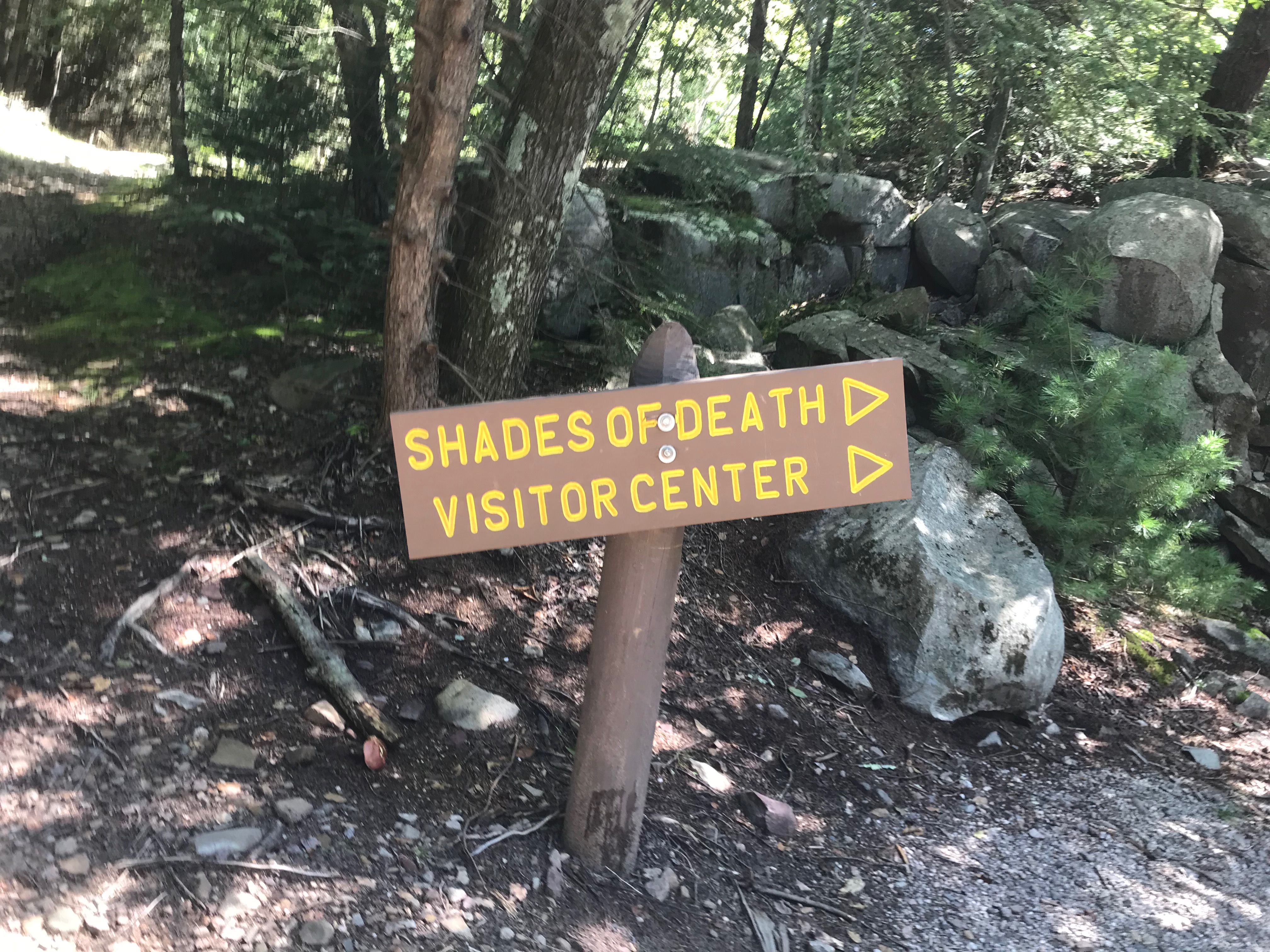
Accusations of a demonic origin may fit in with the popular creatures of the holiday, but they are far from the truth of the matter. A cross-quarter day, Halloween comes in the opposite side of the year from May Day (remember Walpurgis Night) when spirits make their way back into the mortal world. It represents the passing of fall into winter and the shades of death that accompany it. How much more religious can you get?

From ancient times people have been aware of how weak our control over our lives really is. We depend on the sun and the weather to cooperate for our crops. We fear the darkness when our eyes can’t compete with those of our predators. As the year descends into longer and longer nights, we secretly fear that eventually night will not end. The dark time of the year belonged to the spirits.

Just as all ancient people celebrated the vernal equinox (if you missed it, check out the Passover-Easter Complex for more), they marked the autumnal equinox with festivals. Although Halloween is six weeks after the equinox, it seems to have inherited some of the ancient associations of that season. One of the ancient feasts of the equinox was for Pomona, the Roman goddess associated with fruits and seeds. There is more of Thanksgiving than Halloween in this festival, however.

Halloween, as we have come to know it, is usually traced to the same people who gave us St. Patrick’s Day – the Celts. The Irish calendar was divided into four quarters, marked between the solstices and equinoxes by the cross-quarter days. The fall cross-quarter day was Samhain (in case you don’t speak Gaelic, this is pronounced “sow-win”). Samhain can be understood as “summer’s end” and it was the traditional marking of the onset of winter; it actually comes just a month before meteorological winter.

The Celts, as well as other ancient peoples, believed that spirits of the dead were active as the trees lost their leaves, the grass began to dry and, and the world itself seemed to be dying. Huge bonfires were lit to ward off evil spirits, and perhaps bloody sacrifices were made to ensure the safety of the living.

No matter what modern Halloween critics may say, the Celts did not worship Satan and the origins of the holiday are not satanic. Pagan, maybe, but who isn’t somebody else’s pagan? The idea was to fend off evil, not worship it. The shamans, or “medicine men” of the Celts were a class of priests called Druids. Samhain would have been one of the festivals overseen by the Druids. These guys were priests of a religion that focused on nature, not the Devil. They did play a little rough though. They seem to have practiced human sacrifice once in a while, but Samhain was more often about killing off livestock before the winter. Either you can keep your animals alive and they will eat the little food you have, or you can butcher them and add to the little food you have. After all, not much grows in winter.

[See Full Essays for the rest]