Extra Baggage

So, I’m packing.  Have been, on and off, since January.  One of the most dreaded moments of packing is the closets.  You know how in horror movies the villain often hides in closets?  We have no danger of that.  Any monster foolish enough to try it would be suffocated under tons of stuff.  Some houses may have walk-in closets, but I am inclined to call a mining company whenever I need to find anything in ours.  Our closets have led full lives.  It’s almost 100 degrees outside and I’m excavating.  We’re at that stage of “absolutely need to keep?” instead of “do we want this?”  Then I came upon it.  The layer of SBL tote bags.  Like a paleontologist of ancient academia.

If you’ve been a member of the Society of Biblical Literature you know what I mean.  Every year the Society wants you to realize value for your money, and they give you a tote-bag to help you haul home the books you’re going to buy.  Long-time attendees know to pack an empty suitcase inside their regular one just to accommodate the books.  (That could also account for about ninety percent of my packing—we have more books than a small town public library.)  But it’s not the books that are the problem today, it’s the bags.  I’ve been attending SBL since 1991.  Do the math.  I seem to recall that they didn’t do tote bags back in Kansas City, but soon after they became part of the agenda.  And I have an impressive pile of them in my closet.

Too small for groceries—especially in the early editions, back when we could meet in smaller venues—and too impractical for anything other than books, they multiply in our closets.  What professor doesn’t have his or her iconic briefcase already?  Reduce, reuse, recycle they say.  At least half of my totes have never been reused.  Zippers?  Who thought of that?  Pulling handfuls out of the closet, I marvel at their colors.  I can’t remember everyone walking around with a red bag—what year was that?  (San Francisco, 2011.)  The black leather edition—remember that one?  (SBL, n.d.)  The bags aren’t really useful for packing, on a movers’ scale.  You can imagine the burly guys outside their truck scratching their heads at this impractical conveyance.  Like so much else in life they’ve become mere souvenirs.  From the French word for something like “remembrance,” souvenirs are meant to take us back to the place in vivid detail.  I fear that many past meetings have run together into a blend of biblical arcana.  I’m sure that’s just me.  Still, I’m responsible for this new discovery.  I’d I’ll need shortly to decide whether these totes go into the museum or back into the landfill that moving inevitably creates in a throw-away world.
The Self-Importance of Nothingness

Not that I’m aspiring to Sartre, but being in the presence of so many academics brings out the natural existentialist in me. Religion is a funny field to engage in higher education. We are studying an intangible. Many would say an illusion. If we are too bold about what we find, no shaking hand will deign to sign the paycheck, and so we carry on, innocuous, unperturbed, self-assured. At conferences like this I sometimes sit back and watch others walk by. Having entered the academic world from humble, uneducated beginnings, I have no pretensions about what I do. Or where I might go. Yet I hear idolatrous whispers following those who’ve made a name for themselves. God-struck grad students with that theophanic gaze leveled at the man (sometimes woman) whose name graces the cover of so many books. God’s very representative here on earth. Incarnate in this very room.

I entered religious studies because I arrived at college knowing nothing. An exasperated freshman advisor finally insisted I chose a major. I said I didn’t know. “But what are you interested in?” To me religion wasn’t as much an interest as an imperative. Some churches raise their young to believe that all else is vanity. Every moment should be spent seeking that elusive deity, the one whose very words the clergy speak. I fell into religious studies. I fell far. Reading the Bible multiple times as a teen, classes weren’t that challenging. Ideas were. There comes a time, undefined so as not to be pinpointed, when an invisible line is crossed. Then, when you look back, everything has changed. A dark secret has been planted deep in your psyche and you realize that you are a religion scholar. There is no turning back.

No Einsteins exist in the world of the academic study of religion, but gods abound. Watching colleagues who’ve achieved the dream, who’ve been tenured and pampered and paid well to deign to share their lofty thoughts with the rest of us, I feel like I’m watching shadow puppets against a blank wall. When will they get God into the laboratory and switch on their fancy, humming machines, and the one that goes “ping,” to uncover the truth of the universe? How much lower can we mere mortals stoop? It often feels like I missed that crucial first day of school. Having peered long over the ledge, however, I realize that we are all in this together. Has anyone ever bothered to count the homeless in San Francisco? Has anyone ever bothered to look into their eyes? And that guy with high name recognition? I’ll ask him to write a book. And I will fawn and coo. Why? Because I know the hand that signs the check, and I know the price of idolatry.


I Left my Bible in San Francisco

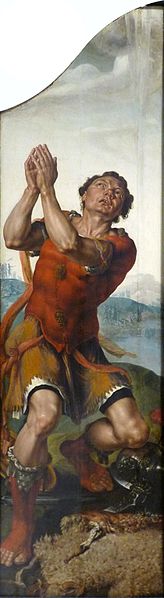
Gideon prays for a Bible

I’m staying at the Hilton, Union Square in San Francisco. Surrounding me are over 10,000 (is that a proper myriad?) religion and Bible scholars gathered for the American Academy of Religion and Society of Biblical Literature annual meeting. I travel light. Having left my Bible behind I went to look up something in the Gideon general issue. It is not here. The world’s largest academic conference focusing on the Bible, four hundred years after the King James Version hit the shelves, and I am Bible-less in my hotel room. Of course, once I get to work I will be surrounded by Bibles, some of them walking, talking resources who have the whole book memorized. Yes, the Society is that kind of place. The Gideon hotel Bible is an American institution. It feels like a constitutional right. When my daughter was very young and we stayed in a hotel, she found the Gideon Bible and asked what it was. We explained that the Gideons leave a Bible in hotel rooms all across the country. “That’s just weird,” she said with all the conviction of a pre-teen.

There are current movements to remove Gideon Bibles from hotels. They do, after all, represent a privileged position to Christianity in a nation founded on religious freedom. No one is forcing you to read that Bible, but it is there, like a tell-tale heart, in your bedside table drawer. Thumping incessantly. To read or not to read? What’s on the TV?

My favorite discussions at conferences like this are with scholars who find the privileging of one religion distressing. Our culture is so grown up in so many ways; we are more enlightened about sexuality and gender and race, and yet, and yet… We still like to have that Gideon Bible nearby. We like our political candidates Christian. Preferably Protestant, although a Catholic will do if he (inevitably he) is on the right side of the right issues. We are vaguely and implicitly afraid of those who don’t share our convictions.

In a moment of levity near closing time yesterday, a customer stopped by to say Routledge should have more gimmicks. Many publishers have giveaways, and some have little games that bearded, bespectacled professors sometimes even play. The customer suggest darts, or even a little shooting range. I said, “Guns and theology are sure to lead to trouble.” Although he laughed, I was serious. Few things in this world can be justified as easily as religiously motivated slayings, at least in the minds of the perpetrators. And to borrow a phrase from a budding genius, “That’s just weird.”


Saints and Angels

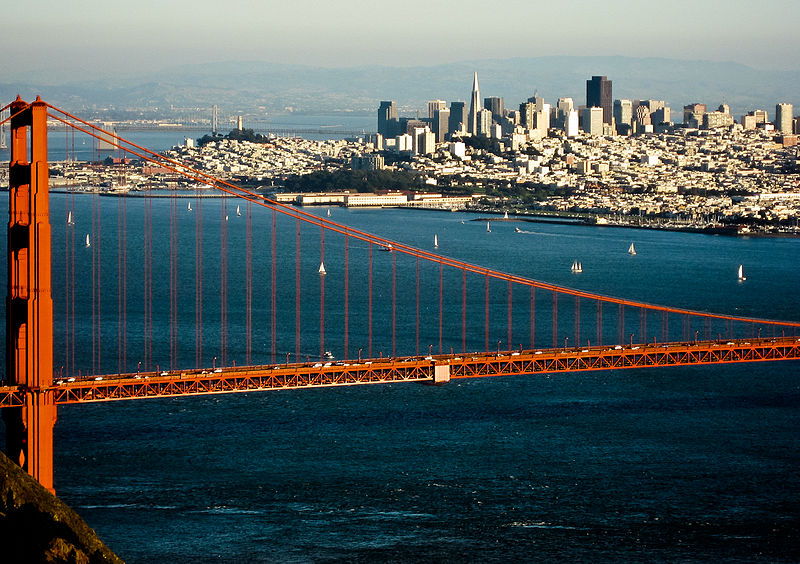
From Wikipedia Commons

San Francisco. As I take a look down the coast I see Santa Barbara, Los Angeles, San Diego. So many saints and angels. And, of course, San Luis Obispo. I’m here in the city of Saint Francis (an odd choice for a rustic saint) for the American Academy of Religion and Society of Biblical Literature annual meeting. Before I began this blog, I attended this conference every year, and then the societies decided that they didn’t like each other any more and had a trial separation. Unwittingly, they were following religion, American style. If we don’t like you, even if you’re in the same tradition, we’ll take our marbles (presuming we have any) and go form our own denomination. This easy divorce of dogma is very American.

For such a religious nation, the United States is remarkably prone to hatred. Even scholars of religion can’t get along. We call each other names like “liberal,” “conservative,” “evangelical,” “secular,” “atheist.” Each a swear word. Long ago it was recognized that these two academies have more in common than not. I mean, come on! Dowdy professors studying utterly impractical, arcane beliefs bridging magic and modernity? Who do we think we’re kidding? I used to give papers here based on one single word of the Bible! So in the city of Saint Francis we are together again. American Academy of Religion, meet Society of Biblical Literature. In the same hotel, but maybe not yet ready to share the same bed.

We reflect the society we inhabit. Christianity in America has a venerable tradition of splitting and reuniting. Evangelical United Brethren, United Methodist, United Church of Christ, anybody but the Unification Church. We come together and soon learn that some molecule of doctrine is out of place—time for an atomic reaction. We are the scholars of religion, and we can’t stand each other. So we’re leading the way, America—we’re reconciling! We’re trying to get together for awhile. Next time let’s make it in a Protestant city.