Viking Trail

History is a powerful elixir, capable of transforming sinners to saints with the mere passage of time. Well, calling Vikings saints may be a bit of a stretch, but still, they have become some of the sexy bad boys of the Middle Ages, and with the finding of a Viking horde in Scotland last month, they are in the news once again. Vikings and monks were kind of like medieval dogs and cats. Monasteries, located in lonely regions, often amassed wealth and Vikings, looking for loot and less scrupulous about bloodshed, were eager to take it. The give and take (literally) of this violent lifestyle involving seafaring, battles, and churches, makes for good ancient drama and much of it took place along the coasts of Scotland. Our Scandinavian scourge, however, didn’t stop there. It is well established that the Vikings made it to North America well before Columbus. Those who don’t dismiss the Kensington Rune Stone also claim that the Vikings reached Minnesota long before football ever did. Whatever the reason, we are fascinated with Vikings.
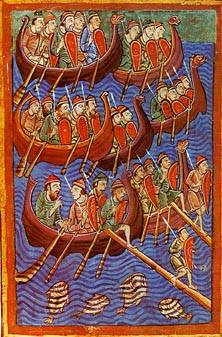
Wikinger

Perhaps they are the ultimate autonomous self-promoters. We all would secretly, at least, enjoy being able to set our own standards so that they favored us and our loved ones. The Vikings represent the flaunting of the rule of law, traveling far to take what they want by force. And, perchance, leaving a bit of treasure behind as well. The Vikings became Christianized and the slave trade (long before the New World caught hold of the idea) was effaced to the point of becoming uneconomical to them. Nobody is certain why, but the Vikings, probably for a variety of causes, ceased to be the terror of the seas. Now the Scandinavians are considered among some of the most literate peoples of the world.

Along with the decline of the Vikings, however, also came the fading of the monastic cultural hegemony. To be sure, there are monks and nuns still today, but the force with which they gripped the medieval imagination began to decline with the Protestant Reformation and the recognition that vast wealth, even if cloaked in poverty, is still vast wealth. Now the finds from both monasteries and Viking sites constitute historical treasure. Information about a world long gone. The underlying idea, however, is never very far from the surface. We may lay claim to post-colonialism, but powerful economies have a way of getting what they want in the way of trade treaties and tariffs in any case. When a Scot finds a Viking these days, it is a cause for celebration as we let bygones be bygones and cut the humanities curricula nevertheless. The Vikings never really disappeared.

Flash Freeze

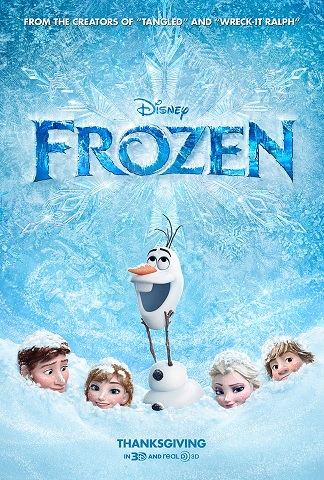
Frozen_(2013_film)_poster

One industry has, in this era of leisure, proven itself powerfully recession-proof. Entertainment, conceived broadly enough to include the sellers of strong drink, always seems to do well when the bread-and-butter parts of the economy tank. Among the entertainment giants is Disney, making it an easy target for curmudgeons like yours truly. Every once in a while, however, the cynicism has to melt. Frozen induced one of those experiences. I left the theater feeling that this may have been the best Disney movie of all time. You see, I grew up largely without Disney. We didn’t vacation in fantasy-lands like Disney World (when we could afford to vacation at all), and watching a movie was a rare treat. We did see some of the old style animations that came to our small town, such as Bambi and Dumbo, and we did watch the television program, I want to say on Sunday night. My real experience of Disney, however, came with parenthood where VHS and then CD then online versions of the movies made them accessible any time, in nearly any place. In the past decade or so, I’ve noticed, Disney has been putting considerable money behind the crafting of story, something many movie moguls fail to attempt. Frozen, however, stunned me.

The visual beauty of the Scandinavian world is no doubt part of it. I don’t often mention C. S. Lewis on this blog—he has been so thoroughly appropriated by the evangelical crowd that it is often difficult to admit how influential his work was to my college-age self. Lewis was unashamed of his Christianity, but in his fiction it isn’t always in your face. When I read Surprised by Joy, his autobiography, a scene—just a sentence really—lodged in my head. Joy, he noted, could be brought on by visions of the grandeur of the frozen far north. Lewis noted that not everyone has that perception, but I certainly share it with him. Elsa’s icy world impales with its beauty. Although I’m sensitive to cold, a deep desire stirred in the construction of that isolated ice castle. Elsa could, as an appropriately messianic figure, walk on water and ascend to heaven.

Of course, as I’ve observed before, the central trope of cinema is resurrection. Anna takes on the self-sacrificial role for her sister, marking Disney’s move away from the magic of the heterosexual kiss as the cure to all female ills. No, here are women who thrive not only without, but in spite of strong male characters. This is a world where not one, but two female protagonists are needed to carry the plot to fulfillment. Self-sacrifice, in fantasy worlds, often leads to resurrection. With Anna’s act of love for her sister, the cinematic world has reached an important pinnacle in its lesson to children: love comes in many forms, and if it is really love it is never bad. Elsa ends up satisfied without a king to guide her, a woman who reigns as she is, not as society says she should be. If only the ice of our patriarchal world could be melted so easily.