Ordinary Magic

ConjuringSpirits copyThe concept of grimoires, as well as being seasonal, has been on my mind as I finish up my paper for the Society of Biblical Literature annual meeting next month. Grimoires, books of magic, have eluded, for the most part, the interests of scholars. Who takes magic seriously, anyway? Slowly our gaze is working its way away from our noses and out to the magical world beyond. Conjuring Spirits: Texts and Traditions of Medieval Magic is a textbook example of what happens when you bring the two together (scholars and magic, that is). Like most collected works, the pieces range from fascinating to somewhat magical in their ability to cause the eyes to close. Nevertheless I learned quite a bit from this book edited by Claire Fanger. Magic is not nearly so rare as we like to claim it is.

Perhaps the biggest takeaway from these essays is that grimoires were not only written by witches. Indeed, in the Middle Ages many of them were written by clerics and monks. They were avidly used by doctors, as science likely has its roots in magic rather than in some sudden enlightenment that matter is all there is. Medicine was still beholden to Aristotle, Hippocrates, and Galen. Humors and stars could make you unwell, and the wise physician would do well to pay attention to magic as well. Today we’re too sophisticated for that, but we still call the unexplained the placebo effect.

Although the church became the great enemy of magic, it was also one of its main sources. The Mass, with transubstantiation, seemed alchemical. Miracles of healing, known throughout the Bible, suggested that the improbable was indeed possible. A number of grimoires contained instructions to work such wonders. One of the most vehemently condemned was a book informing how to attain the beatific vision—a worthy enough goal—but it did so in a way that circumvented the power of the church. Garden variety magic was also available, of course, as were recipes calling for brain of black cat and blood of bat. Witches, after all, were mainly sought out by the church. Those with power are not easily compelled to relinquish it. It should surprise no one then that magic continues to thrive.

The Climate of Belief

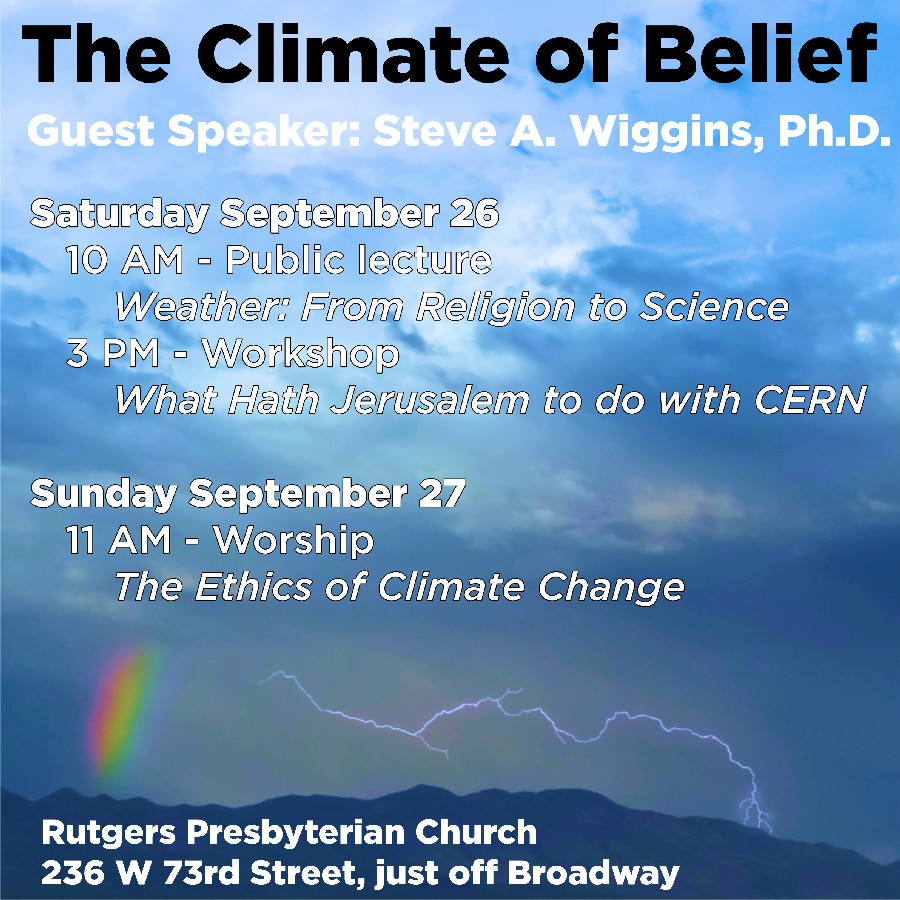
As I’ve noted before, in our culture where an individual voice is hard to hear, those without institutional affiliation are generally considered self-promoting hacks. That’s really too bad, given that so many highly educated people end up in menial positions—our society’s “greatest resources” squandered away behind a counter or sequestered in a cubicle. So it was my great honor to be asked to present Rutgers Presbyterian Church’s Autumn Guest Lecture this year in Manhattan. When I taught at Nashotah House invitations to speak came frequently, even though it was a small school. I even once received an invitation to talk when I was an adjunct at Rutgers University. Since “going corporate,” it seems, I have nothing to say. It really is wonderful to be asked to speak again. Practicing my talk brings back many fond memories. Lecturing is in my blood. The Pastor asked me to come after my book, Weathering the Psalms, was published. Never intended as a best-seller, it has quietly sat on the sidelines, like its author.

weather wiggins ii sml

I suppose a bit of shameless self-promotion might be in order, but of course, I will feel ashamed for pointing out, when it’s all over. If you happen to be in New York City this coming Saturday and Sunday, so will I. Rutgers Presbyterian is located on the upper west side, not far from Lincoln Center and the Museum of Natural History. I’m always glad for an audience. See? Now I feel bad for having said so. My theme over the weekend will be “The Climate of Belief.” In addition to the weather, we’ll be talking about religion and science. Two worldviews that seem to be in constant conflict are not really the bitter enemies they seem to be. I won’t give away any spoilers since then you’d have no reason to come to my New York debut.

Further along, I am scheduled to give a paper at the Society of Biblical Literature annual meeting in the Society for Comparative Research on Iconic and Performative Texts (SCRIPT) session on sensing scripture. My talk on that occasion will be on how the Bible is presented as an iconic book in the first season of Sleepy Hollow. Be sure to mark your November calendars now! It’s not too often that a person with no institution willing to back him gets to speak twice in a year. Someone who’s in a position to hire professors once told me that with so many candidates out there, you have to wait until you fall in love with one. Being a Don Juan, whether in amore or academia, has never been my strong suit. Still, if Elijah is to be believed, even an unamplified voice may carry. I’ll utter my “yop” for those who wish to listen.


Weathering Academia

Come the end of September, I’m scheduled to give a talk at Rutgers Presbyterian Church in New York City. I’m personally very flattered by this because, as it has become clear to me, an academic without a post is mute. I’ve seen colleagues who teach at schools I’ve never heard of consulted by the media—and there is obviously more to it than this—because they have teaching positions. Those of us who used to be professors apparently forgot everything when we take jobs out of necessity. That’s why I’m so flattered. My talk will be on the larger issues behind my book, Weathering the Psalms. I never expected this book to be a bestseller. I knew that it was, in some sense, incomplete. Academic books are the kinds of things you write when you have an academic post. When your day is not programmed with “enter this data, follow up on that book, and when you have time, get other people to write books.” People, of course, with university posts. The rest of us know not whereof we speak.

It’s funny. Back when I was teaching, even if it was only at Nashotah House, I used to be asked to give little talks all the time. It was rare for a year to pass without someone asking me to lead a seminar or share what I’d learned with some august body. That tapered off once I became an adjunct, although a Presbyterian Church in Princeton once invited me to speak because I was teaching at Rutgers (the university). And as I prepare my talk in my free time, I wonder about a society so tied up with name prestige that someone who has something interesting to say is just a crackpot unless a college or university or seminary or think-tank hires them. There are many of us—hundreds, if not thousands—who know as much as our university colleagues about a topic. An individual doesn’t have a name big enough to flash around, so we don’t get asked to share. Keep your hand down and your head down on the desk, please.

IMG_2416

In any case, it has been good for me to come back to the weather and think through some of the larger implications. I’d just had the book declined by a big name academic press when Nashotah House terminated my position. For many years I couldn’t look at the manuscript since it seemed a symbol of my failure. No, the book isn’t everything that it could be, but there is some good information there. The larger implications are actually of some importance here. The weather is studied both by science and by religion. Both understand aspects of it that the other misses. I’m looking forward to exploring this with the good folks of Rutgers Presbyterian who were kind enough to invite a guy with nothing more than a book and an obscure name to come and talk about something that most academic colleagues just don’t notice.


Somewhere, Out There

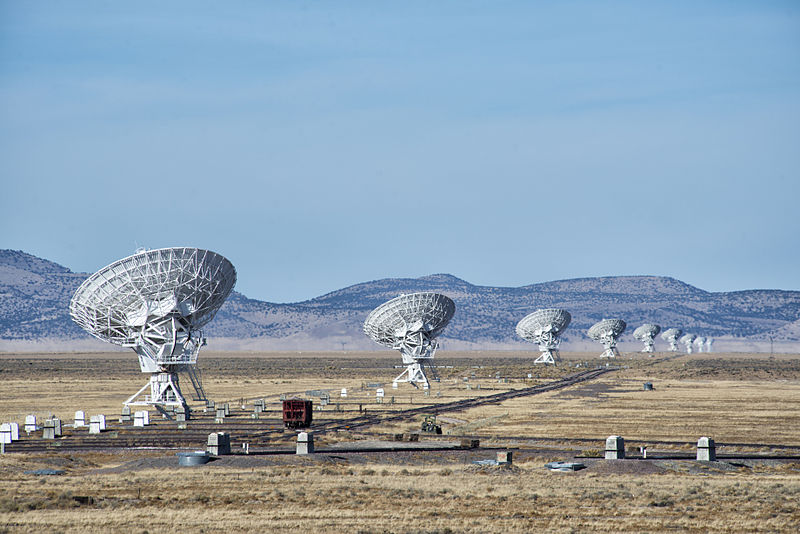
With Pope Francis’s impending visit, the New York-Philadelphia corridor is abuzz with discussions of traffic and commuting disruptions. From a little further away, Irish Central is reporting that the Vatican chief astronomer has gone onto record stating that he believes in extraterrestrial life. (Despite the headline, the article doesn’t say anything about UFOs, and the astronomer, Fr. Funes, is noted as saying that he doesn’t believe extraterrestrials are flying here.) The real issue, however, is metaphysical, rather than physical. How would life elsewhere impact theology? Long ago the Vatican expressed some comfort with the idea of evolution. As early as Augustine of Hippo, thinkers have noted that reason cannot contradict truth and still be convincing. The evidence for evolution, overwhelming as it is, falls under that rubric. Life in space, at least according to orthodox science, is more a matter of mathematical certainty rather than experiential. And like any scientific idea, not all scientists agree with the astronomical odds in favor of life in space.

Funes, according to the article by Frances Mulraney, believes that aliens are not fallen races in need of salvation. The grand master plan laid out in the Bible was unique to this world only. Human beings sinned, we required divine intervention, and, as you’d expect from a Christian source, the incarnation, death, and resurrection of God’s only son. It does raise interesting questions about what the aliens might think of a chosen race. How could you not think yourself superior if you had no need of God’s special attention? One can only hope that ET isn’t the jealous sort.

Photo credit: John Fowler, Wikimedia Commons

Photo credit: John Fowler, Wikimedia Commons

For years those who speculate about non-earth-based life have argued over how religions would handle the news that humanity isn’t alone. Would religious observance increase or decrease? It might depend on what our fellow universalists have to tell us. This, in a nutshell, is the dilemma of ancient religions. Founded when worldviews were pre-scientific, back when the earth was the center of everything, they didn’t add an infinite universe into the equation. And infinity always complicates things. Fr. Funes says the Bible isn’t a science book, and indeed, biblical scholars have long known that to be the case. It’s the contingencies outside the ordinary of two millennia ago that are most worrying to literalists. Even with all we have learned of science, we have a great deal yet to comprehend. Religion is a uniquely human response to an uncertain universe. And since ours is apparently infinite and expanding, religion may very well be something we’ll need to take with us to the stars.


Brains and Selves

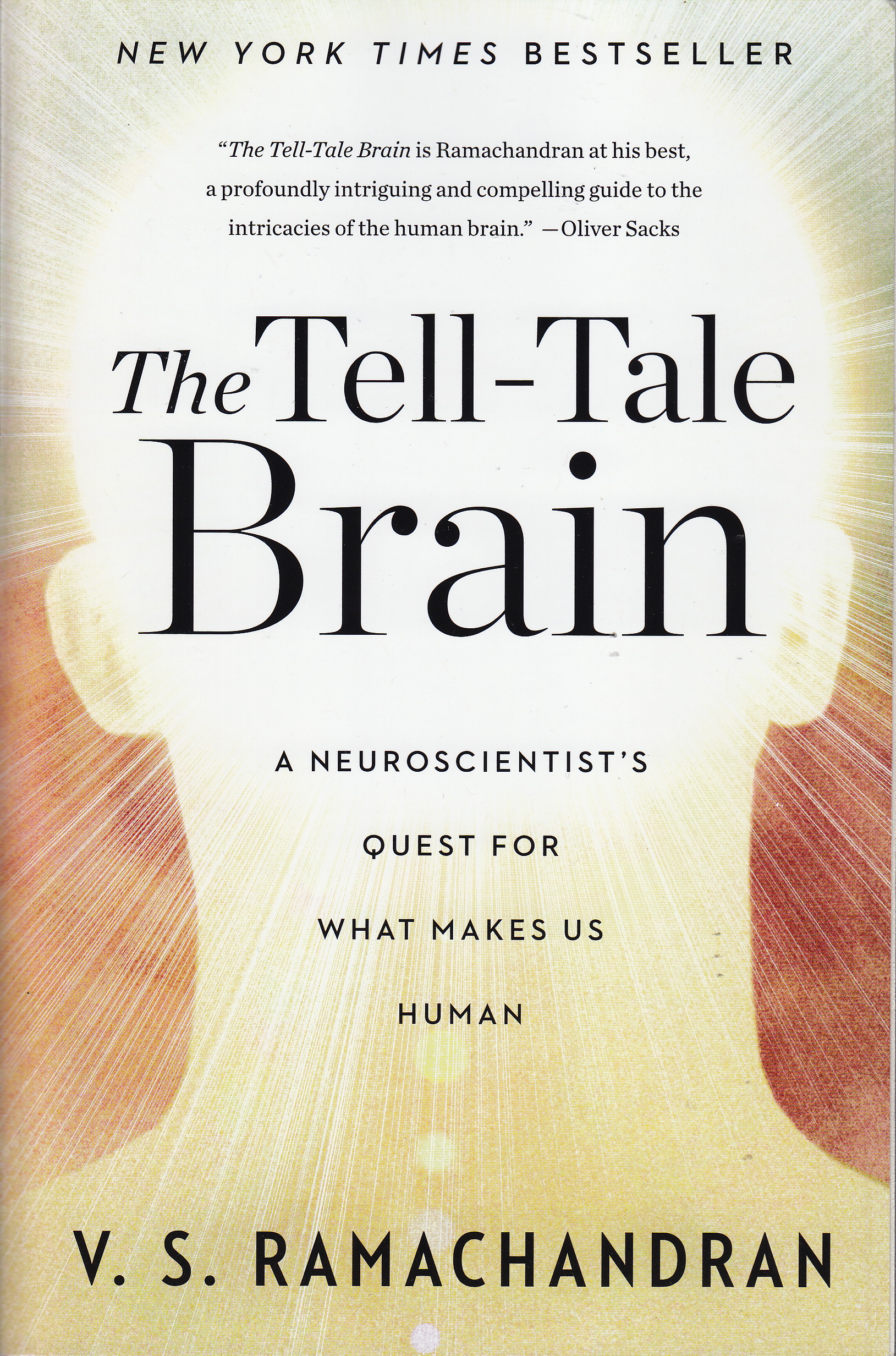
TellTaleBrainThe Tell-Tale Brain is an ambitious, yet humble attempt to find the self. V. S. Ramachandran is a neuroscientist with considerable psychology experience who is well equipped to take on, as the subtitle puts it, A Neuroscientist ‘s Quest for What Makes Us Human. The book will take you to some very strange places. And although he’s a scientist, Ramachandran keeps an admirably open mind. Right at the start he notes that he sees no reason for using “merely”s and “only”s when discussing brains and their realities. In fact, he knows that scientists aren’t qualified to answer the question of whether there is a god. Having grown up Hindu, he used to pray to many gods. A true scientist has no need to belittle beliefs. Belief, as Ramachandran demonstrates, is far more complex than most pundits would suggest. This is based on his close study of the brain and those to whom it has been less than kind.

Already in the first several pages it becomes clear that Ramachandran finds religion a useful trope. It illustrates something we all know. That doesn’t mean he (or you) has (have) to accept it, but we all recognize it. Studying how the brain works, in this book, means looking at patients with various disorders, most of which have tongue-twisting names, that are inherently fascinating. Phantom limbs, people who see the colors of numbers or feel the emotions of fabrics, or who can’t recognize their own mothers—all of these things really happen in the brains of intelligent people. For them these are reality. For Ramachandran, they can frequently be chased down to a neurological cause. And sometimes people even really think they’re God. One of the treasures of this book is to experience the non-normativity of western culture. The use of Indian art and religion as illustrations of what humans believe is refreshing.

Anyone who fears the loss of self take warning; we may not be who we think we are. Brain studies show that, in certain circumstances, brains can contain more than one self. Memories can be fabricated and the continuity that we call our life stories may well contain a healthy dose of fiction. Experiments on brains can change who we think we are. Descartes would, perhaps, go insane. Ramachandran doesn’t claim to have figured out the self, or consciousness. He may have ruled out some options, though. At the end of the book, however, he reintroduces the concept with which he started: science and religion. Quoting Darwin he shows that the main mind behind evolutionary theory refused to make an absolute declaration about the divine. Humility, it seems, may be just as effective in making converts as a Bible in hand. And to figure that out will take some brain power.


Shooting Stars

One of the professions I used to consider as a child, before I had any real concept of the way the world works, was a scientist. I wasn’t sure what scientists did, beyond a broad idea of learning about the world though close observation. I was too young to see that it would likely conflict with the Fundamentalism in which I was being raised, and I suspect the same is true of many who become scientists and never stop to question the religion in which they were reared. Although religion, as a profession, won out in my case, I was, I recognize now, motivated by a deep and undying desire to know the truth. I still am, although you couldn’t tell that from my career path. In fact, rationally, it is the most important thing to me. What is truth?

Science has become extremely complex. The average citizen can’t afford the kinds of equipment needed to unravel the fabric of reality. A cyclotron wouldn’t fit in my backyard, and, besides, I rent. When I sat outside this morning looking for the Perseid meteor shower, I didn’t see a thing due to the ambient light. Even looking through a telescope, I know I don’t have the calculus to explain the things I see. Given all this, the average person requires a scientist to explain. But scientists are only human. We know that we haven’t evolved to discover the truth. Evolution favors survival, not philosophy. We also know that we don’t perceive everything. Some animals have senses that we humans lack. Still, we suppose through our use of our five—obviously the best—we can come up with an explanation of everything. The truth will be ours! Or will it? Even thinkers of such stature as Richard Dawkins and Stephen Hawking make mistakes. They’re only human. When we idolize them, we make them gods.

Back in seminary I learned about the three-legged stool. The basis of authority, in the church, rests on three legs (four if you were Methodist): Scripture, Reason, and Tradition. Methodists added Experience. There were checks and balances here. Well, Scripture seems to have fallen out of the running with the Enlightenment, and nones don’t much value Tradition. Experience is subjective, so we’re left with Reason alone. And yet, reason leads to paradoxes such as if the universe is infinite, how can it be expanding? In classical theological terms: can God make a rock so heavy he can’t lift it? Add to that the fact that some neuroscientists are now suggesting that emotion may be the seat of thinking rather than reason and you might begin to wish you had some tradition to guide you. In my experience, I’ve seen, I suppose, my fair share of shooting stars. I sat outside in the predawn hours this morning and saw nothing. Perhaps I should have had a three-legged stool upon which to sit.

Photo credit: Nerijp, Wikimedia Commons

Photo credit: Nerijp, Wikimedia Commons


God’s Wormhole

Can God and science mix? I suppose that the third season of Through the Wormhole would be the place to look. The entire season has a distinctly metaphysical feel to it, so it is no surprise that the final episode is entitled “Did We Invent God?” It’s also no surprise that, like the other metaphysical issues explored, no resolution is really offered. Interviewing psychologists and neurologists, the show attempts to parse how scientists might address the question of God’s reality. God, of course, being immaterial, is normally understood not to be a subject discerned by science. So instead of putting God under the microscope, human perceptions of God will have to do. Everything from theory of mind to magical beliefs are probed to find hints of whence this strange idea of God might have come. The answer: we don’t know.

The more I pondered this, the more the same result reflected on science itself. When I was growing up I thought science was the truth. If science “proved” something, there was no arguing the point. I have come to realize, however, that science must be falsifiable to be science. That means it is potentially wrong. Not that it goes as far as Creationists take it to say that something is “only a theory,” but rather that science is the best explanation that we have at the moment. Future discoveries could falsify what we now know and the science textbooks would have to be rewritten. The difference here with religion is that most belief systems do not admit of this possibility. The truth has already been revealed, and there is no adding to or taking from it. God is not falsifiable. As stated above, God is not subject to science.

I don’t expect these observations of mind to change anybody’s ideas of the world. I do hope, however, that they make clear that science and metaphysics find themselves in similar situations. Both strive to know the truth. Neither can know if they’ve arrived. Both can believe it. The final episode of the season raises this point starkly. People are hardwired to believe. What they believe in is open to many possibilities, but believe they will. From my earliest days I have taken belief very seriously. What I have believed has changed over the decades, but at each step along the way I believed it was the truth at that time. I don’t know the truth. Nobody does. We all, whether scientist or religious, believe that we have found it. At the moment.

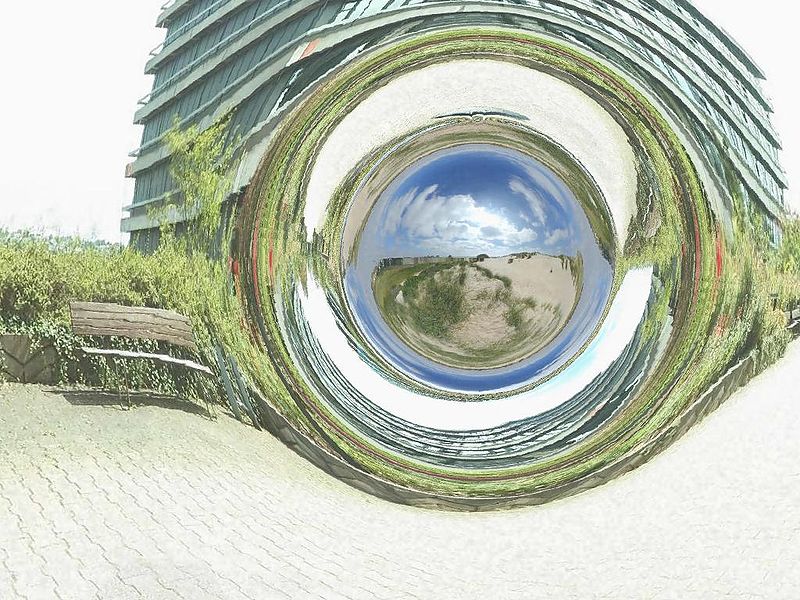
Image credit: CorvinZahn, Wikimedia Commons

Image credit: CorvinZahn, Wikimedia Commons


Contacting Faith

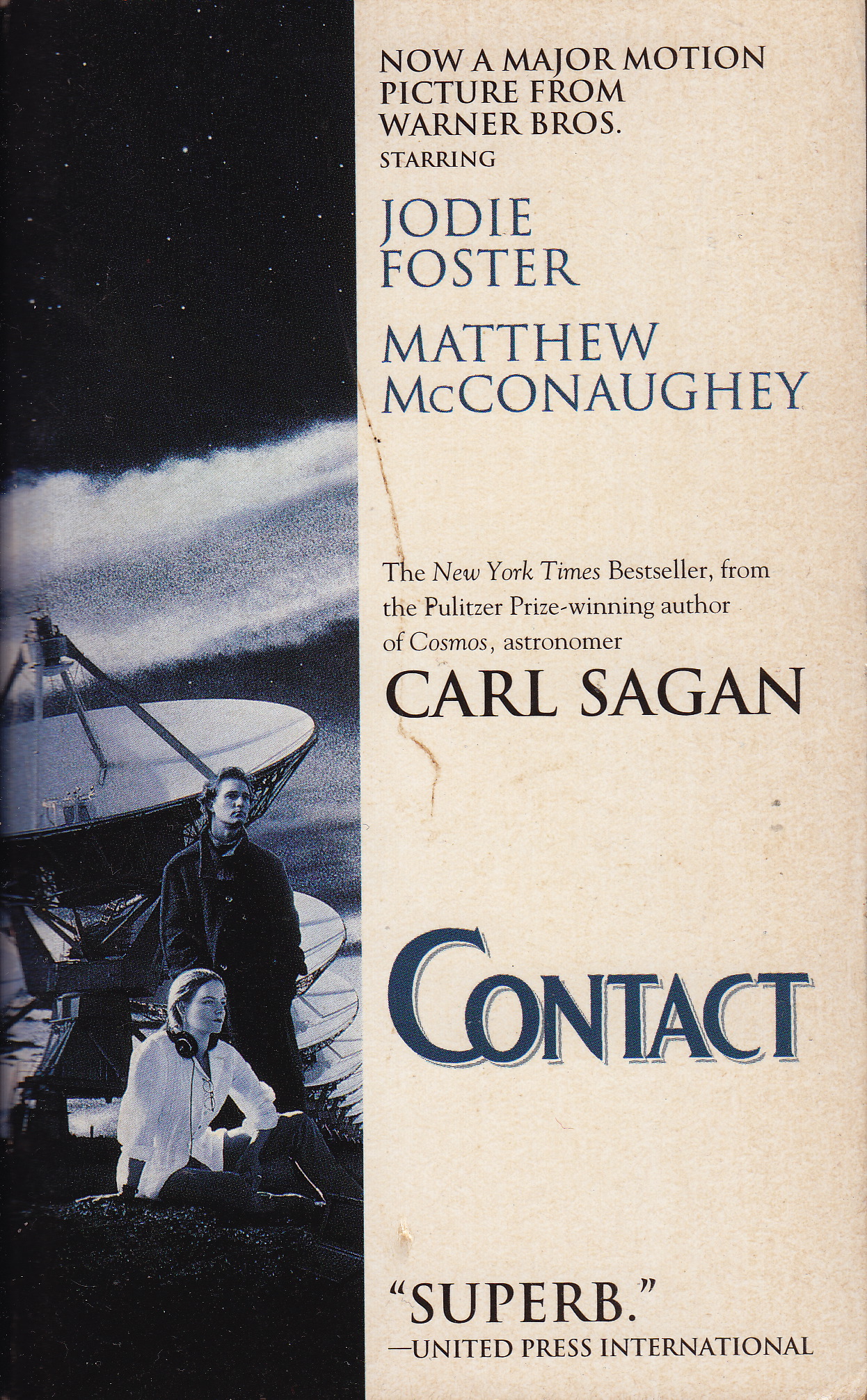
Contact_0001Sometime after the movie Contact came out, I saw it while on a flight to somewhere here or there. As with most movies on airplanes, it didn’t receive my full attention and I seem to recall not hearing a lot of the sound. Having always been intrigued by the possibility of aliens, however, I told myself I’d watch it again. Several months ago I did just that, but as Carl Sagan hoped, much of the story had become somewhat dated. I finally finished reading the novel, and this was a case of the book being better than the movie (as is frequently the case). A number of things surprised me about the story, the primary one being just how prominent religion is in the plot. In the movie some crazy preacher sabotages the first machine just as it’s nearing completion, and even though Ellie Arroway is long connected to Palmer Joss, their relationship doesn’t seem to dominate the script the way it does the book.

Almost immediately upon reading about adult Ellie, it became clear that religion was a major interest that Carl Sagan had. While the chiliasts receive many scathing comments throughout the novel, thoughtful Christian thinkers, such as Palmer, find a way of being taken seriously by Ellie, despite her own personal unbelief. Unable to understand how someone could not accept the evidence before their eyes, she wants to belittle religion but can’t when serious thinkers like Palmer remind her that they have a sophisticated worldview as well. The story represents a long struggle between alternative outlooks. While as a novel it doesn’t always flow, it pulls the reader along, partly based on the intriguing character of Sagan himself.

Carl Sagan believed in life on other planets. He was less sanguine about the possibility of either ancient astronauts or current-day visitors from space, but he kept an open mind. While he was the respected author of numerous scientific papers, other astronomers didn’t always know what to make of such a popularizer. Of course I never knew him, but I have to wonder if his true beliefs didn’t appear in his fiction rather than in his factual writing. At times I found the novel slow and plodding, and as the machine gives ambiguous results, I wondered where the rest of the story could go. Sagan profoundly brings the end back to belief. Without evidence, Ellie finds herself in the place of the religious who believe on the basis of experience and faith alone. And she finds her best friend is a clergyman. Contact, with its God-like aliens, is really a story of finding oneself a place in an infinite universe. To do that well, Sagan seems to have believed, requires both science and religion.


Drumheller Drama

Those who’ve participated in the great drive out west—if you’ve done it you know what I mean—have passed through the range of dinosaurs. Actually, dinosaurs can be found here in the east; New Jersey once had a reputation of the home of the hadrosaurus, before an even larger beast took over the state. In my native Pennsylvania the occasional dinosaur footprint would be found. But to really see the dinosaurs, the west is best. In Makoshika State Park you can find triceratops skulls right out on the ground. You can find plenty of Christians as well. Ironically, we’ve advertised to the world that Christians and dinosaurs don’t mix, but, in fact, they can get along just fine. In a BBC story my wife sent me, one of Canada’s great western dinosaur reserves, Drumheller, Alberta, has a potential clash between sauropods and savior. Seen from one angle, at least. The story by Tom Holland points out conflicting wills for an entrepreneur who wants to build a dinosaur display and a long-established passion play that occupies the space he wants.

Dinos

News doesn’t get read without some measure of drama, so Holland pits the dinosaurs against the Christians. What seems to me, however, as the real issue is entrepreneurial expansion versus what seems like an arcane melodrama, the reenactment of Jesus’ death. Ironically, the greater part of North America was colonized by Christians of various descriptions. Many of them established their culture in various ways across the landscape. As a culture, it wasn’t always belligerent, and sometimes even beneficial. Passion plays, once upon a time, were considered the mark of culture. Jesus, I’m sure, knew nothing of dinosaurs but would have had no problem with them, I contend, if he had.

The issue here is less about science versus religion as it is about cash versus culture. Even Ahab turned his face to the wall when he couldn’t have the land that he wanted. If someone else got there first and made a recurring shrine, does capitalism have the right to slough it out of the way? I love dinosaurs. I’ve driven many miles out the way to see dinosaur trackways far beyond the trodden path. These are but shadows of footprints cast millions of years ago. Both dinosaurs and Jesus have their place in our hallowed past. While pictures of Jesus riding dinosaurs may well be over the top, the message perhaps rings true: there’s no inherent conflict here. When someone wants to make quick cash, however, there will always be sacrificial victims involved.


Old Curiosity Shop

I’m not sure how I’ve managed to live in New Jersey eight years without discovering the Old Book Shop in Morristown. Used books represent the opportunity to find things otherwise hidden away, even often from the all-seeing internet. That’s why I visit book sales at any opportunity, and haunt used bookstores. The Cranbury Bookworm, never easy to reach, was denuded of its glory by a greedy landlord and has only a few shelves remaining in a much diminished location. The Montclair Book Center takes a concerted bit of driving from here, but I always enjoy it when I go. Over the weekend, however, the Old Book Shop was my destination. Although it’s not a large space, the books on display are reasonably priced and represent intelligent collecting. I found a book or two on my wish list there, and many more that, were I in a more lucrative line of work, would have come home with me.

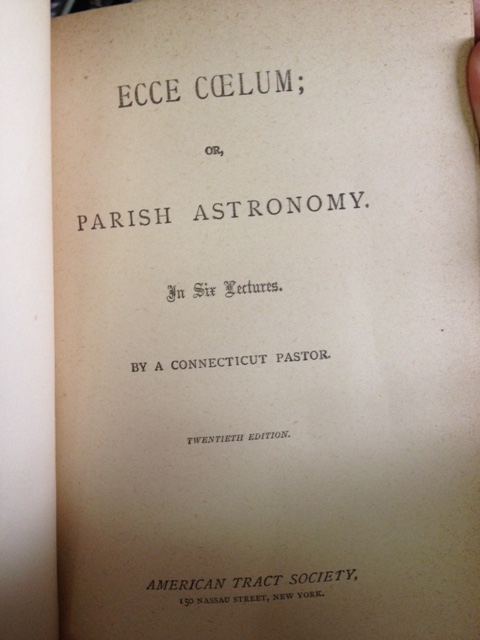
One book my daughter found in the science section, Ecce Coelum; or Parish Astronomy, by a Connecticut Pastor, was clearly from the days when science and religion got along better together. A little research revealed the author as Enoch Fitch Burr. What really caught my eye was the dedication, “lectures on astronomy in the interest of religion.” I’m not sure how I managed to leave that book behind, in retrospect. As a layman both in science in religion terms, I have had lifelong interests in both. It’s only been within the last couple of decades that I’ve noticed a growing tension between the siblings. Like all childhood fights, it is a contested matter of who started it. It does trace its roots back to Galileo and Bruno, but more recently to the Creationists and their never-ending campaigns to have their religion christened science. Back when Ecce Coelum was written, science and religion had much to learn from one another.

IMG_2200

Now they no longer speak. Those who believe all answers lie in material explanations treat religion as a mental disease. The conservative religionists call the scientists atheists, as if that were still an insult. Name calling and bad feelings, I don’t believe, will ever lead to the truth. The science of today will eventually find its way into the used bookstores of tomorrow. Religion books have long lined these shelves, reminding me of the day when she was the queen of sciences. She’s often treated as the jester these days. What scientist now declares, “behold the heavens!”? We might actually benefit to a great degree if both the empirical and the ecclesiastical would behold their world with a little more wonder. And tomorrow’s readers will puzzle at our strange hardness of heart.


Doubt No Alleles

Image credit: Zephyris, Wikimedia Commons

Image credit: Zephyris, Wikimedia Commons

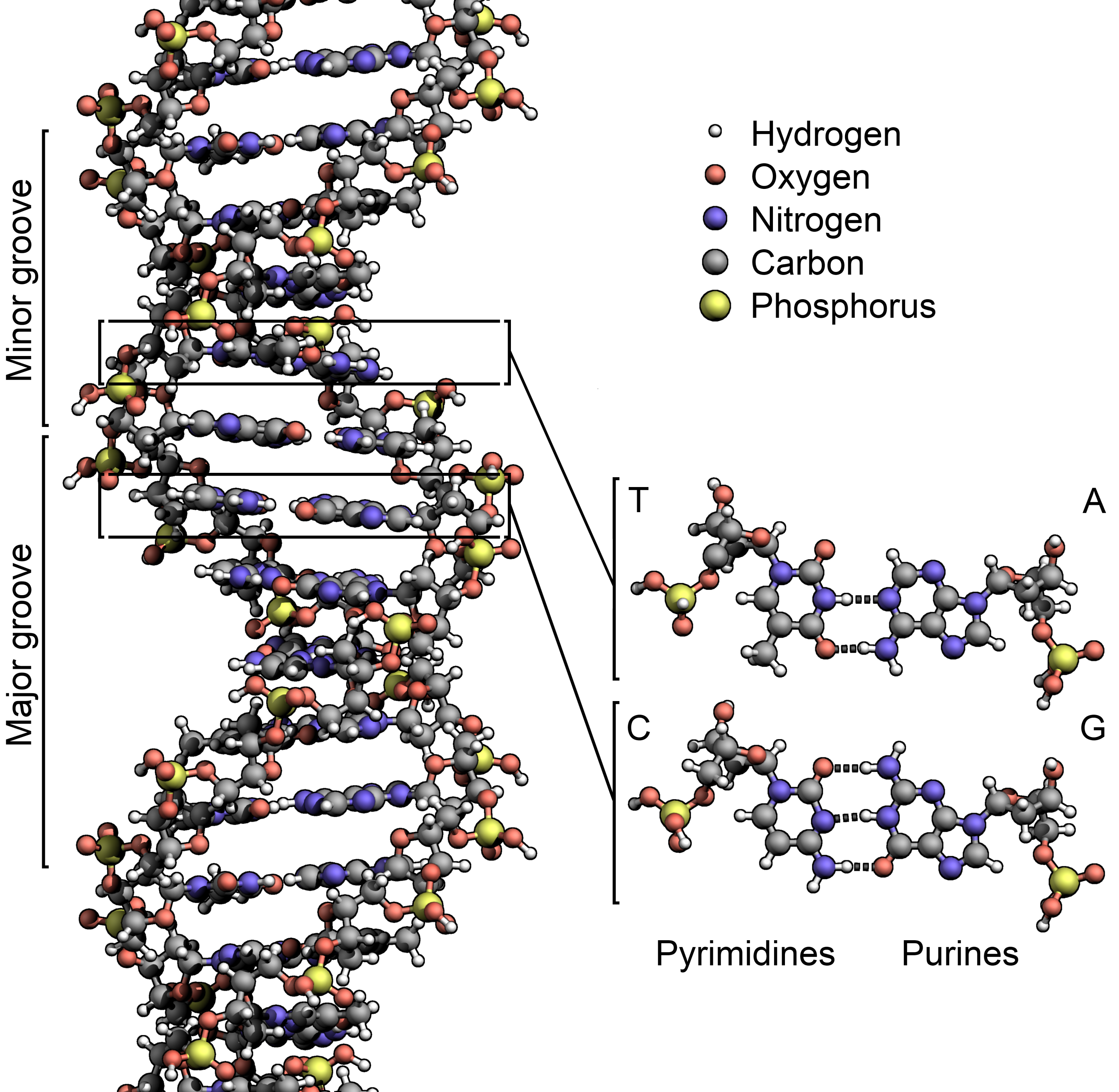
DNA. Is there anything it can’t do? For many decades anthropologists have built painstaking methods to trace developments in human culture. Those of us who’ve studied linguistics in any fashion remember well the many times instructors corrected our false cognates and pointed out family trees of languages that showed who came from whom, based on subtle shifts of orthography or some other aspect of philology. Entire careers could be made in ancient Near Eastern studies by shuffling around the way words were formed and speculating about how they influenced one another. Then DNA. A recent story in the New York Times demonstrates that DNA studies now tell us whence came the Europeans. Among the three groups that eventually settled in Europe were agriculturalists from the Near East, coming along at just about the same time as the Sumerians show up in southern Iraq. They joined the hunter-gatherers already in situ. Their languages, however, did not dominate as a third group, from western Russia showed up and gave (according to DNA) many of the groups their base languages. And here I thought Latin and Greek and Anglo-Saxon had something to do with it.

No doubt we’ve benefitted much from learning about DNA. We can fight diseases that were mysterious, if not divine, in previous centuries. We can learn how closely we’re related to other animal species, or even the neighbor next door. Sneaky fathers can be determined with a precision that sometimes puzzles, such as the recent story of twins who had different biological fathers. Without DNA such a thing could only have been a myth. I wonder, however, what we’re losing in terms of humanity. I suppose we’ll still need a few archaeologists to dig up the remains for scientists to date. And many traditional cultures will still insist that the human remains uncovered be reinterred and not probed and prodded, even after death. We’ll call them backward and superstitious. We’ll consult the genome and decide who to marry.

Meanwhile some hopeless romantic will insist on sitting off in a corner and composing sonnets to the woman he irrationally loves. Looking at the nighttime sky, he may compare her to the beauty of the moon. We know it is a lifeless rock trapped in our own gravity, mechanically reflecting the light of a burning ball of hydrogen and helium 93 million miles away. And if she’ll run this cotton swab across the inside of her cheek we might well be able to tell if she’s a good choice for mating purposes. We’ll also be able to determine the origins of her ancestors and remove a great deal of the mystery about her—there! Won’t that be better than having to woo her and find all that out for yourself? And when your children grow up you’ll point them to the STEM disciplines, since that is the only direction in which there is any human future. And the anthropologists can join scholars of religion as we wait for someone to put the soup in our bowls.


Science v. Evil

Can we eliminate evil? More than a question of metaphysics, this is also the title of an episode of the third season of Through the Wormhole. I’ve noted before that this particular season has been delving more profoundly into areas once reserved for religious thought. Evil is perhaps the most religious of topics, as distinguishing good from evil is at the heart of many religious traditions. Fast forward from the founding of your favorite religion to today. In order to answer the question of whether or not we can eliminate evil, we turn to neuroscience rather than any sacred book. Looking at brain scans, the scientists of Through the Wormhole have isolated areas that indicate who might be a sociopath—a convenient measure of evil—and also who might be less empathetic than whom. Perhaps drugs could be developed to inhibit sociopathic behavior and tendencies. As always, these episodes leave me somewhat distressed.

800px-Planisphæri_cœleste

Losing my long-term position in higher education “without cause” threw me into mental turmoil. Never one to use medications for a long term, I was shattered when my doctor suggested anti-depressants. Would this chemical, designed to “correct” my brain chemistry change who I was? The morning the treatment began, I hesitated to take the first pill, staring long at it and wondering if the person I’d been would be lost forever. I hated being on the prescription. Worse, it was a medication that you couldn’t simply stop. The drop in anti-depressants could bring me dangerously low. Although my employment situation hasn’t radically improved since then, I eventually weaned myself from the prescription. Looking back now, I see that time as an interlude in who I was, depression and all. Mine was, thankfully, a mild case. It has, nevertheless, left me wondering about the nature of evil.

Extremely empathetic, I have never had sociopathic tendencies. I care for insects and amphibians, as well as my fellow humans. I react to the emotions of others. Yet, like all people, I suspect, I know that I’ve got my own personal evils with which to struggle. I wonder if it is a matter of degree. Religions often suggest that the solution to evil is repentance and taking the decision to live a new life. What if one’s brain, however, prevents that? Would the administration of a drug amount to a kind of salvation? And what of those theologies based on concepts of human depravity—can neuroscience prove them wrong? When the moral questions are raised, the physical solutions offer answers. Can we ever reconcile belief and biology? The jury may never come back with a verdict on that one.


Scientific Voices

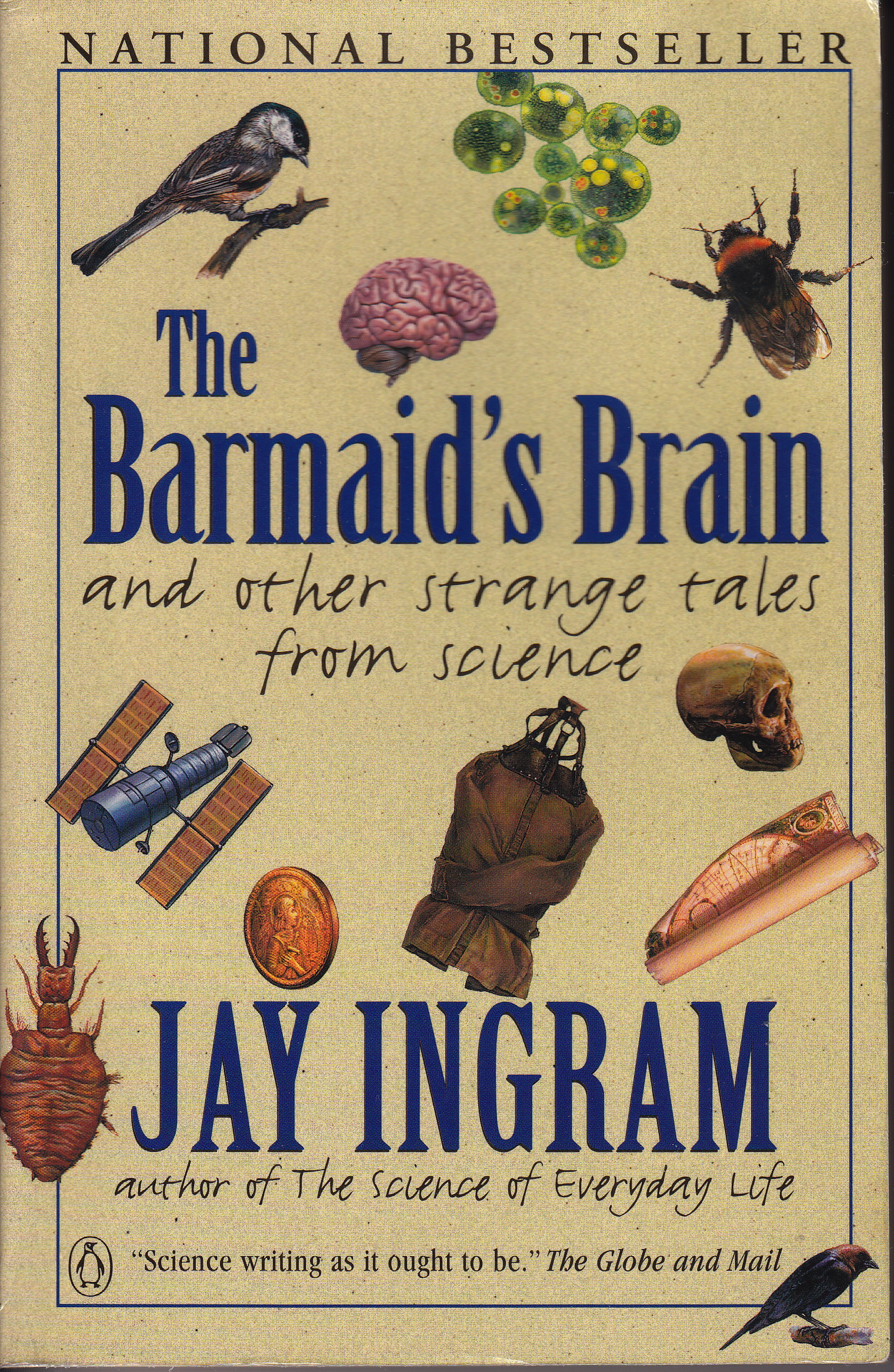
BarmaidsBrainScience requires translation. Even very intelligent people in other fields of study have trouble understanding what scientists have been saying. That’s why science writers are so important. They can distill the heady knowledge that empirical method produces into a palatable tipple for the laity. Jay Ingram’s The Barmaid’s Brain is one such digestible report. As the subtitle (And Other Strange Tales from Science) indicates, this book is about the weird world of science’s often hidden charms. We all pretty much know that quantum mechanics has turned conventional wisdom on its head. We also know (courtesy of the media) that science and religion fight like cats and dogs. What we don’t see is that scientists often disagree on how to interpret data, particularly on the weird end of things. Ingram tells many such interesting tales from nature, psychology, and technology.

The essays in the book are loosely grouped into areas with some common theme. The psychology story that struck me as being particularly appropriate for this blog was the one about Joan of Arc. Joan, as most of us learned from history, was a prodigy. Illiterate, female, and poor, she nevertheless displayed a military genius that led her to the head of a French army trying to hold off the advances of the English. When turned over to the enemy she was treated as a witch, tried for heresy, and burned at the stake. Later she became a saint. The reason that she’s in a book of science essays is that Ingram wonders what exactly was going on when she heard voices and saw visions. Neuroscientists have devised ways of peering into the brain during religious experiences, and psychologists have constructed theories of why otherwise sane people hear voices. Joan doesn’t fit into the category that used to be called schizophrenia, nor does she appear to have been in any way insane. She was religious and her religion spoke to her.

When I was growing up, it wasn’t unusual for scientists to be believers. Nothing was wrong with believing in a god and studying the physical world. Indeed, the idea went back to Isaac Newton and other scientists of the first generation of the Enlightenment. Implications eventually led to the utter absence of deity from the world. People such as Joan were understood as sadly misled by a religion that could not be distinguished from magic. Yet Joan, as Ingram well knows, would hardly be a household name without her visions and her faith. At the end of the analysis, Joan rises from the couch still a mystery. An enigma to science, and suspect to many religious. She was, it seems to me, quintessentially human. We are all, it seems, whether saints or scientists, subject to what empirical evidence will allow us to believe. Most of the time, anyway.


DOA

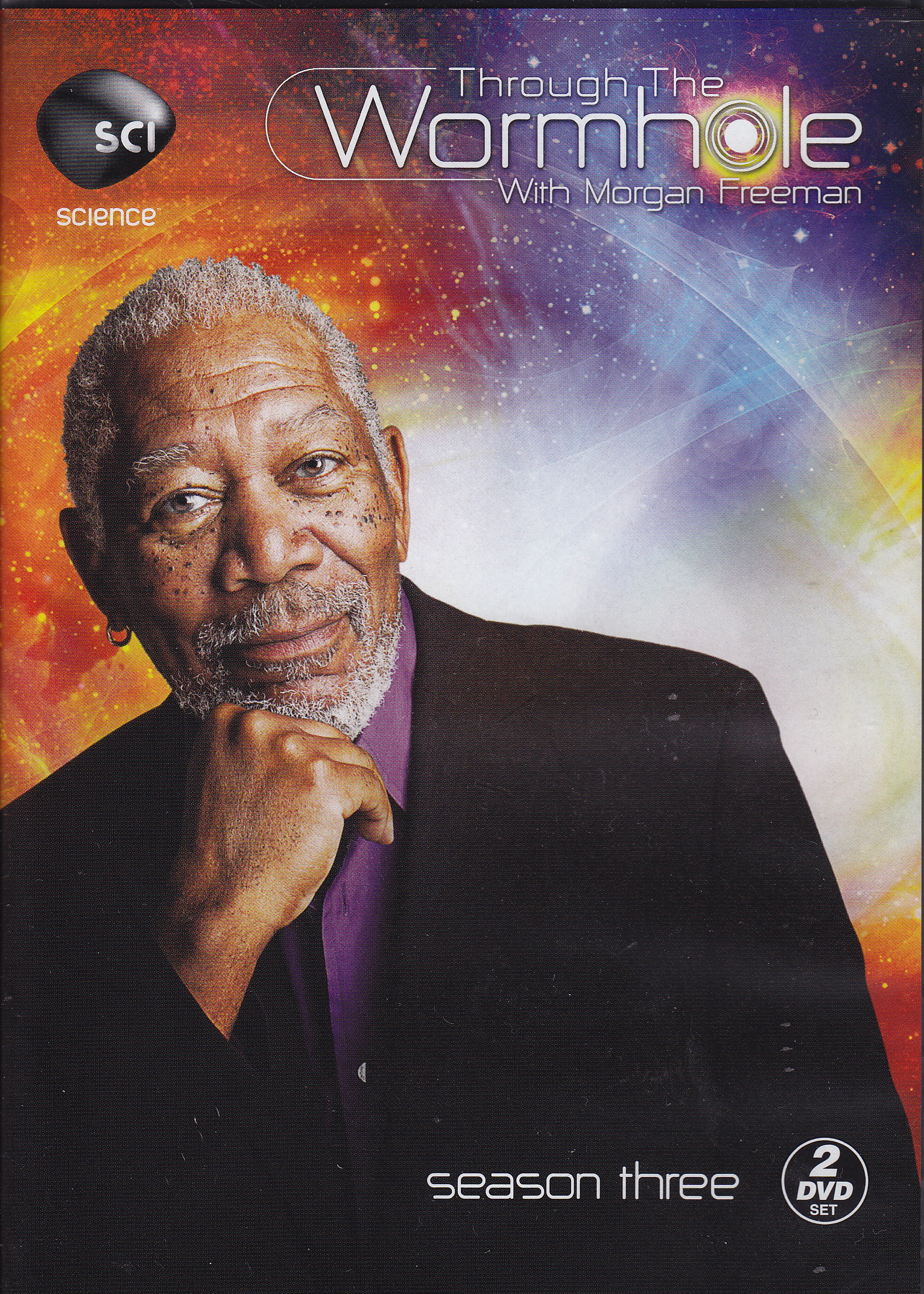
Wormhole3Perhaps it’s just me, but the third season of Through the Wormhole has taken a dramatically metaphysical turn. I always run behind the time when it comes to media; I know that the season is long passed. I started watching Through the Wormhole shortly after the first season became available on DVD. Science has always been an abiding interest of mine, and I face it as someone raised religious and wondering whence lies the truth. (“Through the wormhole,” for the record, is where it might be found according to Morgan Freeman in the opening voiceover.) The third season, through which I’m currently making my way, has begun to raise disturbing questions about life and mortality that start to highlight some of the more Frankensteinian aspects to human curiosity. I recently watched the episode “Can We Resurrect the Dead?”

In the world with which I am familiar, resurrection has always been a religious issue. I grew up with a strong notion of the afterlife, and it was suggested to me that survival beyond death was assured. But the resurrection that various scientists are now exploring is of a different order. For those who can afford the increasingly astronomical costs of top medical care, resurrection is not such an unusual thing. Only, when your body is resuscitated, you wake up the the same weary body that just died. So some of the scientists interviewed suggest that if we can reverse the death “mechanism” that is apparently built into our own mitochondria, we might be able to bring back the dead. Even more bizarre are those called “life loggers” who wear devices to record their experiences in life so that they can be uploaded and preserved. A consciousness digitized and stored on a hard drive heaven for all eternity. Meanwhile a scientist smoking a cigarette in Japan shows us a robot straight from the uncanny valley that looks almost like him and is sent to do some of his lectures in his place.

Maybe it’s just me, but it seems that resurrection used to be somewhat simpler. It was a matter of following the right doctrine and living a life worthy of being continued after this one ends. Now it is a matter of peering through a microscope, or trying to capture on mere devices the multitude of experiences that flood us daily, making us human. Can our future, digital selves really experience human emotion? All those pictures taken while riding a bike—will they convey the effort of balance learned as a child, the sensation of a self-generated breeze on my face, the wonderful weary sensation in my legs upon stepping off? What of that hint of lilac in the air that I picked up momentarily on the wind? Will eternal life, missing the actual life be worth it? I think Victor Frankenstein discovered the answer to that almost two centuries ago.


Strange Days

The flight from London to New York is eight hours. Although I always travel with books, sometimes the selection made before the actual reality of time on a plane turns out to be too academic. I read academic books on my daily commute from New Jersey to New York and back, but these trips are not so drawn out as the long flight across the Atlantic. Since my flight was departing Terminal 2 at Heathrow, I had trouble finding a bookstore. There are stores that sell books, but having been to Blackwell’s the day before, the selection was not inspiring. I wandered to the magazine section. Magazines can be good travel fodder since they don’t demand the rigors of a monograph, and glossy pictures always add to the appeal. But what to buy?

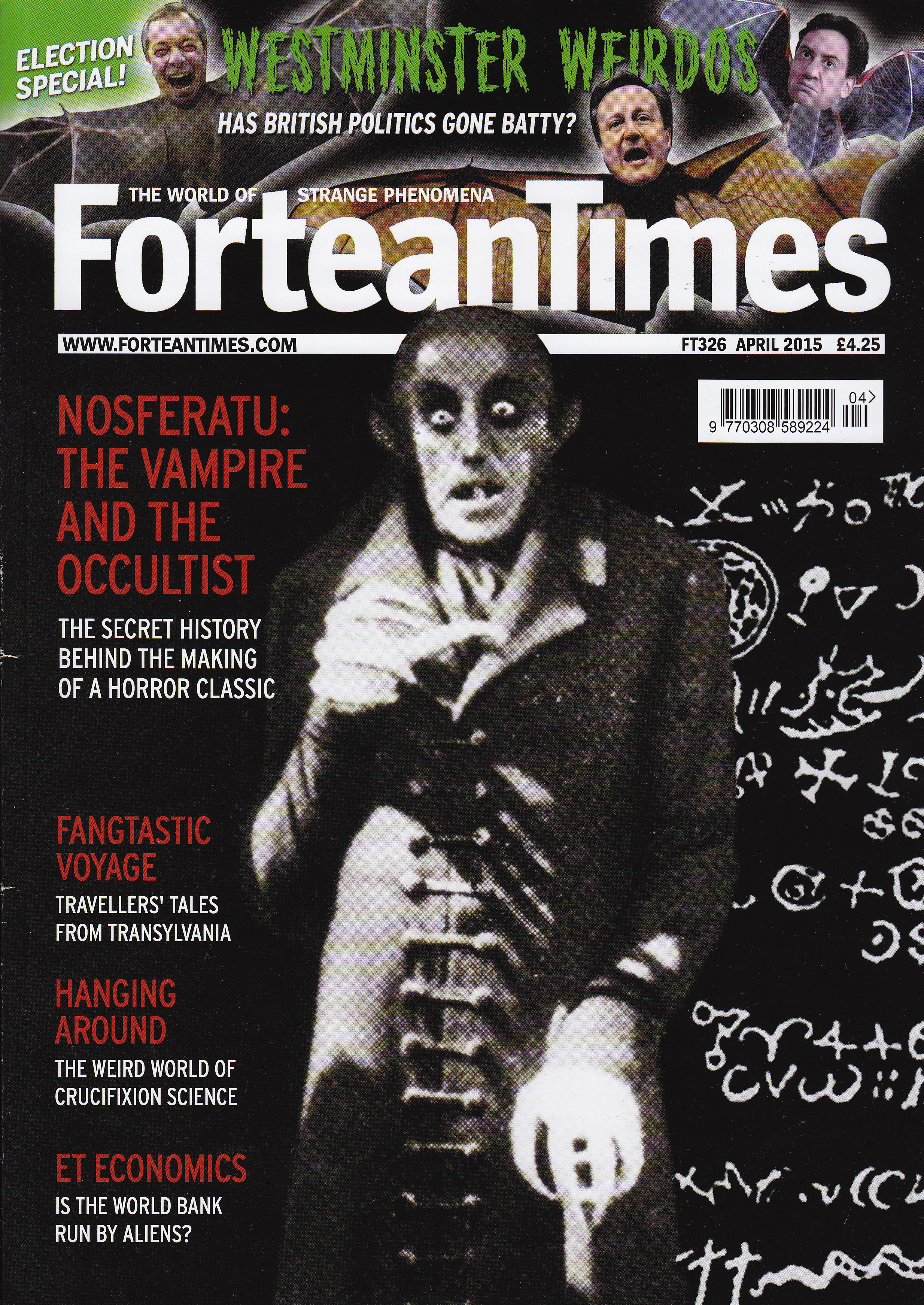
ForteanTimesLooking over the covers, I found one featuring vampires. It turned out to be the Fortean Times, but since I had a row to myself on the plane, I couldn’t see the harm in having a magazine about strange phenomena. I’d never actually read an issue of the Fortean Times before, although I had a general idea of what to expect. While it may seem odd, there is a pretty solid connection between the paranormal and religion. I’ve noticed this for years. Reading through the Fortean Times, it was clear that others have made the connection as well. Many of the articles, including the ones on vampires, touched on obvious religious themes and motifs. This was so much the case that I began to wonder if any kind of solid wall can be erected between the two.

Religion, broadly conceived, tends to be concerned with the non-material world. Its claims tend to defy empirical verification, and its subject matter is often at odds with science (at least in the mainstream). The paranormal is open to scientific investigation in that it tends to be based on secular claims. Like religion, however, it tends to dwell in the non-material realm. After all, vampires coming back from the dead is hardly a phenomenon that is readily recorded with any instrument beyond a Hollywood movie camera. Still, most religions are hostile to the paranormal, and investigators of the paranormal may be unconnected to religion. Both, however, are an engaging recipe for a long flight. Especially if nobody is sitting in the row next to you.