Global Warning

“Sticks and stones,” the childhood wisdom goes, “may break my bones, but words will never harm me.” We were taught that little mantra as a response to being teased by bullies. But words can and do hurt. They can even be lethal. Although I’ve come to realize that specific words are inherently neither good nor bad, I’m still a little shy around some of them. The website known, euphemistically, as “IFL Science!” contains an f-bomb that sometimes makes me wary—what’s wrong with just regularly loving science? In any case, perhaps this adverbial use of the most versatile swear word is intended to make the website a bit of racy fun. The posts are often very good. So it was that I recently read a story about “Friends of Science.” This group, it seems, is paying good money to convince the scientifically illiterate that global warming is natural, caused by the sun and not emissions, and so we should just chill. IFL Science! points out that the group, however, receives money from petroleum companies. Sticks and stones.

450x436_q75

On my way to work this week, I noticed how many of the ads in ebullient, affluent Midtown Manhattan reflect dark shows and movies. It’s summertime, when we expect bright colors and sunny weather. Has it, perhaps, been too sunny? The best selling non-fiction book over the past few weeks has been on economic inequality and how it will lead to a good, old-fashioned primate crash. Going ape-crap on the bullies. Our species doesn’t tolerate radical unfairness for long. Those who suck money from under the ground may not fracking care about the rest of us, but they sure pull in the big money. Big enough to buy the truth. Our emissions, they seem to say, don’t stink. And that weird weather you’ve been noticing for the past decade or so? That’s normal. Words will never harm me.

Global warming is a reality.

Oligarchy comes in many forms, the most insidious of which is the benign overlord. The implied subtext is “if I am smart enough to make all this money, I must surely be smart enough to decide what’s best for everyone.” Call it the gold standard of hypocrisy. In an increasingly secular society where the rewards of heaven devolve to what we can grab on earth, this might even be called a kind of theology. We all know that public policy and federal laws can be purchased, if we call it lobbying. Or election fund donations. The truth it seems, is up for sale. Call it Friends of Science—the name says it all. And if we’re tempted to add our own epithets, it might pay to ask what harm can words really do?


Witches in History

History of WitchcraftIn a rationalistic society, the concept of witches has no place. If only we knew what witches were. Sadly fascinated by the unfortunate—evil would be the more appropriate word—victimization of women in the late Middle Ages as partners of the Devil, I read Jeffrey B. Russell and Brooks Alexander’s time-honored study, A History of Witchcraft: Sorcerers, Heretics and Pagans. With its bold pentagram on the cover, I’d been afraid to take this on the bus, and so it sat in my reading pile until I figured out a way of keeping the cover from view while I perused the contents. The authors wisely spend the introduction with definitions. We define our world through lenses. For the most part, people today use the lens of science, as if that were the only way to view the universe. Still, even with that polished glass in hand, we have a difficult time knowing what “witch” is supposed to designate. Russell and Alexander suggest that it changes over time.

No doubt, witches still exist. The recognition of Wicca as an authentic religion (for tax purposes, the only true measure of a religion’s bona fides) demonstrates that. The problem is that Wicca is not in any sense a direct continuation of the witch hysteria that swept Europe, and parts of New England, centuries ago. As A History of Witchcraft demonstrates, this was a religion practiced by no one, but imagined, and feared, by many. Particularly men. Particularly religious men who had problems with women harboring hidden powers. It was a full-blown and horrible fantasy that led to many thousands dying for a religion that didn’t even exist. Modern witchcraft began in the 1930s and has become a nature religion that sees itself connected to that past, but which really only touches at the very edges.

Witchcraft was a way of looking at the world that saw all things as intimately connected. Russell and Alexander point out the similarity to chaos theory with its butterfly effect. We do see effects at a distance. Science tries to make them less spooky. Those who practiced witchcraft in ancient times, before the Middle Ages could even be dreamed, tried to bring such forces under human control. If some anthropologists are to be believed, some may have succeeded. This idea pulls at our darkest fears. Can we accept a world where we are manipulated by others in unseen ways? It happens every day. Not by spells or incantations, but by forces far more powerful than that. You don’t need to be a witch to see it. You only need to open your eyes.


Do You Mind?

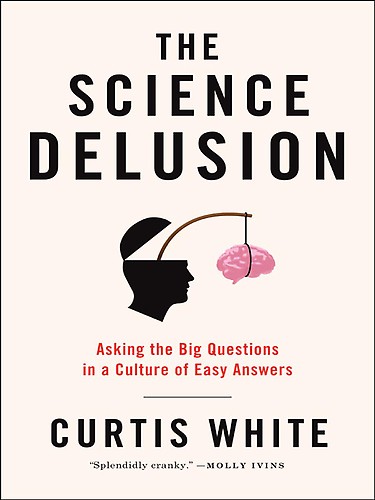
TheScienceDelusionSeems a lot of people are deluded these days. I know I am. Still, every great once in a while I read a book that helps me cope with the morass of everyday life in a way so profound that I feel elated. At least until I get to work. One of those books I cannot commend highly enough. Curtis White’s The Science Delusion: Asking the Big Questions in a Culture of Easy Answers is epiphanic. Not your typical (generally faith-based) objection to the New Atheist phenomenon, White asks more fundamental, and indeed, logical, questions. And he’s incredibly fun to read. Starting with the conundrum that often goes unspoken, White demonstrates that even the scientists among the New Atheists ascribe to immaterial value judgments without thinking through the implications. Having jettisoned religion, philosophy—the whole of the humanities, in general, as pointless, non-empirical window-dressing, even the greatest lights still claim their tenets. As White illustrates, stars cannot be beautiful without a concept of beauty. Beauty cannot be quantified, and is therefore beyond the empirical method. One could say it’s in the eye of the beholder, but science is uncomfortable with metaphors as well.

Materialism, often in league with politics and power-mongers, fails to account for much of human experience. The real danger, as White demonstrates, is when society simply accepts it because it comes from a white lab-coat. White, along with most of non-materialists, is not anti-science. Science clearly describes, in a pretty close approximation, the physical world we know. At least in the New Atheist camp, however, it doesn’t stop there. The take-no-survivors attitude causes problems because it is hoisted on its own petard of logic. The mind that is attempting to puzzle out science is immaterial. Mind does not equal brain. The cause and the result are easily confused. Flush with neuroscience’s success of describing the brain, we assume that science can also explain things as inexplicable as the nature of light, quantum mechanics, black holes, or the Tea Party.

White is not shy of talking about the elephant in the room. Consciousness is not a material phenomenon. If you are reading this, you know what I’m talking about. We are self-aware creatures. So seem to be some other primates, cetaceans, and corvids. If our minds could be quantified a lot of psychologist’s couches would be empty. Chemicals may affect the working of our brains and influence the performance of our minds, but when they wear off, it is still yourself staring back from the mirror the morning after. Those of us who spend our lives pursuing the humanities generally don’t try to take over science. It is very good at what it does. The world as we experience it—even the use of the word “experience” itself—is, however, more than physical. Even the New Atheists dream, and hope, and love. No matter what they may say, there is an inherent beauty in that.


Tempting Truth

Recently I was discussing the internet with friends. Real ones, I mean, physically in the room with me. One asked if the internet made conspiracy theories more believable. My response was that the internet has changed truth. That probably seems like a bold statement, I know. Truth, however, is an abstract very difficult to pin down. Science, for starters, does not deliver truth. Science is theoretical, and since it is falsifiable, a scientific theory, while based on facts, is always contingent; it is the best explanation that we have at the moment. Scientists generally know not to conflate this with truth, deferring the latter to the realm of philosophy. The average person probably conceives of truth as that which is literally real. Reality itself is, however, a very slippery concept—quantum physics reveals realities where many are not comfortable going, and which very few truly understand. Truth is a philosophical concept that reflects what humanity collectively accepts to be reality. It is in this sense that the internet has changed truth. It is the Wikipedification of the mind.

People, for as long as they’ve had the luxury to consider abstracts, have struggled with the question of truth. For a few centuries—almost a couple of millennia—in much of the western world, the Bible was considered a source of truth. If it was in there, it was true. The source of authority here was that of a deity who oversaw the writing of the Bible, word by sacred word. When science began to demonstrate that this Weltanschuung was untenable, people realized that truth was a bit more complex. When westerners came into contact with other religions, the complexity grew. Large swaths of humanity believed things completely different from the rest of us. What was the truth? A rear-guard action was often the result. Those who had the Bible had the truth already, and since truth doesn’t change, what more was there to be said.

Truth or dare?

Truth or dare?

The internet is not yet a mature adult, but an entire generation has now grown to a kind of maturity with it. It is the first line of recourse for true information. Who has a phonebook in their house anymore? When is the last time you opened a physical dictionary? Some of us routinely look up Bible verses online, since the internet is the ultimate concordance. Instead of turning to the Bible, or any other source, we turn to the collective “wisdom” of humanity as the measure of what is true. Snopes aside, we plow ahead with what we read online, confident that with all those millions of users, we just can’t be wrong. How strange a concept to unplug and look at the actual reality behind the screen. We might be surprised to learn that there are great and terrible wizards back there after all.


The Weather in Kansas

In a move that threatens intellectual whiplash, the Kansas State Board of Education has backed the Next Generation Science Standards. For a state historically at war with evolution, adopting a curriculum that (rightly) presents evolution and global warming as facts, there is cause for hope. As an average citizen sometimes just struggling to get by, I watch in stunned horror as our elected officials try to repeal Obamacare without touching their own health plans paid for by yours truly (and mine truly). I see them vote themselves pay raises while pension plans and salaries of ordinary citizens are frozen. I know where the buck actually does stop. So it is strangely encouraging to see a state that has declared war on science beginning to realize that yes, the truth does have consequences.

Science does not necessarily have all the answers, but it is the best that we know. The empirical method works, and our healthcare, transportation, and communication have all benefited enormously by it. Our way of life has grown easier because of our application of evolution and its ways to our understanding of microbes and the ways to hold off their attacks. Science has been warning us since I was a high schooler, over three decades ago, that our industrialization has been causing grave changes to our ecosystem. Unfortunately, those with money to make from it can simply afford to move to higher ground. Kansas is among the Great Plains states. It is wise to recognize that global warming threatens those who live close to the earth most of all.

The intolerance to science is not simply a religious reaction, as some would characterize it. Religion may be used in the interest of business. And any savvy entrepreneur knows, and exploits that fact. It matters not a jot or tittle if you evolved from a common ancestor with the apes, as long as you can climb, like King Kong, to the highest towers and look down on all the rest of humanity. The water from melting ice caps may be rising below, but the Great Ape need not worry. Until it becomes clear that without the little guys down below, even the top monkey is nobody.

NotInKansas


Intelligence, Evolved

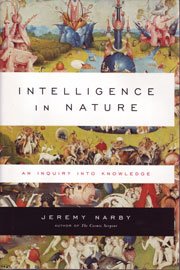
intelligenceinnatureAnyone who has looked into the eyes of a cat or dog can have little doubt that they think. What exactly they think is, of course, a matter of conjecture. I had been meaning to read Jeremy Narby’s Intelligence in Nature for a few years now. We are taught at a young age to eschew anthropomorphism—although our eschewers don’t use that word—as the childish way of perceiving the world. Animals don’t think because that’s reserved for people. We sit in the finest spots in the poshest corners of the animal kingdom and the sign says “No Dogs Allowed.” I never really outgrew this child-like belief because the minimal scientific evidence I’ve been able to infer supports the idea that like us, other animals think. Narby, an anthropologist, agrees. At least to a point. I don’t wish to make claims for Dr. Narby that he wouldn’t support, but he provides fascinating empirical evidence, “down” to the level of amebas and plants, that indicates intentionality. Nature is alive with thought.

As an anthropologist, Narby begins his consideration with the insights of shamans. Although scientists rarely countenance shamans, they are among the earliest of human religious specialists and they have long promoted the idea that humans are fully integrated into nature. We are not separate and above. From our brains to our bones, we are one with the natural world. If we think, should not animals think? Interestingly, this idea brings Narby into some of the same territory as Thomas Nagel; intelligence may be a cumulative process. Our brains’ ability to think may be the result of collecting together the thought processes of our fellow creatures to a point where our thinking becomes abstract. We’re told that dolphins and whales don’t think like us—they don’t build cities, do they? Maybe it’s because they didn’t evolve opposable thumbs. Maybe it’s because they’re smarter than we are.

There are, it seems, many thinkers on the outside of the hallowed confines of hard science that are chipping away at the strict materialist edifice. There can be no serious question that the empirical method explains much of what we experience in the universe. It has always amazed me, however, that we assume that humans are able to find the outer limits of existence with our limited senses. We know animals can see, hear, smell, taste, and maybe even feel in ways beyond our capabilities. Who’s to say that there isn’t other input well beyond our limited senses that we use to survive in this environment? After all, we didn’t evolve to know everything—we evolved to be able to thrive in our ecosystems. For that you don’t need all the answers—just enough to get by. If you doubt my reasoning here, I suggest you ask your dog or cat.


Animal Mentalism

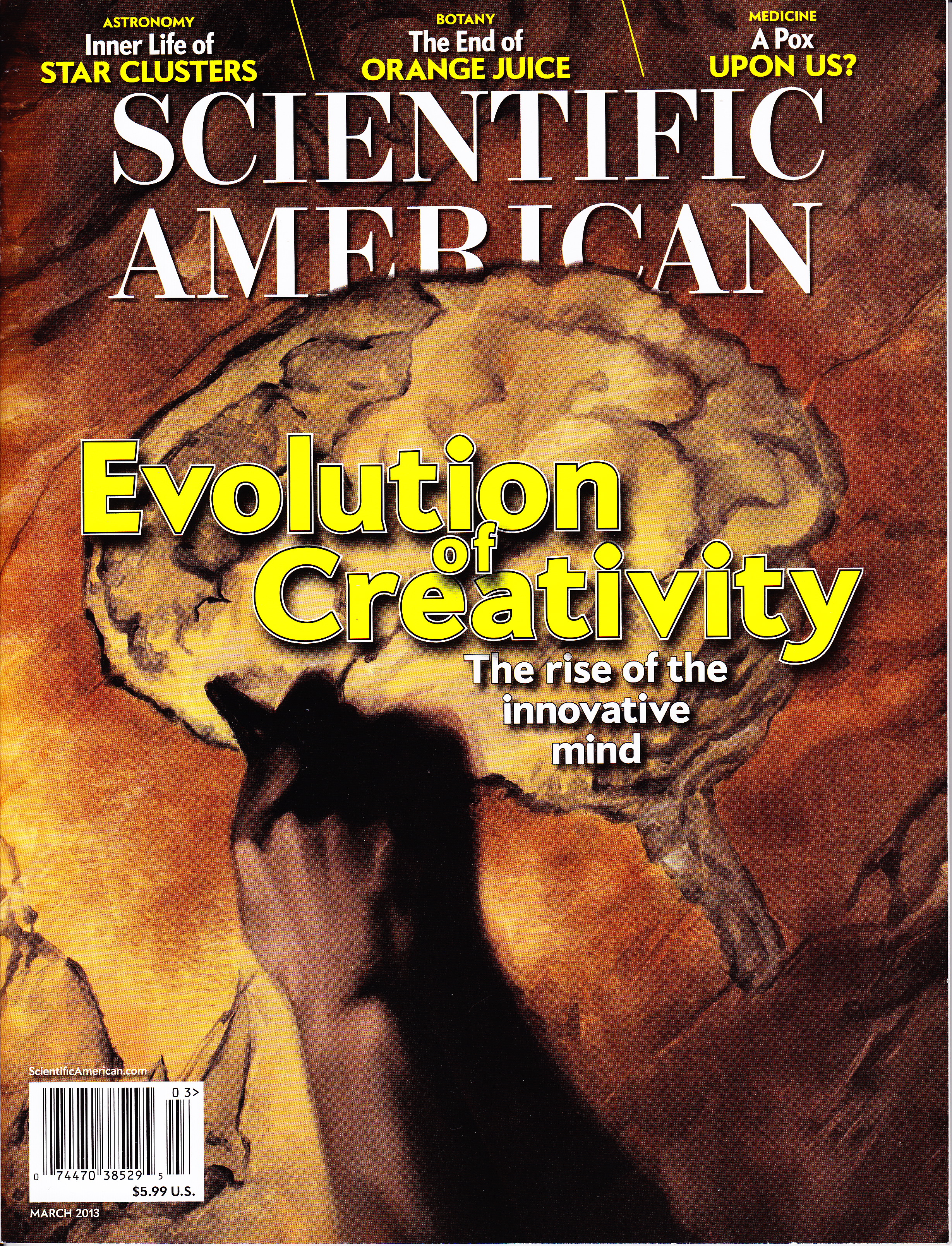
SciAmScience is how we know things. Most things, at least. One of the fundamental aspects of human life not yet grasped by the great empirical method is creativity. We generally have an idea how it works, but, like so much of human experience, it is difficult to describe precisely. When I saw this month’s Scientific American fronting with the headline “Evolution of Creativity”—two of my favorite topics—I knew I’d have to read it. The article by Heather Pringle zeroes in on the archaeology of very early human history. Before modern human, actually. I’d been telling students for years that the development of such traits as artistic representation, burial, music, and an awareness of some forces “out there” could be found tens of thousands of years ago. These, I suggested, marked the beginnings of religious sensibilities. I’d be willing to go even farther, however, and suggest that we share some of these traits with our fellow creatures. Religion may have a biological basis. That’s not where Pringle is going, however, and she addresses not religion, but creativity.

Pringle suggests that evidence for human technology—modest though it may be—stretches back further than the 40K epoch that seemed to house an explosion of human innovation. She shows how sophisticated knowledge of the environment and corresponding innovations were occurring 77,000 years ago, and even earlier. Some of it stretches back before Homo sapiens; stone weapons may be as early as Homo heidelbergensis and kindling fire as early as Homo erectus. Even our Australopithicene cousins seem to have been happily knapping stones two-and-a-half million years ago. The evidence, at the moment, seems to end there. I wonder, however, how far back cognitive development goes. We tend to underestimate the thinking abilities of animals, despite our constant surprise at how smart they seem to be. How very human! How very male, to assume that everything else is here for our use and pleasure.

Scientists often come upon with astonishment ideas that creative folks have been pondering for centuries. Science must be careful—that is one of its limitations. Creativity, the phenomenon Pringle explores, contains, in the words of Lyn Wadley’s team in Science, chemistry and alchemy. Creativity, like religion, isn’t afraid of magic. No doubt, some scientists will claim that true intelligence only begins with humanity. Looking at the way we treat each other, sometimes I doubt that it begins even there. If there is any hope for us, I would humbly suggest, it will come in the form of creativity. It is that very alchemy that keeps me coming back to science, and science will teach us, eventually, that animals are creative too. When we place ourselves among them, we will have created a world.


Continental Drift

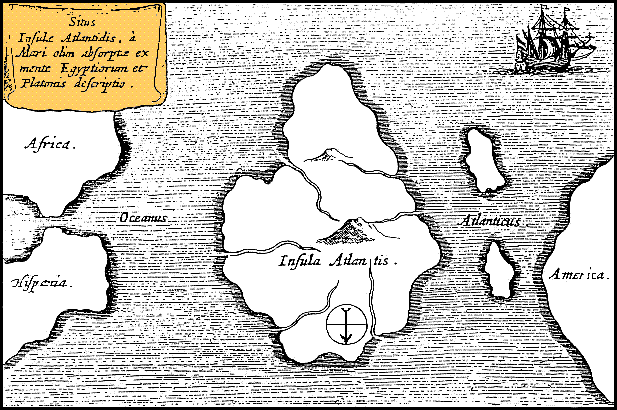
So this is the way epiphany works. (I know it’s Lent, but I’ve got bigger fish to fry.) I sat down to check my personal email after a horrid day at work, and since I have a Verizon account, I can’t help but see the news headline that’s on the page when I open it. When the headline said something about a new continent discovered by scientists under the ocean, I’ll have to admit that Atlantis sounded better than anything I’d heard in the office. So it was worth a click.

Athanasius_Kircher's_Atlantis

Turns out that this isn’t Atlantis at all—I have this habit of making naive assumptions—but a continent just north of Madagascar that sunk some nine million years ago. No happy lemurs or Homo sapiens around then. So when this Atlantis sank, there was nobody around to see it. At least not Plato.

The story was broadcast by Newsy and it made mention of Science World Report. Here’s where the epiphany piphed. I’d never heard of Science World Report. When I went to their site, the wonders of the universe spread out before me. “Dying Stars Reveal the Clue to Extraterrestrial Life: Earth-like Planets Unmasked” read one headline. “How Dinosaurs Evolved the World’s Longest Necks While Giraffes Fell Short.” These are the things I need to brighten me after a rotten day. A world with wonder in it. A world where money is not the sole, or even the highest good. A world where an intellect need not go to waste.

“Human Language May Have Evolved from Birdsong: New Meaning for Communication.” This website is like my eternal monologue in headline format. I’m not naive enough to suppose this website will be the nepenthe for all my workaday woes. But it does serve to remind me that science and religion are not always foes. A religion only becomes belligerent when it takes its truisms too seriously. We evolved in a world of wonder, but we’ve taken great care to remove the wonder from it. As if joy and delight were puerile phantasms with no place in the serious adult world of finance and industry.

I became an educator because I’ve always been in love with ideas. I lost my job in education because I was an idealist. Yes, continents do indeed sink. And while it may not be Atlantis down there, a simple click led me to a world of wonder. And that is, if anything can be, cause for hope.


A Cougar’s Mother

While on a stroll between appointments at Indiana University in Bloomington, I came across a tree with flowers laid underneath and a memorial plaque at its base. I glimpsed the name Mellencamp, and for a fan of rock, it didn’t take much imagination to tie it to John Cougar. Indeed, the memorial is dedicated to his mother, an artist, who died earlier this year. I first came to know of Indiana University because of music. I married a musician who, like myself, had to sacrifice a career doing what she loved in order to “get by.” Although she hadn’t studied at Indiana, my wife knew the reputation of the campus well. At a sunny moment between appointments I sat outside one of the music buildings listening to students practice through the open windows and read about Marilyn Mellencamp. An article in a local paper explains that this week an exhibition of her art is on display in Bloomington. When I read the quote from Waldron Arts Center Gallery Director Julie Roberts that the arts “are viable ways to make a living and they are vital part of being a happy and alive person,” I felt a renewed sense of hope. There are others, it is clear, who see that the arts are called the humanities for a reason. In a culture where only money matters, there is no culture. Think about it.

Since the industrial revolution we’ve been told that the measure of a human is how much money they are able to make. Something profound has been lost since then as great universities cut programs for the arts and humanities while business departments build new facilities. Talk about gaining the world but losing your soul—business cattily replies, “I have no soul.” While John Mellencamp never rivaled the biggest bands for income, his work, particularly Scarecrow, is full of human empathy. I listened to that album over and over in 1985, recounting the farm crisis and the demise of those not driven by corporate greed. And looking at this maple tree I wonder when the last time was that someone honestly mourned the death of a corporate mogul.

It is the mark of a deeply schizophrenic society that we all aspire to what fails to inspire. Our economy is driven by the material—money—and not that which speaks profoundly to what it means to be a human being. We keep the arts alive because the wealthy require something worthwhile upon which to spend their lucre. Is not buying art buying part of another person’s soul? We can’t define souls materially, science must conclude they don’t exist, but every time you say, “I feel happy/fulfilled/satisfied” you belie the facts. Souls may not be material, and they may never be found in laboratories. They are nevertheless part of the human constitution, and I for one, would lay a flower under a tree and know that it is more than just fertilizer for the next growing commodity.


NDEs

I love science. Like many young boys, I was probably enticed to science through science fiction. While I didn’t follow science to a career, I used it to study religious texts. Those who’ve never undertaken the challenge of trying to figure out what something written thousands of years ago—on clay!—really says may be surprised to learn just how much science is involved. Nevertheless, as comforting as reductionism may be, something just doesn’t feel right about it. Science is how we explain and understand our world, and it does a spectacular job of it. The problem arises when science becomes what Stephen Jay Gould called a “magisterium.” Magisteria have all the answers. Yes, science explains how matter and energy work and interact, but it has yet to explain satisfactorily what it feels like. Most days I feel like the person I’ve become accustomed to show to the world. That person is very much like every other—being born, eating, breathing, dying. Medical science can explain most of it, but what about the parts it can’t?

I just finished reading Ornella Corazza’s Near-Death Experiences: Exploring the Mind-Body Connection. I remember when the craze about this hit in 1981 with the release of the movie Life After Life. I was fascinated and terrified by it. Since a materialistic view of science dismisses anything that has the residue of spirits or souls, the phenomenon of the resuscitated dead reporting seeing their bodies from above, shooting through tunnels into the light, and sometimes meeting the dead (or God), were explained as last nano-second hallucinations as the brain prepared to shut down or reboot (upon resuscitation). That’s that. The answer, however, didn’t satisfy everyone. What about those cases where the dead person reported, in detail, what happened in other rooms, or things they couldn’t have seen in their own room, had they been conscious? Corazza takes these considerations seriously and tries to understand what may be going on. Obviously, her explorations will not convince a reductionist, but they may give pause to some of us.

What makes her approach so interesting is that Corazza takes into account an alternative way of looking at consciousness. While the facts of science are, by definition, universal, the contexts within which those facts are viewed are not. Having spent considerable time with Japanese scientists exploring consciousness, eastern ideas of the body inform her research. In the western world we have an easy familiarity with the Cartesian dualism of body and soul that does not fit into other worldviews. Corazza takes the interesting step of asking what if we apply an eastern paradigm of the body (one that understands soul as body, and not just in a materialistic sense) and apply it to the question of Near Death Experiences. The results are mind-stretching. I feel as if my consciousness got up from months of laziness and ran a marathon (or at least a 5-K). It’s a bit winded and parts of it are starting to ache a little. No reductionists need worry, however, because in that worldview none of this exists.


Too Tired or Not too Tired?

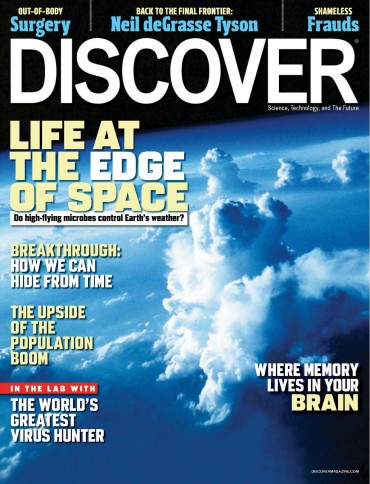
An article in the current Discover magazine ponders invisibility. Sight is actually the perception of certain wavelengths of light, and by bending particular wavelengths around an object it can be rendered invisible. There’s nothing really new there, as anyone who’s heard of the Philadelphia Experiment knows. The next step of the quest, however, is to determine if, by sending parallel light rays at manipulated speeds, an event might be rendered invisible. Event in this sense of the word currently denotes an event on a cyclotronic scale, an incredibly miniscule and inconceivably brief occurrence. Since humans are endlessly inventive, the corollary is naturally what might transpire from there as larger events are targeted and rendered clandestine. Could an historic event be lived out in (or engineered into) complete obscurity? It sounds like science fiction, but these questions are being asked in the workaday world in which we live.

Messing with history is related to fooling about with time. Twice every year we attempt to manipulate the standard determined by our sun and human convention to set clocks forward or back to maximize daylight at certain hours. We are rendering times invisible. Every year when I groggily adjust to the new time scale, I grumble about how wasteful it really is. Being one of those people who wakes up before the alarm clock goes off (I had never even heard the alarm on my current clock), twice this week I have found myself startled awake by the foreign beeping next to my head. In disbelief I stare at the 4 a.m. displayed in placid blue digits floating in the dark. Well, changing three time zones the day before setting clocks ahead probably didn’t help, but I wonder why we don’t just leave time alone.

Waiting for the bus in the dark, a silent kind of joy begins to grow as daylight creeps into those murky morning hours. Then we fool about with time and plunge those on the verge of daylight back into the darkness. Just that one hour leaves a nation yawning uncontrollably for a couple of weeks until our bodies adjust to the new schedule. Why can’t we leave time alone? People are never satisfied with time as it is, but since we can’t seem to stop it, perhaps we can render select portions of it invisible. The potential for abuse seems awfully large to me. Let’s put it to a vote. If we are going to make one historical event disappear, I suggest we do it twice annually. And those events would be the insane toying with time by setting our clocks ahead and back. Excuse me, but I feel another yawn coming on.


Yeti Again

Time magazine announced last week, in a story spelled out on Time.com, that “There may be solid evidence that the apelike yeti roams the Siberian tundra.” This is surprising news given that even in the face of good evidence, science is reluctant to admit new large animals to our biological family. The reasoning goes that since humans (mostly white, male humans of the western hemisphere) have explored most of the landmass on this planet, we could not have missed any large land creatures. There are rare exceptions, such as the mountain gorilla, added to our database only about a century ago, but it seems to have been the last of the large animals to avoid detection. Now the yeti, the bogeyman of many childhood dreams, may be coming to life.

Science is our way of describing and theorizing about what we have discovered. Many therefore assume that science is all about new discoveries. Some of us feel a tinge of sadness at having been born after the great era of discovery. Reading about how adventurers (responsible for far more fundamentally earth-shaking discoveries than scientists of their times) ventured into new worlds and declared the wonders of God revealed in the formerly unknown, is always a humbling experience. We know so little. The mark of the truly educated is not the claims of great knowledge, but the admission of how little we really understand. Does the yeti roam the inhospitable and very sparsely populated regions of Siberia and the Himalayas where it has been a staple of folklore for centuries? We may never find definitive proof, but Time holding out a candle of hope seems a step in the right direction.

Relegated to the world of the “paranormal,” elusive animals demonstrate that the ways we know about the world are multitude. Science does not, and does not claim to, know everything. Indeed, science has a limited frame of reference within which it works. Going out seeking cryptids is not, properly speaking, science. The belief that those seeking evidence display is closer to religious conviction. That does not mean it is wrong or that it is founded upon faulty suppositions. It is simply a different kind of knowledge. It is common to say science is in conflict with religion. It need not be. If we accept science at its word, as doing what it claims to do, there is no need ever to question assured results. Belief, on the other hand, seldom crosses over into the realm of objective truth, empirically demonstrated. If it did, it would not require believing. If yeti is discovered, there will be much celebration among believers, but the creature will necessarily pass into the hands of science. For this reason alone, many are glad to leave it in the realm of folklore and myth. Either way, to some people, yeti will always be real, whether scientifically verified or not.


Timing God

Two weeks in a row now God has made it into the pages of Time magazine. You’d think he was Rick Perry or something (no insult to God intended). This week’s Commentary, written by Harvard physicist Lisa Randall, argues for the importance of believing what science forces us to conclude. The world is warming up, ice caps are melting, and those in low-lying regions are in hot water. I am fully in agreement with her sentiments, but it’s the practicality that bothers me. Not the practicality of listening to science—that’s just common sense—but the practicality of doing so in a world where religion reigns. Despite cries of oppression and suppression and repression—just about any pression you choose—religions dominate the world. What particular brand you prefer does not matter; the fact is most people are religious. Randall believes that religion and science must learn to live together. Her problem is that she is looking at it rationally.

Science has given us excellent leads on tracing the origins of religion itself. Between psychology, anthropology, sociology, and biology we’ve got a fair idea how religion came about. The same brain that shows us the way, however, has evolved with religion still intact. In short, it has learned to accept the unlearned. With our brains acting like dogs chasing their own tails, is it any wonder that as a species we are confused? We see only what we choose to. In the great, artificial landscape of Manhattan many very wealthy people traverse the streets. Every day I see suits that would cost my entire paycheck casually strolling up Madison Avenue. I also see the beggars in the same doorways day after day, blending in with their surroundings. The solution of choice is to pretend they aren’t there, to not accept the evidence of our eyes. The wealthy have a knack for it, it seems. And when they work their way into politics their vision doesn’t improve much.

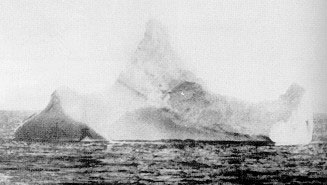
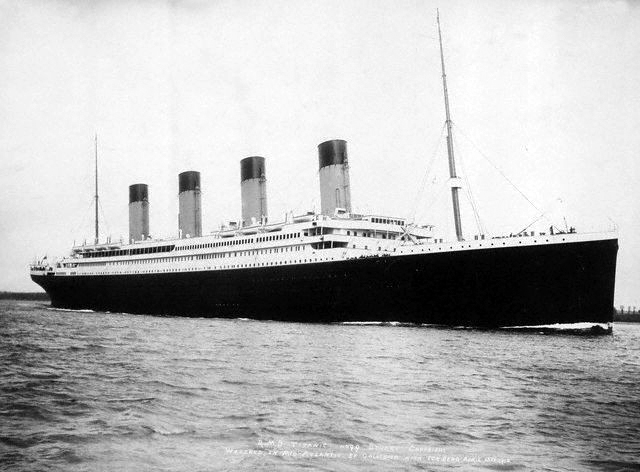
The problem that Randall points out is very real and deadly serious. Trouble is, those who pretend not to see are among the best actors on the planet. Faced with incontrovertible evidence the rational mind has no choice but to acquiesce. Religion, however, offers the perfect escape clause. If global warming discomforts you too much try fanning yourself with a Bible. Soon the excess degrees will simply melt away. And when the religious enemies of science find themselves sitting on the ocean floor like the victims of the Titanic, they too will have the satisfaction of knowing that they were privileged above all people for the time they had on earth. Everyone wins. The insatiably greedy and the abjectly poor both share a spot on an overheated planet. And if the pattern holds true we’ll evolve eyes to read under water, along with our gills, so that we can continue to read our waterlogged Bibles to find out what’s coming next.

Iceberg? What iceberg?


Failing Geology

Rocks of ages

Watkins Glen, New York, sports a natural wonder that has occasionally drawn me to the Finger Lakes region to refresh my memory of the view. The eponymous glen has been carved out of the relatively soft shale by a tireless stream that falls to the level of nearby Seneca Lake. The relentless persistence of this water has left a canyon of striated layers over a period of 12,000 years. Even today tourists from around the world flock to the site, captivated by its natural beauty. To assist walking the gorge, 832 steps have been added alongside a mile and a half of the stream, taking the visitor past, and occasionally behind numerous small waterfalls. When we visited yesterday, what struck me—beyond the sheer number of out-of-shape Americans complaining of the number of stairs (this was well before the hundredth riser), a number that continually thinned the further we climbed—was the special compensation that biblical literalists claim to accommodate their view. The typical response is that all geologic wonders are a result of Noah’s flood, despite the different erosional rates and dates of the sites. Watkins Glen is a fairly new piece of earth architecture.

Some years back while driving out to the western United States, my family camped in Makoshika State Park in Montana. This particular park, apart from its wild, arid, and rocky scenery, also boasts many dinosaurs. You can sidle right up to the exposed, fossilized backbone of a hadrosaurus, and triceratops skulls can be found in situ. Preparing to hike one of the trails, we stopped at the ranger station for a map. As usual, interpretive displays explained what we were about to see. As we entered, an older couple spoke with the ranger. One of them said, “How can that be, since the earth is only 6,000 years old?” Special compensation is required to refuse the evidence that lies all around us. The Fundamentalist movement seldom takes into account that this distorted and bizarre worldview is almost uniquely American. Religion drives their scientific outlook, even as they are relying on the factuality of actual science to prolong their lives with medical advances or to allow them to read this blog (although the latter is not likely).

The same flood had to carve out the buttes of Makoshika and expose its Cretaceous fossils of 65 million years ago at the same time as eroding the first 6,000 years of Watkins Glen, leaving the remaining 6,000 to be worn away during our world’s lifespan so that we might declare the great works of God. It is a worldview that demands a constant center stage for a feeble explanation based on the worship of a misunderstood book. And yet they come to see the beauty. No matter how many persuasive words might be penned, the possibility of changing this outlook will elude us. Reinforced by television personalities and politicians, this utter breakdown of reason is one of our national characteristics. As a nation we suffered through eight years of “leadership” by a president who did not believe in science, and we are still paying off his tab. In another 6,000 years or so we may succeed. By then, however, I expect, if I’ve learned anything from the movies, we will have reversed roles with the great apes.


Tea Party Science

I sometimes jog in the morning before the sun begins his course across the sky. Funny thing is, sometimes I beat him. I know the sun is a guy because the Bible says so. When I startle a bunny from its hiding place along my path, I am amazed that those little creatures chew the cud just like bovines. It is the word of God. Occasionally a suicidal insect tries to fly into my mouth, and unless they go about on all fours, with legs above their feet, I spit them back out. If they do meet Leviticus 11’s strict standards and I accidentally swallow, I try not to think of Deuteronomy 14.19. I am surprised that the Tea Partiers haven’t tried to correct science on this point: the Bible is clear that insects (technically “flying creeping things”) have four legs, not six. Open your eyes people! Six legs? All those sixes seem to be from the antichrist. That’s why I feel comfortable with the potential of handing our nation over to the Tea Party. Certainty is better than scientific orthodoxy, hands down.

“I don’t know how much God has to do to get the attention of the politicians. We’ve had an earthquake; we’ve had a hurricane. He said, ‘Are you going to start listening to me here?’” The words are those of Michele Bachmann. Those of us who were taught that hurricanes result from the heating of Atlantic waters, swirled by the rotation of the earth (it does not move, according to the only proven source of science, the Bible) have egg on our faces. Do I ever feel silly! Empirical evidence suggests that the earth’s crust consists of tectonic plates that sometimes bump and rub and pull apart. Earthquakes result. Last week’s earthquake creates a problem for me, however, since North America is not mentioned in the Bible. I now live in a country that can’t possibly exist. We had better elect leaders who know how all this really works.

According to a Religion News Service poll this year, 40 percent (that’s more than half, in Tea Party mathematics) of Americans believe natural disasters are signs from God. I am relieved that this clearly shows science to be wrong—surely that many individuals must be correct. That’s the way math works. I sometimes imagine the United States as the Titanic (movies are another good source of science). Ismay, the Tea Party, declares, “But this ship can’t sink!” Thomas Andrews, the engineer (representing science) replies, “She’s made of iron, sir! I assure you, she can… and she will. It is a mathematical certainty.” Ismay, believing the rich are too wealthy to die tragically, refutes the findings of science. When the colossal ship slips into the icy Atlantic, however, he’s nowhere on board. Like the rest of his party, he’s already secured himself one of the rare seats on the lifeboats inadequate to save those of us in steerage. Since the ship can’t sink anyway, why are we even worried about this?

Full speed ahead and damn the icebergs...