Back to School

“We want to make certain that we view culture through the eyes of faith, that we don’t view our faith through the eyes of culture.” The words are those of Stephen Livesay, president of Bryan College, according to a recent New York Times article. Bryan College in Dayton, Tennessee, already famous as the school that evolved out of the Scopes Monkey Trial, has been toying with adding a more specifically fundamentalist statement to its panoply of faith. Instead of stating simply that humans (more precisely, “man”) were (was) created by God, Livesay wants to clarify that this means by special creation, no evolution involved. Hey, we’re all thinking it. Why not just say it?
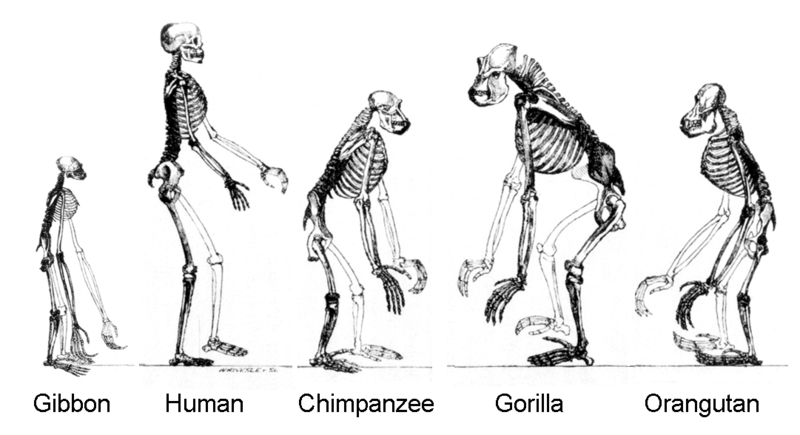
800px-Ape_skeletons

With the characteristic, journalistic eye-rolling that inevitably accompanies stories about creationism, I frequently wonder why there aren’t more calls to try to understand this viewpoint. It’s easier to condemn and say that narrow minds can’t widen out, but some of us who had believed in Bryan’s hypothesis at one time have managed by dint of reading and reason to climb our way out of the slime. If we understood what made literalism so appealing, we might be able to figure out why only America lags behind the developed world in accepting what is otherwise universally regarded as a fact. Instead, faculty members nationwide willing to call this into question are summarily fired and nobody bothers to do a thing to support them. Collateral damage of the culture wars. Perhaps we should add a statement about not letting the door hit you on your way out.

Evolution through natural selection stabs very deeply into the heart of human self-worth. We still refer to other animals as “lower” than us, and we exploit them in any way we see fit. Then we don’t wonder why being told you’re just like them isn’t disturbing. This is trench warfare. Lines in the sand dug deeper and deeper. Those who believe in creationism aren’t simple. Even with all our space telescopes and Mars rovers, we’re told the most complex thing known to humanity is still its own brain. And that brain makes people with Ph.D.s think that they’re special—either a separate creation by an invisible god, or because they can recognize how irrational our own brains make us. No intelligent being would want to understand why this is so by studying it rationally. That would make far too much sense.


Planet of the Monkeys

“If salvation is available only to Christians, then the Gospel isn’t good news at all. For most of the human race, it is terrible news.” That may not be Rachel Held Evans’s choice for the final word on the subject, but it is the privilege of all writers to be misinterpreted. I read Evolving in Monkey Town because of an odd confluence. Evolution always tastes like forbidden fruit to me, although there can be no real doubt concerning its factuality. Also, the spiritual journeys of women continue to fascinate me. Even if the women are young enough to be my daughter. I first learned about the Scopes Monkey Trial in Mr. Pierce’s tenth grade history class. In eleventh grade I argued the Fundamentalist side of an epic, three-day debate on evolution in current issues class. I set a reputation that I’m still attempting to live down. (Studying religion for the next ten years probably did me no favors here.) The end result is that I feel a personal connection to what happened in Dayton, Tennessee, although I’ve never been there.

Evolving in Monkey Town is a memoir of a struggling, skeptical fundamentalist. Reading it at times made me squirm a bit, seeing childhood worries and frustrations coming back to me through someone else’s experience. Some of Evans’s remarks could have come from me, had I the courage to write up my past so that others might view it. At the end of the book it was obvious that I could not agree with many of the author’s personal convictions, but she earned my respect. Under the constant pressures of pleasing a deity that can’t be seen, or empirically verified, Evans sees clearly the disconnect between the teachings of Jesus and Fundamentalist Christianity. She has a wonderful knack for clear sight and forthright comment. Like me, she has become aware that a Fundamentalist upbringing is something no one ever truly escapes.

The crisis that seems to have sparked Evans’s angst was the recognition that no matter how you arrange it, an exclusive religion cannot coexist with a just deity. The world is just too big for that. Any scenario in which God sets the rules and makes it impossible for the vast majority of humanity to attain those rules does reflect rather poorly on this pater familias. We are all reduced to a diabolical game of charades as we march merrily toward perdition. Theodicy is an insurmountable problem in this live-a-day world we inhabit. Reading about the altruistic traits of the primates most closely related to us reveals something about being a monkey’s uncle. When we look at the shenanigans religions enforce on people to make them more worthy of heaven, I think we would all have to admit to living in Monkey Town.


Sh*t Apes Say

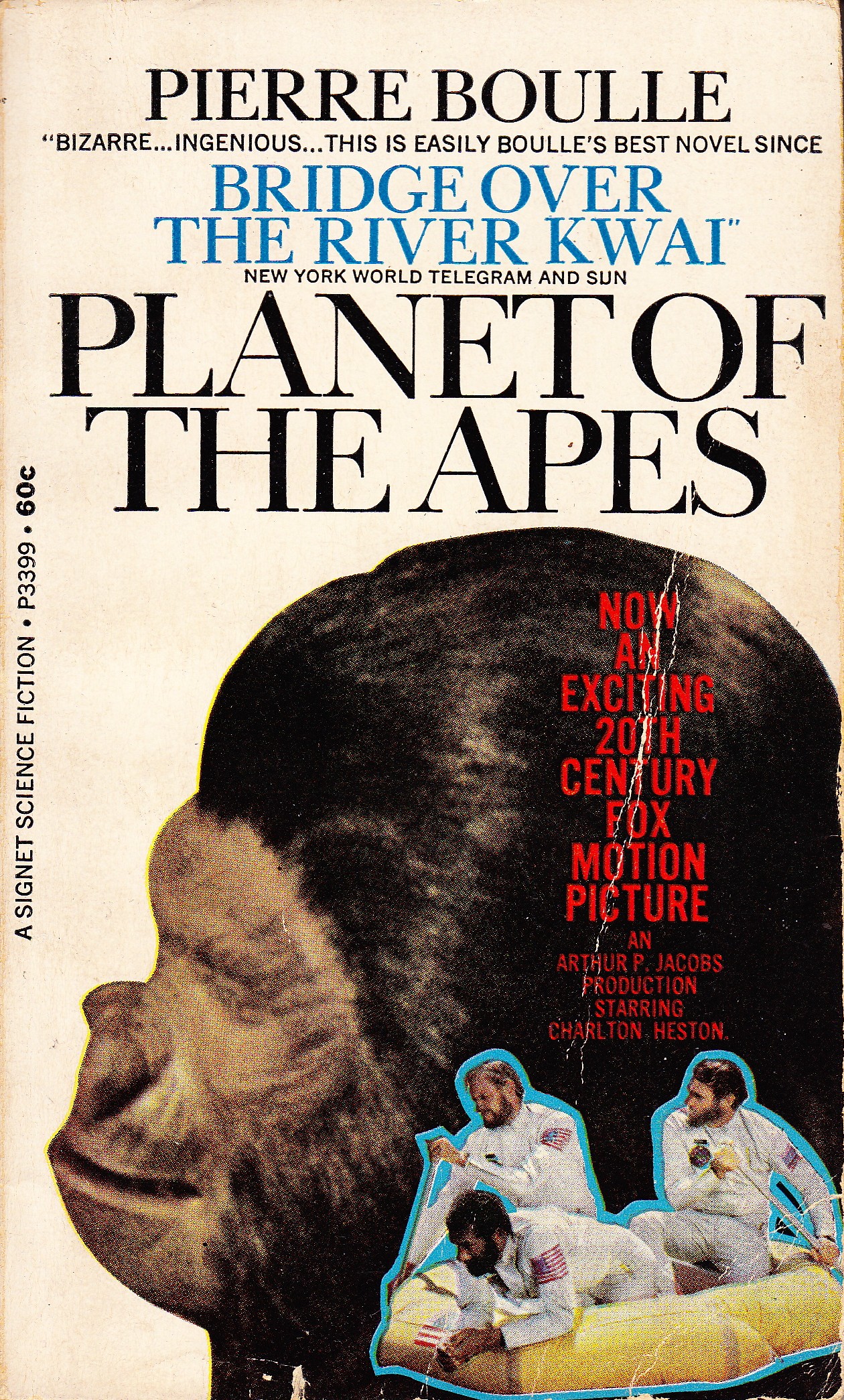
Knowing from experience that when I stay alone in a hotel, despite my best intentions, I will get bored and end up watching Mudcats or Dual Survival until my brain feels like a boiled egg, I anticipated my trip to California. I packed Planet of the Apes, the original and best of the lot, hoping for some intellectual stimulation. Having grown up in an anti-evolution household, we were curiously allowed to watch Planet of the Apes, a kind of forbidden zone of the mind. It remains one of my favorite movies of all time. It is also a manifesto of science besieged by religion. Note what Dr. Zaius says, “There is no contradiction between faith and science… true science!” And he is the Minister of Science, and Chief Defender of the Faith. The trial of George Taylor, a thinly disguised parody of the Scopes Trial, has Honorious (read William Jennings Bryan) stating, “It is based on our first article of faith: that the almighty created the ape in his image, that he gave him a soul and a mind, the he set him apart from the beasts of the jungle and made him lord of the planet,” and turning on his fellow apes Zira and Cornelius, he accuses them of being “perverted scientists who advance an insidious theory called evolution!”

Dr. Zira, as one of these “perverted scientists,” asks Cornelius (incidentally, the name of the first non-Jewish Christian, according to Acts), “How can scientific truth be heresy?” This is echoed by Dr. Zaius in the trial where he states, “It is scientific heresy that is being tried here.” Indeed, the entire simian culture is based on the blurring and blending of science and religion. Throughout the film various characters make barbed statements about the human propensity to ignore the obvious. Landon, challenging Taylor about the time change they experienced in space, says—in a line that could come straight from Answers in Genesis—“Prove it! It’s still just a theory.” The exact rhetoric currently used by creationists in school board meetings around the country. To which the most apt reply seems to come from Dr. Zaius, speaking of humanity: “his wisdom must walk hand-in-hand with his idiocy.”

Occasionally even the gun-toting humans get the picture clear. In his opening monologue George Taylor wonders about the world seven hundred years from now, “Space is boundless. It squashes a man’s ego. I feel lonely. That’s about it. Tell me, though. Does man, that marvel of the universe, that glorious paradox who sent me to the stars, still make war against his brother? Keep his neighbor’s children starving?” This seems to be the true measure of heresy—a religion that puts fellow humans on the same level as animals (and even animals deserve far more credit than we are willing to give). Among my favorite lines is Cornelius’ response to Taylor shaving his beard; “Somehow it makes you look less intelligent,” he opines. Endlessly remade, Planet of the Apes is a movie that still answers some of the issues that plague our society nearly half a century later. Perhaps the last line should go to the apes, adjusted of course, for gender sensitivity, “[hu]man[ity] has no understanding.” Well said, Dr. Zaius, well said.

A piece of childhood


Which God?

In Sunday’s newspaper (that’s the kind of week it’s been) an op-ed piece ran with the title “Is God real? Putting the idea on trial.” Written by a priest, Geno Sylva, the article tells how a Wisconsin church set up a mock trial where the litigants argued the case. The trial did not reach a consensus on the matter, even when a great deal of “money” was at stake. Rev. Sylva is okay with that, noting that the main thing is to keep the conversation around God going.

The article brought to mind the Scopes Monkey Trial, another case where God ended up, indirectly, in the dock. It also occurred to me that the real issue is not the existence of God. Juries, and even—gasp!—lawyers don’t demonstrate the truth. The lawyer’s job is to convince people to approve of his (or her) argument—many famous cases are known where the lawyer knew his (less often her) client committed the crime. The argument gets shifted to guilt (one of the favorite tactics of the God of the Bible)—is the defendant guilty or not? Not did the defendant do it. Now let’s put God in the equation. God is not on trial here—remember, it is God’s reality that is being debated.

It appears that God, as an abstract, does not and cannot matter. The mere existence of God proves nothing. Rev. Sylva mentions Einstein as a believer. Well, in a very qualified way. Einstein’s “God” was non-interventionist; the laws of relativity ran the universe. Enter the atomic bomb. QED. The existence of God is not meaningful to believers if God does nothing. The purpose of worship is, after all, to please and interact with God. If God exists like an ancient, unmoving statue, nobody’s happy. The kind of God that worshippers want must be at least able to hear prayers, and must be able to do something about them. Their God is interventionist. This is not Einstein’s god.

Arguing whether God exists proves nothing. It would be like arguing that the universe exists. If it does, so what? What Rev. Sylva’s faithful need to know is does God do stuff. Is there promise of heaven or threat of hell? Or, less crassly, does the ethic of God compel me to do good? Is God, as the old hymn says, “mighty to save”? A god who merely exists is an academic or intellectual curiosity. No more. Will Rev. Sylva’s congregation be happy with that? It seems likely that if the verdict denied God’s existence the party on the side of the Lord would simply appeal to a higher court.

What's really at stake?


Legislating Reality

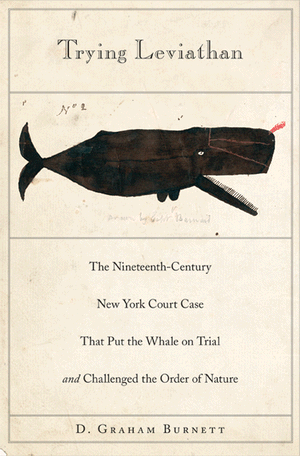
The follies that plague humankind come in an almost cyclical form. As old Ecclesiastes wrote, “there is nothing new under the sun.” I just finished D. Graham Burnett’s Trying Leviathan: The Nineteen-Century New York Court Case That Put the Whale on Trial and Challenged the Order of Nature. Other than the fact that the subtitle accounts for a good portion of the book, this account shows just how little we’ve progressed. At the heart of the book is Maurice v. Judd, a New York case of 1818 in which a whale merchant contested an assessor’s fee on “fish oil” by claiming a whale was not a fish. In “trial of the century” style, star witnesses were called in, bringing science to the docket. It was known, even in these pre-Origin of Species days, that a whale was a mammal, but what soon became clear as Burnett laid out the facts of the case was that the Bible held sway. Genesis divides the classes of nature into beasts, birds, and fish. This simplistic taxonomy was held by many in the nineteenth century to be a sacred statement of fact. If whales lived in the water, they were fish. The fact that they nurse their young, who are born live, and that they share the skeletal template of land creatures and have warm blood, and breathe through lungs, simply did not matter. If Genesis says fish, fish it is.

My mind immediately jumped ahead just over a century to the Scopes Trial. Once again, science was bent over the knee of Genesis and poised for a paddlin’. And the challenges still have not stopped. Call it Intelligent Design, or Answers in Genesis—anything but mythology—and it will keep coming back for more. Already, in 1818, lawyers were arguing that science could be decided in the courtroom. Facts only muddy the issue. If Genesis weren’t enough, Jonah’s “great fish” was called a “whale” in the Gospels, so, QED. There is no debating Bible science. Just to prove the case, we’ll bring it to trial so that twelve people with no science training can decide the issue based on rhetoric. Disciples of dogma. No surprise that the jury found the whale to be a fish. There’s no stopping a true believer.

My wife gave me this book because of my enormous fondness for Moby Dick. In both books the discussion of killing and butchering whales bothers me immensely, but I know that Melville is running after a beast of a metaphor and that whale-boat skimming across the surface of the ocean has lanced a far greater prey than a white whale. The creationists, however, fail to see the beauty of mythic images. Anyone who’s even watched a court drama on television knows that the truth is not what courts seek. Courts seek to convince a jury, whether a person is guilty or not. No matter if it’s a while whale or a white bronco involved. Truth is much more subtle and fragile. Truth can be discerned by facts. But the Bible is a heavy book, and when dropped from a great enough height, can fracture even the laws of nature. Like Ahab, the creationists are never truly gone forever.


O Tenn Won’t You See?

Truth goes to the highest bidder. In the United States the highest bidder is the party with the numbers to get elected. Truth by democracy. Once again Tennessee is flirting with Creationism, if not having already climbed into bed with her. High school biology teachers nationwide are afraid to take on the issue directly; many of them are told by their clergy that the concept itself is anti-Christian. This is what happens when mythological needs go unanswered. No one has yet deciphered why human brains evolved the capacity to believe in outside agency beyond the realm of nature. Many Fundamentalists use the phenomenon as proof of their pre-decided answers, despite their willingness to utilize this evolved Internet to spread their ideas. If evolution is false the Internet does not exist.

The larger issue here is the fact that educators have, by-and-large, dismissed the impact of religion. Particularly in higher education. Everyone has their own religion, we don’t discuss it because someone will become offended, and we pretend that, gosh-darn-it, people are just too smart to believe all that. Meanwhile millions of tax-payer dollars are wasted on cases continually going to court where one subset of one religion insists that its mythology has a right to be taught as science. Even the Fundamentalist’s strange bed-fellows in other conservative issues, the Roman Catholic Church, has stood up and put on its slippers. This one is not a matter of opinion, ecclesiastical or otherwise.

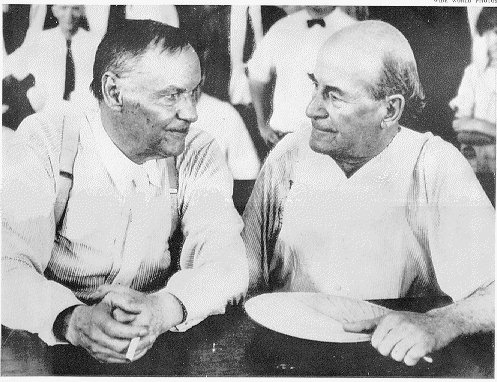
But religious folk understand that if they elect the right candidates, the issue can be forced again and again. The Creationist tactics are evolving to fit the situation. Meanwhile, not only religion, but also the study of history is largely dismissed as irrelevant. It is history that demonstrates the birth, growth, and current goals of the movement. The Scopes Monkey Trial was nearly ninety years ago, but it may as well have not taken place yet. If William Jennings Bryan had been smart, he’d have waited until his cohort had had time to carefully sow their seeds, water, weed, and fertilize them (using the oldest known material to ensure growth – plenty of manure) and then take it to legislators. The results are as predictable as the sunrise over our flat earth.

Seems just like tomorrow...


Awaiting the Evolution

My daughter’s taking the mandatory New Jersey high school biology tests this week. Probably designed to ensure that basic health risks are factored and understood, it is one of the few bulwarks of the correct teaching of evolution in the United States. As anyone who follows my college Michael Zimmerman’s blog in the Huffington Post realizes, Creationism is a constant menace to our country. Although many simplistically assume that the threat is gone, it is, alas, sleeping but not dead. Perhaps quiescent under the administration of a moderate president, the Creationists have not gone away. I fear an imminent backlash along with popular apocalyptic hype for the year 2012. The Creationists are out there, just beyond the perimeter fence. I can feel it.

Having grown up under the umbra cast by the Creationists, I know their resiliency well. In a high school current events class, I participated in a Creationist-Evolution debate that classmates still remember some three decades later. It would be a situation laughable if it weren’t such a serious threat. While society has continued to evolve since Scopes, most Americans are still convinced that there is something insidiously evil about evolution, as if the devil generated the first simple cells and set the entire process running. In a society where Creationists daily benefit from the advances of science – as any search for evolution on the internet will demonstrate – they hold their feet firmly on the brakes nevertheless, awaiting a snow-white stallion at the parting of the literal clouds overhead.

I am not alone in foreseeing this whiplash that’s about to come. Many analysts who know the radical Evangelical camp share my fits of nerves and jitters. The educated elite suppose they’ve been eliminated, but those of us who know the world of the uneducated faithful tremble with a fear not inspired by the Maya. Sarah Palin is one of the most popular people in this country right now, and the Creationists, I assure you, are already staring at their watches and counting each passing tick.

Neo-Cons marching straight to the polls


Bible vs. Bible

Back in December I wrote a post about a mother (Estelle Walker) who was put on trial for starving her children (who survived). The reason the poverty-stricken mother did this was that, as she read the Bible, God would provide for her. She prayed mightily, but the children still went without food. She was found guilty of child endangerment, and at her sentencing this week the judge, interestingly enough, cited the Bible. Noting that the Bible presents a nurturing image of mothers, the judge, Peter Conforti, said, “The court has read the Bible too. Mothers are told to love their children.” Walker’s attorney cited a “‘delusional disorder’ that caused her to have an overreliance on God,” according to Joe Moszczynski, of the New Jersey Star-Ledger. An overreliance on God, or on the Bible?

This entire sad scenario highlights the danger of viewing the Bible as a magical book of answers. In a scene that is reminiscent of the Scopes Trial, both sides of the case cite the Bible for their actions. Which is correct? Is it not both? Does this not show the problems that arise when considering a lengthy book written over a period of at least a millennium by perhaps a hundred different authors as a uniform source of legal code or ethical conduct? Yet, when swearing to tell the truth, people lay their hand on the self-same Bible while thinking it means something highly idiosyncratic.

As a teacher of Bible I have a great admiration and respect for this problematic book. One of my recurrent concerns is that a storehouse of human experience and wisdom is treated as if it were a font of magic. As if finding a statement in the Bible somehow assures us that our viewpoint is correct. The Bible is used to justify crimes and noble actions. If clergy could have a more enlightened view on just what the Bible is, perhaps believers would not be led to destructive behavior because of simple misunderstandings. Perhaps children would be fed and judges could spend their time judging cases where the Bible simply doesn’t apply.


Religion Embraces Science

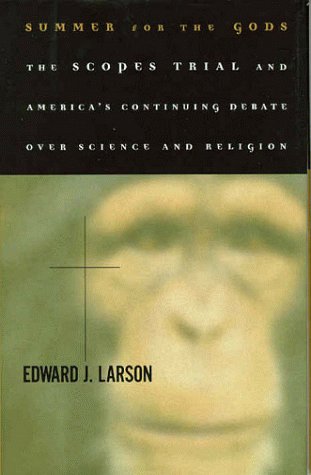
My colleague and one-time dean, Michael Zimmerman of Butler University, has brought his Clergy Letter Project to the Huffington Post. Well, he has written an online piece for the Huffington Post entitled “Redefining the Creation/Evolution Controversy.” His article is clear and to-the-point: the Creation/Evolution debate is not about religion versus science. That has been shown repeatedly for those who care to examine the history of this controversy. Evolution barely caused a ripple among clergy when it was first becoming popular among scientists. Ministers assumed it was just one of God’s mysteries and went about their clerical duties. The issue became a public relations boondoggle with the Scopes Trial of 1925. One of the best books written on that subject is Edward Larson’s Pulitzer Prize-winning Summer for the Gods.

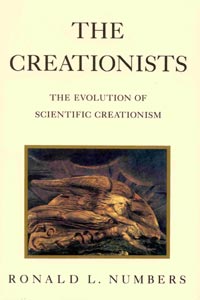
As I have stated in my podcast on this issue, Creationism is a splinter movement within Evangelical Christianity. Over the years it has drawn in members of a wide variety of Christian groups, including Roman Catholics and mainstream Protestant denominations. It has publicized its concerns so well that many people assume that this is the “Christian” viewpoint and that all other views are, by definition, non-Christian. This is the perspective that has driven a wedge between religion and science, creating a false front that has led to many confrontations between Evangelicals and scientists. My favorite history of the Creationist movement is Ronald Numbers’ The Creationists.

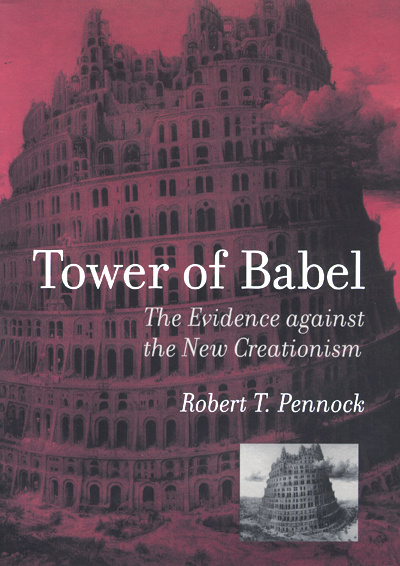
The true motivation of the movement is, without doubt, political. While many sophisticated people scoff at the apparently simplistic machinations of the Creationist movement, what they do not realize is that it is a highly organized and politically savvy alliance of special-interest groups. Robert Pennock’s Tower of Babel was an academic exposé of the inner workings of the Creationist movement. It is perhaps the most important book written on the subject. Published by an academic press, however, it has not found the wide public readership it deserves.

Do yourself a favor: read Dr. Zimmerman’s post. I believe he has framed the dilemma in the correct way: the struggle is one within a specific religion, Christianity, not one between religion and science. The more the public knows about this issue the better off we all will be in the long run.