Chapter and Verse

Maybe like me you’ve read some arguments based on chapter and verse.  I should mention that I mean chapter and verse in the Bible.  The typical scenario will go like this: Genesis (say) uses this word three times in chapter 38.  The case then often slips to making a point on the number of instances a word or phrase occurs within a circumscribed set of verses.  (The actual word doesn’t matter—this is a thought experiment.)  When I ran into an example of this a few days ago a thought occurred to me: chapters and verses are later additions to the biblical text.  They were never part of the original and were only added because Bible readers got tired of saying “That part in Genesis where…”  In other words, chapter and verse are artificial means of interpreting the Bible.  They’re very useful for taking quotes out of context.

I used to tell my students that you have to think carefully about what is the Bible and what isn’t.  As a culture where the book has instant recognition, we tend to think of that discrete unit of pages and cover as coming from one person—the author.  In reality most books (I can’t speak for the self-published) are the work of several people.  Just like it takes a community to raise a child, it also takes one to assemble a book.  That includes the Good Book.  Not everything between the covers is sacred text.  I’m pretty sure about that since as I was glancing through the latest edition of the New Oxford Annotated Bible I found my own name in the Preface.  As much as I’d like to claim otherwise I’m not exactly biblical. 

Modern ways of looking at ancient texts require a degree of facility in understanding how God’s scribes of yesteryear went about their work.  While early experiments in binding books may go back close to the time when the latter parts of the Bible were being written, the scroll—without chapter and verse—contained only the words of the text.  Most ancient manuscripts in Greek, anyway, didn’t even bother to put spaces between the words.  That leaves some room for ambiguity in among all those letters.  The Bible is a complex book with a complex history.  We do it a disservice as modern readers treating it as a modern book.  If you read Scripture online, or via electronic media, an even further layer of interpretation has been added.  That’s why we still need Bible scholars tangled somewhere in this world-wide web.

Ancient Tech

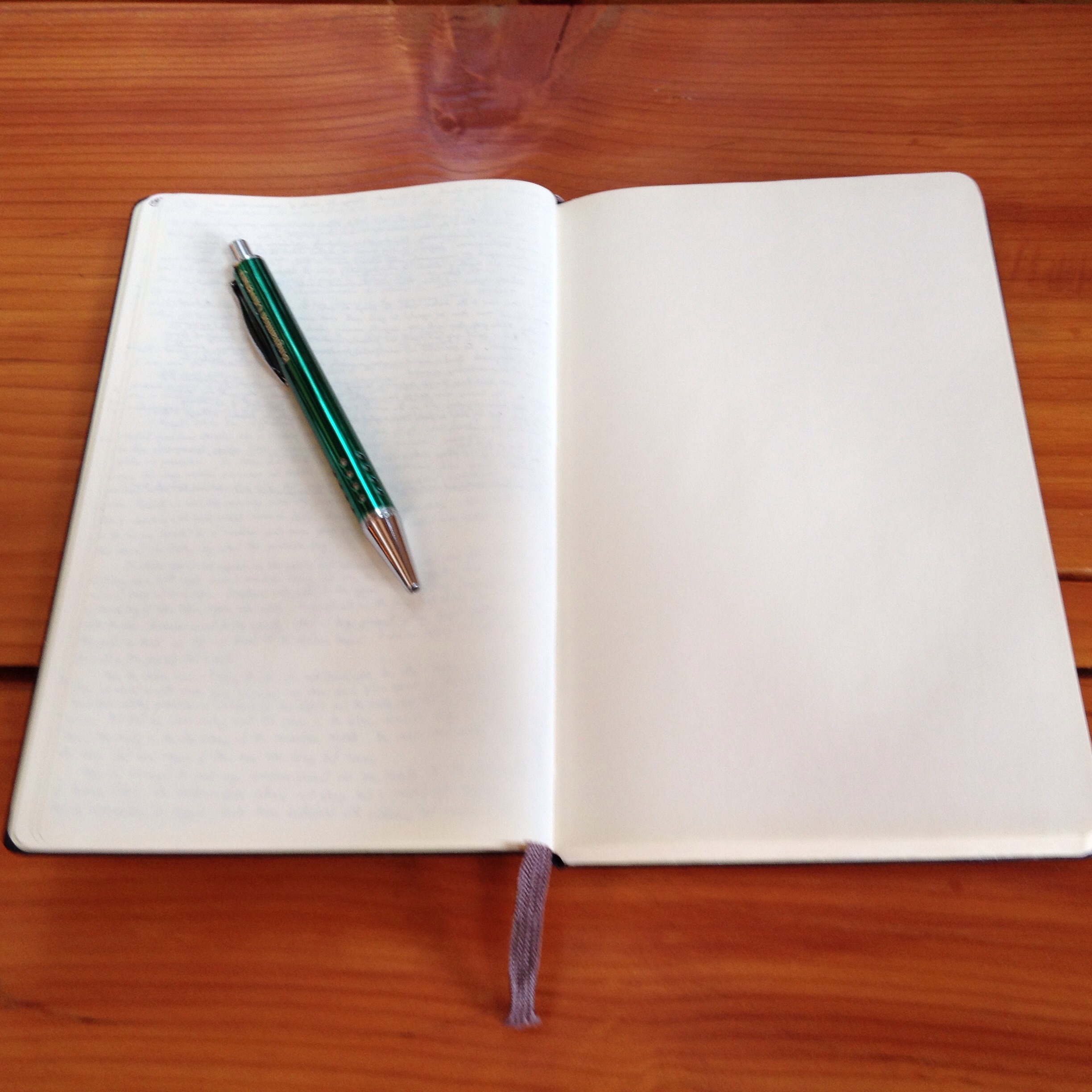
I feel like scraping Roman numerals on the wall of my cave with a sharp rock. One for each day I have to spend without my laptop. I’ve been working on this blog, born in this very cabin in which I sit, for six years now. With some exceptions, I’ve posted something new (and, I hope, thoughtful) every day. Even holidays and weekends. Most of those posts have been written on the deceased laptop that’s sitting in my carryon, electronic carrion. This has caused me to stop and consider that the most lasting words—the ones we all quote or at least recognize—tend to come from a far older form of communication technology: the pen and paper. Of course, there are older technologies yet. The Sumerians figured out that clay of the right consistency keeps marks made by a pointed reed pressed into it while it was still damp. Cuneiform writing lasted for millennia as the most advanced technology humanity had devised. The results, however, were bulky, heavy, and fragile. Few could learn the technique. It was an elite skill.

Nobody quotes the Sumerians anymore. Well, maybe the occasional quip from Gilgamesh will work its way to memory, but not much else readily does. The Bible, perhaps the most quoted book of all time, at least in western culture, wasn’t written on clay. By the time the earliest books of the Bible came along, scrolls had been developed. Probably suggesting itself from the way that papyrus naturally rolled up, this early form of paper—indeed, the word “papyrus” gives us our word “paper”—could be marked up with styluses or brushes and ink. Prepared animal skills, or parchment, sometimes called vellum, could also be used, but they were expensive. Pens at this period were sharpened objects dipped into ink, but the most famous words, well, penned by humankind were passed down in that medium. Copied, recopied, memorized. Electricity hadn’t even been discovered yet.


Printing presses and their children—typewriters and the consequent qwerty—have led the way since they were invented. Until, however, the 1980s at least, professors would accept only the old fashioned manuscript for papers. Indeed, the medium had given its name to the end result. We still write academic papers, although they are more often published and read electronically. So here I find myself in a cabin on a beautiful lake, surrounded by nature, worried about a communication device that can speak with the stars. There may not be workable clay here—the soil is far too sandy and I don’t have the patience to look up how to make clay on my phone—but there is paper. Pens are scattered everywhere. I am at home in the matrix that has given us the great ideas of humankind.