
“Male and female created he them; and blessed them, and called their name Adam,” so reads Genesis 5.2 (5.2a, for those sticklers among the crowd). Long ago I lost track of how many times I’d read Genesis. It has a privileged place in the Bible partially because of our modern method of reading books. We assume that the beginning should be read first and that it should lay the groundwork for what follows. The Bible, however, was compiled over centuries and the story may begin at Genesis, but not all that follows is in agreement with it. “Called their name Adam” sent me scurrying back to dust off my Hebrew of the Bible. The King James Version, after all, was translated from manuscripts that are sometimes inferior to many that have been discovered since then, including the Dead Sea Scrolls. Maybe this was one of those strange Elizabethan passages, for after all, Queen Elizabeth I did have a bit of a reputation. To my surprise, however, “their name” remains plainly in the Hebrew, suggesting that the first couple were both Adam.
Since just a verse later Adam and Adam have a son called Seth (and since the genealogies seldom mention their women at all), presumably Adam here means Eve. Literalists beware! The creation story in Genesis 1, as opposed to Genesis 2.4b, pictures the genders created simultaneously. Women and men together are humanity. The second creation story offers Adam a generous dollop of primacy; he gets to be first and even gets to name the animals and the wife; he is the lord and master of his domain. And people refer to eating the fruit as a fall! Now at Genesis 5 we have humanity reunited in the person of Adam, the bi-gendered representation of humanity.
Of course Adam is a play on words. The Bible begins with humanity as a joke. Adam is just one syllable short of the word for “ground” (adamah), and so Adam is the original groundling, or earthling. Yet Adam is never given as a proper name until Eve appears. It is only with the creation of woman that man becomes man. I suspect that may be the underlying of logic (if it is even right to call it such) of the plural, “their name Adam.” It might be easier just to recognize that the Bible doesn’t give us the endpoint of the discussion of human nature, but the starting point. There are those who insist that the Bible has all the answers. In my experience it is primarily full of questions. And the questions require both female and male to answer them. Otherwise, humanity is indeed a joke.
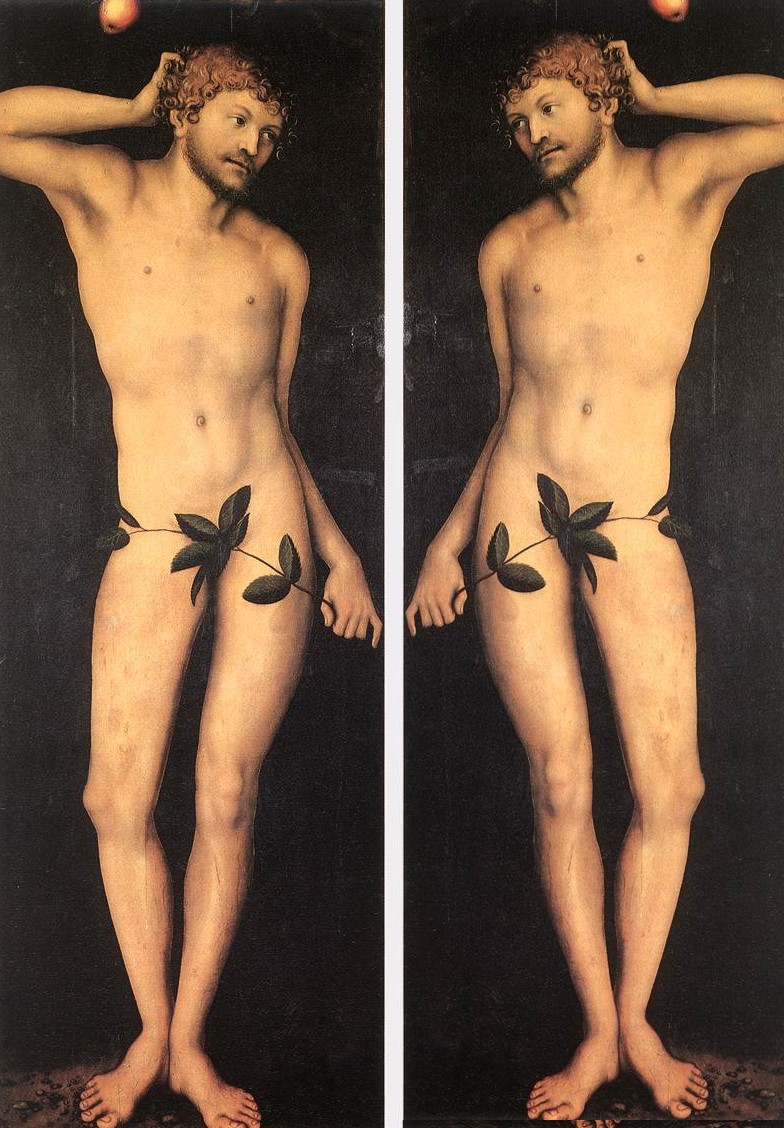
“Adam, I’m Adam”
 Steve A. Wiggins