Logan Again

A couple of friends, both younger (ahem), liked my recent post on Logan’s Run.  As did someone my post on Goodreads.  I was pleased to see that.  I was alive, but not yet literate, when the book was originally published.  So, predictably, I sat down to watch the movie again.  My wife had to work that weekend and I had last seen it in 2011.  This time, the book fresh in my mind, I was able to notice just how much the movie diverges.  For practical reasons, the movie has people live to 30 instead of 21.  The issue was finding enough young actors (this was the seventies, after all) who could carry off the story.  Michael York was over thirty, but he could pass.  The book is a romp across the country, and it would be unbelievable in the film if Peter Ustinov were able to walk from Washington DC to Los Angeles.  
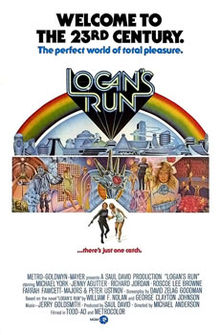
The movie has Logan dedicated to Jessica, but in the novel they have to grow to love each other.  In the film, Logan is sent on a secret mission to find Sanctuary, which, it turns out, doesn’t exist.  The novel has Ballard (transformed into “the old man” in cinematic form) disguised as Francis, Logan’s fellow Sandman, from pretty much the beginning.  On the screen, Francis remains a dedicated Sandman to the end.  Gone are the zoo animals in Washington, the hovercraft chases, and the little children who save Jessica’s life.  Granted, a lot in the novel would be very difficult to transfer to celluloid, and changes had to be made.  The whole episode of the religion of “Carrousel” isn’t in the book, but was added to give the movie coherence.  I did find it odd that they included the scene with Box, which really doesn’t fit the film.  

In any case, it warms my heart that some of my younger friends have fond memories of this movie.  It’s definitely a period piece.  Fitting for the seventies, there’s kind of an atheistic undertone to it.  Sanctuary only exists in people’s minds.  Nobody is “renewed” (born again).  But not all is doom and gloom.  The old man quotes from Old Possum’s Book of Practical Cats, by T. S. Eliot.  (That fact is the only way that I could get my daughter to watch the film.)  And it does have an optimistic ending.  Logan and Jessica decide they want to stay together—marriage was ancient history in their world.  And the young people, my greatest hope for the future, came to see the old man was fascinating.  Something that gives this particular writer a true sense of hope.

Fun Homework

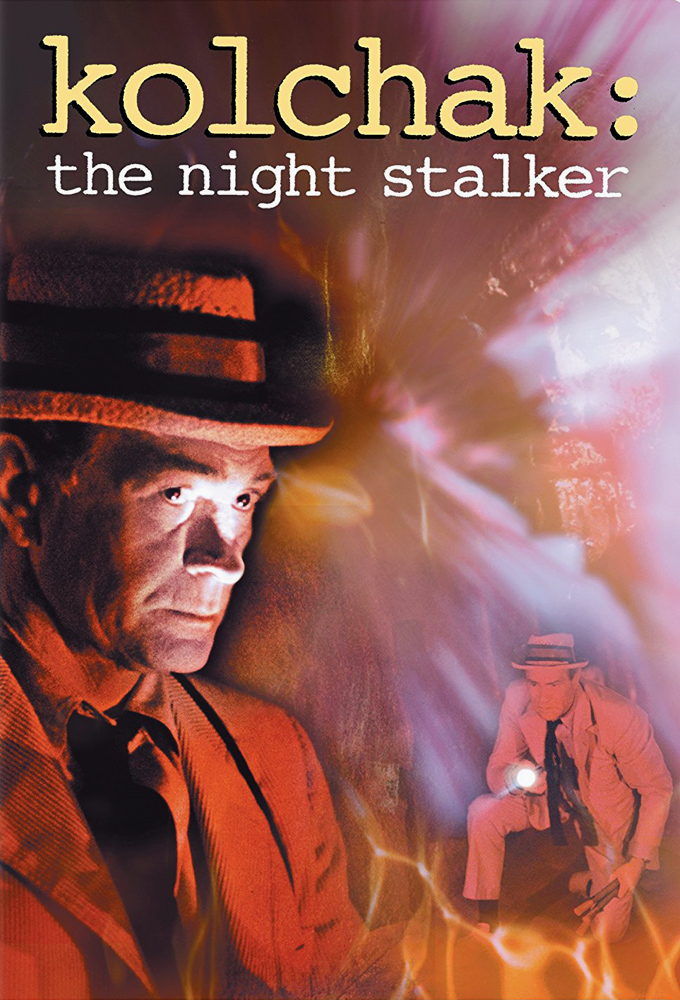
I recently discussed the two Kolchak movies: The Night Stalker and The Night Strangler.  In those posts I noted that I’d not grown up with Kolchak.  My reason for watching them was part of a self-assigned homework project.  You see, I’d begun watching the series online.  I realized backstory was missing, and, despite what literary critics are fond of saying, I like backstory.  After a couple of episodes I decided I needed to see the movies before moving through the rest of the series.  As it turns out, you can do the movies without the series or the series without the movie.  Regardless, I soldiered on through all twenty episodes.  This series was terribly influential for the kinds of things I eventually cottoned onto.  Kolchak was formative for the X-Files and many “monster of the week”-formatted series.  I felt like a poser having never had watched it.  This telinematic experience was good homework.

Originally a television movie produced by Dan Curtis, of Dark Shadows fame, the first film was successful enough (very successful, in fact) to cause a second one.  The second film also performed well, but instead of a planned third, ABC decided on a weekly series instead.  Only twenty episodes were aired and the run was cancelled before all the ordered episodes were filmed, or even scripted.  Still, this small franchise had a solid following and led to a number of other successful franchises in its wake.  The monsters are definitely fun, but Darren McGavin’s Kolchak does tend to get on your nerves after a while.  Even McGavin was reputedly ready to leave the show as things started to get pretty silly near the end—an animated suit of armor, a very cheap humanoid-alligator, and Helen of Troy hardly seemed conventional monsters.  

In fact, the Helen episode (“The Youth Killer”), although it had a solid premise, didn’t convince that Helen was a monster.  She prays to Hecate to steal the youth of “perfect” young people around Chicago and rejuvenates herself as the twenty-somethings age and die in a matter of minutes.  And a Greek cab driver (former Classics teacher) is the one who helps Carl crack the case.  Famous for its quirky humor, this one just seemed to have all engines fail.  Of course, the series lived on as a cult classic and can be found in a variety of media today.  I’m glad to have had this particular homework assignment.  Television had a number of influential shows in the seventies, and it feels like coming home to have caught up on one that I initially missed.  Even with Cathy Lee Crosby and a monster I just couldn’t buy.


Rats

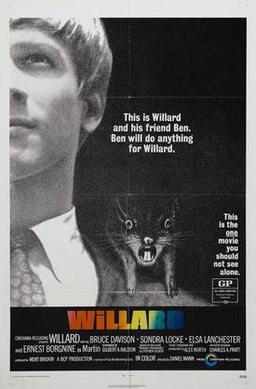
Small town living had its benefits but one of them wasn’t seeing movies.  In the seventies, before the local mall came in, there were scattered movie theaters about.  You could sometimes see reruns on television, if you were free and awake when they were aired.  VCRs weren’t widespread and DVDs and streaming were decades away.  One horror film I very much wanted to see was Willard.  Released in 1971, it did quite well at the box office.  I was only 9 at the time so I never saw it and by the time I became aware of it theaters had long lost interest.  Kids were still talking about it years later, probably from television showings.  When my second resurgence of interest in horror came around, it was still difficult to find.  The DVD wasn’t available and it took some time for it to appear on a streaming service to which I subscribe.

I have to wonder how we got through the seventies, but I finally had a chance to stream it.  The story, since there was a new millennium remake, is probably familiar.  A young man (the eponymous Willard) who doesn’t fit in eventually befriends some rats in the run-down property of his once opulent home.  He teaches them to understand him and eventually has a virtual army of rodents.  He’s a good lad, however, and only uses the rats to redress social inequities.  His boss, a real old school bad guy, stole the steel mill from his father and is trying to drive Willard out.  You can see the boss’s fate coming from afar.  It’s not much of a horror film by present-day standards, but it does have its moments.  It would likely have more impact had I seen it fifty years ago.

The theme song from the sequel, “Ben” (also the title of the next movie), performed by Michael Jackson, rose to number 1 on the charts.  Those of us in the seventies knew it was a song about a rat.  Well, at least some of us knew.  Horror, despite its detractors, often influences mainstream culture.  Indeed, Willard seems to have had some lasting knock-on effects, including the remake just into the new millennium.  Movies from the seventies, although some are excellent, often bear the brunt of the malaise of that period.  Did we ever think big, boxy cars were attractive?  Were men really such chauvinistic pigs?  Still, the story is a good one.  I wasn’t really interested in the 2007 reboot, but having seen the original I’m now curious.  It is, at least, fairly easy to find.