Shipping Tracking

It’s an anxious season. What with porch pirates being a thing and the holiday season near, I think it’s about time to rate shipping trackers.  Please, I am not rating the actual delivery persons—theirs is a difficult job, I know.  On the receiving end, there’s always an anxiety that an item left on the porch will be raptured before discovered by the person who ordered it, so I try to arrange my schedule to be home on delivery day, during delivery hours.  The post office (USPS) has always been a little suspect.  I’ve had “item delivered” messages from them only to find it wasn’t even out for delivery that day.  And don’t get me started about two local distribution centers that appear to have no idea what state they’re in, let alone what other towns might be nearby.  USPS isn’t near the top of my list.  With apologies for the spoiler, Amazon understand logistics.  I know many people who don’t like Amazon for various reasons, but say what you will, they generally know where your package is, in my experience.
There is a service on the bottom of the list, regarding trackers, but before I get there I need to say that these are shipping companies we’re discussing.  Their raison d’être is to move items from one place to another.  I also realize that the older companies that ship had to integrate computer tracking into already existing structures.  USPS was around centuries ago, and it’s understandable that integrating tech into the rather straightforward process of getting an item from A to B is a challenge.  I’ve worked for companies that have tried to integrate tech into pre-existing structures, and it’s always messy.  Still, it would seem that if your business is delivery and everything from GPS systems and advanced software make that more efficient, why wouldn’t you integrate it?

Which brings me to the bottom of my personal list.  I’m sorry UPS (not USPS), it’s you.  The tracking info is often virtually junk.  The number of times I’ve seen a package to be delivered that day only to have some half-hearted excuse, such as “Delayed” pop up on the timeline, with no explanation, followed a day or more later with a vague “we’ll get it to you when we can” message, hardly inspires confidence.  All the more’s the pity since UPS was the “United Parcel Service,” with the goal of being a package delivery service industry.  And it was founded more than a century ago.  You’d think that they might be able to scrape together a few dollars to hire some kind of systems architect to figure out where the software’s falling down on the job.  Of course, I should be charitable with the spirit of the season. It’s just that I’m anxious.  There are porch pirates in the neighborhood.

Finding Yourself

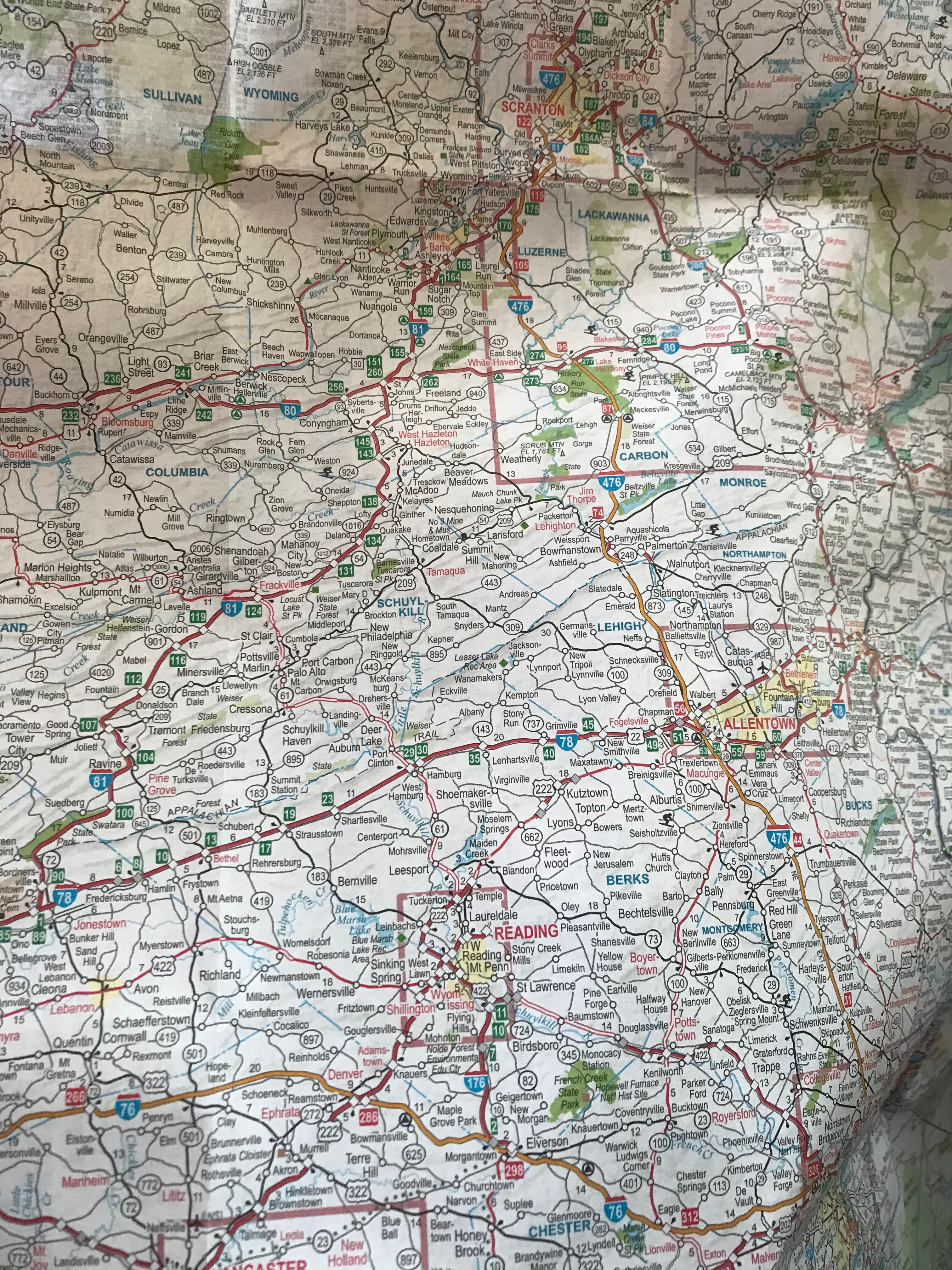
Sometimes I look, fascinated.  At tracking info, that is.  I once ordered an item from Montreal, which is, I’m told, in the province of Quebec, Canada.  The estimated shipping time was five days.  It ended up being quite the tourist package.  Its first US port of call was Plattsburgh, New York, which makes sense.  The strange thing is the Canadian tracker didn’t include the states—just town names, all of them small, as if this were a covert operation.  From Plattsburgh it went to East Syracuse, because, well, who wouldn’t want to go to East Syracuse?  From there it leapt right over Pennsylvania, where I live, to Hodgkins, Illinois.  This is a town so small that you really have to be a fan of package vacations to find it.  From there it went to Maumee, Ohio.  It seemed to be heading in the right direction, in any case.  Maumee led to Middlebury Heights, still in Ohio.  Finally it reached Pennsylvania, in New Stanton, not terribly far from my childhood home.  Then Carlisle, about halfway through the state.  Finally to Easton, from which it reached me.  Surprisingly, on time.  

It’s gotta be around here somewhere…

Logistics baffle me.  I had it drilled into me as a child that the shortest distance between two points is a straight line.  Montreal is about 400 miles from here, pretty much straight north.  I wouldn’t venture to tell UPS (the carrier in this instance) how to do its job, but when you’re ordering something carbon neutral (that, of course, you can’t get close to home) it feels kind of excessive to have to stop in so many small towns only to skip the destination state by flying from New York to Illinois so you can drive it back to Pennsylvania.  Logistics people need jobs too, I guess.

Amazon has made many people ask why things can’t arrive more quickly.  The fact is, shipping companies have their own protocols.  It’s like when you have to fly south from a regional airport to get onto a flight north.  You have to reach a hub where they know how to direct your package.  And if your item requires sea freight, well, all bets are off.  There may be no tracking points between Shanghai and Los Angeles.  No matter how much some people may say they hate it, we live in a global society.  We rely on China, and Canada, and everywhere else, to make life go in these United States.  Even following your tracking information can, in that way, be an exercise in thoughtfulness as well as a learning experience. 


Lost at Sea

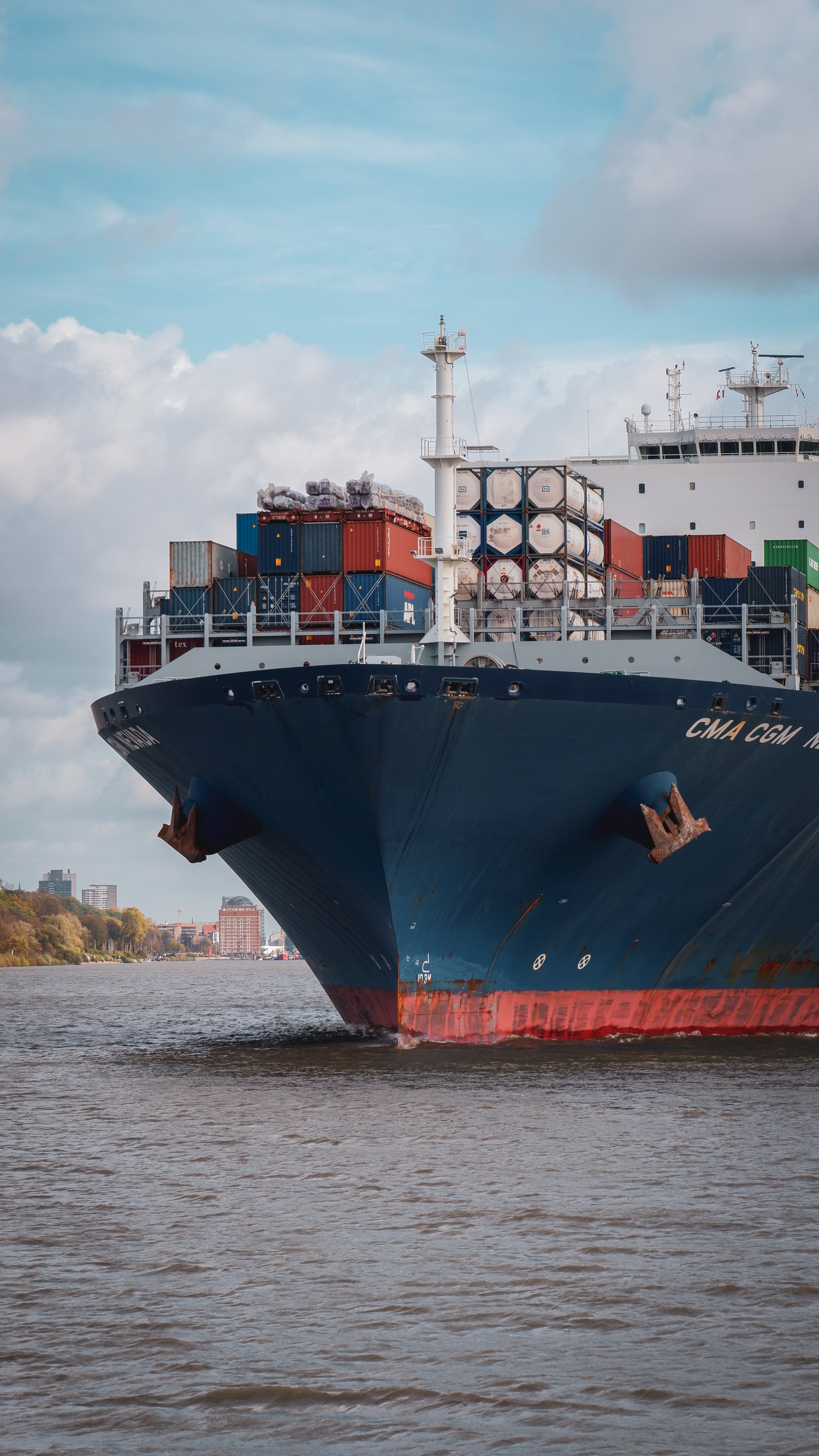
Where do books come from?  It still comes as a surprise to many authors, but books tend to be shipped by, well, ship.  When publishers use overseas facilities, it’s far too expensive to send books across the ocean by air.  I had many people express disbelief when I explained their books were delayed by the Suez Canal blockage, but if most of the world’s international goods are sent by ship (and they are) what might seem like a quirky news story has very real ramifications worldwide.  I was reminded of this by a recent NPR story of two new cookbooks having been lost at sea.  The ship from Taiwan, bound for New York, ran afoul of a storm in the Azores, resulting in the loss of 60 shipping containers—including those holding the newly printed books.  There is a worldwide shortage of shipping containers (seriously) and one of the problems is they keep falling off ships.

Photo by Elias E on Unsplash

If you haven’t googled “cargo ships” and looked at the image options, do.  You’ll see astonishingly large ships with what look to be entire cities worth of cargo containers stacked on the deck.  Many of these containers are lost at sea.  Current estimates are that about 1,000 containers fall off of ships per year.  Although the authors of these particular cookbooks took a lighthearted approach to the news, the book that really brought this home to me was Moby-Duck, which I blogged about some years back (you can read it here).  That book was about trying to follow the plastic “rubber duckies” that fell off a ship back in 1992.  This isn’t, in other words, a new problem.

Videos posted of these massive ships being tossed about and losing cargo are impressive in their own right—they make the ocean seem omnipotent.  But the fact is, we’ve littered it pretty badly.  Books, in their defense, will decompose naturally.  We live in a society defined by consumerism.  We see things and we want them.  In order to make them inexpensive, American companies buy the items from overseas where labor costs are much cheaper (and where many nations have socialized medicine, I might add, making employees cheaper to pay).  As ships grow larger we might expect these kinds of accidents to increase.  The older I get, the more I pay attention to economics.  The dismal science does hold a macabre fascination, especially when entire printings of a new book end up at the bottom of the ocean.  Authors, if they’re curious, ought to consider where books come from.


In Praise of Cardboard

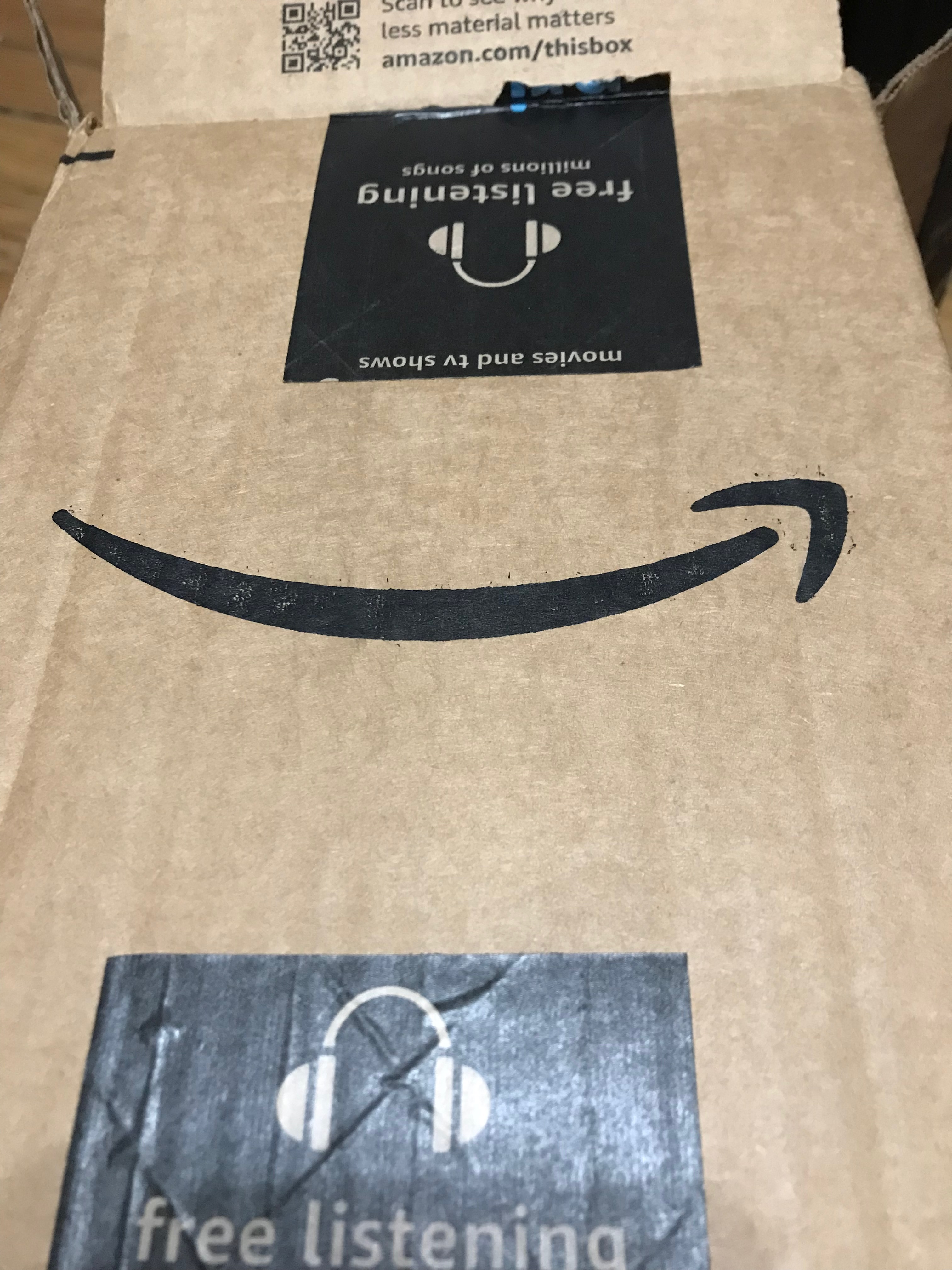
There’s an irony to it.  Using single-use plastic bags to ship books.  Now I know better than to stereotype book lovers, but I suspect it’s safe to say that those of us who order books like paper.  And we are probably well aware that paper recycles more easily than single-use plastics with heavy, preternaturally sticky labels attached to them.  You see, much of the clutter about our house is our reluctance to just throw away things that can be recycled or reused.  There are rules for prep, however.  Labels are supposed to be removed from plastics and judging from my experience, I need to be doing more pushups to do so.  Some are stuck on so well that it stretches and distorts the plastic like the face of a movie monster, still without coming off.  What’s wrong with a box?

Books arriving, snug in a box

Apart from being easily recycled, boxes prevent books from getting banged up in transit.  I often receive books so tightly cased in plastic that removing them must be like pulling off snug leggings when it’s really humid out.  There’s an almost obscene quality to peeling off something that tight.  And getting the label off?  Forget it.  Boxes are better.  We tend to reuse many of them—they’re good for sending fragile gifts to others.  Or storing other single-use plastic pieces for use in art projects.  (Lids often can’t be recycled.)  As long as the paper’s responsibly sourced, cardboard has environmental benefits.  Besides, I suspect books prefer the feel of paper on their skins.

I’m not a very good consumer, but I do have a soft spot for books.  Even as reasonable grocery chains are phasing out single-use plastics, many book sellers are picking up the slack, it seems.  I know we have developed civilization to such a point that our lifestyle is impossible without plastic.  Indeed, the very keys on which I tap out these thoughts are made of plastic (at least Macs use metal casings for their laptops, or some of them, anyway.)  I have this nightmare that I’ll get something in the mail, or worse, a visitor at the door, telling me that they’ve pieced together, from all the fragments of labels still on plastic bags, that I’m the one who’s been turning them in for recycling without properly removing the sticky paper.  I know that I won’t have any viable defense—I don’t have the time, resources, or tensile strength to do the job properly—and all I’ll be able to say is, “I prefer boxes.”


Perspective on Distance

Thirty miles can be pretty close or pretty far, depending.  This time it was pretty far.  I know the Post Office has been having trouble, but when the tracking number on the package said it was “being held by customer request” (wrong) at a Post Office thirty-plus miles away, I had to wonder.  I still remember when zip codes were made mandatory for mail.  They would give the Post Office a more precise set of coordinates to get to your house or apartment.  The funny thing is they’ve been vastly outdone by other delivery services.  Amazon makes mistakes too (they recently delivered something I’d ordered for myself to my mother—thankfully it wasn’t too embarrassing), but less often.  It would seem that if you pay someone to bring you something, they should be able to manage a bit closer than thirty miles.

I went to the website where delivery instructions was an editable field.  In it the PO had helpfully written “DI not available for this delivery.”  If you want it, you have to drive over sixty miles round trip to get it.  Only during office hours.  Don’t get me wrong—I’ve always been a supporter of the Post Office.  They generally get things to you—it’s pretty remarkable.  (Junk mail inevitably arrives, of course.)  I even used to collect stamps.  I’m still reluctant to not save one or two that catch my fancy.  But thirty miles?  You’d lose at both hand-grenades and horseshoes with that kind of accuracy.  When I called they offered to put it back in the system, but that would add several days to the delivery schedule.  Who’s to say that it might not end up even more than thirty miles afield?

If it were an atomic bomb, or a volcano, thirty miles would hardly seem far enough.  It’s a matter of perspective, I suppose.  So it is with most things in life.  Nine hours isn’t long if you’re engaged in a task you really enjoy.  In fact, the forty-eight hours of the weekend go by so fast that you’re left wondering where they went.  If you take nine hours and put them toward a dull and tedious task, however, they stretch to monstrous proportions.  Science tells us that the amount of lapsed time—or space—is the same.  It’s just our perception that changes.  In the larger scheme of things thirty miles in the middle of the day can take only a couple hours, with traffic.  From that perspective it’s better than a nine-hour drive to the original shipping location.  It’s all in how you look at it.

It depends on your perspective

Who Says Suez?

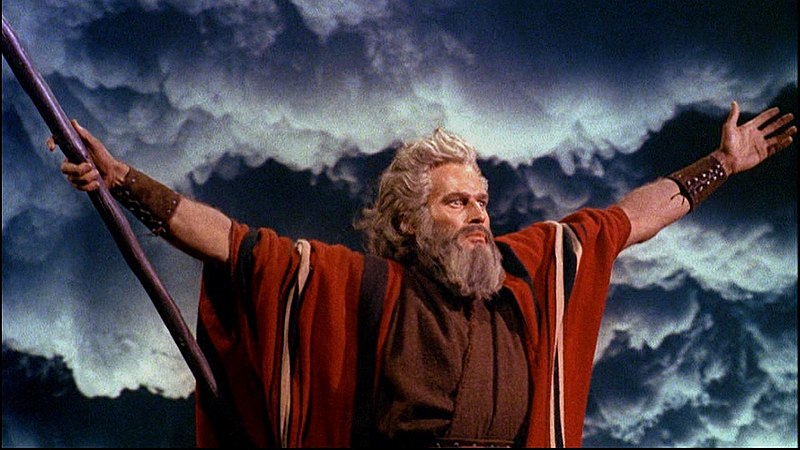
“Where was Moses when the lights went out?”  That’s one of the few sayings I remember from my grandmother.  She lived with us when I was a child and she’d say that when someone came in too late to help with something.  I always thought it a strange expression since Moses didn’t do miracles on demand, but I still remember it—kind of a miracle in its own right.  The expression came back to me when hearing about the MV Ever Given in the Suez Canal.  This massive cargo ship, buffeted by high winds, has choked the canal that links the Red Sea to the Mediterranean for days.  This shortcut means ships don’t have to round Africa to get to European and American ports.  While the problems of this one ship play out, over 150 others are waiting to pass through and goods could be delayed for weeks around the world.  I’m glad we have toilet paper.

Image credit: Ten Commandments trailer, via Wikimedia Commons.

Now Moses was known for have a role in the dividing of the Red Sea.  Of course, the name of the body of water is debated.  The Good Book actually says “Reed Sea” and nobody’s really sure where that is.  Besides, the miracle isn’t really credited to Moses.  God did the deed through, well, a strong wind.  If the waters could be divided perhaps present-day crews could figure out how to free the ship.  Photos of a bulldozer that looks like a Tonka next to the colossal freighter give an idea of the scale of the problem.  People building things so large that they can’t control them.  And the forces of nature seem happy to remind us that we’re not in control, right, Moses?

And everything, we assume, will go smoothly if left to its own devices.  How often do we really worry about the Suez Canal?  Or large ships, for that matter?  Theses things should go just as clockwork, we suppose.  Until our order from Amazon is inexplicably delayed.  The pandemic, Post Office troubles, and unexpected bad weather have caused major shipping delays around here over the past several months, and now we have no Moses when we need him.  According to Exodus, God lives right next door on the Sinai peninsula.  That’s where Moses first met him.  If we had a true prophet these days (let the reader apply wisdom here) there would be no concerns for something as simple as a wedged ship.  But we can’t even find Moses when the lights go out.