Christmas Silence

Christmas seems to have come too fast and not fast enough this year.  Like Halloween, it’s one of those long anticipation holidays.  The older I get, the more I appreciate the silence about it.  Not in a Grinch-like way, I hope.  More along the lines of “Silent Night.”  We spend so much of the year—so much of our lives—hustling about, barely having time to think.  Speaking personally, it takes about a week off work just to begin to get to that phase.  I need time to let the daily onslaught of work and capitalism and angst tune down.  There’s a quietness about Christmas that’s profound.  I suppose that’s why I like to spend it with my small family and not feeling obligated to go anywhere.  It’s like those precious moments before sunrise that I experience daily, only all day long.  That’s truly a gift.

The newspapers and internet sites have been summarizing the year for the last couple of weeks.  That always seems premature to me.  I understand why they do it, but Christmas and the days following are some of the very best of the year, and it makes sense to include those along with the stress, darkness, and ugliness that are the daily headlines.  I can’t help but think of Simon and Garfunkel’s “7 O’Clock News/Silent Night.”  Especially this year.  Christmas is for everyone, and the insistence that we make it exclusive (putting Christ back into it) makes it divisive.  Why some people have to be right all the time I don’t know.  I prefer Hamilton Wright Mabie’s take: “Blessed is the season which engages the whole world in a conspiracy of love.”  Simon and Garfunkel are both Jewish and I think they understood “Silent Night” better than many Christians did back in 1966.

I’ve been writing quite a lot about horror movies this year.  The months and days leading up to Christmas have often been difficult ones.  Such movies are therapy.  They can even fit into the beautiful silence of this day.  That’s my hope, anyway.  May this day include enough silence for you.  The rest of the year has no difficulty filling itself with trouble.  We need holidays.  Christmas has always struck me as the most peaceful of them all.  Ministers, and even those of us who never made the cut, tend to be holiday experts.  Those who don’t get caught up in the dogmatism of it all are the most blessed.  Christmas is for everyone.  And may it be peaceful this year.


Simon Says

Music preserves your youth. When my wife was studying music therapy, one of the pieces of information she received is that those whose brains have begun to shut down the speaking faculties can still sing. People respond best, in such states, to the music of their youth. Anyone who lives long enough will decry the noise that the younger generation calls music. I’m thinking about this not just because of my recent visit to Bethel Woods, but also because of a New York Times story that Paul Simon is planning to leave the musical stage. Simon and Garfunkel was among the music of my youth. Accessible music with profound lyrics and, for the most part, a muted sadness. I grew up a long way from New York City, but listing to this music I felt like I was wandering the streets of the Village, soaking in a reality I would otherwise never experience.

It strikes me as no surprise that among the earliest manufactured artifacts discovered are musical instruments. While I seem to have missed nature’s boon in offering musical gifts, I nevertheless inherited the appreciator’s side. I don’t often listen to background music. I listen to music to listen. It carries its own meaning, akin to what we tend to think of as a religious experience. No doubt, for many, Woodstock felt like such an encounter. Music that could take you away from the troubles of a war-torn, prejudicial, jaded society. Even if only for a few moments. “I am a Rock,” was, for much of my youth, a kind of personal anthem.

IMG_2836

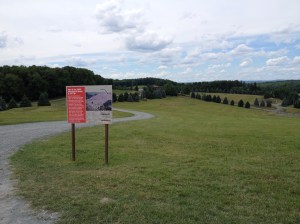
During a commencement address in not too distant months past, Simon told the graduates that ours was becoming a society at war with art. Music is money. College isn’t about becoming who you are; it’s career training. We don’t allow our young any time to explore any more. Few are willing to admit that capitalism, unrestrained, is just as bad as communism. Music used to be about the soul. The artists I know tell me it’s now about the cash. The man calls the shots. So as I stood on the hill overlooking the former Max Yasgur’s farm a few days ago, the lack of sound was poignant. There used to be, it seemed, different ways of existing in the world. Today the tempo is set and the music composed by those who prefer marching tunes that lead straight to the bank. Standing on that windswept hill I’m sure I can hear the sound of silence.


Post Script to Art

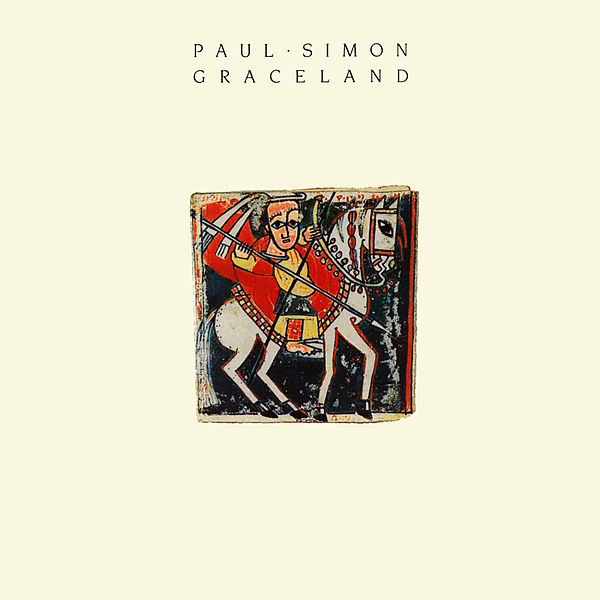
At work Christian Century is a magazine that sometimes lands on my desk. I suspect the book reviews are the main reason for this, but I like to skim the headlines to see what the more progressive, popular periodical has to say about the world. I always glimpse the news in brief section, and quite often the quotes of the week are poignant. This past week I read one from Paul Simon, who was speaking at Princeton University. The quote ran, “We are living in an anti-art age. The world is now a brutal place and obsessed with speed and wealth.” I found my head nodding as I read that sentiment. While I was a little too young to be aware of Paul Simon’s considerable contribution to popular music while it was happening (although I was old enough to appreciate Graceland when it came out), I nevertheless listened to Simon and Garfunkel during college and beyond, amazed at the depth and accuracy of Simon’s poetry. Here was a true artist.

What a difference half a century can make. I find myself not recognizing the world that I took for an assured thing as a child. Drawing back to get some perspective—which is something I think Paul Simon would appreciate—I think about the world without technology. Other species, for example. The behavior of, say, deer is the same today as it was when Europeans first invaded these shores. While deer still wander out onto roads in their natural quest for food, we race at them in heavy machines that leave them dead and twisted grotesquely at the roadside. Deer may not have the mental capacity to think, “hey, there’s fewer predators than there used to be,” but they are frequently brought into contact with a technology that is so nineteenth century, and the result is fatal. Where has the artistry gone? The deer remain the same.

I read a lot of older stuff. When I see the literature that was clearly published for its beauty of language and artistry, it brings a tear to my eye. We don’t publish work like that any more, unless it can make money. Everything has become a calculated capital venture. If you can’t make money off it, it’s not worth doing. When I was stressing out in college over exams, I would sometimes put on my old Simon and Garfunkel records and listen to the deep and complex lyrics to “Mrs. Robinson,” or “Bridge over Troubled Waters,” or “The Sound of Silence.” Despite the angst, this was a world that had a place for beauty for its own sake. It’s not just the music that’s changed since then, because I knew that I was listening to the words of a prophet. And prophets only appear when there’s trouble ahead.

Graceland