Generation Tech

You can’t be lazy in a technocracy.  I find myself repeating this mantra to myself when dealing with many people who use technology only when strictly necessary.  They don’t realize the war has already been lost.  If you want to thrive in this new world order, you need to keep up at least a modicum with technology.  I deal with a lot of people for whom biblical studies means handling only pens and paper.  J. C. L. Gibson, one of my doctoral advisors, wrote all his books longhand and had his secretary type them.  That’s simply no longer possible.  For authors, if you’re not willing to put notice of your books on Facebook, Twitter (or, as it seems to be going, Threads) people aren’t going to notice.  Publishers don’t send print catalogues any more.  My physical mailbox has been quite a bit less used of late.

There’s an irony to the fact that the generation that grew up on Bob Dylan’s “The Times They Are a-Changin’” are now refusing to accept our robo-overlords.  AI is here to stay and shy of a total collapse of the electrical grid, we’re not going back to where we were in the sixties.  The times have a-changed.  And you know what Bob says to do if you can’t lend an appendage.  Now, if you read my blog regularly, you know that I don’t go into this future with a sincere smile.  But at least I try to keep up with what I need to to survive.  I have to stop and remind myself how to write a check.  Or fold a roadmap.  I suspect that many of those who object to doing academic business electronically also drive by GPS.  It beats getting lost.
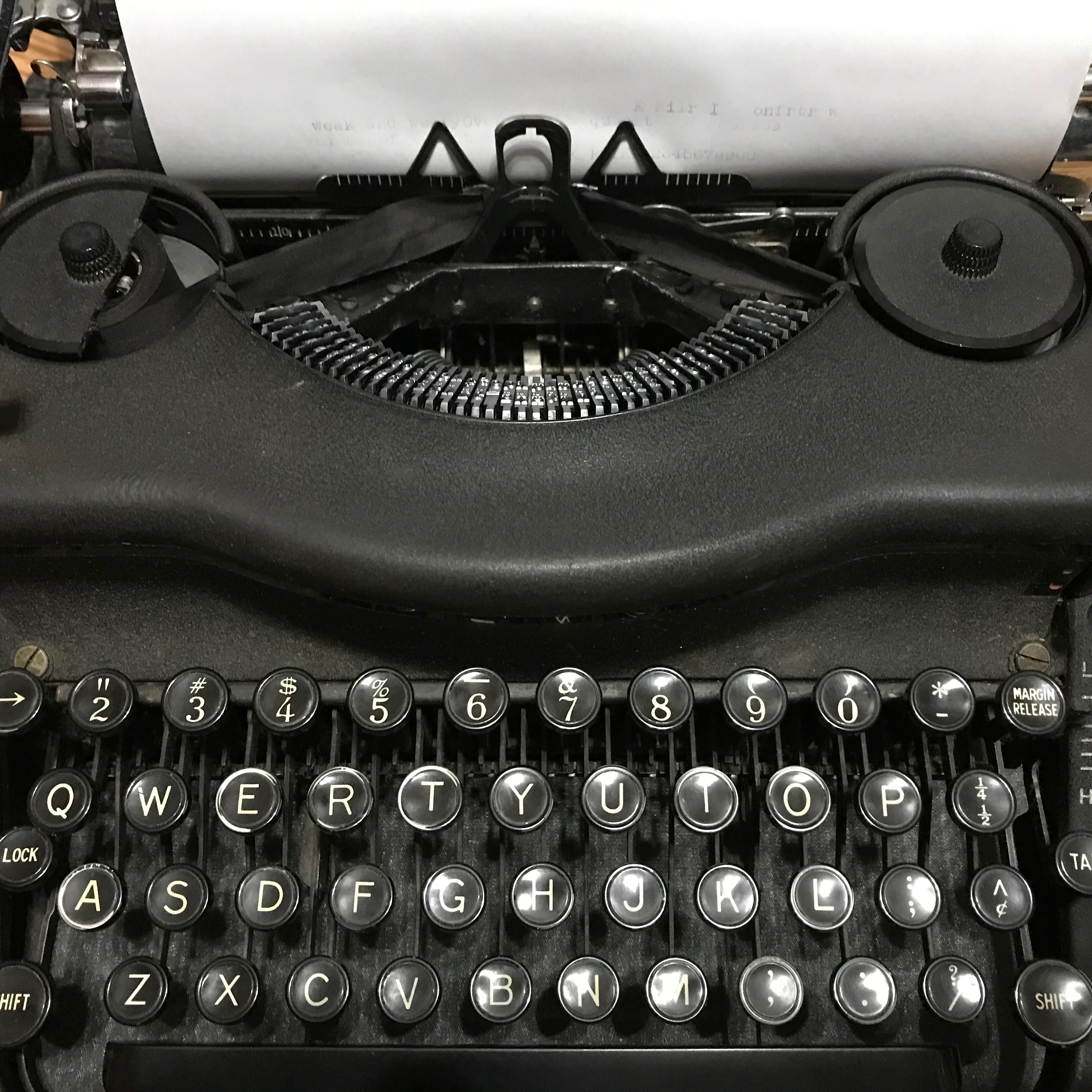
How does this connect to the internet?

No, I’m not the first in line.  I still wouldn’t be using a headset for Zoom/Teams meetings if my wife hadn’t given me an old one of hers.  This despite the fact I complain that I can’t hear others who insist they can speak clearly without and whose voices are muffled by the echoes in their work-at-home room.  Nevertheless, if you want to be a professional of any stripe, you need to reconcile yourself with technology and its endless changes.  You wake up one morning and Twitter is now X and you find yourself xing rather than tweeting.  I need to get more followers on Threads, but you can’t do that on your laptop—I guess times are still a-changin’.

Sixes and Sevens

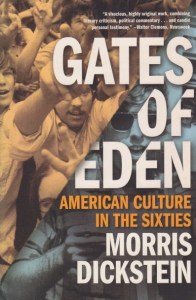
Few eras conjure mental images as readily as the sixties.  As the first decade of my life, I idealize them a bit, I suppose.  I wasn’t old enough to appreciate the truly wonderful and troubling things going on around me, and being raised in a Fundamentalist family I probably couldn’t have enjoyed many of them in any case.  Morris Dickstein’s Gates of Eden: American Culture in the Sixties was written in the seventies.  Since he’s a literary scholar much of the culture he analyzes is print culture, emphasizing the works of Jewish novelists and African-American writers.  That fits the sixties image pretty well.  He also looks at the music, but not as much as I had anticipated he might.  For me the music of the decade conveys what it really was about.

At one point Dickstein describes the political situation in the fifties that led to this incredible decade.  I had to remind myself that this was written forty years ago, for he seemed to be describing, with eerie prescience, the world of Trump and his followers.  Repressive conformity and the superiority complex of that era led to a breaking point where individual expression tumbled long-held rules and regulations that had tried to repress women and those that didn’t fit the WASP mold.  Most of us thought those controlling, catatonic days were over for good.  It seems we underestimated the will of those who lack imagination of where things might go if freedom were allowed to be free.  Some people, it seems, believed the sixties were a disease to be cured.

Historians who have a wider grasp than I do say that time has to pass before accurate pictures can emerge.  Instant potted histories tend to miss much of what becomes clear only with the slow passing of further decades.  To me the music defines them.  I only started to become culturally aware in the seventies, and that was in a small town.  When I learned to look back, largely in the eighties, I could see, and hear, that I’d lived through an extraordinary time.  The nineties, largely spent at Nashotah House, were again isolated from culture.  Who knows how this new millennium will be assessed?  Has a new music emerged that will help define us?  Or will it be, as Dickstein unwittingly projects, a new era of acceptance, love, and peace?  Or did the world really end at the millennium?   It could be, we might dare to dream, that a new decade as remarkable as the sixties is waiting to usher in Eden again.