Unidentified

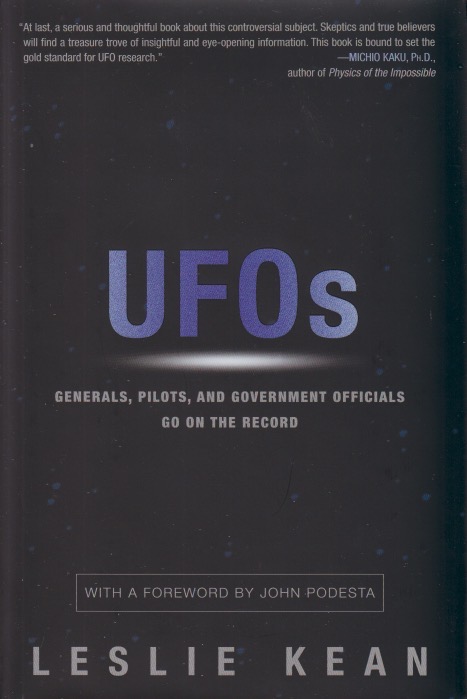
Some topics are subject to ridicule.  The poster child for this is UFOs.  What’s so remarkable about Leslie Kean’s book is that she began as a skeptic.  She points out that before a sea change takes place intense ridicule against the new idea is normal.  Then Kean did an extraordinary thing—she actually looked at the evidence.  UFOs: Generals, Pilots, and Government Officials Go on the Record is a remarkable book.  It’s filled with stories of the power of conversion.  Many UFO experts were skeptics at first, completely dismissive of the phenomenon, until they took a close look.  Official government files, even those available to the public, demonstrate the reality of UFOs.    Interestingly, as Kean highlights, the average person now no longer really requires convincing.  The elites (government officials, scientists, and mainstream media) are slow to accept the fact that UFOs/AUPs exist, even if we can’t say for sure what they are.  And they still like to poke fun.

Skepticism is necessary for science.  We can’t simply accept anyone’s word for something.  Kean’s book, which contains pieces written by an international group of high-ranking witnesses, points out that strong evidence does exist.  And it is possible that some group (not “the government”) does have more information than they’re sharing.  I also found it interesting that a number of countries—many, in fact—treat UFO reports from pilots seriously.  In the UK they are required to report them, for example.  In the United States, they are instructed to keep their mouths shut.  They doesn’t stop them from seeing what they do, however.  Still the ridicule taboo remains.

Ridicule of what we don’t understand must be a deeply ingrained defense mechanism.  As Kean notes, it took centuries before a heliocentric model was accepted.  People laughed.  And as recently as the nineteenth century it was considered impossible for rocks to fall from the sky.  Paradigms had to shift.  Meanwhile, people laughed.  We seem to have an aversion to anything in the sky other than God and angels.  Even in current models that assure us that the universe above us stretches on to infinity.  The only one “up there” is divine.  So we laugh at anyone who’s mastered the skies.  Until we catch up.  Heavier than air flight was impossible in my grandparents’ lifetimes.  People laughed at the idea.  It took me over a decade to find the courage to read this book—it made a little splash when it came out, but it didn’t change much.  Until the U.S. Navy fessed up.  Other countries had already done so.  Maybe we should see a psychologist about that laughing reflex, though.


Souls, All

What is a soul?  Can you lose your job for believing in one?  Well, maybe not lose your job, but be placed on paid leave.  Yesterday’s New York Times ran a story about Google engineer Blake Lemoine being put on leave after claiming a soul for the company’s artificial intelligence language model.  Isn’t that what artificial intelligence is all about?  We’ve become so materialistic that we no longer believe in souls, and when we create life we don’t expect it to have one, right Dr. Frankenstein?  One of the sure signs that we are alive is our sensing of the many qualia of biological existence.  We understand that we’re born, we’re biological, and that we will die.  We also sense that there’s something beyond all this, our self, or mind, or psyche, call it what you will.

In our minds the soul has become entrenched with the Christianity that provides the backdrop to our somewhat embarrassing history of repression of those who are different.  How do we redeem one without having to be shackled to the other?  And once we do, can we declare why AI doesn’t have a soul while biological beings do?  Or will we insist that it is solely human?  In this odd world that’s evolved, we view animals as innocent because they can’t know what they’re doing.  Historically there have been animals put to trial.  That’s an aberration, however, from our usual ways of thinking.  We don’t know what a soul is.  We’re not even sure there is such a thing.  To suggest a machine might have one, however, is taboo.  Would we trust a soul made by humans?

Skepticism is good and healthy.  So is having an open mind.  We’ve been a polarized people for a long time.  If it’s not politics it’s elites versus uneducated, materialists versus those who think there might be something more, self-assured versus those who question everything.  The path of learning should keep us humble.  We should be open to the possibilities.  There’s no way to measure the immaterial since all our tools are material.  Even psychology, which utilizes categories to help us understand neurodiversity, often finds chemical solutions to the most cerebral of problems.  Perhaps overthinking is an issue—it can certainly get you into trouble.  Believing in souls can put you in a place of ridicule or suspicion.  Does AI have a soul?  Does a soul emerge from biological existence, whenever a sufficient number of neurons gathers in one place?  Is it the fabric of the universe from which we borrow a little?  We have some soul-searching to do.

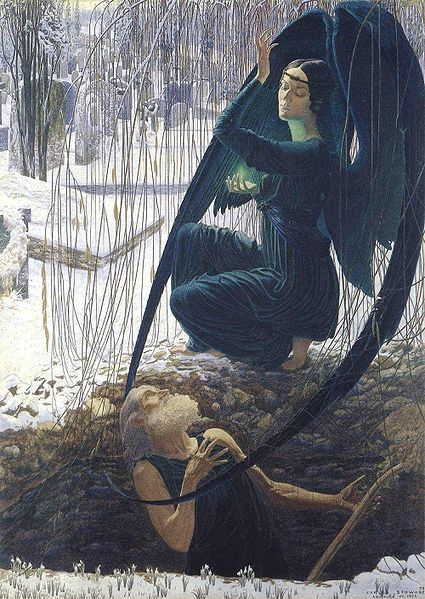
Carlos Schwabe, Death of the Undertaker; Wikimedia Commons

Making Noise

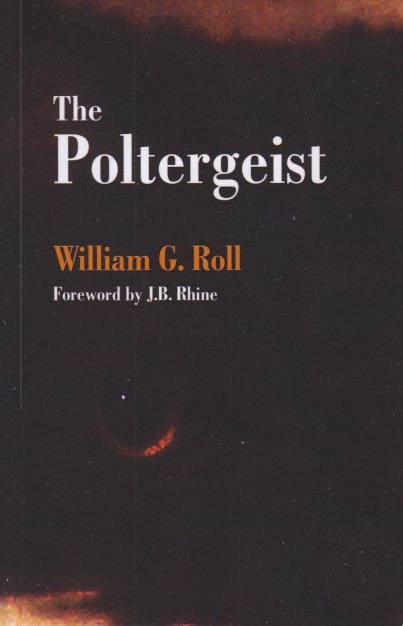
There’s a real danger, it seems, to having an open mind.  We live in a world defined and classified by materialists.  They hold sway not only over science and commerce, but in whether prestigious jobs are on offer.  Consider the case of William Roll.  Roll was a fully credentialed psychologist with an interest in parapsychology.  His book The Poltergeist is a classic in the field.  He’s now frequently called a “credulous investigator.”  What that means, of course, is that he listened to and sometimes believed the people who reported the paranormal.  For materialists that discussion is already closed.  Anyone who tries to pry it back open is ridiculed and called names.  (We’re all adults here, right?)  Yet his classic book still gives pause.

If you actually read it, “credulous” is not a word to suggest itself.  Could Roll have been tricked by clever pranksters?  Yes.  Most people, even clever pranksters, can.  If someone is caught hoaxing a phenomenon, does that mean the whole thing is a hoax?  Not necessarily.  It’s here the materialists swarm.  Interestingly, Roll acknowledges that there could be good psychological reasons for hoaxing after a genuine event.  The person caught hoaxing perhaps realized the benefits of the attention received when something unexplained occurred, and learned how to replicate, or at least imitate it.  People will do anything for attention.  Roll asked a bit more finely parsed question: does hoaxing discount genuine phenomena?  He even tried to get experiencers to the lab where controls could be put into place.  As this book demonstrates, he doubted some of the cases and did so openly.

I became interested in Roll after watching A Haunting in Georgia.  The Wyrick family maintains that the events happened (I’ve written about a book penned by two of the aunts), and they seem sincere.  The problem is money.  Once there’s potential money to be made the skeptics come out, claws bared.  The problem is we all have to make money to survive.  If that involves “capitalizing”—even that word betrays much—on weird things that happen to you, skeptics claim it’s all made up.  There’s an ulterior motive.  For most of us there’s an ulterior motive for going to work, too.  For me, Roll appears to have been sufficiently skeptical.  Statistical anomalies shouldn’t be simply dismissed.  If they are, it’s possible we’re missing something important.  While this book may not have aged particularly well, it is still worth reading with a mind at least a little bit open.  


Building Trust

Photo by Marek Piwnicki on Unsplash

Perhaps the most insidious aspect of the Trump presidency was the four years of eroding trust.  People, it seems to me, no longer trust each other.  I’ve noticed it most since the reign of a pathological liar.  It’s kind of like a nation of children of alcoholic parents—trust is a real struggle.  I regularly deal with academics.  Now, critical thinking tends to make a person skeptical, at least to a degree, but it seems to me people would trust a very old, highly regarded institution.  Lately I’ve noticed that trust eroding in various ways, and that puzzles me.  If we can’t trust those who’ve done the heavy lifting of keeping a solid reputation for centuries, well, who can you trust?  It’s a real dilemma.  Maybe it’s because we had four years of equating “my opinion at the moment” with “facts.”  The damage will take many years to repair.

The basic way that civilization works is with trust.  We tend not to pay our money for something unless we believe it’s worth what we’re spending.  Skepticism, in appropriate measure, is a good thing.  So is trust.  One way that I often see this is in the hiring of contract managers.  Yes, there is such a thing!  Many younger academics now hire companies to make sure the publishing contracts they sign aren’t cheating them.  When I was in academia you simply went by the reputation of a publisher.  Everyone knew who had a good reputation because of, well, their reputation.  What a publisher represented was well known and respected for what it was.  Perhaps I’m mistaking the desire for personal advantage for lack of trust.

Companies sometimes engage in trust-building exercises.  Getting beyond someone’s politics to the person beneath seems to be a dying art.  Deep divisions are difficult to achieve when people trust one another.  Consider the anti-vaxxers who are now feeding the delta-variation of Covid-19.  They’ve been taught not to trust the scientists and officials who offer a way to ending this pandemic.  For free.  They even don’t believe the post-presidential interview with Trump where he encouraged (far too late) his followers to get vaccinated.  Trust has to be built slowly.  Over centuries sometimes.  One man’s selfishness tore down the modicum of trust that had been slowly growing since the 1860s.  Now uninformed skeptics think critical race theory is some kind of plot.  Trust isn’t a bad thing.  It is the only way to move forward.  Trust me on this.


Fun with Skeptics

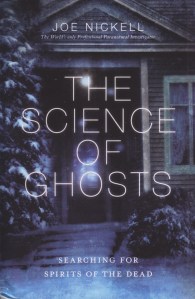
You have to love skeptics.  Really.  Like most people who’ve spent many years attaining a doctorate, I’m naturally skeptical about many things.  One thing that I only temporarily lost (between about 1991 and ’99, if I recall) was an open mind.  That is to say, I discounted many things out of hand because people with doctorates don’t countenance such things.  I eventually realized the folly of academic arrogance and went back to considering things by actual evidence.  The results were interesting.  In order to help with my Ed and Lorraine Warren dilemma, I decided to read The Science of Ghosts by Joe Nickell.  It’s hard not to like Nickell.  He was a stage magician and eventually earned a doctorate in folklore.  He then made a career out of being a paranormal investigator.

He begins his book by claiming to have an open mind about ghosts.  Very quickly, however, a skeptical reader with an open mind notices his magician’s tricks.  He’s very good at misdirection.  While putatively not debunking (but actually debunking) ghostly encounters, he time and again comes to the states of consciousness when individual super-impose images from the  unconscious mind onto what they’re seeing: when falling asleep, in the middle of the night, when waking up, when doing routine chores, when concentrating, when working.  That about covers over 90 percent of human time.  During these periods we’re likely to mistake what’s not really there for what is.  It could explain much of the driving I’ve witnessed in New Jersey, if not ghosts.  And he also picks straw men (and women) to knock over (pardon the violent metaphor).  Accounts by the credulous are his favorites to explain away.

What we really need is a middle ground between credulousness and a skepticism that can’t be convinced even by evidence.  Yes, ghost hunters use ridiculous methods for claiming “proof.”  Yes, some credible people legitimately see incredible things.  Nickell never deviates from his definition of ghosts as a form of energy left by the departed.  Nobody knows for sure what ghosts are, of course.  If they did there’d be little mystery about them.  Although Nickell claims openmindedness, he states at several points that at death brain activity ceases therefore nothing can think, walk, or talk afterward.  As any experimentalist knows, the results reflect the way an experiment is set up.  If the assumption is that there can’t be ghosts, there won’t be ghosts.  To get to the truth of the matter something between credulousness and biased skepticism must be brought to the table to see if it really tips.  Skeptics are fun, but an actual conversation might be more fruitful.


Straining Credulity

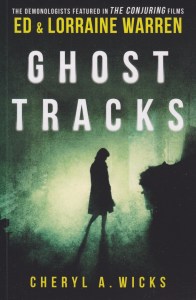
Ed and Lorraine Warren aren’t easy to figure out.  I realize that for someone who holds an actual doctorate from a bona fide, internationally recognized research university this might be something strange to say.  That’s because the standard academic response is simple dismissal.  Ed, at least, was known to have stretched the truth from time to time, but that’s not the same as never having reported weird things that actually happened.  This is why I’ve long advocated academics at least looking at the evidence—rare though it may be—before the simple hand-waving dismissal.  Part of the problem is that the Warrens’ books were written by credulous followers who don’t question things nearly enough.  Ghost Tracks, by Cheryl A. Wicks, may be the last of this strange genre of hortatory, biographical accounts “by” the Warrens written while Ed was still alive.

Skepticism is very important.  But so is listening to people.  What I find compelling is that similar weirdness—frequently dismissed out of hand—has been recorded throughout the length and breadth of history and across the entire globe.  The problem is that many of these things fall outside current scientific means of testing.  While perhaps not widely known, very reputable universities quietly explore these possibilities with actual science.  Part of the problem of the Warrens, as well as various other “ghost hunters” is that they use scientific equipment and think that makes them scientists.  It doesn’t.  Science requires deep engagement and many years of strenuous study.  And yes, skepticism has to be part of it.  The thing the Warrens have to offer is that they realize(d) that when science does engage the supernatural interesting things emerge.

Sensationalism, however, is the slave of capitalism.  Books sell better when they make extraordinary claims and declare they’re based on true events.  Trying to make a living investigating the paranormal led the Warrens, it seems, to tip the balance a little too far in the way of credulity.  Some of the stories in Ghost Tracks are more believable than others.  Some are just plain frustrating.  Ed’s interview with George Lutz (of Amityville fame), for example, is full of dropped balls.  A good question receives an intriguing answer only to have the subject immediately switched by the interviewer.  Even just a little skepticism and a follow-up question would have done scads to improve the believability of the story.  This is something a scientist would have known.  Someone as smart as Sir Arthur Conan Doyle, although his Sherlock Holmes generally found  ratiocination led to physical explanations, believed in the supernatural.  If only his Holmes might’ve been brought to this discussion we might possibly have learned something.


Long Nights

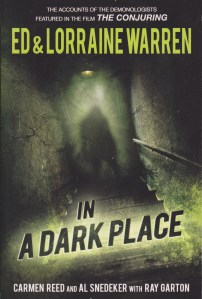
Before I really knew who Ed and Lorraine Warren were, I watched a made-for-television movie called, I think, A Haunting in Connecticut.  Unlike many television movies, it was actually quite scary.  Fast forward several years and I find myself writing a book that involves the Warrens.  I felt obligated to read all the books they “wrote”—all of them ghostwritten—and I’d been holding off on the one titled In a Dark Place, which is the story behind this television movie which was subsequently made into a theatrical movie.  The book is by Ray Garton and the parents of the family involved (Carmen Reed and Al Snedeker) are also credited.  The story is indeed a dreary one, not something I expected would bring any holiday cheer.  About that I was correct.

Why do I do it, then?  A concern with veracity drives me.  Throughout history enough people have told stories like this that either we have to lump our species together as a bunch of lying attention-grubbers, or there might be something to what they say.  The academic and official responses have long been to state that such things can’t happen, so they don’t.  When compared with how we come to know other things about life, we quickly realize that it involves experience.  In cases where experience is anomalous we tend to dismiss it.  We are great conformers.  What if there really was a demon in the Snedeker house?  Others have told similar tales.  If there’s any reality to it, shouldn’t we know?

As a former academic, I always thought that if we really wish to learn the truth, no subject should be off-limits.  That’s not the same thing as credulousness.  We don’t have to believe everything overwrought people say, but the subject should be worth consideration.  Of course, those who ghostwrote for the Warrens claim that they were given liberty to stretch the truth to make a better story.  They also tend to claim that the basic elements of the story are true.  When someone’s writing a book, there’s likely some hope of remuneration involved.  And sometimes the truth isn’t quite flashy enough for major presses with the bottom line in sight.  Still, the question of what really happened is left open.  The internet is a place where credulity reigns.  We can seek truth there only with great caution.  Maybe that is the lesson to apply to books like this as well.  Although In a Dark Place is scary, there was money at stake, and as the wise say, money changes everything.


Residual Thoughts

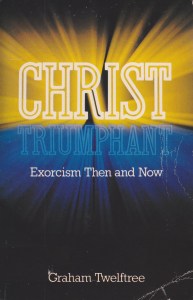
I feel compelled to say that this book was not among the overwritten tomes I mentioned in yesterday’s post.  Indeed, although the title reflects the outlook of the author, you need to get to the subtitle to find out what the book’s about.  Although I work at an academic press, I disagree with academic book pricing models.  Graham Twelftree’s previous book, Jesus the Exorcist, had to be picked up in a paperback reprint edition before it could be affordable to the likes of mere mortals.  After reading it I learned that Twelftree had written a more popular book on the topic—Christ Triumphant: Exorcism Then and Now.  Putting much of the material from the previous book in less technical terms, this version goes on to ask questions that can’t be put into a standard dissertation, such as “should exorcisms still be done?”

The academic is necessarily a skeptic.  One of the biggest problems our society faces is the open credulity of those who haven’t been taught to think critically.  Twelftree is a rare academic who keeps an open mind while approaching the material with a healthy skepticism.  Often it’s too easy to suggest that disregarding that which doesn’t fit a theory is the only way forward for an academic.  Sweeping off the table that which we don’t like.  The word Twelftree uses is “residue”—that which remains after the majority of possession cases have been explained medically.  The usual response is to disregard this small fraction of anomalous material and claim “case closed.”  In this book Twelftree dares to go further.

The supernatural has become an embarrassment for many, even in believing communities.  An interventionist god, or demons, would set off chain reactions that would distort the known laws of physics, so such things simply can’t exist.  Things which we can’t explain only exist because we haven’t got all the variables yet.  I recall how cold that made me feel when I first encountered the idea in physics class.  “Scientific determinism” it is sometimes called.  This little book rehearses the New Testament material covered in Twelftree’s dissertation, but goes on to raise the implications from that study and apply them to modern times.  It’s a brave thing to do in an academic world where brushes and brooms are very common.  Where residue is wiped up and tossed away without a second thought.  Those who stop to think through the implications are rare, which makes them so much the more interesting reading.  And not being from an academic press, such books are often  affordable.