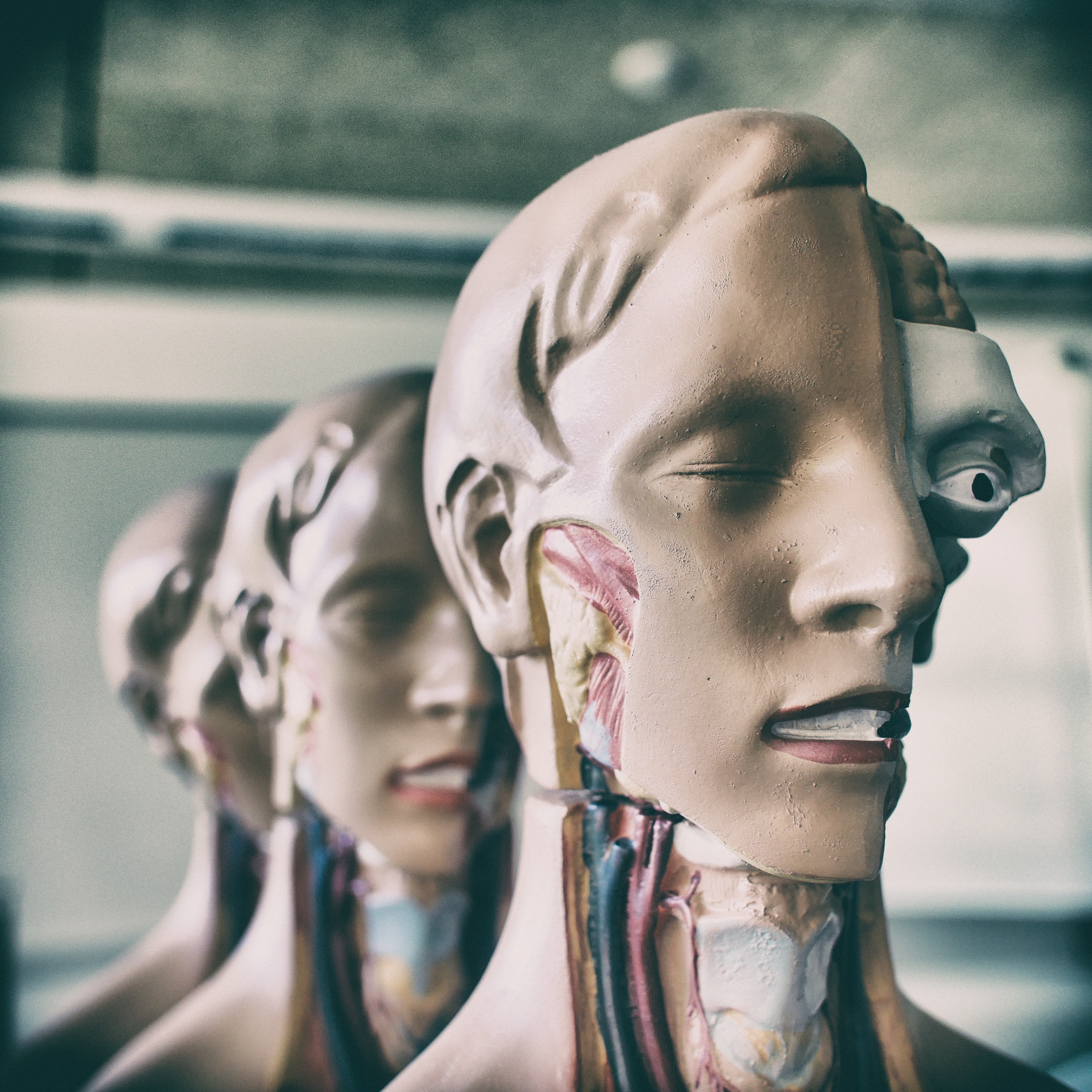
Dream Machine

I’ve reached the age where, instead of how well you slept, it’s the nature of my dreams that is more reliable projector of productivity.  You see, after a night of bad dreams I often wake up drained, lacking energy.  Entire days can be cast into this state of lassitude.  The only thing for it is to sleep again and reset.  The next day I can wake up after positive dreams, bursting with ideas and creativity.  New ideas come so fast that I can’t get them down in time.  Dreams. 

My entire life I’ve been subject to nightmares (no, it’s not the movies).  I still wake up scared at least once or twice a week.  More positive dreams have been struggling with these nighttime frights, and when they win, I have a better day.  I know, I know.  I should be in regular therapy.  The problem is time.  I see notes in papers and elsewhere of people younger than me dying.  On a daily basis.  The problem is I’ve got so much that I want to accomplish that I don’t have time to locate, pay for, and drive to see a therapist every week.  (The bad dreams come that frequently, so it stands to reason that weekly appointments should be on the script, right?)

The thing is, there’s no predicting these dreams or their timing.  My wife and I live a life of routine.  I awake early (anywhere from 1 a.m. To 4 a.m. these days) and begin writing and reading.  I jog as soon as it’s light and start work when I get back.  The 9-2-5 insists that you answer emails until 5 p.m., which can make for some very long days, depending.  After that we have dinner while watching some show we missed when it first aired, and then I go to bed.  That’s been the pattern ever since we bought this house nearly seven years ago.  Before that, we didn’t always watch things in the evening, but that doesn’t seem to make a difference in the dreams.

So I get up early and write down my thoughts for this blog, work on the books I happen to be scrawling at the moment (both fiction and non) and anxiously watch for sunrise, that ever shifting foundation.  And then work.  Always work.  But how well I work will depend largely on what was in my subconscious mind before I wake.  I have no idea if this is normal.  Knowing myself, it probably isn’t.  But I’ve reached the age where it at least starts to make sense.


Sleeping and Watching

The older I get, the more flexible my idea of reality becomes.  I’m starting to notice things that may have been happening for decades, but the reflection of age throws into sharper focus.  I’ve mentioned before that a good night’s sleep casts the day in a different light.  Such nights are sometimes hard to come by and unrelenting capitalism doesn’t offer enough “sick days” to sit out the bad ones.  But it’s not only that.  I watch a lot of movies.  Since I’ve been writing books on movies that only makes sense.  Still, I’ve begun to notice how movies stay with you after the credits roll.  Sometimes they remain the whole day until a night’s reboot comes.  This can also happen with reading, but on a slower, and most likely more profound level.

In high school, reading existentialist plays (sometimes in German), I learned to remind myself that watching a play (or movie) is observing an illusion.  Now I’m beginning to question whether that’s entirely true or not.  What enters our minds becomes part of us.  Think of the vast majority of human lives throughout history.  People living out their lives by farming and/or hunting.  Spending every day on the many tasks it takes to stay alive.  No reading.  No watching.  Their daily lives constructed their reality.  How many of us could grow our own food or build adequate shelter?  And God help us if we need a doctor.  Our lives require many other people to ensure we keep on going.  Most of them people we don’t know.  People whose realities are different than mine.

My career trajectory misfired fairly early on, and my reality has been years of trying to make sense of what happened.  From the first days of hurt and confusion I began to cope by watching movies.  For ninety minutes, at least, I escaped reality.  Or did I?  Was I enhancing reality?  What of my existentialist outlook?  Perhaps I was doing what existentialists do best—creating my own meaning.  So if I get out of the wrong side of bed, and the day feels like it really isn’t welcoming me this time around, I await the reboot.  Or when I have a few moments to sit down and watch a movie, I get up from my chair with an alternative reality surrounding me.  Perhaps I have learned something by sleeping and watching.  Maybe I have learned that reality is more flexible than I’ve been inclined to believe.  Maybe somehow this all does make sense.  Or not.


Thinking Thinking

Something that’s been on my mind (anticipatory pun) lately, has been thought.  More especially, the quality of thought.  We are conscious beings, although we’re not sure what that means.  Beyond a Cartesian self-awareness.  Everyone knows what it is to have times when you’re not thinking clearly.  Or are feeling confused.  Those of us who tend to live quasi-monastically (keeping to a routine, early rising, writing and reading daily before the 9-2-5 routine) notice the ways subtle things can influence the quality of our thinking.  For me, first thing in the morning is the best time.  (Although I must confess that lately I don’t wake up with the crystalline clarity that I have for years, as if sleep is beginning to intrude on my earliest hours.)  Once I’m up and going, though, routine, you’d like to think, would provide the same results.  But it doesn’t.

Photo by Pierre Acobas on Unsplash

I’ve written before how the quality of sleep can affect the quality of awake thinking—something we’ve all known all along.  But even when I have somewhat identical nights (same quality of sleep more than one night in a row), the subtleties of difference in thought persist.  To understand this, you need to realize that I’ve been rising well before the sun for a dozen years now.  I awake to a quiet house and spend a couple, sometimes a few, hours writing and reading.  (It’s how I write my books, as well as this blog.  And my fiction.)  Even on “identical mornings” where the weather’s pretty much the same, and all other factors seem equal, the quality of thought differs.  Sometimes it depends on whether I’m writing fiction or non.  As I transition into my reading time, that can make a difference in the reading experience.  I suppose that’s one reason I value good writing.

We don’t understand consciousness.  Identity is also somewhat negotiable at times.  We’ve all known a family member or friend to act “not like themselves.”  More to the point, to think not like themselves.  We have no real way of understanding thinking itself.  I think about thinking quite a bit, and I marvel at how intensely personal it is.  We may, at our will, keep our thoughts to ourselves (and that’s a good thing, in many circumstances).  Thought, it seems to me, ought to be a very high priority in our academic pursuits.  It’s a powerful thing, capable of more than we’re even presently able to imagine.  And it can differ from day to day.  Do you suppose I wrote this after writing fiction or non?


Sleep Well

It’s scary, actually.  How you think depends on how you sleep.  I suspect that the degree of this differs individual by individual, but I recently had a couple of consecutive nights where the differences were striking.  To put this in context, it was after ending Daylight Saving Time (it should be kept all year but with Republicans in the House unable to pick a speaker, what chance do we have of them ever passing a simple, but necessary measure?).  Mondays, for some of us, we naturally awake earlier since, well, work.  I happened to wake excessively early that morning and couldn’t get back to sleep, no how.  I functioned alright during the day, but those who work 9-2-5 aren’t allowed naps and some of us aren’t young anymore.  I thought it was a fairly normal day.  That night I slept well.

Photo by Kate Stone Matheson on Unsplash

The next morning it was like my thoughts were supercharged.  I was thinking things I’d failed to pick up on the previous morning.  I was efficient and energized.  What a difference a good night’s sleep makes!  But the herd mentality—work must be eight hours and those hours must be from nine to five (if you work more, that’s great!)—doesn’t allow for bad nights.  It’s ageist, really.  Once you reach a certain age, you don’t sleep as well at night.  Work times are non-negotiable, so you’re forced to keep going through the yawns that a good nap would take care of.  So much depends on a good night’s sleep.

In reading about the history of holidays (I’ve been doing this for years, as The Wicker Man demonstrates), it’s clear that the United States stands out in the dearth of its holidays.  It’s been that way from the beginning.  Most employers don’t give Veteran’s Day off.  None note May Day, which is Labor Day in many parts of the world.  No time to sleep in in this country!  Work while you’re tired, work while you’re wakeful, just as long as you work those sacred eight hours and more.  Of course, all of this may come from that grouchy feeling a poor night’s sleep bestows.  I don’t keep a sleep diary, but I do wonder how many social ills are brought about by a bad night’s slumber.  It’s the darkening time of the year.  Nature’s telling us that reasonable animals hibernate.  The rest of us set alarm clocks to wake us before it’s light, no matter how we fared the night before.


Hotelling

Perhaps I’m just sleep-deprived, but staying in a hotel is a collective experience.  It’s a place where communal consciousness should run high.  You’re stacked (in many cases) on top of and/or beside strangers.  And strangers have different habits.  Back in my hometown of Franklin for my mother’s funeral, there aren’t many options for accommodation.  Her last years in this region were spent in the small “suburb” of Oil City called Seneca.  An ambitious Holiday Inn Express visionary put a not-exactly-cheap establishment in this economically depressed area.  It’s generally a pretty comfortable place to stay.  I am, however, an early riser.  (I know this can’t be easy on my family since I go to bed early and that means televisions have to be kept low after 8 p.m. I’m part of the problem.)  As I say, it’s a collective experience.  I’m constitutionally incapable of sleeping in, so late nights lead to sleep-deprived days.

Around 1:30 new upstairs neighbors checked in.  Walker, Texas stranger types.  Heavy-footed with a penchant for running.  Their arrival awoke me at a dangerous hour since any time after midnight my body says, “You’ve had a few hours’ sleep, and dawn’s not that far off.”  As I groggily tried to remember relaxation techniques, my mind kept getting sucked back to our New Jersey apartment.  We rented the first floor of a house and one set of upstairs neighbors had a son who would run back and forth the length of the apartment, shaking all the light fixtures, knocking down plaster, and breaking concentration.  And sleep.  One particularly memorable work night, said urchin was leaping off a bed and running at about the same time as our late visitor last night.  The husband had a police record but we had to call the landlord for an intervention (I had to get up at 3:00 to be ready for my early bus).

When staying in a hotel, we’re living a model of life in community.  I think of this as a parable.  Societies thrive only when everyone considers the effects of their actions on others.  Arriving at a hotel after a long drive, kids are full of energy (I was, believe it or not, once one myself).  Still, if children aren’t taught that strangers are sleeping below, as adults will they ever internalize the message?  Or maybe it’s simply the trauma of those disturbed and frustrating years of constantly pounding feet above my head that have come back to me at an inopportune 2 a.m.  I have a funeral later today, but perhaps I’m just sleep deprived.

Who might be staying upstairs?

Subconscious Humor

It’s good to know your subconscious has a sense of humor.  What with all that’s going on in the world these days, God knows we could use a laugh or two.  At least a smirk now and then.  One of the less-anticipated aspects of becoming old and wise is disrupted sleep.  Our bodies did not evolve for the 925 schedule, and the “eight hours a night” trope is more naturally along a pattern of sleep for maybe four hours, get up for a while and get things done, then sleep for a few more hours, until dawn.  That doesn’t fit well at the office, so we try to cram all of our sleep into one unbroken stint.  When you’re young that’s often not a problem, at least in my experience.

Then you reach a certain age when, with no discernible change in habits, you have to visit the restroom in the middle of the night.  Modern people, of course, have a lot on their minds, so after that mid-night pee it’s difficult to get back to sleep.  For those of us who can’t break the long-term commuting habit, any waking after midnight is likely to be the end of a night’s sleep.  Once you get tired enough, however, you tend to overpower the full bladder and snooze on to the usual rising time.  (For some of us that’s earlier than it is for others, but that’s immaterial.)  This is where the subconscious starts to play its role as the comedian.

Mildly thalassophobic, I tend not to go out on very deep water, especially in small craft.  To be fair, I don’t live too close to the ocean and I don’t own a boat of any kind, so this often isn’t an issue.  One of my biggest traumas in college was meeting the “swim a length of the pool” requirement for graduation—I understand that’s now been abolished.  I nearly didn’t make it, but the last semester as a senior I had a private show—which must’ve been funny—for the swim coach.  So when I need to pee and I sleep through the middle of the night, I have deep water dreams.  I’m on a small boat in an ocean.  Sometimes I see paranormal geysers bursting from the surface and wonder what they are.  Then I wake up and dash for the bathroom.  Hey, it could be worse—my subconscious could find a humorless way of waking me.  Meanwhile, it probably wouldn’t hurt to take some adult swimming lessons.

All that water…

Real Dreaming

I keep odd hours. Although we don’t live far from New York City, as the pigeon flies, public transit sets the schedule for my day. (I’m merely writing as a representative here, since I know others keep my hours as well.) Since I’m usually waking up around 3 a.m., I have to go to bed pretty early. One night recently I turned in around 8:00 p.m. and fell into a fitful sleep. When I awoke three hours later, it was as if my gray matter were a thunderhead. Ideas, worries, and memories flashing like lightning. Concerned, I watched the clock since I knew it was a work day. When three rolled around with no more sleep I hoped it would be like one of those rare days of interrupted rest when my conscious mind does just fine. Would it function that way on just three hours of sleep?

This incident brought home to me once again the mystery of consciousness. I had a meeting in New York I couldn’t miss that day, but by mid-morning (in real-people time) I was seeing things that weren’t there—an almost Trumpian dissociation from reality. Then I’d snap back to awareness and realize my mind was drifting off to steal some of the sleep it refused during the hours of darkness. Using the usual tricks I stayed awake for the workday and even for the bus ride home, with only brief momentary lapses where what had been reality had stopped making sense. Consciousness, it seems, functions best with a well-rested brain. A good night’s sleep put me back to normal the next day.

Reflecting back over that previous 24 hours, I thought how surreal they’d felt. Not to put too fine a point on it, but they were like an altered state of consciousness. Religions, some claim, began because of such altered states. They are strange and powerful. And fairly universal—almost everyone experiences them from time to time, whether by sleep deprivation, controlled substance use, or prayer and meditation. Even knowing the cause (going to bed with a lot on your mind when you have to wake early, for example) doesn’t change just how real the experience feels. This is one of the reasons that rationality doesn’t explain all of experience. In the same brain there are Jekyll and Hyde aspects to consciousness, interchanging with each other every few hours. As the movie Inception underscored, you don’t remember how you entered the dream. You’re just there. And when that world intrudes on the conscious, rationally ordered territory of wakefulness, the questions can become quite religious. Unless, of course, I’m still dreaming.


After Darkness

Some historians, I suspect, despair of the volumes already written on all periods, ancient and modern. History, however, can cover a variety of segments of time. A. Roger Ekirch, for example, thought to write a fascinating history of darkness. At Day’s Close: Night in Times Past is a thoughtful exploration of what night has historically meant. For those of us born in the era of constant light, the realities of what it was like after dark in the past are almost unimaginable. I’m sure Ekirch didn’t intend it to be so somber, but the reality of frequent crime in unlit regions made reading much of this book a sober experience. Confident of their ability to get away with it, many up until modern times took advantage of the night to commit all kinds of crimes. Makes you kind of want to check the door locks once again before turning in.

Much, but increasingly less, of our lives is spent in sleep. The advent of artificial light has led to changes in lifestyle that, according to biology, aren’t terribly healthy. The natural rhythms of sleep and wakefulness may be challenged by jobs or enticements to stay up late and surf the web or any number of other factors. Now that light has become so very portable in the form of smart phones and tablets, even less of darkness remains. Although it’s a bit repetitive and not laid out chronologically, At Day’s Close contains many provocative observations about the dark. There’s even a bit about monsters.

Night has always been symbolic. Death and fear were associated with night early on, and we still call the era of scientific progress the Enlightenment. Churchmen (for it was an age of such) tended to condemn night as evil, the Devil’s time. Not all agreed, for some considered the dark a creature of God and complained of the hubris of setting up lights at night. The religious symbolism of night is very rich and very ancient. Those of us used to artificial light have difficulty imagining what it took to navigate after dark in ages past. More than an annoyance, night could be a truly dangerous time. Dreams, once mainly the products of the night, also had religious significance before being rationally explained. The industry of banishing night also has, in some respects, the effect of banishing dreams. We should stop and think before we put night to flight. Half of our time is spent in darkness, and all of our time is highly symbolic.


Beam Me Where?

It’s kind of like the transporter dilemma on Star Trek. Where is the person/Vulcan/Klingon when their atoms are being disassociated in one location and reassembled in another? In the classic series, McCoy was never happy with the technology, and even today our doubts linger about what constitutes a person. The other day in a routine medical procedure, I underwent anesthesia. Lying there in the corridor, staring at the calmly themed over-head light colors (no, they actually were themed covers; the drip hadn’t started yet), I wondered where I was about to go. I’ve only had anesthesia once before that I can remember, and I recalled awaking suddenly from the most profound, dreamless sleep ever. It was very different from ordinary sleep. So where was my consciousness at the time?

We have no satisfactory answer to the question of what consciousness is, let alone where it is. Materialists would say, literally, it’s all in your head. Consciousness is a happy mixture of electro-chemical signals in a dull gray organ that’s busing churning out this illusion that Steve A. Wiggins is something more than, well, a mixture of electro-chemical signals. Those of us who’ve experienced enough to question such simple answers wonder a bit more deeply about it. What is consciousness? We’ve all had that feeling, I suppose, of awaking from a dream and being disoriented, even throughout the day at points, as to whether it was real or not. Or, alternatively, remembering something but not being sure if it “really happened” or might’ve been a dream. Ordinarily we recognize the difference between waking and dreaming consciousness, but sometimes the line is blurred.

My experience this time around was the same as last. One moment you’re talking to an anesthesiologist and the next you’re awaking from a completely blank state of mind, a little confused about where you are. You haven’t been in dreamland since there was nothing there. The exact mix of chemicals isn’t the same as when you fall asleep. For all intents and purposes, you are completely gone for that span of time. When I woke up I remembered the anesthesiologist and the watch he was wearing. His accent. His assuring me that the bubbles in the tube were okay. Between that moment and this, nothing. A complete blank. I went in hoping that I might explore alternate states of consciousness in those few disassociated moments, but that’s not how it happened. I think I’m ready to beam back aboard now, though. I trust my consciousness will follow my gray matter, even as I’m being beamed through the ether.