Galileo’s Tool

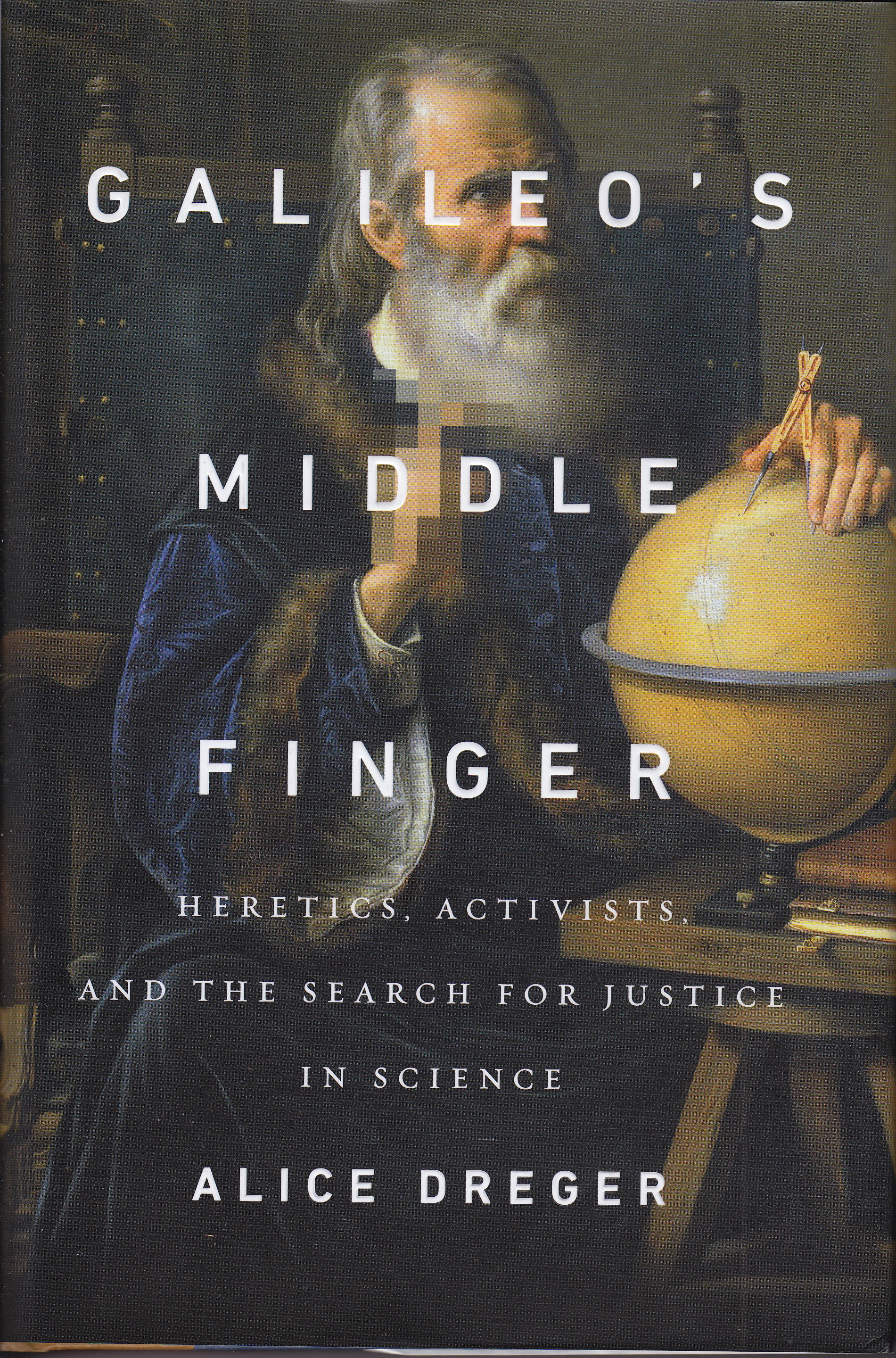
GalileoMiddleEarly in my academic career I got into trouble not because a Harvard professor hadn’t adequately checked his data, but because I had pointed out that a Harvard professor hadn’t adequately checked his data. You see, I was a naive realist. I believed academics were objective, factual sorts who looked for the truth no matter how uncomfortable it was. My honesty didn’t earn me many friends, and I still can’t mention this professor by name because I have seen grown men melt into tears at his name, due to their overwhelming loyalty. By contrast, a fellow Edinburgh student once told me that he disagreed with our mutual dissertation adviser, “on principle.” As the old saying goes, nullius in verba, take nobody’s word for it. Reading Alice Dreger’s Galileo’s Middle Finger: Heretics, Activists, and the Search for Justice in Science drove home a number of important points, one of the most memorable being that academics take real risks when they won’t fudge the facts to fit the establishment’s expectations.

Although this autobiographically revealing book is about as honest as a writer can be, it deals largely with issues of social justice in the context of those who “don’t fit.” Intersex individuals, especially, are treated before they can give consent and live their lives based on other people’s expectations of what their gender “should be.” Like most people I was raised thinking there were only two genders. Science has consistently demonstrated that “gender” is a construct that occurs along a continuum. Some species change gender in their lives. Some have such complicated reproductive techniques that far more than two genders are postulated to make sense of it all. And yet, when it comes to humans, we suppose that we’re either female or male. And religions consistently claim that any sex outside those parameters is evil. We are so naive.

Dreger focuses her attention much more widely in this important book. She shows how universities, constantly becoming more corporate, often don’t support research that challenges their investments, or “branding.” She demonstrates first-hand the character-assassination that academic snipers use so well on those who follow the evidence. She is living proof that education and activism should go together. Intricate and with bizarre loops and twists thrown in, her account of what some people will do to silence others, and get it peer reviewed, saddens me. I’ve always believed that education is the surest way to solve social ills. Education, however, is increasingly being purchased by special-interest groups that protect the establishment. The establishment may no longer be the church, but we need another Galileo, and soon.

Ethics for Rent

Ironically, the Bible is the basis for the western preoccupation with land ownership. What with commandments against stealing and coveting, the Israelites had a sense of being promised a land by God. It was their land and no human motivation—including imperial conquest—could trump the divine will. In the western world, so heavily influenced by the Bible, the concept of private property is itself considered sacred. If enough land to sustain yourself is good, even more land than you need must be better. That’s logic. Land-grabs by the powerful are nothing new. In America (land stolen from the original owners) no better symbol of affluence exists than property ownership. Like many things biblical, this is often a myth. Although I’m a white, Anglo-Saxon, straight, Protestant, I grew up among renters. My family couldn’t afford a house. When my mother remarried, my step-father owned his house and it was in such bad shape that as soon as he moved out to a rental property, it was immediately razed. On my own, I’ve always been a renter because I couldn’t ever afford to be anything else.

After Nashotah House, my wife and I considered buying. Wisconsin, apart from having no jobs, seemed like a nice place to settle. We researched. Your mortgage payments should be no more than 30 percent of your income, we learned. Living in suspended animation since those days, we’ve rented in a variety of places and the 30 percent figure has also turned out to be a myth. Affordable housing, in the United States, is set at that benchmark. A recent news byte in the Christian Century notes that in not one of the fifty united States is it possible to rent a one-bedroom apartment on 30 percent of minimum wage. 49 hours of work a week would be necessary to meet that benchmark in South Dakota, the state with most affordable housing. I know professors of Bible who own summer houses. That’s in addition to their regular houses. Meanwhile, many who would like to own something much more modest can’t afford even that.

The biblical worldview is an idealistic one. Recognizing that greed is inseparable from human will (even among a chosen people) the hope was that the poor would be taken care of by those who had more than their share. As the statistically inclined like to say, the numbers don’t lie. Housing, one of the most basic of all human needs, is exploitatively expensive. Many renters can never break out of the cycle of paying too much in rent so as not to be able to save up enough to make a down-payment on a place of their own. Yet prices go up while raises don’t keep pace with inflation. It’s all about ownership. Laws are in place to protect those who take (“legally”) for themselves. The rest pay into the system at three times a tithe. And even this, the numbers say, isn’t nearly enough.

Rent


Permian Record

GorgonIt looked like an arm bone to me.  Then again, I have no formal training in either anatomy or geology.  The strata of Pennsylvania shale was littered with shell fossils from before the dinosaur era.  Had I found a rare early animal?  You see, I love fossils.  In fact, I was so disappointed the first time I walked into a Fossil store that I’ve never had the heart to go back.  Something about finding the remains of creatures millions of years old is inherently fascinating, and I was fortunate enough to grow up by a river that had plenty of fossils for the taking (a great pass-time for children of humble means).  When I saw Peter D. Ward’s Gorgon at a local book sale, I had to get it.  In addition to my love of fossils, I also have a special interest in Medusa, and the title grabbed two aspects of my attention at once.
 
The gorgon of the title is explained by the subtitle: The Monsters That Ruled the Planet Before Dinosaurs and How They Died in the Greatest Catastrophe in Earth’s History.  As Ward explains, many in the media express surprise that there was anything before the dinosaurs.  Perhaps I grew up with too much Genesis on the mind, but I knew about the Permian Extinction—the most deadly episode in Earth’s biological history.  Over 90 percent of life forms died out, including some of  the cooler species of mammal-like reptiles like the dimetrodon.  I have to confess, however, that I don’t recall ever hearing about gorgons before.  They are a South African species.  Well, they were, long before apartheid and other ridiculous human foibles.  Indeed, one of the charms of Ward’s account is that he doesn’t separate the human element from the paleontological.  His visits to South Africa often demonstrated how the current dominant species of the planet participates in its own extinction.  Valuing personal gain over social justice cannot have long-term payoffs.
 
This is a compelling story of people committed to finding answers in a barren land.  To an inveterate fossil-hunter like me, it was a dreamy sort of read.  I had my fossil “arm bone” assessed by a geologist.  It was actually a trilobite trail.  A trace fossil.  Sometimes things aren’t what they seem.  The answer of why of the Permian Extinction transpired turned out to be the most distressing aspect of the tale.  Climate change, Ward demonstrates, can easily lead to mass extinction through the very act of breathing.  Our evolution has favored the current atmospheric makeup of our planet.  Dinosaurs, who appeared after the Permian Extinction, had evolved lungs for processing air with less oxygen than we’re used to.  Greenhouse gases can shift subtle, invisible balances that are necessary for taking a breath.  And I could extrapolate to a future where technology will again come to the rescue, but only of those who can afford it.  And I wonder what far distant evolved intelligent species will make of a civilization where financial gain was considered the greater good than survival of an entire species?  Humanity itself will have become a fossil by then. But a well-dressed one.


More Rainbows

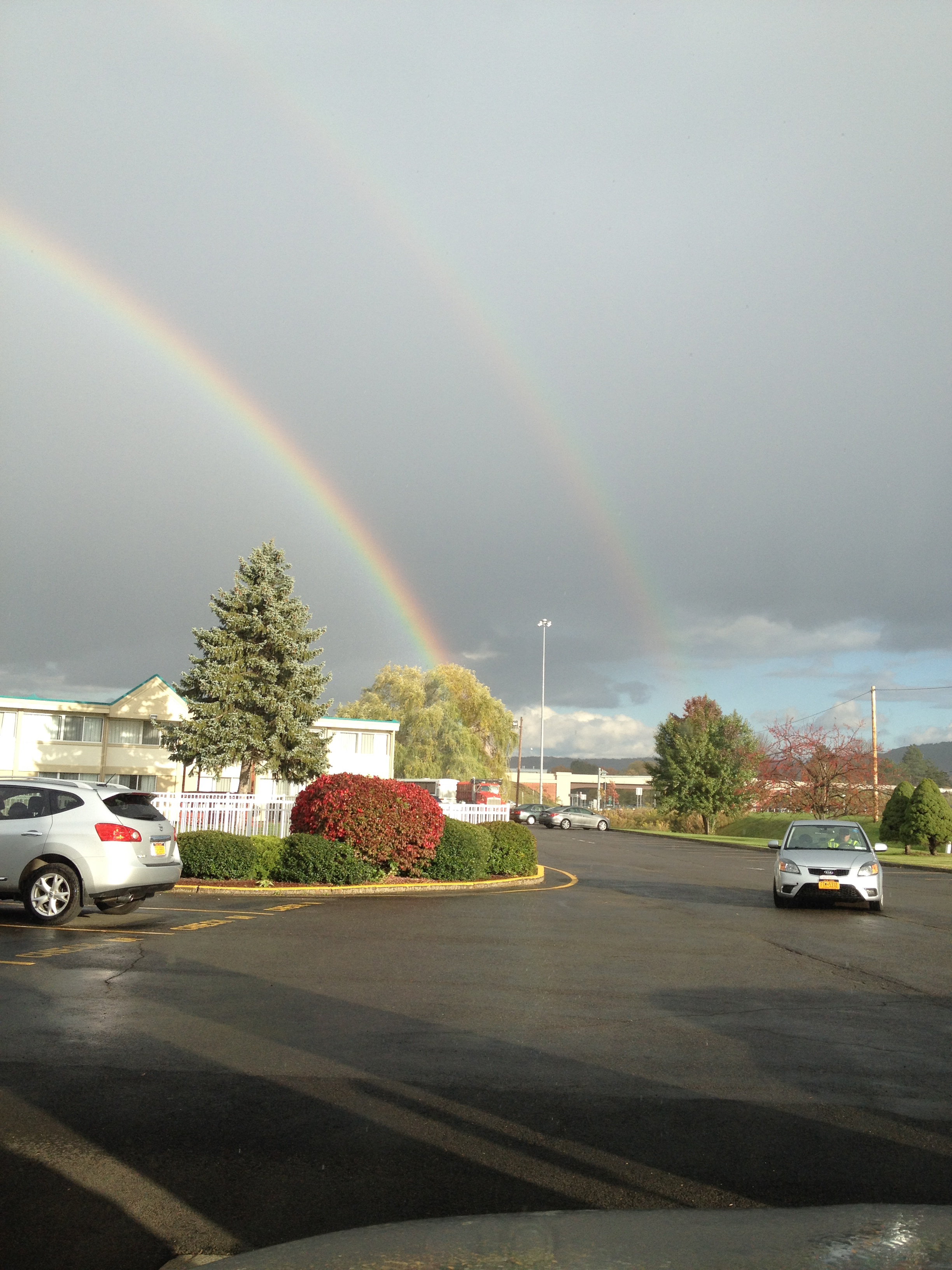
There’s been a lot of rain this June. In between there have been some glimpses of sunshine. When the rain and sun combine, I always look for rainbows. Yesterday there were rainbows. You see, I didn’t realize until physics class that the sun has to be behind you to see a rainbow. It stands to reason, of course, because the light has to be refracted before it can break into its beautiful constituent colors. If any of the colors were missing, true light wouldn’t exist. Even with many of the religious grumbling, the United States took a fumbling step toward justice yesterday. Justice is something that always comes as a bit of a surprise these days. I’m not sure that we can always trust those that money puts into power. Nevertheless, gay marriage is so in the spirit of America that I wonder it has taken so long to become legal.

I’m heterosexual and I’ve been married for over a quarter century. I know the benefits of married life, so why should they be denied any couple that love each other? Raised on conservative Christian literature that taught me homosexuality was evil, it took some intensive education to unlearn what I’d been told. The Bible has very little to say about homosexuality, and in each instance where it does there are extenuating circumstances that must be considered. The Bible, which hasn’t become authoritative for stoning adulterers (heterosexuals all) had somehow been the final word to oppress those whom nature has oriented to the same gender. I had been told “no animals are homosexual.” That is wrong. Documented cases time and again show that homosexuality is as natural as rain. Just ask the bonobos. For literalists that’s a problem because we’re not even, from their point of view, evolutionarily related.

So although it is a cloudy, rainy Saturday morning, I’m strangely optimistic. There may be rainbows today. Now if only we could spread the message wider, raise our voices louder, and maybe join in singing “Amazing Grace.” Maybe we could dare to dream that races and genders should be treated equally. Will our Supreme Court ever make true equality the law of the land? Yesterday brought us over a major hurdle. I don’t want to rain on this parade. Still, justice demands that more work be done. I rejoice with all loving humans that marriage is open to all. Charleston is still on my mind. And if some rain does fall today I can always keep what sun there is to my back and hope that there will be more rainbows.

IMG_1087


Pope of Deliverance

As I was out jogging just now, a large gasoline truck pulled across the road, stalling my attempt at healthy living. As I waited for the driver to move, I thought of Laudato Si’. In Laudato Si’, Pope Francis’s encyclical letter, the future seems, for the first time in a long time, an optimistic place. I’m not Roman Catholic, but knowing that the head of the largest Christian body in the world has made an ecclesiastical pronouncement about our responsibilities as citizens of the planet is nevertheless authoritative. A world run by blind greed cannot see the signs in plain sight. We have taken what does not belong to us and have left a wasteland behind. I look back over a lifetime of advocating, in the small way my small voice can reach, for responsible tenancy on the Earth, and feel comforted by such a powerful ally. Perhaps it’s because I’ve never been a property “owner,” buying into the myth that the planet may be purchased, but it has never made sense to me that one species has the right to claim it all for itself, leaving it in a state our mothers would’ve never allowed our bedrooms to have been left, and supposing it is somebody else’s problem. If not ours, whose? We’re the ones paying the rent.

Those responsible for industrial level pollution baulk at the idea of economic fairness. Capitalism rewards the greedy and the only thing to trickle down is tears. Those with money can always count on lackeys to follow, thus when the man in white says this is important, those in red, and purple, and black have no choice but to follow. There’s no escaping the planet. We shouldn’t have to feel we need to escape. We need to take—dare I say it—corporate action. Those of us on an individual level sometimes think we can’t make a difference. Habits can be powerful things. A visit to a landfill can be a mystical experience. The visions you have there won’t be beatific, however. You might begin to understand the Inferno, in any case. We consume, and pollute, as if it is our right to do so. As if our brains have misfired into suicidal sociopaths.

Son, behold thy mother.

Son, behold thy mother.

Where, I have often wondered, is the voice of the church in all this? By far the vast majority of the world’s inhabitants are religious. Religious leaders, embroiled in politics that lead to solvency and power, have frequently neglected to turn out the lights when they’ve left the board room. While it may seem to be an abuse that the Catholic Church is extremely wealthy and highly influential, it may be that the humble leader of such an organization is the only person truly capable of getting attention. The Pope’s voice carries farther than that of any other single individual in the Christian tradition. And the media are already buzzing about the long anticipated Laudato Si’. The Pope begins on a positive note, and if those who make any claim to be faithful pay attention to the truly important message—far more important than fighting condoms or ensuring that half the human race is kept out of the club house—there may be a slight glimmer of hope yet. Maybe religion really can deal with ultimate concerns after all.


The Land of Who?

“Parochial” is a name we small-town types dread. Growing up with television, which gave us a magical view into New York and California, as well as other cosmopolitan locales, we could easily feel the accusations of being small-minded and unsophisticated. Although I never wanted to move to the New York City area, I did decide to get away to Boston, then Europe, to be educated. I didn’t want anyone accusing me of being an intellectually challenged rustic, just because of where I happen to have been born. People around my home town, however, aren’t as closed minded as portrayed. Well, not always. You see, apart from conferences where some institution or corporation foots the bills for hotels, I tend to stay in more reasonably priced places when I travel. Even on the road I can’t sleep in, so I find myself chomping at the bit for the breakfast area to open in the morning. Sometimes I’m the first one there.

On a visit to my hometown in the not too distant past, I happened into a breakfast conversation in media res. A local back in town for a holiday weekend was vociferating his views in stentorian tones that could be heard down the hall. The television in the breakfast room, as always, was on. Apparently a story had been shown that teed this old-timer off. His daddy had been a local policeman and he just couldn’t understand why blacks were rioting about unfair treatment at the hands of the police. I cringed as I filled my coffee cup. “They ought to be gassing them and reading their rights later,” he lamented. An older couple, also returning to the area from their home in Baltimore, seemed to agree. I tried to find a corner out of earshot. Unsuccessfully. I could barely hold in my indignation. We were all Caucasian here—what did any of us know of racial profiling, deep-seated prejudice, or being prisoner in our own country? “Why don’t they just stay home?” he said. Home, ironically, of the free.

DSCN4676

I could see that he was elderly and afraid. The media—likely Fox news—had instilled a kind of terror in him that could only be assuaged by reliance on force. The world his daddy knew. I was also reared here. It was pretty much a white town, but some of my best friends growing up were the few African-American kids in my school. My small-town mother taught me not to judge anyone by the color of their skin. The hotel I’m staying in is run by an Indian family. The local stores now reveal a healthier mix than that in which I grew up. I wanted to tell this fellow parochial patron that we need not be afraid if we only seek justice. The region in which I grew up has become more homogenized, and I believe we’re all healthier for it. Until, however, civil rights are truly rights for all, we need to stand with those who’ve been clearly wronged, even if at personal cost. That’s something I learned growing up in this small town.


Dis-Connected

One of the more bemusing academic exercises is the analysis of the working class. Sometimes sociologists or scholars of religion take it upon themselves to present the view of the underprivileged. While they certainly seem to get some aspects right, in truth, they frequently don’t have a clue. Growing up in a working class household is the only way to have the authentic experience. I am one of a few, and I should I say I know many, many academics, who grew up in an authentic blue collar environment. When I read my fellow religionists discussing what it must be like to be underprivileged, I think, why don’t they just ask? Oh yeah. That’s right, I don’t have a teaching position. Why not? I have no connections. I have no connections because a kid who grew up in small town in a poor family doesn’t know to go to Harvard. I applied to transfer to Harvard from Boston University and was accepted. I decided not to go. A guy with connections would’ve known better.

Those of my colleagues with university or seminary posts tell me that the authentic blue collar academic is a hot commodity. In my blue collar frankness, I would equate that statement with what one might find behind the hindquarters of a male bovine. When a rare academic job opens up, the connections circuit begin to whir. Those of us who are unconnected (and I know I’m not the only one) will be passed up for one-year replacement positions as well as non-tenure track positions. They’ll gladly hire us as adjuncts—the blue collar workers of the academic world. I have been an inside candidate before. Although I knew entire departments I was not hired. I guess I don’t know the right people, dang-nabbit. (Imagine a thigh slap in there, in case you want to visualize your narrator.)

Blue collar workers are hard workers. As everyone, friend and foe, knew at Nashotah House, I worked hard. I obey the foreman. It’s a skill I learned before I finished middle school when I took my first blue collar job. Don’t bother telling me the excuses since I’ve heard them all before. We had to hire a (fill in the blank). So-and-so was already in our mind when we advertised the job. Once a seminary trustee complained to me that he had to get up at 4 a.m. to catch his flight. I get up at 4 every day, sometimes earlier. He was also well known for having an expensive, frivolous, and vain collection. He was the rector of a large and very influential parish. No worries; the poor you’ll always have with you, but be careful not to let them join the conversation. They might interfere with your connections.

Tell, don't ask.

Tell, don’t ask.


The Art of Religion

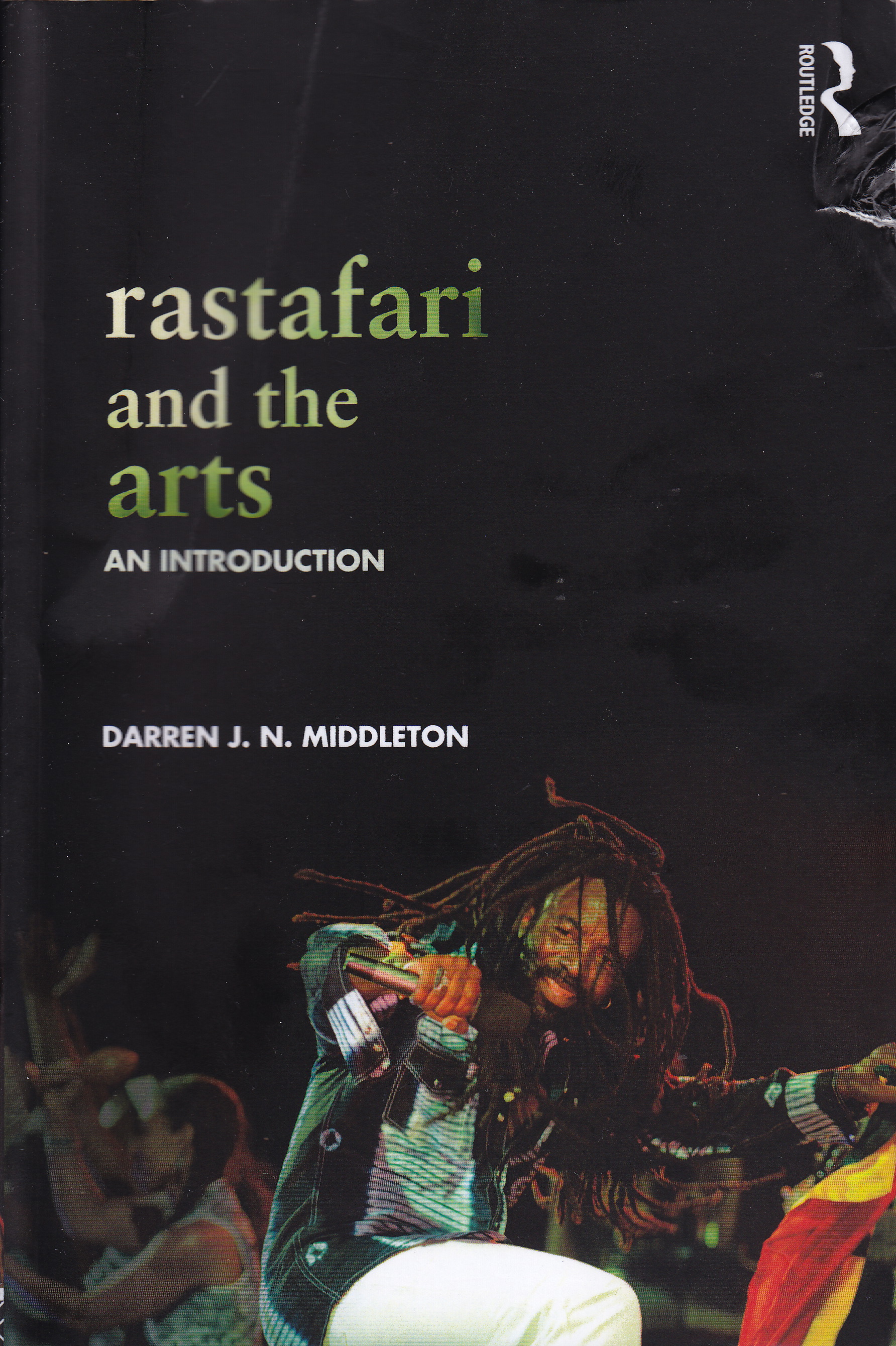
RastaIf you take a train along the Raritan Valley Line en route to New York City, you will see many of the less highly regarded sights of New Jersey. The properties along the rails are often industrial and neglected. Graffiti abounds. On one particular concrete underpass is a truly monumental graffito reading “Paint the Revolution.” Since I can’t afford to take the train on a regular basis, seeing that prophetic line is a rare occasion for me, and it always casts me in a reflective mood. No doubt injustice has become deeply entrenched in our society where politicians are synonymous with distrust and wealth is carefully corralled by a passing insignificant number of individuals. These thoughts recurred as I was reading about Rasta, the religion that developed in 1930s Jamaica, and is now found throughout the world.

Perhaps the most rewarding aspect of being an editor is exposure to new ideas. Of course, anyone can achieve this by reading, but as a person whose job is to find new books, an editor often has to go beyond passive, to active reading. So it was that, while at Routledge, I came to Darren N. J. Middleton’s Rastafari and the Arts. I immediately fell for it. I’d read about Rasta before, but Middleton’s use of art as a means of exploring the religion was captivating. Now that his book is out, I reacquainted myself with what drew me to the project in the first place. Admittedly, a large part of the draw is the fascination with Rasta itself. While some, perhaps many, would claim that it’s not a religion, Middleton demonstrates pretty clearly that it is, or that it at least has all the hallmarks of one. Moreover, it is a religion profoundly based on the concept of social justice, something that many religions possess in diminishing quantities.

The African diaspora led to the development of several new religions as African thought was forced into a mode of accepting Christianity. Among those many new religions, Rasta stands out for its association with a particular musical style, reggae. Of course reggae can be secular, but one of the many insightful observations of Rastafari and the Arts is that the global spread of Rasta often begins as music travels. While reggae is generally identified by its musical style, it is also noted for having a heavy dose of social consciousness. People who’ve been oppressed, no matter what their race, often express their victimhood in their arts. Not particularly numerous, and certainly not politically powerful, Rasta has been painting its own revolution. That revolution is associated with peace and love, and, in a way almost unique among belief systems, its music.


Just Justice

494px-Martin_Luther_King_Jr_NYWTS

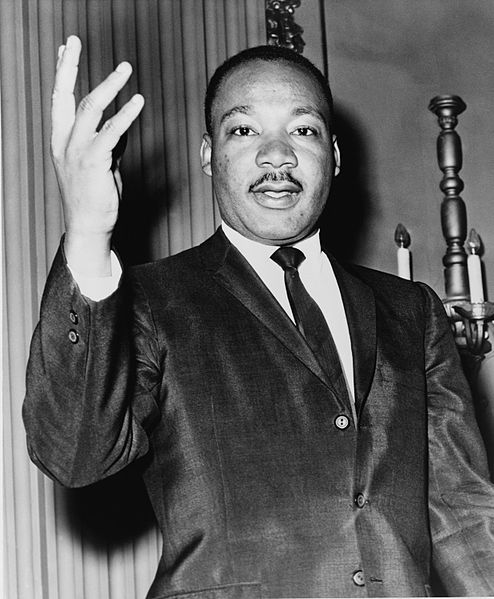
It was not intentionally because it was Martin Luther King Junior’s alma mater that I chose to attend Boston University School of Theology. King’s legacy there was certainly a perk, but I had found the seminary engaging because it had a rare combination, at least in my limited experience, of academic rigor and a strong sense of social justice. Too often, it seems, academic enterprises become dispassionate and social justice becomes one of those squishy human element sorts of things that really can’t be quantified. We pursue knowledge without really thinking if its impact will be positive or not. At least fair or not. Fairness is a concept rooted in belief, and, as studies of primates show us, it is very deeply embedded in us. What has it to do with academic achievement?

This Martin Luther King day, I’m concerned about how difficult social justice is to find, even in those places where we expect it to reside. Taking second place to doctrine in many churches, social justice is more of an uncomfortable requirement than a true passion. This winter I’ve noticed more and more homeless on the streets. Our “economy” seems to dictate that many have to be losers so that few can be big winners. Instead of helping them out, I see authority figures come along to shoo them out of the way before those who have jobs have to come that way. We don’t want to be reminded that we might lose everything as well. Affluent society requires victims, and we can be very academic about it.

I have to admit to relegating holidays to that mere Monday off work. The relentless wheels of capitalism ever turn, and only with reluctance do our companies grudgingly give us ten days spread throughout the year to recuperate. The next slated holiday comes in May. Will there be social justice by then? With the eventual warming of the air by that season, will we simply blend those without homes into the less well-dressed and pretend that we have achieved a fair society after all? What do we really celebrate today? Is it just another morning to sleep in, or is there something more to it? A dream that won’t be extinguished until fairness is established? Seems like a worthy idea, at least in theory. But until then you’ll find us at our desks, working to keep the system strong. And hopefully, we won’t forget to dream.


Christmas Lights and Machine Guns

“Silent night,” the old hymn goes. “Holy night.” In a gray dawn after a weary, early-morning New Jersey Transit ride to Midtown, I climb off the bus to find the Port Authority Bus Terminal decorated for Christmas. I could say the holidays, since the dangling LED lights are white and non-suggestive of anything too Christian. There are, however, wreaths with red bows adorning the pillars. Beneath them walk men in fatigues with machine guns. I think I’m getting mixed messages here. Later today they’ll announce that there will be no indictment in the homicide of Eric Garner, just a few days after a similar decision concerning Michael Brown’s shooting. There will be protests here in New York, and there will be armed militia when I rush by this evening for an even longer ride home. It’s Christmas time in the City.

IMG_1841

Staten Island may be a long way from Ferguson, Missouri, but both are far, too far from liberty and justice for all. Fear of the other is deep in the human psyche, but for generations we’ve been trying to educate our young that prejudging a person by their race is wrong. We don’t live what we say. Although my hometown was largely white, I had African-American friends growing up. Nothing suggested to me that they were more likely to break the law than any of the other kids I knew. In fact, the bullies I encountered were all white. To our small town, in my young eyes, race didn’t seem to mean too much. We were generally working-class people trying to get by. Prejudice was a word I never heard. Of course, I don’t know the full life of my African-American friends. Perhaps they too received threats and taunts. I hope not, but it seems there’s been more rain than snow this Christmas season.

We live in a constant state of threat. If it’s not racial unrest at home, it’s distrust of the Arab abroad. Always our response is the same—attack and subdue. Show superior force. Some of my fellow commuters look pretty frazzled to me. That night a fight nearly broke out on the bus with a couple of passengers arguing about the territoriality of the narrow seats. I’m looking at the nice Christmas lights brightening the prematurely dark sky as we trundle through the various neighborhoods where the bus makes its stops. This is a racially mixed neighborhood if the people regularly getting off here are any indication of the demographics. It seems so peaceful. The machine guns enforcing civility are far behind. Sleep in heavenly peace. Sleep in heavenly peace.


Underrepresented

Underrepresented groups, I am told, are eagerly sought by academic institutions. The white male establishment has begun to develop a conscience, it seems. If I appear more credulous than an academic should be, it’s because I grew up poor. While I have no doubts that the entrenched power structures need to change, in an unguarded moment I wonder about the obvious overlooked financial demographic. What of the poor? I’m told by my friends with academic posts that universities are eager to find authentic poor folk—working class people who’ve worked they’re way up. To me, as one such person, this is another academic myth. Even a “white” man can struggle. If you’re born into an uneducated, blue-collar, paycheck-to-paycheck family, getting ahead is often sublimated survival. Those who’ve had me in class may not believe that I grew up with red-neck family values. Duck Dynasty? Well, in my case it was more a case of Deer Destruction, but I lived in a small, industrial, rust-belt town on the edge of the woods. From middle school on I worked to buy my own clothes for school which, I could always tell, were bargain rack compared to other kids who’s parents struggled less. In times of stress (and they are many) I find myself slipping back toward my blue-collar days and wondering just what is wrong with privileged America.

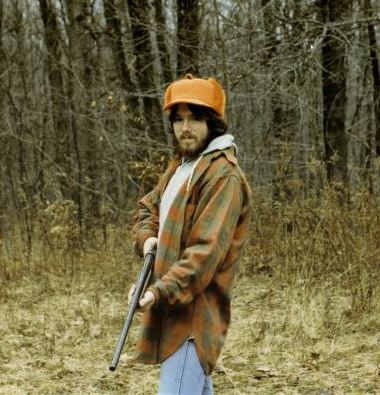
shtgn

I don’ t pretend to have grown up in abject poverty. My wife, from a middle class family, was, however, a victim of culture shock when she first visited the house I grew up in. (I still end sentences with prepositions from time to time.) And that was after the improvements. College was my choice and was paid for by my own work since parental contributions hovered somewhere around the zero line. Along the way I learned to act like others. I even became Episcopalian and most of my “peers” had no idea I didn’t really fit in. I say all this not for pity, but because of a deep conviction that the poor are the hidden demographic. We, as a society, need people to take away our garbage and plow the snow from our streets and dig our ditches. We don’t really want them educated since, well, they would be overqualified. Disgruntled. Our institutions may say they want to hire them, but they lie. The poor make the affluent uncomfortable even as they make them comfortable.

In my campus experience (which, all told, comes to over 25 years) I always found talking to the grounds or maintenance staff more comfortable than the academic staff. I understood where they were coming from. Even now as I wonder how I’m going to afford to get the car fixed, I recall conversations around the more practical matters of life with which I grew up: how to make sure poorly insulated pipes don’t freeze up in winter. Eating venison, or coming home to find carp that a neighbor caught swimming sluggishly in the bathtub were not unknown. While I didn’t go to bed hungry, the food available made me wonder what was in front of me in some fancy restaurants in San Diego. If academe is serious about understanding the poor, they’re going to have to start listening to them. And when they form a department of red-neck studies, they’ll hire someone from an established academic family with an Ivy League degree to lead it. I’ve always been more credulous than I should be.


Sustain This

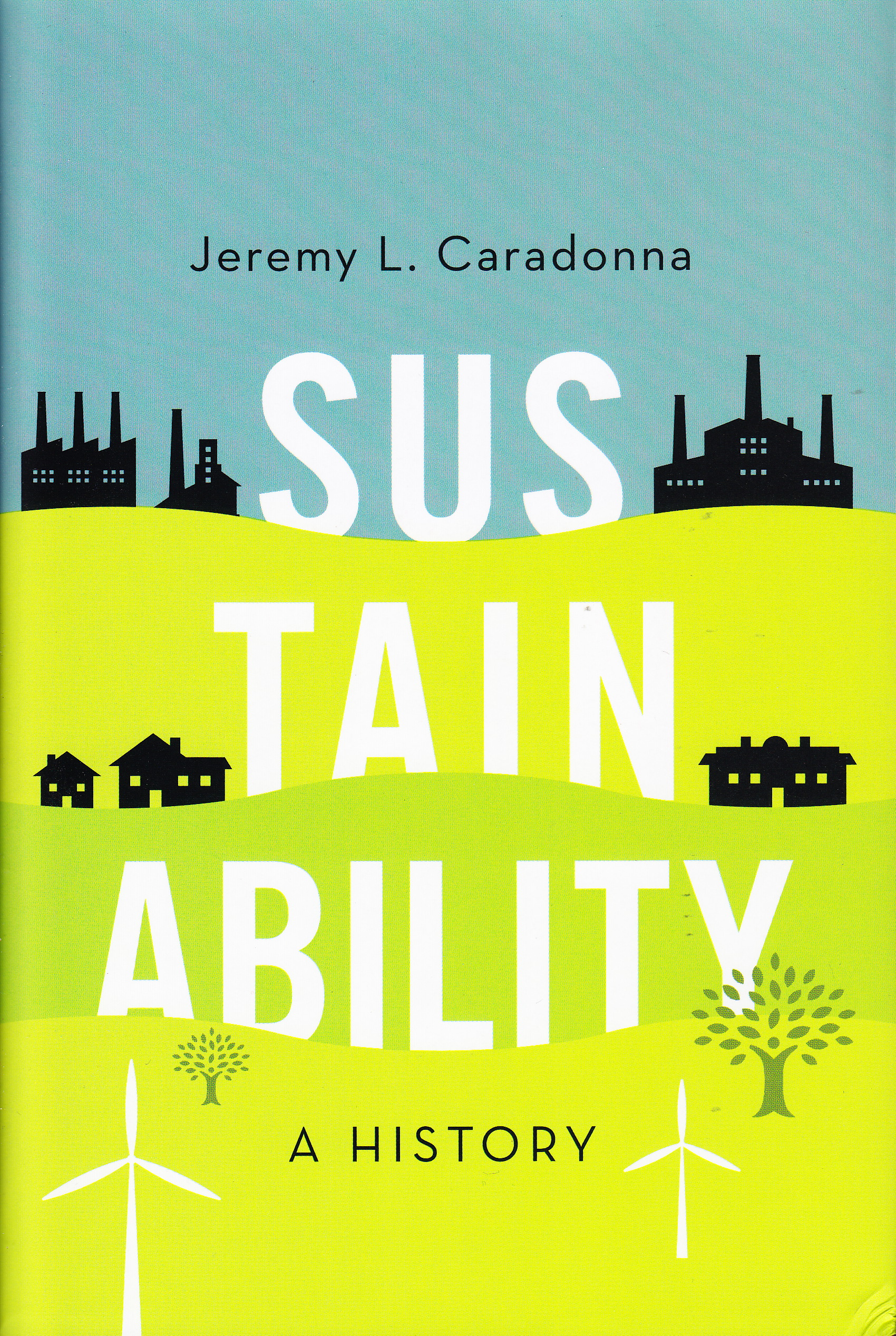
Sustainability“Grant me chastity and continence,” Augustine famously prayed, “but not yet.” That tragicomic scene kept coming to me as I read Jeremy L. Caradonna’s Sustainability: A History. Few ideas can bear the sheer weight of irony than that of a human population destroying their own and only planet. We know we’re doing it, and yet for a few more greenbacks to flash before our fabulously wealthy peers, we don’t mind warming the place up by a few degrees. There’ll be time to throw on the brakes right before the crash. I once took a ride, perhaps unwisely, with a friend who believed nothing could go wrong. Although the car didn’t actually roll, it came awfully close, and I am haunted by what might have happened. The difference between that incident and destruction of the environment is that the latter has already happened.

I’m cynical enough not to believe in simple solutions to complex problems, and reading Caradonna was a sobering finish to a day that had started out optimistically. Such books are not easy to read. Science does not come charging over the hill like the cavalry to save us at the end of the picture. You can’t take your marbles and go home when the marble is home. Sustainability does not set out to be a bleak book. There is a guarded optimism to it, and I was particularly pleased to see that sustainists readily recognize that without some kind of just distribution of goods, no system will ever be sustainable. I had no idea, until I read this book, that some economists advocate for a steady state economic existence instead of the ridiculously illogical constant growth. Constant growth in a world of limited resources is the worst kind of delusion.

We’ve gone pretty far down the road to destroying our planet. Already it will take many decades to repair the damage done. If we can muster the will to address corporate greed with a good old dose of primate ethics. Society, in all honesty, may have to collapse before that happens. If it does, of course, the strong will survive. I have a prediction to make, and it’s one that rationalists won’t like. If we can’t avoid the wall that is right before us, and if society as we know it buckles under its own greed, the survivors will, as sure as gray matter, devise a religion to explain it. As a species we are all about myths. Like fabled saints we believe we can have our fossil fuels and consume them too. Before rising sea levels wash us all away, do yourself a favor and read Sustainability. And when you’re awake for nights afterward, tell everyone else you know to read it too.


Working Dead

AmericanZombieGothicPerhaps being born into and reared in a working class environment naturally predisposes me to the populist variety of entertainments. Although this may be true, serious scholars have begun to pay attention to the subjects traditionally classified as “lowbrow,” and particularly zombies. I mention zombies not infrequently because they are monsters with religious origins (although not the only ones). Reading Kyle William Bishop’s American Zombie Gothic (and who could resist such a title?) resurrected all of these interests for a few happy days on the bus. Subtitled The Rise and Fall (and Rise) of the Walking Dead in Popular Culture, Bishop’s study goes back to the beginning with zombies and their religious origins. Since the concept of zombie required the blending of Catholicism with its root African indigenous religions, it seems natural that the concept would emerge in Voudon (voodoo) religions of the Caribbean. What Bishop makes clear, however, is that the zombie is a way of coping with slavery, since, as originally conceived, zombies represent the horrors of enslavement. In other words, they represent a social justice issue.

Dismissed as puerile and unsophisticated, zombies had a difficult time catching on in American culture. Once they caught on, however, they didn’t let go. (They are zombies, after all.) As Bishop shows, this appeal has many bases. George Romero’s zombies were always social critique. Exploiting their shock value made a point, but other filmmakers soon followed, enamored of the potential violence, gore, and exploitation the zombies offered. Then, following 9/11, zombie movies proliferated, demonstrating that even the undead might perform some kind of catharsis. As Bishop notes, zombies were primarily a movie phenomenon, slow to catch on in literature.

Having read a few zombie novels in the last few months, I have pondered this last point deeply. What is believable, momentarily, on the big screen is rendered laughable with the ponderation of reading. When your brain has time to process what slick visual editing denies, it is clear that decaying corpses would have a pretty tough time getting around—even living bodies have trouble with it from time to time. Zombies, after all, are not really ever literal. They are signs, or even prophets. They point to a reality beyond themselves. Zombies, in reality, represent enslavement—whether literal or figurative—that holds us back from our true potential. No wonder they’ve become such fixtures in a world where opportunity has become effaced and terror can breach even secure borders. They may be lowbrow, but having lived the working class life, I have always had profound respect for the walking dead.


Are You Being Served?

Weary from a long day at work, I stepped off the bus last night to find the street to my house barricaded. That’s seldom a good sign. From the looks of the sludgy stains along the street, it was pretty clear that we were dealing with a water-main break. Sure enough, at home, no water. As I pondered making supper, washing dishes, and brushing my teeth—all that I usually have time for before going to bed—I wondered how I’d do any of them without water. As humans do, I managed. This morning I awoke to find the faucets still empty and considered the prospect of going to work with no shower, when a natural kind of grumpiness settled over me. We expect water. We take it for granted. For much of the world, however, lack of clean water is one of the largest problems faced. Showing up for work in a modern city with dirty hair hardly seems like a major issue when children are dying of diseases due to lack of potable water. Water is a justice issue.

Some experts have been positing that the next great war (as if there’s anything such as a great war) will not be over oil, but water. Politics aside, we know that western involvement in Middle Eastern conflicts comes down to petroleum. They have what we want. Better make some friends. But water is even more basic than oil. Scientists have discovered many odd creatures in extreme environments on this planet, and all share this quality: life can’t go on without water. Even the amazing tardigrade, able to survive a decade without water, will eventually die without it. People can barely make it a day or two. We have the technology to make clean water possible for many. Instead we wonder what’s taking them so long with the repairs this time, and my gosh, it’s time to go to work and I can’t even brush my teeth. It’s a sliding scale of fairness. The ethics of economy.

I can’t put it off any longer. I’m going to need to head for the bus stop and await my fate. I live less than fifty miles from the ocean. All oceans are interconnected, covering a full three-fourths of our planet. With water we can’t drink. We emit our gases and melt our ice caps—some of the largest natural reservoirs of fresh water on the planet—thinking only of the joyous prospect of an overflowing bank account. What will we do, however, when we awake in the morning to find the water still off? Will we think of our fellow humans dying at this very moment for lack of life’s most basic necessity? Will we rush out to petition our leaders to ensure that safe water is provided to those without? Will we even remember this tomorrow? I know that like your average other guy I’ll find myself grumbling over the fact that I don’t have coffee, and it will seem that my petty world is suffering its own little apocalypse. And justice hasn’t been served.

Photo credit: Tiago Fioreze, Wiki Commons

Photo credit: Tiago Fioreze, Wiki Commons


Soldiers of Forfeiture

Somebody, perhaps a robot, reads my blog. I can’t imagine what keeps this feeble enterprise going sometimes, since continued growth of readership has been elusive for several years now. Still, I get requests to post information on my daily soapbox, sometimes for issues of which I’ve never heard. Civil Forfeiture is one of those issues. I’ve only ever been stopped for driving too fast once. I’m not a speeder by nature, and it was an oversight in one of those slowdown zones between a highway and town. I had no idea, however, that civil forfeiture might happen without any conviction or charge. See the infographic below from one of my readers at arrestrecords.com.

Social justice is perhaps the leading motif in my existence. I was attracted to the life of the clergy out of a profound sense that life is unfair. As if it’s not bad enough that nature posts us each at unequal starting places, human society joins in the game by contributing rules that are inherently unfair. Healthcare in the United States, for example, has been unequally distributed. I had figured this out even as a child when my family doctor walked into the examination room with a lit cigarette dangling from his lips, asking why I was having trouble breathing. I didn’t know what chronic bronchitis was in those days, but thankfully I grew out of it. In any case, laws for fair treatment of all citizens should underlie any just society. Not just healthcare, but basic, constitutional rights.

Having been reared in a small community where arrest was not rare—most of the time certainly deserved—I was woefully ignorant about what a person was free to do. I still am, I guess. I go to work each day hoping that I don’t infringe on any unknown law that stands to make this land a nest of freedom. Having arrived in Boston with a migraine after driving all my worldly possessions from Pennsylvania back in 1985, I parked in Winthrop, outside my apartment, with the right wheels to the curb, just like every other car on the block. I stumbled inside and fell into my unmade bed. My first morning as a Massachusetts resident, I awoke to find a parking ticket on my windshield. I went to the police station to explain what happened only to have the receptionist say, like a line from Gilligan’s Island, “Ignorance of the law is no excuse.” I can think of no better excuse. Is a law degree necessary for fair treatment? Whom did I harm by parking with the rest of the residents? At least I didn’t face civil forfeiture. If I had, all they would’ve found would’ve been a few boxes of books and enough clothes to get me through the week—all my possession fit inside my VW Beetle in those days. What more does a person really need?

Civil Forfeiture, an infographic from ArrestRecords.com