Someplace Beyond Longing

November is a month pregnant with significance. It is the month of NaNoWriMo (National Novel Writing Month; when I tried it a few years back I finished a novel in three weeks). It is the start of the “Holiday Season” with Thanksgiving kicking off a slightly more relaxed schedule for businesses and students alike. Often the first day of Advent falls near the end of the month. In many places it has already provided the first snow of the season. For scholars of religion, however, November is the month of the American Academy of Religion and Society of Biblical Literature annual meeting. This year it will be held in San Diego, and will, no doubt, impact my blogging schedule somewhat. Being a creature of consistency, I try to upload my posts around 4:30 a.m. eastern time on weekdays, as I start pulling myself together for work. I’ll be three hours off for the latter part of this week, but if trips to California conform to any pattern, I may still find myself awaking at 1:30 wondering why the city is so quiet. California, here I come!

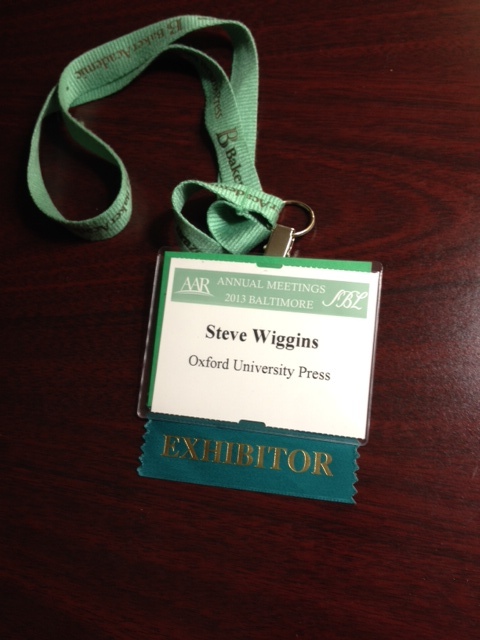
When I attended as a participant, I gave a paper nearly every year. Several of these papers were making their way toward a book that will never be published. Some produce content. Others only consume. Attending as a participant was kind of like a professional vacation—a few days off the usual teaching schedule, trying to find colleagues to catch up on, listening to papers. From the publishing perspective, it is a non-stop four-day weekend of work. As I see my colleagues on their way to late night receptions, I have to beg off. Tomorrow’s a working day for me. The exhibit halls open at eight, and I will have no idea what time it is in any case.

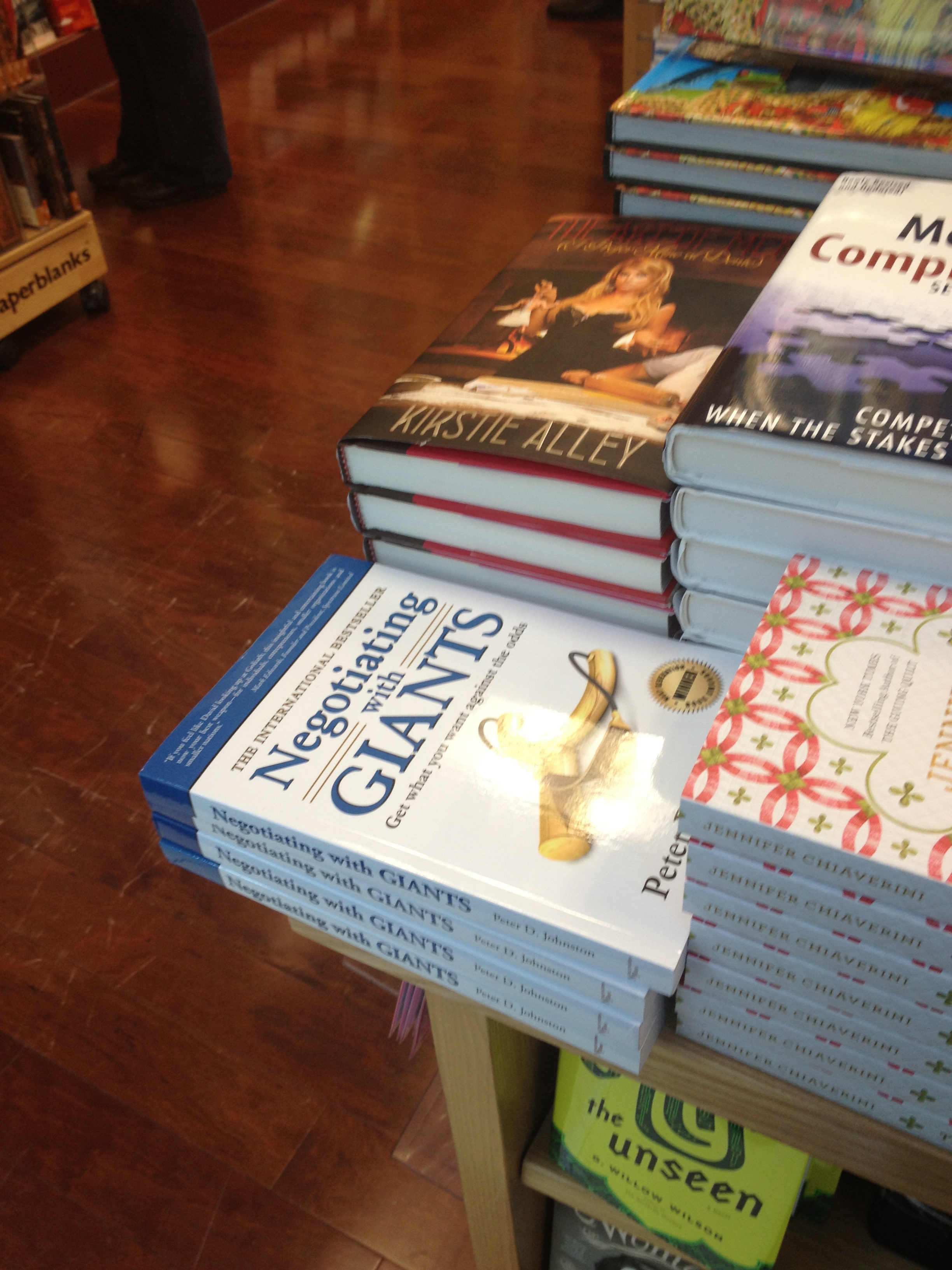
Ironically AAR/SBL is one of the things that has remained consistent in my professional life. It is almost a migratory feeling. I began attending in 1991, only missing the odd year here and there when something more important took its place. I was, however, never an insider. I chaired one of the sections for six years, but nobody ever contacted me suggesting we meet up. I could advance no one’s career. Now my calendar’s full. Now that I have something others want, suddenly I’m a commodity. Funny thing about a conference dedicated to disciplines associated with selflessness. As I pack my bags and make my plans to take care of details while I’m gone, my mind wanders to the purpose of it all. I used to dream that I would forget to visit the book stalls, and on the plane returning home I’d realize that I’d missed one of the most important parts of the show. That nightmare no longer plagues me. It is now the sole purpose for which I attend.
Am I that obvious?

Am I that obvious?


Horsemanship

Hi ho Silver, away! I’ve been pondering academic freedom. (It was suggested to me that I might discourse on such.) My academic career, three years cold in the grave, seems a long way away. In religious studies it is kosher to fire someone for academic freedom issues. Doctrine permits no challenges, for it has already been decided. This doesn’t only apply to conservative religions, but to academic institutions of all stripes. Nobody likes to be challenged. Somehow, since 9/11 any academic dispute in religion is a potential threat. I have known many academics to have lost their jobs. I also know how it feels to see colleagues go from grace to grace because they have an institution that will vouch for them. I don my black mask and saddle up Silver. Those of us raised in working class families watched that show, you know, religiously. And Gunsmoke, among other campy westerns. Caricatures of good guys versus bad guys. You know the story.

In a moment of self-delusion, I thought I might be asked to deliver a paper at this year’s Society of Biblical Literature annual meeting. I plodded along in my cumbersome way, reading a few books on academic freedom and interviewing a couple of its sacrificial victims. Turns out I was, well, self-deluded. It is probably for the best since I don’t wish to put myself forward as an expert on anything. Still, it felt like arriving at the front desk on that great and terrible day to find out your name’s not in the book after all, and so, where do you go now? Academics are running along as healthily as they always have. I was not raised knowing the difference between a salad fork and a meat fork. Some colleagues insist that universities crave the voice of hoi polloi; the authentic blue collar academic who worked his or her way up from a disadvantaged start through a doctoral program. I know it’s all just fancy talk. Academics are just as xenophobic as the rest of us.

Losing an academic position is easy. It’s like falling off a horse. I speak from experience here, having fallen off a big horse during a canter while helping underprivileged kids at horse camp one summer. It didn’t seem much like the wild west at the time. Seeing the world in a side view of the horse as you’re sliding off has a way of changing your perspective. You know the ground is coming fast. You just hope that your feet have slipped the stirrups. When it was all over the horse whisperer (or whatever they were called back then) publicly berated me for letting the reins fall from my hand. I should’ve slipped them over the saddle horn on my way down. Didn’t I know that the horse might’ve stepped on them? Rubbing my sore backside, I didn’t feel like such a masked lawman anymore. Silver had gotten away. At the dining hall I could feel the uncomfortable stares. Which one is the salad fork again? I never could keep my silver straight.

By Pleasure Island Uploaded by We hope at en.wikipedia [Public domain], via Wikimedia Commons

By Pleasure Island Uploaded by We hope at en.wikipedia [Public domain], via Wikimedia Commons


In Our Own Backyard

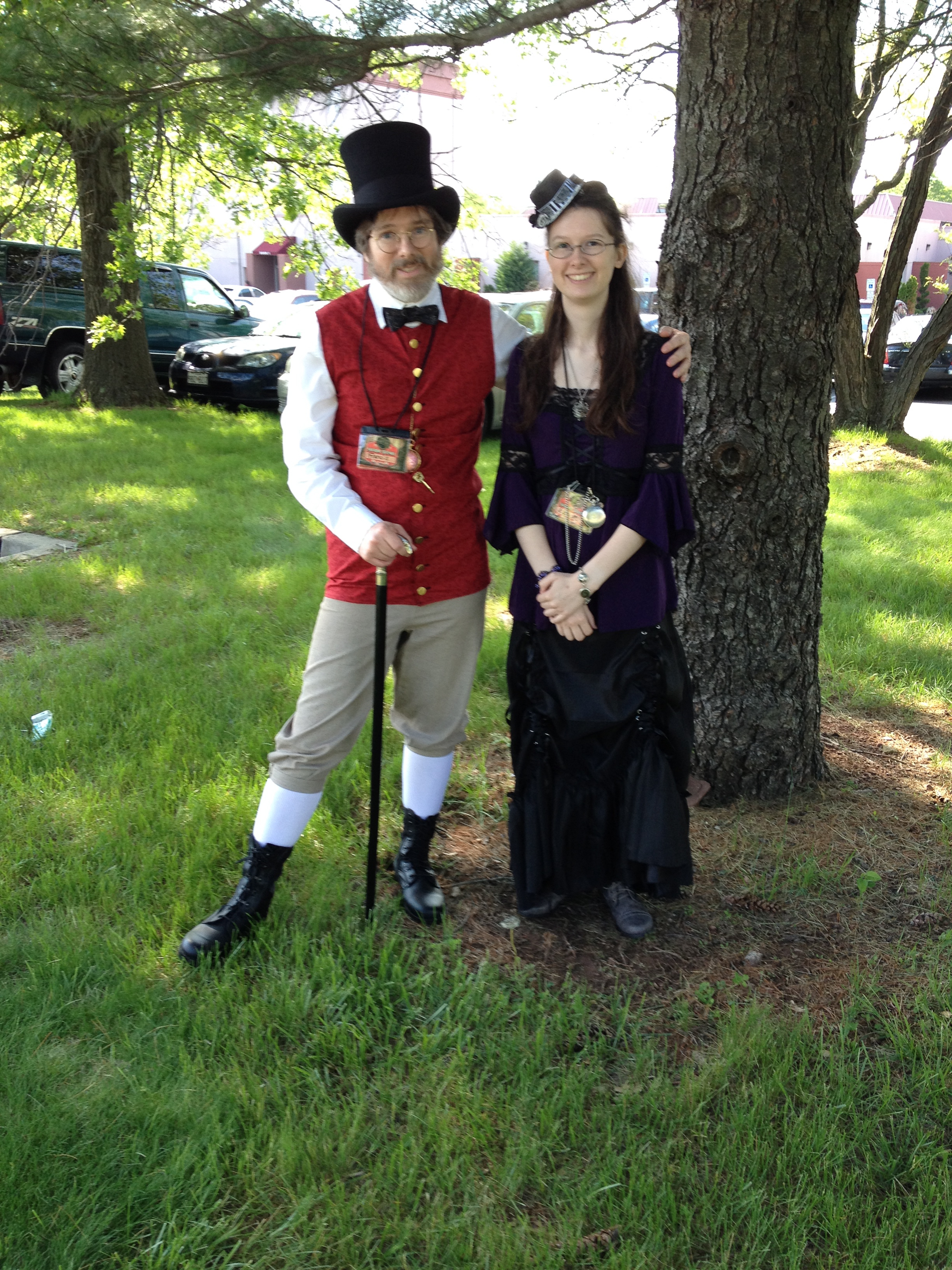
That monk walking towards me looks a little suspicious. Perhaps it’s that guy with a top hat and weird gun strolling next to him with a waxed mustache and carefully sculpted beard. Like a page ripped from ComicCon, the Steampunk World’s Fair draws people from all across the east coast (perhaps even further afield) to Piscataway, New Jersey, or some venue near Rutgers, every spring. In a world where work routinely stifles creativity, a weekend of subculture is about as good as it gets. As a veteran of over two decades of Society of Biblical Literature meetings, I’m used to large conferences. Only this is much more fun. The Steampunk World’s Fair draws some 4,000 people, most of them baroquely costumed, to a sleepy corner of an overly developed industrial corridor, courtesy of Jeff Mach and Widdershins LLC. I met Jeff Mach at Steampunk City last October. A natural promoter, he has a way of getting events noticed.

Steampunk is more than a literary genre. It has become an eclectic mix of the technical and supernatural, the scientific and the absinthe-laced dreams of fantasy. An element of H. P. Lovecraft fandom is clearly present at the World’s Fair, as is an interest in Victorian spiritualism. Indeed, it would not be difficult to concoct a religion out of this heady brew. Like most human cultures, there is no pure form here. Vendors will be glad to accept your money, but true artists put great effort into unique pieces of creativity and style. I’m here, not feeling entirely safe surrounded by such strangeness, wondering if this isn’t a natural outgrowth of what happens when a technically oriented society too long denies its emotional subtext.

Role-playing is catharsis. Many of us spend our days feeling relatively powerless in a capitalistic system that is overwhelming and stifling. Thomas Piketty meanwhile suggests that extreme economic inequality leads to a breakdown of a system that favors too few. Although restraining himself from the economic implications, Frans de Waal notes the same phenomenon among primates that we insist on calling lower than ourselves. Bread and circuses, we know, only kept imperial Rome going for so long before it collapsed under the weight of inherited greed. Under great pressure, the people will play. This feels a bit heavy for the Steampunk World’s Fair, however. I can’t recall the last time I saw robots rubbing elbows with bearded, cross-dressing nuns, and nobody thought any of this was out of the ordinary. Or maybe it’s just the absinthe-flavored truffles talking. I know where I will be, in any case, come next May.

A typical sight.

A typical sight.


Piece on Earth

The New York Times recently ran a story about the academic boycott of Israel by the American Studies Association. For those unfamiliar with the ways of academics, many who teach in higher education participate in professional organizations. In my line of work it is usually either the American Academy of Religion or the Society of Biblical Literature. These organizations take on personalities of their own, often representing the character of the strongest voices within them. For example, a few years ago the American Academy of Religion decided it didn’t like the Society of Biblical Literature any more, and decided on a trial separation from their joint annual meeting. Like in most divorce cases, the children suffered. Eventually the two got back together and the study of religion could move ahead apace. The American Studies Association is an organization that has run out of patience with the Palestinian issue in Israel. The academic society is boycotting scholarship from Israel, as if professors agree with and support the policies of the government. A rare scenario indeed.

Growing up as a middle child, I often find myself in the role of peacemaker. Like AAR and SBL children, I know the lifelong insecurities caused in kids by divorce, and I know that it is important for people to talk to each other. The situation between Israel and Palestine is fraught. It is so much easier to make a decision about who is right when you don’t have as both sides populations that have been historically victimized. Like most people I have my personal opinions about who is in the wrong here, but I also realize the situation is far more complex than this small-minded biblical student’s ability to declare anything ex cathedra. It seems surprising that any academic organization would be willing to take such a stand. In most instances I’ve read of, it is politicians, not professors, who are the problem.

Of course, at the very root of the situation lies, like a snake curled, ready to strike, religion. It seems that mixed messages have been received from on high. Bethlehem, much in people’s minds this time of year, represents the issues coldly. Two groups claim the same land, broadly speaking, claimed by three major religions. Despite their common ancestry, the three major monotheistic faiths differ vastly from one another. The problem is, there is only so much habitable land. Historic ties going back hundreds, and in some cases, thousands of years, are not easily severed. Divorce hardly seems an option when both parties continue to live in the same house. Academic societies have minimal influence on public policy. They, however, can show public faces. Perhaps the best way forward does not involve silencing the voices of any who wish to speak. After all, we are told, even angels sang over the lowly town of Bethlehem in a time of deep political turmoil.

Ich habe einen Traum.

Ich habe einen Traum.


Some Baltimore Lessons

As someone who hovers around the edges, perhaps I’m preoccupied with perceptions. I have been attending the American Academy of Religion and Society of Biblical Literature annual meeting regularly since 1991, with a few years off for bad behavior. Usually it is held in a colorful US city that can afford to have a myriad of religion scholars show up all at the same time. I have noticed, over the years, what a conspicuous lot we are. As I drove into Baltimore, for example, I could tell who the locals were right away. They fit their environment. When I reached the medical area near one of the large hospitals, the people were wearing scrubs and white coats. I could navigate to the convention center by following the bearded, tweeded, and professionally dressed feminine to where the specialists in arcane subjects gather. We rather stand out. The funny thing is, once you get us together, we don’t always have a lot in common.

I used to teach, and as a teacher you run into this strange contradiction of roles where you are expected to keep your expertise up-to-date, to entertain students in the classroom, and to write books and articles in your spare time. I excelled at this and found my niche for a while. The beard I already had, but the look had to be acquired. Tweeds were not difficult to locate in Scotland, and so I returned to the States with the image already down. At Nashotah House, I recall many students complaining about the rules that forbade wearing a “seminarian collar.” Yes, even priests have a guild. A seminarian collar looks like a Roman collar, only it has a dark vertical stripe in the middle to warn the penitant that this is not a full-fledged priest and confessing your darkest deeds might not be a good idea. Don’t buy any wafer’s s/he’s selling. Their complaint was that to learn the role you have to dress the part. The administration at the time had rules against it. Confusing someone for a priest can have serious consequences. (Never mind that on a campus with at most 50 students everyone knew everyone else by name and habit.)

So I sit in my car at the stoplight and watch the academic parade. In this crowd there are people with god-like status in the academy, but whose names would mean nothing in even a highly educated household. The metaphorical Red Sea of scholars in the bookstalls parts at their approach. On the street corner they look lost. To the locals it is obvious that a horde had descended upon the town. Many forget to remove their name tags, announcing to the secular world that there be giants here. But they are shivering giants, as if they might’ve forgotten to pack a coat and the wind sure is chilly for this time of year. I suppose I must look like one of them myself. After all, I’m trying to turn the wrong way on a one-way street again.

Am I that obvious?

Am I that obvious?


Away as a Stranger

I’ll admit it. One of the things many scholars secretly enjoy about the American Academy of Religion and Society of Biblical Literature annual meeting is discount rates at fancy hotels. Unless things have changed drastically since my teaching days, professors don’t make enough to spend nights at four-star hotels as a matter of course. This year, however, Routledge pulled the rug out from under me less than a month before the conference. I had to cancel my reservation and forget the dreams of a leisurely train ride to Baltimore, a nice walk to a luxury hotel, and four days of schmoozing with the intellectuals (or at least those who are considered smart enough to write books). Then, Oxford University Press. I started work on Monday, and by Friday I was attending AAR/SBL. But with a twist. All the hotels were full—not a room in Bethlehem, I mean, Baltimore. So I had to find a run-down hotel several miles away and drive four hours to get there frazzled and decidedly unacademic. Still, map is not territory.

worldmap

Getting back to the hotel from the Convention Center, I had technology issues. You see, I didn’t have time to plan the trip out this year. I had no maps, figuring my smartphone was more intelligent than I (I don’t set a very high bar). Alas, for the GPS on my phone knows Baltimore less well than me, apparently. When the scenery turned industrial and I could see the ocean although my hotel is miles west of the city, I knew I was loss. My GPS, groping for dignity, kept instructing me to make u-turns on the interstate. Finally, I pulled off an exit and tried to use dead reckoning. Baltimore, like most cities, has problem areas. My GPS took me on a tour of them, as darkness was falling. Boarded up row houses leered at me as I took each turn the phone dictated. I noticed with alarm that the low battery indicator had come on and I was nowhere near anything that looked like a conference center, highway, hotel, or even Salvation Army. I had trusted technology, and it had let me down. Finally, with 8 percent battery power remaining, I spied my seedy hotel in the distance. I was never so relieved.

I have attended this conference since 1991 (I’ll leave the reader to do the math), and only one year did I not stay at a conference hotel. I think I remember why. People are discarded here. Entire cities left to crumble. Without a map, I witnessed territory that I’d rather not have seen. My academic friends, I know, were tipping back a glass, knowing that they had only to find the elevators to be home. Map is territory. And the terrain is untamed. We have created our urban jungles, and it will take more than a GPS to get our way through them. Tomorrow I will try again, if my trembling fingers can find the ignition, so that I can drive to where the more fortunate dwell. Some dreams are best left undreamt.


The Goddess

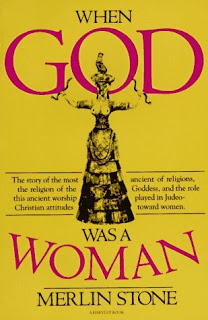
WhenGodWasAWomanMerlin Stone was a sculptor and an artist. I met her only once, a few years back when I was still recognized as an “authority” on ancient goddesses. At one of the many Society of Biblical Literature annual meetings I attended, she came and introduced herself to me, thanking me for my work. Of course I knew who she was—the author of When God Was a Woman, one of the books that was most influential in the revived goddess movement of the 1980s. I have always appreciated those women who have dared to take on the often amorphous patriarchal power structures of society to raise the necessary questions of fairness and justice. Stone was one of those women. Her book, while based on sometimes questionable historiography, nevertheless highlights some of the issues that many male scholars have chosen simply to ignore.

One of the biggest problems faced by authors like Merlin Stone and Marija Gimbutas has been the shifting sands of history. I recently had a deep conversation with a couple of feminist friends of mine where the issue of truth emerged. Truth, as I came to realize, may be a temporary phenomenon. What is true today (the earth is the center of the universe) may not be true tomorrow. It is always contingent. Historians reconstruct a past to which they do not have direct access, and further discoveries will often detail the errors made along the way. When God Was a Woman was originally published in 1978. Some of the historical constructs that Stone uses have since crumbled, but the main point of the book remains firm—women have as real a claim on the divine as do men. (I can’t help but wonder if there is some connection between this and the recent trend towards prominent male thinkers declaring themselves atheists.)

Although I can’t agree with everything Stone wrote, one of her ideas dropped a hook in my brain. In describing the sexuality that apparently attended worship of “the goddess,” she notes how male scholars came to refer, always derisively, to the such religions as “fertility cults.” Turning this phrase about, Stone wonders whether far distant future analysts will look at monotheistic religions that decry sexuality as “sterility cults.” Not that the goddess is all about sex. Religions, however, always weigh in when such spiritually significant activities as sex take place. Men, who are often eager participants, are the ones to construct religions condemning what should be a most obviously sacred human activity.

Merlin Stone may have died just over two years ago, but her book will stand as a yad vashem to half of the human race who have been religiously subjected to the other half. And perhaps there is a goddess out there yet who will bring about liberty and justice for all.


Monument to Madness

Reflections on the implications of my recent trip to the United Kingdom will likely continue to filter into conscious expression over the next few days. Jet lag will inevitably fade, and some concepts will shake down and settle into place as the reality known as work once again demands its pound of flesh per day. One of the realities that struck me during my time in St Andrews was how violent the Reformation was when it came to Scotland. Truth holds the world hostage, since everyone wants to believe they own it. And it’s my word against yours unless one of us can pull in a larger authority—and who is larger than God? There was a lot of credibility riding on the Reformers’ certitudes. And resistance was strong. Fatal even.

Reform is nearly never gentle, especially religious reform. After the Society of Biblical Literature’s meeting disbanded last week, I wandered around the old, medieval section of St Andrews, trying to get a sense of what such conviction must have been. One of the participants narrated to me more of the stories of those who’d died in the course of conversion. Patrick Hamilton, it turns out, may have been the first victim of the Reformation, but he was not the last. Walking along on a sunny afternoon in a country where several religions consciously coexist (I was, as an American, surprised to see so many large mosques in the UK), it seemed difficult to believe that humane individuals would torture someone to a horrendous death by burning just because of religious differences. The killing times seemed so long ago. Or perhaps our killing has just become more subtle.

IMG_0814

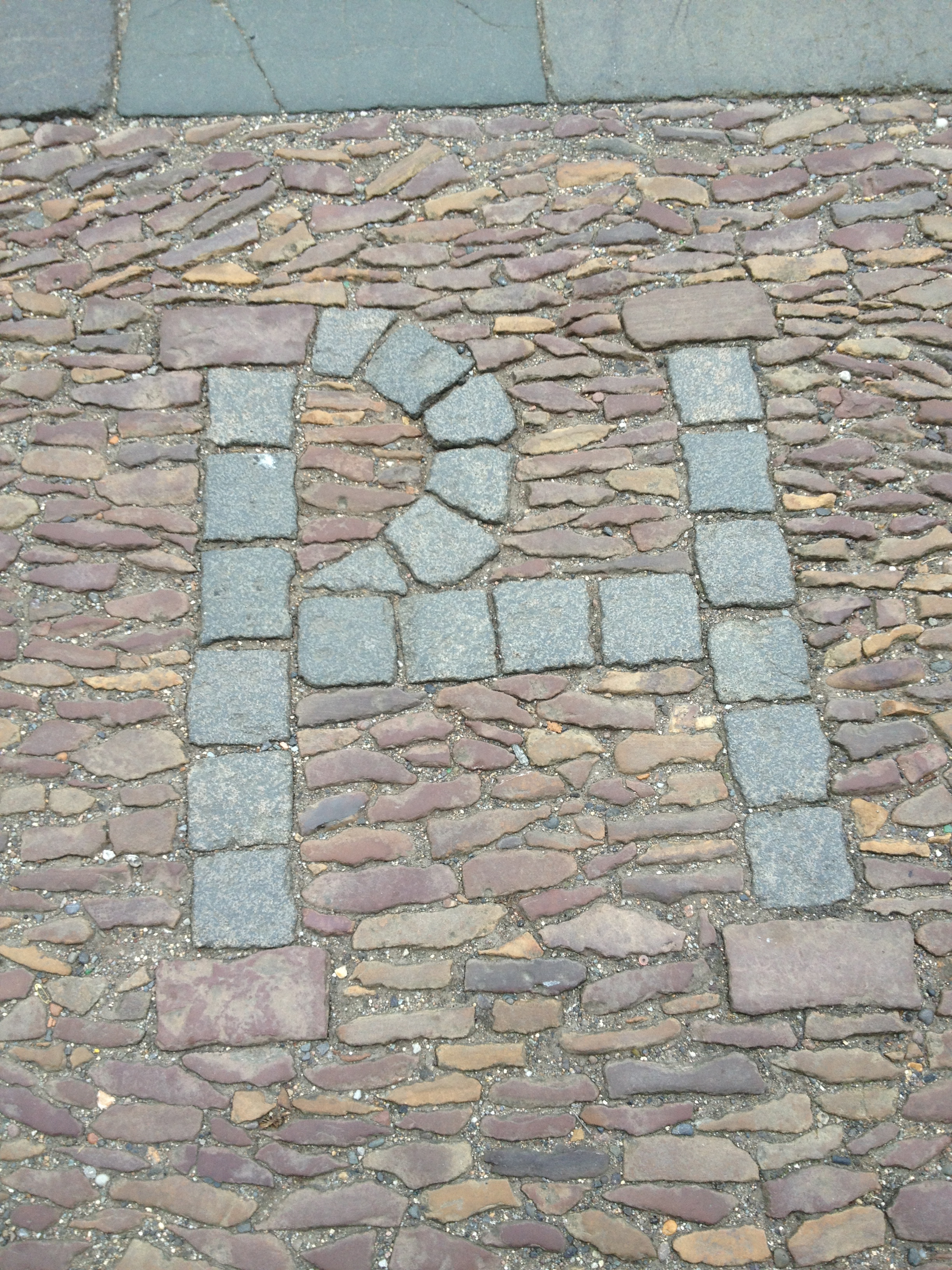
Following the directions I’d been given, I came upon the Monument to the Martyrs. Not wishing to belittle the atrocity of undeserved deaths, I could not help thinking of the pillar as a Monument to Madness. Is the need to feel right so great that others must be made to die for it? After all, among those generally considered to be sane, we all believe that we are right. Who consciously accepts untruth as reality? In such circumstances the best, the only reasonable response is to agree to disagree. I can let you accept your truth, if you’ll let me accept mine. And perhaps such tolerance would serve our planet well. Even the number of trees spared had autos-da-fé been forbidden provides a silence to the wisdom of allowing difference to thrive.


Whose Reality?

It was a groggy, foggy morning when I stepped off the bus in St Andrews. I’d been here before, but it had been over two decades ago, and with my wife, who is my navigator. I knew the International Society of Biblical Literature meeting was here, but I didn’t know where. Instinctively, I headed toward the medieval part of town. A religion conference, I reasoned, would best fit there. Seeing no signs of the inimitable professorate that I associate with the Society, I finally stopped into a university office where a dubious-looking receptionist peered at the conference letter and shook her head. The she spied a familiar address on the letterhead. “Ach, that’ll be doon this way, past the second roond-aboot.” Having lived in Scotland for over three years, I understood. I suppose if I’d just read the materials sent ahead more closely, I would’ve known that we were meeting in the newest part of Scotland’s oldest university.

A religion and science reunion came in the form of the physics and maths building where the meetings were being held. Science grad students, somewhat bewildered by so many biblical scholars, pushed open their lab doors with a sense of wonder—and perhaps disbelief. Could so many educated people seriously spend their time on the Bible? Science, after all, now has cornered the market on truth, hasn’t it? What hath Jerusalem to do with St Andrews? Ancient universities were generally founded to study theology. In 1413, when St Andrews opened its academic doors, God was the undisputed arbiter of truth. Now high-tech fighter jets scream overhead in nearby Leuchars, and we are secure in the ability of science to save us. And still biblical scholars, like the horseshoe crabs, come together in huge numbers on the beachhead of the human psyche every year.

To the student trained in the sciences, I have no doubt that we appear superfluous. Nevertheless, without religious belief, or the Bible, our society would not be where it is today. Although now it seems that science and religion bear deep hostility to one another, they actually grew from the same root and have a similar goal—to discover the truth. Science finds no evidence beyond the material, but religion declares the material as the perennial under-achiever. Scholars of the Bible from around the world, many of them not religious believers, expend their limited resources to come to one of the more inaccessible tourist destinations of Scotland and meet in a clean, modern, comfortable sciences building. Across town, in the heart of the old, medieval district, stand the remains of a once grand cathedral. Still majestic in its glorious decay, the church towers over a town once ruled by religion where now science and golf define the new reality.

DSCN3582


Burning Faith

1528. February 29. St Andrews, Scotland. 24 year old Patrick Hamilton was burned to death for espousing the teachings of Martin Luther. St Andrews University is the oldest of Scotland’s four ancient centers of higher education. Heterodox religious teaching was considered a very dangerous thing in those days, especially in the halls of academe. Once infected with Lutheranism, like a zombie, you had to be burned so that the rest of the world could be safe, the virus contained. Only the problem in this case was an all too human one—difference of opinion regarding religion. The Thundering Scot, John Knox, would’ve been all of about 14 at the time, and reformation for the Catholic Scotland was still years in the future. Now, one of the largest European cathedrals, in St Andrews, lies in ruins because of that very reformation.

Religious bickering has a tendency to move beyond the ridiculous to the insane. Burning young men, after decades of burning hundreds of young and old women alike throughout Europe, was one of the most heinous symptoms of a horrid madness that had grown from religious fervor and fear. Religion itself is not to blame as much as the human tendency to use it as a weapon against those who are perceived as different. Some five centuries later and the physical stakes are gone but the fervor and fear are as strong as ever. As we hear politicians and televangelists lash out against those of whom God disapproves, the smoke still rises from the spot where Patrick Hamilton, late of the University of St Andrews, was sacrificed for his faith.

IMG_0729

Ironically, as I sat on the quiet morning train from Edinburgh to Leuchars, from the headphones on the young man behind me wafted AC/DC’s “Highway to Hell.” Was Patrick Hamilton aware that he was on a literal highway to hell as he returned home to Scotland? Did he have an inkling that his own people would torture him to death because he taught such dangerous ideas as salvation by faith alone and Scripture as the instruction for that salvation? Could anyone have guessed that the then teenaged John Knox would introduce what was to become an even less forgiving form of Christianity to Scotland by the time young Hamilton should’ve reached his dotage? Religion is funny that way. Even those who give their all to defend it easily become its victims. And a few yards down the road the Society of Biblical Literature meets in a university building dedicated to the sciences. History’s ironies never end.


Bonnie the Brave

As a preemptive warning to my regular readers (am I’m sure you both know who you are), I am off today for a stint in my old haunt of Scotland. Before you get out your congratulations, be advised that this trip is for work. The Society of Biblical Literature, in addition to the big meeting about which I sometimes post, holds an international meeting every year. Since my employers frequently want me out of the office, I am being sent to the fair city of St Andrews in the kingdom of Fife for a week. Although I studied across the Firth of Forth in the wondrous town of Edinburgh, I ventured to St Andrews a time or two during my postgraduate days. By that time anyone in tune with popular culture had seen Chariots of Fire, and it was almost a requirement of credibility to visit the famous beach on the North Sea where the actors iconically ran as the movie began. And as in Chariots of Fire, I’m not sure that wifi access will be readily available. Should I find access, I shall gladly update my blog with my customary observations. If I fall silent, you’ll know why.

Scotland had a tremendous draw for me as I was contemplating where to complete my studies of religion (as if one ever can). Not that I was Presbyterian, and not that I have Scottish ancestry (although Celtic is represented in the Irish stowaway on my father’s side a few generations back)—it was the antiquity that drew me. One of the mysteries, to me, of new religious movements, is how people can believe in a religion that recently began. Should there be a supernatural, I’ve always supposed, and should that supernatural be concerned that humans have the truth, why wait so late in the story to start? It was such thinking that drew me from Methodism to its estranged parent, the Episcopal Church. Among the Episcopalians are many who argue for a continuity with the Catholic tradition, separated, literally, only by a matter of divorce. And Catholics go back to Jesus himself, a member of a religion so old that even the Romans grudgingly respected it (Judaism). I guess I’m guilty of old-school bias.

Kim Traynor's Edinburgh, from Wikicommons

Kim Traynor’s Edinburgh, from Wikicommons

So it was that I came to spend some years among the Presbyterians at Edinburgh University. The Ph.D. that I earned there translated to an unfortunately brief career doing what I’m best at—teaching. My tenure at Nashotah House never offered the opportunity to travel back to Scotland, or even England with its Anglicans. And as I prepare to board a plane across the Atlantic, although strictly for work, I can’t help but to reflect on those years of intensive learning, hoping to do my Scottish alma mater proud. And returning to the States to have my career shipwrecked on the rocks of unforgiving religious dogma. It may be that once I’m back among the heather and thistles, I may cast my laptop aside and try to claim religious asylum in a past that I can only see through rose-coloured glasses.


Heaven Forbid

Cars can be a nuisance—they consume resources, pollute the environment, and have a habit of being very expensive to repair. We’ve been pretty good about taking our car in for its regularly scheduled Toyota check-up. Since the garage is several miles away and my wife and I both work, it is often a matter of the one who can most easily work from home the day of the car doctor appointment taking it in. Our Toyota dealer has in-store wifi for those who can’t live without the internet. For some of us, work is almost exclusively internet. So it was that I drew the short straw and dutifully drove out to the dealership. I was pleased that my VPN connected so easily; this was going to be a snap. I was working happily away when I had to find somebody on a university website. I googled the name and clicked. I received a forbidden website message (copied below) explaining tersely: “Block reason: Forbidden Category ‘Religion’.” I tried again on the Society of Biblical Literature website—same message.

ForbiddenReligion copy

Now I can understand workplaces blocking pornography sites, and even Facebook (I found the latter to be blocked at Toyota some time ago, but I’ve never tried the former), but religion? I am a religion editor. How am I to work when I can’t access websites that contain the word “religion”? The more I pondered this—I could still check my email, and do VPN-type work with files from the office—the more it bothered me. On the television in the background inane daytime talkshow hosts were interviewing someone who’d written a book about God. How many more businesses out there are biased against internet religion? That means my blog is blacklisted along with the scantily clad and overly chatty. I fully support the disestablishment clause, but I also subscribe to the freedom of religion. Smirks aside, there is a serious undertone to all of this.

I have no desire to be proselytized at work. I also agree that it is the right of others to expect the same. Sometimes, however, a little religion might help work go down like a poppinian spoonful of sugar. One time when I worked for Ritz Camera in Brookline, Massachusetts (I seem to have a knack for working for businesses that are on the way out), I had a tough day. Some of our customers could be quite abrasive, and since the customer is always right, we had to take personal insults with a smile. One lunch-hour I told my manager that I needed to recoup my moxy (I didn’t use those words). I ducked out the door and stomped to the first church I could find and asked if I could just sit in the pew for a few minutes. The church secretary, a complete stranger to me, said “of course.” Ten minutes later I returned to work collected and able to face more unreasonable customers for the rest of the afternoon. Maybe it wasn’t religion, maybe it was only the calm of sitting in what some believed to be a sacred space, but my capitalist company got better performance out of me that day because of it. Ironically, at Toyota, my religion editing is cast in with the tax collectors and prostitutes. Only the tax collectors, I’m pretty certain, are always permitted to work.


Just Books

It’s very difficult to make your voice heard in this world. I’ve been talking for nearly half a century, and most of the time it’s like nobody’s listening. For those who follow the Chronicle of Higher Education, the fact that Herbert Richardson, the founder of Edwin Mellen Press, is threatening to sue some librarians for comments made on various blogs, is not really news. When the Chronicle ran a story this week on Herbert Richardson’s career, I gained a renewed appreciation for what he’s doing. I say “renewed” because I remember the days when I was very poor. My first year of teaching, with my wife in a university program and my own student loans due, I was paid a measly ten grand for a salary (this was in 1992). Despite these privations, my wife and I attended the Society of Biblical Literature annual meeting on a very tight budget. For those of you who’ve not been, SBL offers a book orgy for scholars. Publishers of all descriptions offer books at a discount, but even so, many titles are out of reach. My wife was researching Methodist hymnody for her thesis, and Edwin Mellen Press had a resource that she needed. We simply couldn’t afford it. Herbert Richardson saw our earnest discussion at his book stall, walked over, picked up the book, handed to my wife and said, “Take it.”

Although Herbert Richardson would not recognize me, he has on other occasions, shown me unsolicited kindness. Reading the Chronicle account, I learned that he is a Presbyterian minister and that he had taught at Harvard Divinity School. He is unconventional in some respects, but he also enjoys bucking the trends. Edwin Mellen Press publishes good research that mainstream publishers pass up because their eyes are always on the prize. The bottom line. I never published with Mellen, but I have had snooty presses turn down very careful scholarship of my own. My sympathies are with the underdog, and with the guy who tries to help the underdog. Academia is a cruel world. Some of us have received nothing but backhanded salutes from “established institutions” for all of our adult lives. It’s hard to feel sorry for them. What are the needs of one man in a machine so vast? Not much, apparently.

I’m not the litigious sort. Lawyers have generally caused mostly grief, in my experience. But I don’t castigate the important work Herbert Richardson is trying to do. It might be easy for those lucky enough to be welcomed by academia to forget just how lucky they are and noses are easily looked down towards those of us who never received a chance to shine. No, I wouldn’t sue those who bad-mouth me, and I’m sure there are plenty, but I think Herbert Richardson’s heart is in the right place. As a guy who would happily work for books if food, shelter, and healthcare could somehow be had, I know what it is to covet a book and not be able to afford it. I know what it is like to feel want. Herbert Richardson, based on my encounters with the man—we continue to cross paths from time to time—understands those who love books. That is a principle I can live by.

IMG_0506


Bible-Landia

It takes a mighty powerful stimulus to get the media to pay attention to biblical scholars. It is no surprise, therefore, when the Society of Biblical Literature meets with the American Academy of Religion each November that, for a few days a year, Bible becomes chic. This year various newspaper articles appeared, perhaps warning Chicagoans what all these crusty professors were doing invading their fair city, but the one that caught my eye was in the Chronicle of Higher Education. The Chronicle is the purveyor of all that is high-brow and sophisticated, epithets seldom applied to the Bible. The story in November 19’s edition made this clear by throwing in a little scandal—some Bible scholars believe the Bible to be “morally bankrupt.” Now there’s a twist. Nor is it really that hard to understand. Anyone who’s read the Bible seriously will have to admit to having squirmed a time or two at the moral implications. Dashing babies heads against the rocks will be one of those places.

IMG_0513

In a society accustomed to seeing in black and white, morally at least, it is difficult to get the religiously convicted to admit that the Bible is a pastiche. Some parts are morally sublime (yes, even in the Hebrew Bible where “love your neighbor as yourself” originates) while others are ethically execrable (can I get an amen from the babies?). It is always interesting to see friends quoted in the media. I taught Hebrew Bible for 18 years without anyone really being that interested (including most students). I guess maybe I wasn’t radical enough. To me the Bible has to be viewed in balance, the moment one falls on their knees before it the corruption has begun. Interestingly, the article focuses on the New Testament side of the equation. That’s where the sexier conflicts wallow.

People arguing about the Bible. Is there anything more representative of American culture? It happens every four years, at least. Ironically the Bible quite often stresses the unity of those who believe. With thousands of denominations mutually excommunicating each other, one has to wonder if the Bible is living up to its full potential. Not that anyone will notice. Amid all the well-heeled, tenured professors, satisfied with their lot in life mill the hundreds who’ve spent thousands earning their advanced degrees. They are the lost generation—those for whom there are no, never were any, jobs. They are every bit as capable, and in many instances even more capable, than their tenured compatriots. The level of concern, at least at a visible level: nil. That, more than anything, indicates to me the true morals of studying the Bible.


After the Gold Rush

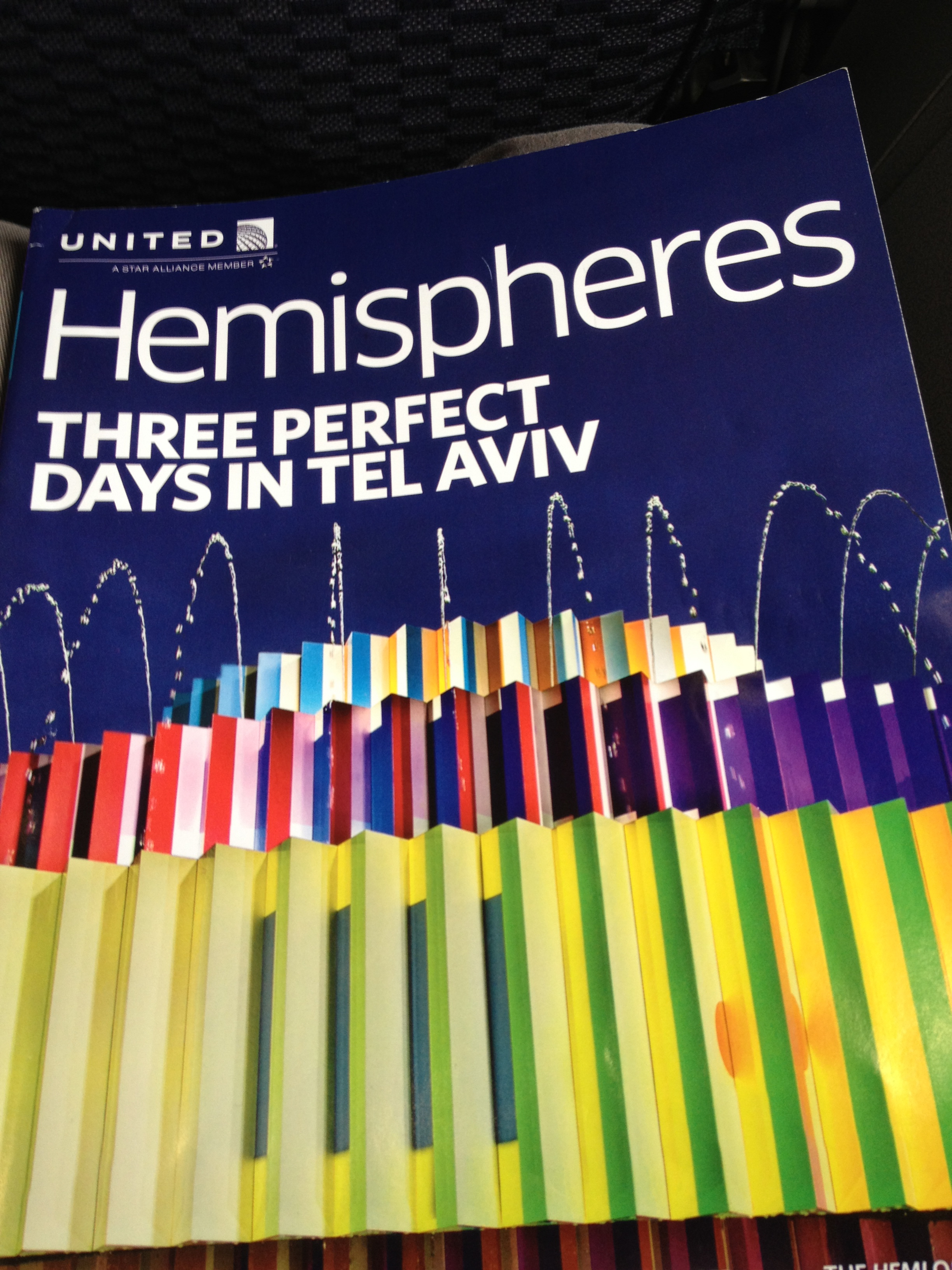
The morning I flew to Chicago for the American Academy of Religion and Society of Biblical Literature annual meeting, the headlines in the morning paper were about the rocket attacks in Tel Aviv. Ironically, the in-flight magazine cover on United, I noticed as I fastened by seat belt securely low across my waist, read “Three Perfect Days in Tel Aviv.” The irony wasn’t so much funny as it was sad. The situation in the Middle East is hopelessly entangled, but it all comes down to our obsession with dividing people into groups. Religious, ethnic, social: somehow we are not like them. We’re better, superior in some way. It matters not that proving superiority is a purely subjective enterprise. After all, we just know it. When history places one persecuted group in a position of persecuting another group, well, I’m afraid we all know what happens.

The problems in the Middle East are largely biblical and predominantly petroleum-based. Even those who tend to read the Bible figuratively can see a land claim based on an Abraham who probably never existed as strangely literal. Especially when there’s oil in them thar wells. Isolationism served the United States well until it was discovered that they had more black gold than even Texas does. Establishing a foothold in the region was not such a subtle policy; the x-ray vision of politicians funded by heavy industry saw beneath the sandy soil to the real deity that lay beneath. Dig a well, hit a gusher, and, like the Bible says, “he anointeth my head with oil, my cup runneth over.” Good news for modern capitalists. But some people will have to die.

As I sat in the lobby of a posh hotel, waiting for an appointment, I heard a fragment of a conversation as a couple of scholars rushed by. They were discussing the aftermath of the rocket attacks on Tel Aviv. One suggested to the other, in the context of how many Palestinians might die in retaliation, “well, if they can keep the numbers down…” and then they were gone. My mind jumped to The Prisoner. “I am not a number, I am a free man!” crashed in my head with the way that the dead in the Middle East are piled up as “the numbers.” I’m sure it was only intended as a convenient turn of phrase. Outside the hotel lobby the striking workers from the Hyatt labor disputes were protesting in a cold, crisp Chicago morning. They were soon cleared away. My fear, Number Six, is that you are wrong. We are all numbers, even the best of us.