
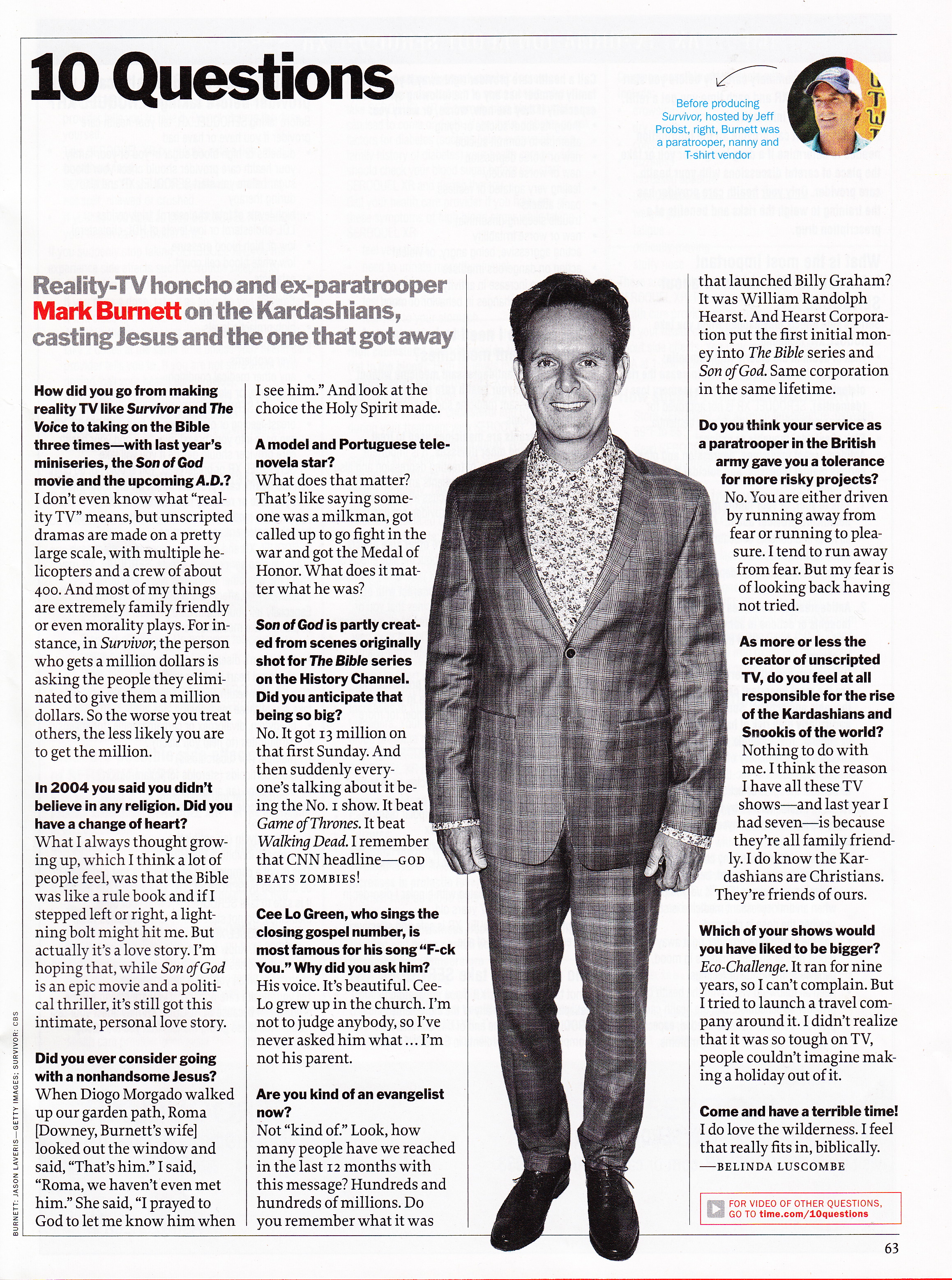
 I don’t watch television. This is not some moralizing, high-brow stance—it’s just the fact that it isn’t cost-effective with the little time I have for the tube. Growing up, however, television was at times my best friend. I see we’ve grown apart over the years. Who’s to blame? In this week’s Time magazine, the 10 Questions are directed to Mark Burnett, whom, prior to reading them, I couldn’t have identified with my TV Guide atop a Bible. Burnett is the mind behind the movie Son of God, originally a History Channel television show that managed to beat out even Game of Thrones. The laconic remarks left to Burnett reveal a man somewhat cagey about religion, but with a sense of mission nonetheless. What had never occurred to me is that even evangelists have corporate sponsors. According to Belinda Luscombe, Burnett said, “Do you remember what it was that launched Billy Graham? It was William Randolph Hearst. And Hearst Corporation put the first initial money into The Bible series and Son of God.” The first money into the son of God, Billy Graham, and the Bible. Who can match such a pedigree?
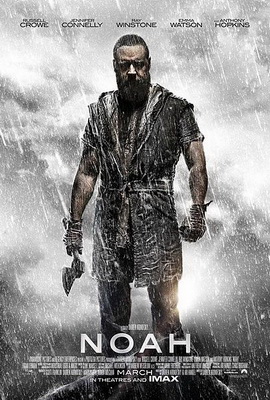
The public airing of faith lacks something without big money. The Crystal Cathedral, Lakewood Church, Heritage USA. Where would we be without the media moguls to lead us? There’s gold in them thar hills. All it takes is those willing to ask the gullible to mine it. Where your treasure is, there will your heart be also, n’est-ce pas? Seems like the Son of God raced past the Lego Movie on its opening weekend, but fell behind Non-Stop, although he’s still gaining. This is the sign of true divinity. Who will ultimately win? Does anybody have an ark?
Crystal Cathedral Ministries went bankrupt in 2010 and sold the Cathedral to the Catholics. Heritage USA lost a slug-out with Hurricane Hugo, as Jim Bakker was checking into a cell with Lyndon LaRouche. Can even the Son of God rock the critics with such a record? Mark Burnett is also credited with helping to create reality television. As we watch the rise and decline of the Duck empire, and the tearful admissions of personal failings from evangelists so rich that we have to admit a funny thing happened on the way to the Compaq Center, can there be any doubt where reality really lies? Who can really tell the difference between The Bible and The Game of Thrones?
 Steve A. Wiggins